

Genocide Watch Staff and Interns
Grace Harris
Chief Operating Officer
Great Lakes & Central Africa Team Leader
Grace is a graduate student at Columbia pursuing a Master of International Affairs degree with a concentration in Human Rights, Gender, and Equity. She recently graduated with a B.A. in International Development Studies from UCLA. There, she was the recipient of the International Development Studies Activist Award for her departmental honors thesis exploring the intersections of development, aid, genocide, and genocide prevention. Originally from Tampa, Florida, she has fostered an interest in human rights issues and genocide and atrocity prevention since high school. She first got involved in this field when she joined her school's chapter of STAND: The Student-Led Movement to End Mass Atrocities, eventually becoming a member of its Managing Committee. Grace has been with Genocide Watch for two years, and has taken on a number of roles from running the Alliance Against Genocide Division to leading and co-leading two task forces. This summer, she looks forward to serving as the new COO and driving the future of the organization! She is motivated by a passion for global justice and a desire to make the world a better place.

Editorial Board
![Frankie Condon_NCTE22ThursdayEC0241[3] copy.jpeg](https://static.wixstatic.com/media/d0bbf9_df9ad8f38c414072bc0aa1bef0dbf52b~mv2.jpeg/v1/crop/x_8,y_0,w_2392,h_2999/fill/w_316,h_396,al_c,q_80,usm_0.66_1.00_0.01,enc_avif,quality_auto/Frankie%20Condon_NCTE22ThursdayEC0241%5B3%5D%20copy.jpeg)
Frankie Condon
Lead Editor
US and Canada Team Leader
Frankie Condon is an Associate Professor in the Department of English Language and Literature at the University of Waterloo and the Associate Chair of the Conference on College Composition and Communication (CCCC). Frankie’s recent co-edited collection, CounterStories from the Writing Center (with Wonderful Faison) is the winner of the International Writing Center Association’s 2023 Outstanding Book Award. Among her other books are her monograph, I Hope I Join the Band: Narrative, Affiliation, and Antiracist Rhetoric; Performing Anti-Racist Pedagogy in Rhetoric, Writing and Communication, co-edited with Vershawn Ashanti Young; and The Everyday Writing Center: A Community of Practice (co-authored with Geller et al). Her current projects include new monographs: The Road to Hell: Radical Precedents of Post-Racial Rhetoric in the 21st Century, a genealogical history of the metaphor of colourblindness for racial justice, and Encounters with Bean: Contending with White Supremacy in the Antiracist Classroom.
Jennifer Mitchell
Co-Senior Editor
Jen Mitchell is an Associate Professor in the English Department and director of the writing center at SUNY Potsdam, a public university in northern New York. She has over 25 years' experience teaching courses in first-year composition and professional writing, including courses for incarcerated students. As a community volunteer, she has written grant proposals and standard operating procedures for local nonprofits. Jen earned a BA in sociology at Bryn Mawr College and a PhD in English at the University at Albany.


Sheryl Ruszkiewicz
Assistant Editor
Sheryl Ruszkiewicz is a Special Lecturer in the Department of Writing and Rhetoric at Oakland University and a Mental Health First Aider. She has self-published a collection of community stories, along with published co-authored chapters and books on content strategy, user experience, and technical communication. Sheryl has experience as a technical writer and has edited and indexed works of various lengths including book-length manuscripts. She is interested in researching antiracist, accessible, and inclusive teaching practices; using storytelling and counterstories as community building; and community engagement with nonprofit organizations.
Asmita Ghimire
Assistant Editor
Asmita Ghimire, PhD is a scholar, practitioner, and educator in the fields of writing, rhetoric, and technical communication. She specializes in international, intercultural, and transnational technical and professional communication. Her research focuses on critical AI literacy, machine learning platforms, global public policy, and transnational technical communication. In her work, she draws on transnational feminist methods and methodologies, as well as Global South epistemologies, to examine, critique, and reimagine technical and professional communication documents. She is deeply committed to exploring how technical and professional documents can be designed to promote transparency, accountability, and social justice.


Benny Skinner
Assistant Editor
Benny Skinner (they/them) is a PhD, Global Governance student and fellow at the Balsillie School of International Affairs, and an instructor at St. Jerome's University College. They are a Two Spirit thinker, creator and educator living on The Haldimand Tract in Waterloo, Ontario (Canada). Benny specializes in information governance, institutional history, and decolonizing methodologies.
Management Team
Beth Paul
Podcast Director
Beth is a Masters student at Trinity College Dublin studying International Peace Studies. She is an honors graduate of Western Washington University with a B.A. in Political Science & Government, and a concentration on International Relations and Religious Studies. Beth has a background in local grassroots campaigns and has managed four successful bids for local and legislative office, including the most competitive Washington US House seat. She has worked two sessions with the Washington State Senate and now works at a social impact nonprofit.


Renata Lampert
Research Director
Legal Team
Renata is a lawyer (qualified in Brazil), currently completing an LL.M. in International Human Rights and Humanitarian Law at Europa-Universität Viadrina. She intends to pursue a Ph.D. to further advance her academic research in international law.
At Genocide Watch, Renata serves as Research Director and Legal Team member, while contributing to the Latin America and US & Canada Task Forces.
Her research focuses heavily on international criminal law, specifically examining human trafficking, child soldier recruitment, and their roles as structural indicators and weapons within broader systems of mass atrocities and genocide.
Juliana Giorotto
Alliance Against Genocide Director
Juliana Girotto is an undergraduate student at the University of California, Los Angeles, pursuing a Bachelor of Arts in Global Studies with a minor in Anthropology. She has developed her interest in global justice through studying abroad in The Hague, focusing on human rights governance and international human rights law. Currently, she is a Research Scholar with UCLA’s Internet Research Initiative, analyzing grassroots digital infrastructure initiatives through frameworks of inequality, policy, and infrastructural power. Beyond academics, Juliana is an active member of the United Nations Association at UCLA, where she has organized and participated in advocacy and educational initiatives around human rights and sustainable development. Passionate about cultural preservation, she has pursued research and professional experiences that highlight the importance of safeguarding history and community heritage alongside human rights work. At Genocide Watch, Juliana serves as a member of the Central Asia, Southeast Asia/East Asia, and Balkans teams as well as the Alliance and Research Divisions. She aspires to continue her academic and professional development in the fields of human rights and international affairs, with the goal of working for NGOs supporting vulnerable communities worldwide.


Trinity Huynh
Finance & Fundraising Director
East & Southeast Asia Team Co-Leader
Trinity Huynh is an MSc student at the London School of Economics and Political Science, where she continues her work at the intersection of international human rights law, conflict resolution, and atrocity prevention. She holds a Bachelor of Arts in Political Science with a minor in Peace and Justice Studies from Chapman University.
At Genocide Watch, Trinity founded the Southeast Asia and East Asia team and formerly led the China Action Task Force. In her current role, she co-leads the East and Southeast Asia task force, where she authors country alerts and monitors human rights developments across the region.
Her research spans a range of issues in international law and transitional justice, including nuclear disarmament, disability rights, and the legal and collective memory of mass atrocities. She has contributed a book review to H-Genocide on witness testimony in international criminal tribunals and conducted independent research on the legacies of Agent Orange. She also contributed to a legal database documenting the Russian-Ukrainian war for future scholarly use.
Trinity has co-authored work on bottom-up approaches to human rights change with Open Global Rights, and has engaged with questions of AI policy and the role of education in genocide prevention and peacebuilding
Deana Syrneva
Communications Director
Deana Syrneva is a graduate of American University in Washington, DC, where she majored in International Relations and Political Science. She was actively involved in campus life as a member of the Club Swim Team and Pre-Law Society. She currently serves as the Professional Development Chair for the Sisterhood of International Engagement and as Social Media Coordinator for Amnesty International, where she has helped lead a Uyghur Muslim Awareness Exhibition alongside tabling events on issues including the Sudan conflict, the death penalty, and genocide prevention.
Deana’s commitment to genocide prevention emerged through her academic focus on political violence and human rights. She was particularly influenced by Philip Gourevitch’s We Wish to Inform You That Tomorrow We Will Be Killed With Our Families, which deepened her understanding of the Rwandan genocide and the global failure to intervene. This experience motivated her to join Genocide Watch and apply her passion for justice to real-world early warning and prevention efforts.
At Genocide Watch, Deana is part of the Research and Communications Team and contributes to the Gaza, India, and South African Great Lakes Task Forces. She brings a strong interest in legal accountability and international justice to her work. In the future, she hopes to pursue a career in international law focused on atrocity prevention, legal reform, and the protection of vulnerable communities worldwide.


Areeka Khan
Sudan and North-Central Africa Team Leader
Near East Team Co-Leader
Coordinator, Alliance/IRF Genocide Working Group
Areeka holds a bachelor's degree in Philosophy from Sophia College for Women in Mumbai, India, where she conducted extensive research on topics such as abortion, LGBTQIA+ rights, and women's rights. Her academic background is complemented by practical experience in human rights advocacy.
In her previous role as an International Justice Intern at the Advocates for Human Rights, Areeka prepared reports for submission to various United Nations treaty bodies, gathering comprehensive and reliable data on human rights issues, including gender-based violence, the death penalty, and discrimination against the LGBTQIA+ community in countries such as Eritrea, Oman, Bangladesh, Nigeria, Guyana, Egypt, Albania, Somalia, and Qatar.
At Genocide Watch, Areeka serves as the Sudan Task Force Co-Leader. She is also a member of the India and South Asia Team, as well as the Near East Team. She has co-authored UN Resolutions on Sudan presented to the UN Security Council and the UN General Assembly. She originated Genocide Watch's Sudanese Gold is Blood Red campaign, for which she spearheads initiatives to raise awareness about the genocide and humanitarian crisis in Sudan. She has written reports on the rising anti-minority,
Islamophobic Hindutva movement in India. Her efforts include producing a variety of advocacy materials on both Sudan and India. She is the Coordinator of the Alliance/IRF Genocide Working Group.
Areeka aspires to pursue a degree in international law to deepen her understanding of the field and to develop effective mechanisms for addressing the UN's limitations, aiming to strengthen enforcement and implementation of human rights law.
Franzie Schatzl
Europe Team Co-Leader
Armenia and Turkey Team Leader
Middle East and North Africa Team Co-Leader
Shaped by hands-on experience in post-conflict settings across Rwanda, Cuba, Ukraine, Türkiye, and Southeast Europe, Franzie Schatzl is dedicated to memory justice, advocacy, and peacebuilding through education and public engagement.
She is currently completing her Bachelor’s degree in History at the University of Vienna, with a focus on genocide prevention, transitional justice, and international diplomacy. In 2021–22, she completed her Austrian Peace Service at the Kigali Genocide Memorial, contributing to survivor interviews, educational programmes, and historical research.
As COO of Ronja – Association for the Promotion of Human Rights – she leads initiatives at the intersection of urban activism and political education. She also works as a Junior Project Manager for Fix in Art (Thessaloniki) and other civil society organisations in Ankara and Vienna, coordinating EU-funded projects on displacement, discrimination, and gender-based violence.
In 2024, she co-developed a cultural empowerment initiative in Kyiv, Ukraine, using music and public art to support local resilience. She has served on the Advisory Board of the Hil-Foundation, selecting projects that address gender-based violence, and regularly participates in international youth-led initiatives promoting anti-discriminatory frameworks.
Driven by a belief in memory as resistance, Franzie is committed to building cross-border solidarities that centre memory, justice, and lived experience.


Michał Jagielski
Central Asia Team Leader
Middle East and North Africa Team Co-Leader
Michał Jagielski is a recent graduate of Lund University in Sweden, where he majored in Middle Eastern Studies, defending his master’s thesis on the Egyptian Muslim Brotherhood’s framing strategies in exile. Previously he received his bachelor's degree in Iranian Studies from the University of Warsaw, Poland. Michał has experience working for NGOs and INGOs where he participated in projects focusing on humanitarian aid, advocacy and human rights protection.
At Genocide Watch he is co-leader of the Sudan and North-Central Africa Team and leader of the Central Asia Team. He is also a member of the Research Division and Alliance Division and the Middle East and North Africa, and Central Africa Teams.
His current research interests include the remnants of colonial mentality in international law and geo-politics, political persecution, state building and resolving generational traumas and prejudices.
Madelyn Smith
Southeast and East Asia Team Co-Leader
Madelyn Smith is an undergraduate student at Leiden University College in Netherlands pursuing a degree in Global Challenges focusing on World Politics and International Justice. She has previously interned at two U.S. Embassies, including for U.S.A.I.D. where she created more efficient office webpages that generated inter-office awareness and coordination. She has fostered her passion for human rights, refugee work, and education as a board member and student coordinator of IncLUsion, by connecting asylum seekers with university education opportunities. She was responsible for the application process of over 150 prospective students, as well as the communication and organization of the social and academic wellbeing of active students. At Genocide Watch, Madelyn continues to put her passion for human rights issues to use as the Co-Leader of the East/Southeast Asia Task Force and a member of the Central Asia Task Force team. In the future, Madelyn plans to pursue a graduate level degree at the intersection of law and international relations in the field of human rights.

Francisco Perpuli
Latin America Team Leader
Francisco Perpuli holds a bachelor's degree in History from the University of Guadalajara in Jalisco, Mexico. He is currently studying an Advanced Diploma in Latin American and Chinese Studies from FLACSO Argentina. He developed an interest in genocide studies whilst studying abroad at the University of Leeds.
He is a member of the International Association of Genocide Scholars (IAGS), the International Council of Museums (ICOM), and the Latin American Association for Asian and African Studies (ALADAA).
At Genocide Watch, Francisco hopes to develop solid experience in advocacy work and further his knowledge in genocide studies.


Shriya Hegde
India and South Asia Team Co-Leader
Shriya is a current master's student in Human Rights Policy and Practice. Her research examines militarization and state accountability in conflict-affected regions of Northeast India, focusing on gendered forms of resistance and everyday peacebuilding.
Prior to her graduate studies, Shriya worked as a human rights lawyer with NGOs and government institutions in India, focusing on child protection, anti-trafficking, and migrant rights. She contributed to drafting child protection guidelines and juvenile justice rules, and designed and led capacity-building programs for law enforcement officials, prosecutors, and child welfare authorities. During the COVID-19 pandemic, she worked with an organization coordinating large-scale volunteer networks to support access to healthcare across states, and worked on public health policy. She has also completed a specialized program on Migration and International Protection, where she gained comparative insights into asylum systems, migration governance, and protection frameworks.
At Genocide Watch, she co-leads the India and South Asia Task Force and is a member of the Sudan Task Force and the Legal Division.
Kristie Moore
Ukraine, Russia, and Post-Soviet Space Team Leader
Armenia & Turkey Team Co-Leader
Kristie Moore is a Mexican-Slovak American from the United States. She is currently an undergraduate student at the University of California, Berkeley where she studies Global Studies with a concentration in peace and conflict studies. Within this broader field, her academic and research interests center around mass atrocity prevention and reconciliation in Central Asia and the South Caucasus, specifically as it connects to multiculturalism, migration, displacement, and violent conflict. She brings extensive research experience having previously served as a student researcher at UC Berkeley’s Human Rights Center and as a fellow for the REEES Think Tank at Howard University. Her professional experiences are complemented by a depth of regional knowledge from her time intensively studying foreign languages and conducting research in Russia, Kyrgyzstan, Kazakhstan, Armenia, Georgia, and Tajikistan. Kristie is currently based in Dushanbe, Tajikistan where she is beginning her studies of Tajiki and pursuing research on migration in Tajik society. As the descendant of Jewish Holocaust survivors from Czechoslovakia and Mexican immigrants, Kristie's interest in this field and desire to contribute to a more peaceful world, are directly informed by the experiences, struggles, and perseverance of her family.

Tara Davis
Artificial Intelligence Project
Tara Davis holds a Ph.D. from Vanderbilt University in pure mathematics as well as an M.B.A. She worked for 12 years as an Assistant, then Associate Professor of Mathematics at Hawaii Pacific University. She taught a variety of upper and lower division math classes, as well as interdisciplinary courses spanning education and psychology. She enjoys curriculum development, mentoring students and junior faculty, and collaborating on research with colleagues.
From 2023 to 2025, she served as a Peace Corps volunteer in St. Vincent and the Grenadines. In her capacity as an English Literacy Resource, she worked harmoniously with local staff, teachers, principals, and government officials. She created a data-driven literacy pullout program in a low-resource primary school, which resulted in 73% of participants gaining at least one reading level; she co-founded a sustainable teacher community of practice; and she delivered professional development to secondary school mathematics teachers focused on inquiry-based learning and problem solving.
Tara is currently a professor of mathematics in Oregon. She brings a lifelong interest in human rights and a passion for reading memoirs of genocide survivors. She is excited to apply her interest in AI as the leader of the anti-hate speech team at Genocide Watch.


Alexander Smith
Balkans Team Leader
Alexander Smith is an undergraduate at Tufts University double-majoring in International Relations (concentration in Europe and the Former Soviet Union) and Russian and East European Studies. As a student leader, he is President of Tufts’ Amnesty International Club and has organized panels on freedom of expression, held events on campus that supported grassroots advocacy organizations, and overseen weekly informational meetings. He is the founder of the Tufts chapter of Students Demand Action, where he is mobilizing his peers to prevent gun violence in the United States. As a native bilingual Serbo-Croatian speaker, he founded the Tufts Slavic and East European Association, which has promoted cross-cultural discussions and events, including a talk by an ambassador from Montenegro. Alex is also an avid photographer, traveler, and soccer player. As an intern at Genocide Watch, he will be writing alerts and monitoring developments in Europe and the Balkans, and will assist the effort of the Alliance Against Genocide. Later this summer he will be conducting field work in Bosnia, and in the fall plans to study abroad at University College London’s School of Slavonic and East European Studies.
Fauwaz Khan
Mapping Team Leader
Fauwaz Khan is currently pursuing an M.S. in Urban Planning at Columbia University in New York. Trained in architecture, his interests have gradually expanded toward understanding how identities, differences, and forms of belonging are shaped through social, political, and spatial processes.
Prior to Columbia, he was a Fellow at the Indian Institute for Human Settlements (IIHS), where he worked on interdisciplinary urban research alongside planners, lawyers, journalists, and policymakers. Through his work and studies, he has become increasingly interested in the relationship between knowledge, advocacy, and accountability, particularly in how societies engage with competing histories, lived experiences, and understandings of reality.
At Genocide Watch, he looks forward to contributing to research, monitoring, and advocacy efforts related to genocide prevention and early warning.

Staff

Anita Lesniak
Anita holds a Master’s degree in Public International Law, specialising in Conflict and Security, from Utrecht University, as well as a Bachelor’s degree in International Law and German from Birkbeck, University of London. Her Master’s thesis examined the “reasonable military commander” standard, analysing how proportionality is assessed in attacks with secondary effects under international humanitarian law. Alongside her academic work, she has practical experience supporting vulnerable and marginalised communities affected by conflict and displacement. She previously volunteered as a caseworker with Bail for Immigration Detainees in London, where she worked closely with individuals held in immigration detention, assisting with bail applications and navigating complex legal processes. She continues this work as a volunteer helpline agent with the Red Cross Netherlands, providing information and support to migrants and refugees in need. In addition, Anita contributed to Action on Armed Violence’s Global Mass Shooting Database by researching and documenting mass shooting incidents in the United States. She is motivated by a strong commitment to justice, accountability, and the protection of vulnerable populations, and aspires to work in the fields of international humanitarian law, international criminal law, and human rights.

Rebeca Ancer Gómez
Rebeca is a second-year law student at Northeastern University School of Law and holds a Master’s degree in Peace and Justice from the University of San Diego’s Kroc School of Peace Studies. She earned her Bachelor’s degree in Ethics, Society, and Law from the University of Toronto, where she interned with the Canadian Centre for the Responsibility to Protect (CCR2P), monitoring and reporting on human rights violations and mass atrocity crimes worldwide. Rebeca has also served as a legal intern with Human Rights First and Casa Cornelia Law Center, where she worked closely with asylum seekers and refugees fleeing persecution in their home countries. Originally from Monterrey, Mexico, she grew up volunteering at local migrant shelters, an experience that inspired her lifelong commitment to defending the rights of displaced people. At Genocide Watch, Rebeca is a member of the Legal Team; the Latin America, East/Southeast Asia, and Balkans Teams; the Alliance Against Genocide Team; and the Communications Team. She is passionate about human rights, refugee and asylum law, international law, and corporate accountability. Through her work with Genocide Watch, Rebeca hopes to strengthen her skills in atrocity prevention and help amplify the voices of communities affected by mass violence.

August Wyma
August Wyma is a Canadian student of International Relations who is graduating this summer with a B.A. from the University of British Columbia (UBC-O). Coming from a settler background, August quickly adopted a passion for understanding and preventing genocide, as his own country was built on the persecution of Indigenous peoples. Since studying at UBC-O, August has taken a structuralist approach to understanding genocide and seeks to develop this understanding further as he continues his academic journey. Apart from his studies at UBC-O, he has also spent a semester at Sciences Po Lyon in late 2025, where he received a Diploma of French and European Studies. He sees this experience as extremely valuable to his role as an anti-genocide activist, as it provided him with an alternative perspective on global justice and diplomacy. Additionally, August worked as the podcast host of UBC-O’s student news broadcast in the Spring of 2026, where he had the opportunity to discuss the intricacies of genocide with the leading scholar, Dr. Adam Jones. August hopes to have built the required foundation for a future in anti-genocide advocacy. Accordingly, he sees a position at Genocide Watch as the natural progression towards making a positive change for at-risk peoples
Grace Lew
Grace Lew works as a Policy and Campaigns Officer in the rare and genetic disease sector, contributing to health policy development, advocacy, and stakeholder engagement within the UK health system. Her academic and professional background reflects a progression from health sciences to international development and human rights–informed policy and public affairs. Although she comes from a background in health, her exposure to structural violence and systemic inequities led her to develop a strong interest in human rights and mass atrocity prevention, which brought her to Genocide Watch.
She holds an MSc in Health and International Development from the London School of Economics and Political Science and a Bachelor of Health Sciences (Honours) from the University of Calgary in Health and Society, with a concentration in Economics. Her master’s dissertation analyzed academic and grey literature on how formal and informal health systems respond to the mental health needs of survivors of collective and conflict-related sexual violence in post-conflict settings. Using pluralistic health systems and bio-psychosocial frameworks, her research synthesized evidence across multiple contexts to identify structural, social, and health-system drivers relevant to upstream mass atrocity prevention and survivor-centred recovery.
Grace’s research background includes peer-reviewed and applied work in geriatrics, palliative care, including Medical Assistance in Dying, and emergency medicine, alongside broader research ventures in global health and the analysis of nationally representative datasets across multiple countries. Across these settings, she has employed both qualitative and quantitative methodologies, with particular expertise in interview-based qualitative research centred on lived experiences.
In parallel, she volunteers as a Legal Assistant with the ROMILDAMOR Foundation, supporting survivors of human trafficking, gender-based violence, and modern slavery through survivor-centred legal documentation, case preparation, and reintegration support. This work has further strengthened her commitment to bridging health, human rights, and justice-based responses to structural harm.
Outside of research and advocacy, Grace is a competitive freestyle wrestler and volunteer coach, delivering regular training sessions and actively working to increase women’s participation and leadership in the sport. She has also held multiple leadership roles, including Vice President of Finance and Legality positions across student and nonprofit organisations, managing organisational budgets, compliance requirements, and governance processes.

Flora Tu
Flora Tu is a senior at Burnaby North Secondary School in Vancouver, Canada, with a strong interest in law, human rights, and international justice. She has a background in public forum debate, earning national-level recognition through placing in the top 8 teams at the Harvard National Speech and Debate Tournament in 2025, and top 16 at the National Speech and Debate Opener the same year. Beyond debate, Flora also has a passion for music and piano performance, placing 1st at the Pacific International Youth Music Competition (19 & Under). She serves as Co-President of the Lower Mainland Music Students’ Association, where she has coordinated large-scale fundraising and community outreach initiatives benefiting local charities and vulnerable populations. She also helps expand access to debate lessons as the Vice President in the Pacific Northwest Debate Society. Through PNDS, she organized and coached free debate classes that saved $50,000+ in tuition for students. Flora is eager to contribute to Genocide Watch’s research and advocacy efforts and is looking forward to working with the team.


Kara Esplin
Kara Esplin is a current Master’s candidate studying Ethics, Peace, and Human Rights with a concentration in Genocide and Mass Atrocities Studies at American University. Her research interests focus on the intersection of gender, mass violence, and post-violence memorialization. In addition to her studies, Kara is a fellow with the Mass Atrocity Research Initiative at American University, where she is researching the United States' involvement in mass atrocities and the suppression of atrocity narratives. Prior to attending American University, Kara graduated from the University of Utah with Bachelors’ in Geography, International Studies, and Peace and Conflict Studies, as well as a minor in Portuguese and Brazilian Studies. At the University of Utah, Kara completed her capstone research project analyzing gender based violence and post-genocide birth rates in Rwanda. In addition to her academic experience, Kara has lived in Germany as a State Department Youth Ambassador and in Brazil as a Global Citizen Year Fellow.
Erik Heyman
Erik Heyman is a current undergraduate at Drexel University pursuing a B.A. in Global Studies (concentration in Global Health and Sustainability) with double minors in Asian Studies and Political Science. He has a background in journalism, environmental policy, and political activism. Currently, he is the Co-Chief News Editor for The Triangle, Drexel’s independent student-run newspaper currently celebrating its hundredth year in circulation. Erik has a primary interest in foreign policy and affairs, wanting to understand how international systems directly impact those around the world. This desire for understanding manifests not only in his writing, but also in the study of how colonialism impacts the global community today, as well as conflicts and their impact on the environment. Geographic areas of interest for Erik have been Latin America, Africa, and East Asia. He hopes to expand his understanding of conflicts and genocide directly impact communities, with the eventual goal of going into either conflict and or environmental journalism.
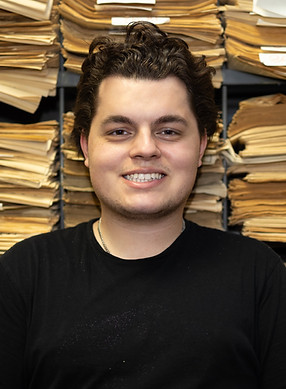

Sophia Khan
Sophia Khan is a recent graduate from the University of British Colombia Okanagan (UBCO) with a B.A in International Relations, concentrated in History and Political Science. Living and learning as an uninvited immigrant settler on unceded Syilx First Nations territory, she has explored the intersections of settler colonialism with human rights issues, while weaving historical matters with contemporary problems. Sophia has written and researched extensively on both Soviet and post-Soviet countries within political context and hopes to continue to integrate this interest during her internship at Genocide Watch. This year, she received the Peter and Claire Hanretty Prize in History at UBCO for her paper written on the Soviet invasion of Afghanistan and Islam. As an undergraduate, she continued to foster her interest in human rights and social justice by exploring avenues for advocacy, including becoming Vice President of the student-led non-profit Angels Without Boundaries, helping fundraise for children in underserved communities both locally and globally to make education more accessible. At Genocide Watch, she hopes to contribute research and communication skills by monitoring countries in the post-Soviet and Central Asian regions. In the future, she plans to pursue a Master’s that blends her interest in human rights advocacy, migration, and political patterns.
Leonardo Monopoli
Leonardo Monopoli is a graduate of King’s College London, where he completed a BA in War Studies and History with First Class Honours. His academic focus includes post-conflict peacekeeping, internationalism in the twentieth century, human rights and and conflict resolution. His dissertation examined the war in Bosnia and Herzegovina, analysing the shift from UN peacekeeping to peace-enforcement and the institutional limits of UN intervention.
In September 2025, he represented Human Rights Now at the 60th session of the UN Human Rights Council in Geneva. He delivered two oral statements on the situations in Gaza and Cambodia, drafted analytical reports on Council debates, tracked state policy positions, and engaged in advocacy coordination with other NGOs and civil society organisations. He also authored written submissions to the UN Human Rights Council and the UN General Assembly on the situation in Gaza.
He has additional experience in sustainability and ESG consulting at Ernst & Young and has held leadership roles in academic societies, including Vice-President of the King’s College London War Studies Society. Leonardo intends to pursue a masters in the field of human rights and conflict resolution.


Solaris Ahmetjan
Solaris Ahmetjan is an undergraduate student at American University studying International Studies (concentration in Justice, Ethics, & Human Rights) through an accelerated three-year program, with a Minor in Korean. They are Editor-in-Chief of The World Mind and a Division Chief of Global Public Health and Environment at The Pericles Institute, where they have written on the politics of genocide recognition. Under their university’s Mass Atrocity Research Initiative (MARI), Solaris conducted archival and comparative research for the project “In Remembrance and Responsibility: How Societies Confront Mass Atrocities Through Accountability, Conflict, and Memory,” examining how states acknowledge domestic and foreign perpetrators of violence through memorialisation practices. They presented their findings during Genocide Awareness Month, contributing to discussions on historical accountability and collective memory. This summer, they will continue their work with MARI on a project exploring unrecognised atrocities and the limitations of international law. Solaris is also conducting independent research on the influence of colonial-era legal systems on contemporary genocide adjudication before the International Court of Justice. Their paper, “Justice or Power? Colonial-Era Legal Systems and Their Influence on Genocide Adjudication in Modern International Law,” has been accepted for presentation at the 10th International Conference on Genocide, hosted by the International Network of Genocide Scholars. Their academic and professional interests include human rights and international law, with a particular focus on genocide studies, development, and transitional justice.
Interns
Alice Nenci, Early Warning Analyst
Alice holds a Master’s degree in International Security from the University of Groningen and a Bachelor's degree in Philosophy, International and Economic Studies from Ca’ Foscari University of Venice. Her academic focus includes human security, violent conflict, power imbalances, and resource governance.
For her undergraduate thesis, she analysed the Tigris-Euphrates water conflict involving Turkey, Syria and Iraq, highlighting how asymmetric control enables different parties to weaponize water. For her master's thesis, she investigated intrastate conflict in African countries, aiming to find the correlation between conflict intensity and human security levels. She developed an index for each category of human security as defined by the UNDP and analyzed them against fatality rates using a regression model.
During a prior internship in a Bulgarian think tank, she conducted empirical research and policy analysis on issues related to foreign information manipulation and interference (FIMI) and democratic resilience. Alice is motivated to contribute to work advancing human rights and peacebuilding.


Yasmine Halmane, Early Warning Analyst & Podcast Coordinator
Yasmine Halmane is a graduate of Yale University, where she earned a Bachelor of Arts in History and Modern Middle East Studies, as well as a Certificate of Advanced Language Study in Arabic. Her interest in genocide prevention began in high school, when she joined STAND: The Student-Led Movement to End Mass Atrocities and became a New Jersey State Lead. This shaped her studies at Yale, where she explored the historical roots of systems of oppression and their contemporary manifestations. Her senior thesis examined Morocco’s migration dynamics from colonial legacies to present-day integration, focusing on sub-Saharan African migrants, refugees, and asylum-seekers fleeing persecution.
Upon graduating, Yasmine joined UN Women’s Civil Society and Youth Division, helping amplify youth voices in multilateral decision-making. She then worked with the Syrian Negotiation Commission, engaging UN Member States and agencies to call for international action after over a decade of repression. Following the fall of the Assad regime, she took on a diplomatic engagement role with the Women’s International League for Peace and Freedom, liaising between the Syrian Women’s Political Movement and the international community to advocate for women’s political participation and protection amid Syria’s transition. Yasmine hopes to build on this experience at Genocide Watch, continuing to advocate for sustained international attention on overlooked crises.
Yasmine has experience in the legal field as a Paralegal Analyst at a civil litigation firm, conducting legal research and drafting pleadings across state, federal, and appellate courts. She aspires to become an international human rights lawyer dedicated to making legal systems more accessible and compassionate for victims of injustice.
Luna Aimeri, Early Warning Analyst
Luna Aimeri recently graduated cum laude with a M.A. in International Relations from Leiden University following a B.A. in Philosophy, International and Economic Studies from Ca' Foscari University of Venice.
For her master’s thesis, Mapping Otherwise: Decolonial Cartographies in Contemporary Art and Indigenous Practices, she explored how artistic practices can challenge dominant political narratives and create alternative ways of understanding the world. The research further developed her interest in cultural erasure and the ways communities reclaim their own narratives.
Her interest in atrocity prevention took shape through her first internship at the International Institute of Humanitarian Law in Sanremo and further developed through a summer school on Atrocity Crimes Prevention and Human Rights in Dubrovnik. Most recently, as a Policy Assistant intern at the Unrepresented Nations and Peoples Organization in The Hague, Luna conducted research and drafted advocacy materials on minority rights, self-determination, and transnational repression across communities including Uyghurs, Tibetans, Baloch, and Crimean Tatars.
As an intern for Genocide Watch, she will support the Genocide Watch Podcast, drawing on this background in atrocity prevention, minority rights advocacy, and narrative-driven research.

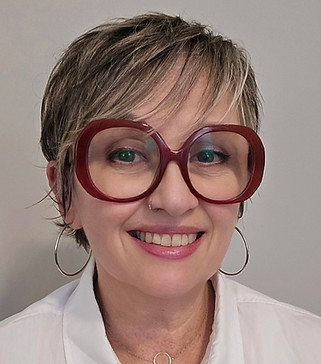
Natalie Kasper, Early Warning Analyst
Natalie Kasper holds a Master of Legal Studies in Human Rights from the University of Arizona James E. Rogers College of Law and a B.A. in
International Relations from Steven J. Green School of International and
Public Affairs at Florida International University. Her research interests focus on political violence, decolonizing space, space labor law, and non-exploitative governance frameworks for off-world resource rights.
As an intern for Genocide Watch, she supports the team's ongoing casework and analysis. Natalie returned to school after entrepreneurial endeavors in Information Technology and Copywriting, focusing on ways to highlight and protect human rights from rising threats. She is preparing to apply to Ph.D programs in Human Rights, Political Economies, and International Relations, with long-term goals of teaching and drafting policy.
Fitry Nabiilah Hamidah, Early Warning Analyst
Fitry Nabiilah Hamidah is an Indonesian legal professional and graduate of Leiden University’s Advanced LL.M. in Public International Law. Her academic and professional interests include public international law, international criminal law, international humanitarian law, and human rights. She has published “Improving Compliance towards International Humanitarian Law: Filling in the Gaps?”, which examines challenges to compliance with international humanitarian law. For her LL.M. thesis, Dissecting the Principles of Reparations in ICC Reparations Orders: The Incoherent Liability of Convicted Person, she examined the principles governing reparations ordered by the International Criminal Court and the liability of convicted persons to provide reparations to victims. She has gained practical experience through internships and volunteer work with the International Criminal Court (ICC), the International Bar Association Human Rights Institute, the International Bar Association ICC & ICL Programme, and LBH APIK Jakarta. At the ICC, she worked with the Defence Team for Mr. Al Hassan, conducting legal research and assisting with legal memoranda and submissions on issues including detainees’ rights, protective measures, evidence, and sentencing.
Alongside her work in international law, Fitry is developing her legal practice in Indonesia, particularly in litigation and corporate law. As an intern for Genocide Watch, she will contribute to research and legal advocacy on genocide prevention and mass atrocities. She hopes to build a career bridging Indonesian legal practice and international law.
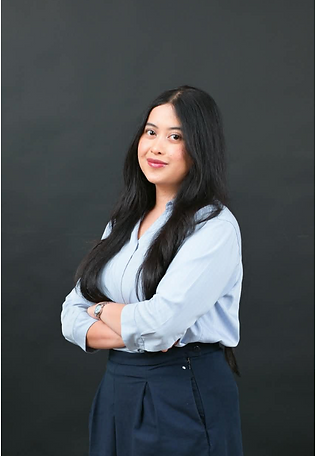

Keara Vyas, Early Warning Analyst
Keara Vyas holds a Master’s degree in Ethics, Peace, and Human Rights from American University’s School of International Service. Her research interests include conflict prevention and peacebuilding, migration, and the relationship between government policies and vulnerable populations. During her master’s program, Keara completed a capstone project exploring how “iron fist” policies in Latin America have shaped irregular immigration and U.S.-Latin American relations. She collaborated with a team to develop and deliver a policy briefing for the Latin American Working Group, connecting their research to broader questions of migration and U.S.-Latin American relations. Prior to attending American University, Keara graduated from the University of Maryland, Baltimore County with a Bachelor’s degree in Economics and International Relations. She has also gained professional experience in human rights research, legislative tracking, and program support through her work with organizations including the Global Peace Foundation and the National Immigration Forum. At Genocide Watch, Keara is interested in contributing to research and advocacy efforts focused on understanding and preventing mass atrocities.
Emma Op het Veld, Early Warning Analyst
Emma Op het Veld is a recent graduate from Leiden University with a B.A. in International Justice, as well as a LL.M. in Public International Law. While having broad interests and appreciation for interdisciplinary research, her specific interests center on human rights, the rule of law and conflict resolution. Her passion for human rights and international justice are reflected in her work at think tank GROW (Generation for Rights over the World), where she has worked both independently as well as in collaboration with others, towards producing different written outputs aimed at raising awareness and promoting the strengthening of human rights. This experience has provided her with a profound understanding of both the legal and policy framework on human rights in Europe. Additionally, her volunteer work with refugees in The Netherlands further demonstrates Emma’s commitments to the protection of those whose rights are more vulnerable and at risk of being violated.
Throughout her studies she has observed how the current world order often provides challenges for the enforcement of international law. It is therefore precisely Genocide Watch’s emphasis on accountability, cooperation and the promotion of rights-respecting societies, that aligns well with her goal of pursuing a human rights career that facilitates a strong rule-based order, fosters international peace and the enjoyment of human rights for all.
At Genocide Watch, Emma is eager to support its mission to strengthen preventive and punitive mechanisms that help combat the crime of genocide and contribute to international justice.


Elizabeth Stillwell, Early Warning Analyst
Elizabeth Stillwell is a current student at John Jay College of Criminal Justice receiving her masters in Human Rights. She also holds a masters in Library Science and currently works as a public librarian in South Carolina. Her research focus through both programs has been in Latin America, with emphasis on the so-called Dirty Wars in the region during the Cold War and into the 1990s, and the uses of public spaces as places of commemoration and community building post-conflict. She will use her research skills developed through library training to monitor Latin American countries for Genocide Watch. In the future, she hopes to move into legal research support positions to ensure that all victims of state violence have access to judicial remedy.
JOIN OUR TEAM
All of us at Genocide Watch currently work on a volunteer basis. In joining us, you will be joining a committed and passionate team of people who believe that genocide can be prevented.
Contact
Genocide Watch is a A 501(c)(3) nonprofit organization.
Tax exempt EIN: 26-1672589
"Genocide Watch" is a trademarked term. It may be used only with permission of Genocide Watch, Inc.
Connect


SiGN UP FOR UPDATES