Search Results
Search results for "south africa"
2846 results found for "south africa"
- Brazil: gunpoint search of African diplomats' children
prompting outrage – but also a weary recognition that such experiences are all too typical for Black youths “The officer guided my son much more gently because he is white, while the three Black youths had guns
- Genocide Watch Warning: Ethiopia
Ethnic divisions in Ethiopia date to the 1880s when the Abyssinian Empire invaded its southern neighbors, creating the boundaries of modern Ethiopia. European powers supported Emperor Menelik (1889 – 1913) with weapons, military advisors, and diplomatic recognition. Emperor Haile Selassie I (1916 – 1974) made Amharic the official language, though only 27 percent of Ethiopians are Amhara. Ethiopian Orthodox Christianity became the official religion. Eritrean Muslims fought for independence for decades. Eritrea finally seceded from Ethiopia in 1993, but war continued. Ogadeni Somali Muslims also seek secession. Oromos constitute one third of the population, but they held no political power until 2018. Since the sixth century, Beta Israel, a persecuted Jewish community, has lived in northern Ethiopia. Over 100,000 Ethiopian Jews emigrated to Israel from 1979 to 1999. Those who remain face discrimination. In 1974, the Derg, a Marxist-Leninist military junta, seized control of the country and systematically implemented genocidal killings of political rivals. The Derg abolished parliament, arrested Emperor Haile Selassie I, who died in custody, and suspended the constitution. The Derg was backed by the Soviet Union. The Derg’s “Red Terror” murdered over 500,000 Ethiopian citizens. In 2006 the Ethiopian Supreme Court convicted Derg leader, Mengistu Haile Mariam of genocide (in absentia) and sentenced him to death. Mengistu fled to Zimbabwe, then under Robert Mugabe, where he remains with impunity. The Derg was overthrown by the Ethiopian People's Revolutionary Democratic Front (EPRDF) in 1991. The EPRDF was dominated by ethnic Tigrayans. Under Prime Minister Meles Zenawi, the EPRDF committed genocide in 2003 against the Anuak people of Gambella province, and it committed crimes against humanity against the Somalis of the Ogaden. In 2018, an Oromo, Abiy Ahmed, became Prime Minister. He negotiated an end to hostilities with Eritrea and won the Nobel Peace Prize in 2019. He named a multi-ethnic cabinet, but all Tigrayans resigned. Ethiopia’s regions are divided on ethnic lines. Persecution of minorities is increasing. Regional governments recruit ethnic militias. Since 2018, ethnic violence has displaced one million people. University dormitories have become segregated by ethnicity. Most Tigrayans have left universities. Tigrayans claim that Amharas, Oromos, and other groups have destroyed Tigrayan businesses and homes. Prime Minister Ahmed fired many Tigrayan ex-officials on corruption charges, which Tigrayans see as ethnic persecution. Persecution by the Oromo Liberation Front has forced ethnic Gedeos to flee from West Guji. The Ethiopian diaspora funds ethnic divisions, though some leaders advocate unity. In 2019, Amnesty International released a report implicating the country’s security forces in extrajudicial killings of 39 people in Oromia. The report also accused security forces of standing by while 130 people were killed in ethnic clashes between Amhara and Qimant communities in the Amhara state. In early July 2020, security forces arrested several members of the Oromo opposition party and critics of Prime Minister Abiy after an estimated 239 people died in protests surrounding the murder of Hachalu Hundessa, a popular Oromo singer. Most of the victims belonged to the Amhara ethnic group. The government shut down the internet and the Oromo Media Network TV station for two weeks. Due to the COVID-19 pandemic, The Prime Minister’s term has been extended and elections postponed. Genocide Watch is issuing a Genocide Warning for Ethiopia due to the government’s inaction to stop ethnically motivated violence between Oromo, Amhara, Tigrayan and Gedeo peoples. Genocide Watch considers Ethiopia at Stage 6: Polarization according to our Ten Stages of Genocide. Download Alert
- Failing states make Africa terrorism epicentre, says UNDP
08 February 2023 By Antony Sguazzin In 2021 sub-Sahara Africa accounted for 48% of all deaths from violent extremism and 21% of attacks, the UNDP said in its 'Journey to Extremism in Africa' report released , ranging from the Sahel zone in the west to Somalia in the east and Mozambique in the south, has made In 2021 sub-Sahara Africa accounted for 48% of all deaths from violent extremism and 21% of attacks, the UNDP said in its Journey to Extremism in Africa report released on Tuesday.
- Namibia: Displaced Angolans Face Human Rights Abuses
Said Tigere Chagutah, Amnesty International’s Regional Director for East and Southern Africa. Tigere Chagutah, Amnesty International’s Regional Director for East and Southern Africa Between May 2024
- Genocide Emergency: The Banyamulenge of the DRC
The Banyamulenge are related to the Tutsi of Rwanda and Burundi and have lived in South Kivu, DRC since
- Sudan: Growing protests against insecurity in central Darfur
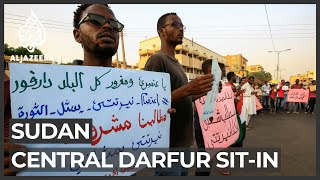
Villagers in Darfur are demanding Sudan's government does more to protect them from militia attacks. Thousands of protesters in Sudan have been staging a sit-in outside the administrative headquarters in the town of Nertiti, central Darfur, for more than a week. They accuse the government of failing to protect them from militia attacks. Sudan's police chief and his deputy were sacked on the weekend. SOURCE: Al Jazeera's Hiba Morgan reports from Khartoum, Sudan.
- Kiir in Riyadh for Saudi-African summit on Sudan peace
Kiir waves to First Vice President Riek Machar before departing to Addis Ababa, August 7, 2023 (PPU) South Sudan’s President Salva Kiir is in Riyadh, Saudi Arabia to participate in the Saudi and African leaders A South Sudanese official accompanying Kiir told Sudan Tribune Thursday that the event would address ways through which important messages are conveyed in the relations of the two countries”, said the South South Sudan’s Foreign Affairs minister, James Pitia Morgan said the event would be an opportunity for
- U.S. imposes sanctions on Sudan for chemical weapons use
that the RSF has committed genocide in Darfur through systematic killings and rapes of the ethnically African Darfur -- "naming and shaming" of perpetrators, a "tremendous global activism" and the prospect of African Perriello also voiced shock that regional power South Africa welcomed RSF leader Daglo on a visit and that there was not "much of an outcry from South African civil society." But he said African powers increasingly focused on domestic issues and "want to be seen as economic powerhouses
- DR Congo & UN Plan to fight violence in east
Female peacekeepers from South Africa on patrol in the Democratic Republic of the Congo. east The security and humanitarian situations in the eastern Congolese provinces of Ituri, North and South explosions were also recorded in the town of Beni, and intercommunal tensions are flaring in Ituri and South Mission’s drawdown, laid out in 2020, is progressively consolidating the UN’s footprint in North Kivu, South
- Central African Republic votes amid fears of unrest
Central African Republic held presidential and legislative elections Sunday amid fears of violence after (Antoine Rolland/Reuters STRINGER/REUTERS) BANGUI, Central African Republic -- Central African Republic “The vote is a right, a right for Central Africans. Special Representative for Central African Republic, Mankeur Ndiaye, said he considered the elections However, in other parts of Central African Republic, violence kept voters from the polls.
- Rebels attack central African Republic mining town
(Reuters) BANGUI, Central African Republic (AP) — Armed rebels on Sunday attacked a Chinese-run gold mining town and killed at least four people in Central African Republic, authorities said. Central African Republic has been in conflict since 2013, when predominantly Muslim rebels seized power Last year, nine Chinese nationals were killed at another gold mine in Central African Republic during
- Rebels in the Central African Republic are filling the void of an absent government
By Jack Losh March 26, 2018 KAGA-BANDORO, Central African Republic — On a dirt track beneath a and sectarian violence have divided this dusty cattle-trading town and roiled the rest of the Central African These are central Africa’s ministates — overlapping and unrecognized fiefdoms in a Texas-size country With the country surrounded by Islamist insurgencies and other conflicts in Chad, South Sudan and Congo The lucrative trade in bush meat — a vital source of subsistence protein in central Africa — is another