

Doubts over Transfer of Bosnian War Crimes Cases to Serbia

By Emina Dizdarevic Tahmiscija
October 22, 2026
While a court in Bosnia and Herzegovina has sentenced 13 people to a combined total of more than 180 years in prison for the killing of Bosniak civilians in two villages during the 1992-95 war, the acquittal of two others by a court in Belgrade has raised further doubts about the merit of transferring war crimes cases from Sarajevo to Belgrade.
It was by sheer chance that Bekir Alic survived when his father, brother, uncle and cousins were killed in a Bosnian Serb attack on the villages of Alici and Ekici in northwestern Bosnia and Herzegovina on June 22, 1992.
A total of 24 people died in the attack near the town of Bosanski Novi.
“They were all our neighbours, our relatives, some closer, some distant,” said Alic. “Someone with whom you were born, lived your whole life, you are tied to those people. And unfortunately, the killers were our neighbours too, people we had gone to primary school with, secondary school, with whom we worked, went to the same bus station.”
In 2024, the Bosnian state court jailed 10 Bosnian Serb soldiers for a total of 162 years for crimes committed in the Bosanski Novi area; previously, in 2016, three others were sentenced to a total of 19 years in prison, having admitted the murders, forced displacement and torture of Bosniaks in the municipality.
Bosnia charged two other men - Zeljko Novakovic and Milenko Karlica - in 2019 and 2016 respectively in connection with the Ekici and Alici killings. The cases against them, however, were handed over to Serbia in early 2022, based on a 2013 protocol on cooperation in the prosecution of individuals charged with war crimes. The intention of the protocol was to prevent individuals with dual citizenship from evading justice.
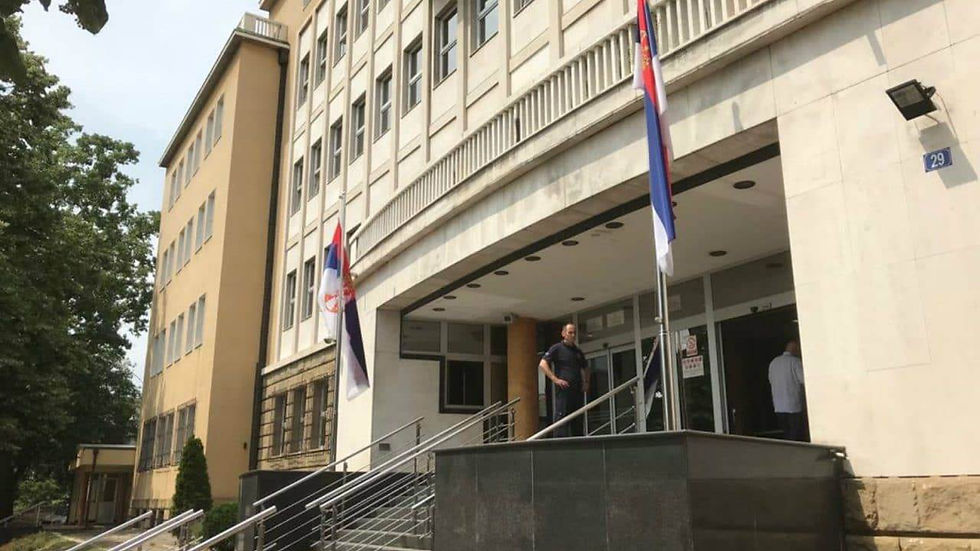
In Belgrade, however, both men were subsequently acquitted.
Marijana Cestic Jelovac, a legal analyst at the Belgrade-based Humanitarian Law Centre, an NGO, cited a host of shortcomings in the way the case was handled in Belgrade. The damage done is often significant.
“For the families of those killed and the survivors, such an outcome can deepen sense of injustice, particularly given that crimes against civilians have already been the subject of proceedings before the Court of Bosnia and Herzegovina, where the responsibility of the accused was established, while other defendants in Serbia have been acquitted in connection with the same events,” she said.
“The consequence is not merely dissatisfaction with the verdict, but a further erosion of victims’ trust in the judicial system.”
Serbian prosecutors ‘going through the motions’
Novakovic was acquitted in May this year but Karlica’s case was returned for a retrial on certain charges; in August, the Belgrade Court of Appeal upheld Novakovic’s acquittal, and this month, the Humanitarian Law Centre said Karlica was also found not guilty.
Alic said he was “disappointed” with the court proceedings in Belgrade, in which he said he testified.
“I wouldn’t say you get used to it, but as time passes and you follow these proceedings, you come to see that certain people are simply going through the motions,” he said.
Murat Tahirovic, president of the Association of Victims and Witnesses of Genocide in Bosnia, said the verdict fitted a pattern evident in Serbia. He cited the case of eight Bosnian Serb former police officers charged over the execution of more than 1,300 Bosniak civilians at a warehouse in the village of Kravica near Srebrenica in July 1995.
“There is a trial that is still ongoing, which has not been completed, and which started in 2015, involving eight police officers from Kravica,” said Tahirovic.
“That case has been dragging on for 11 years. There is always some reason to postpone it. However, the question is what to do, how to make it serious, so to speak.”
“Any case transferred there will not get its necessary epilogue. If there is a conviction, the sentences will be minimal or there will be acquittals.”
According to Cestic Jelovac, the indictment brought against Novakovic and Karlica by war crimes prosecutors in Serbia did not cover the same factual and legal framework as the indictment transferred from Bosnia, given that the prosecution in Serbia refuses to bring charges of crimes against humanity.
Cestic Jelovac said the prosecution failed to submit new evidence. The judge’s verdict was also “problematic”, she said, “as the court did not assess the presented evidence in an appropriate manner”.
“In the explanation, the judge states that women and children were transported by tractor to the settlement of Urije in order to be sheltered and protected, which is unacceptable because the court did not look at the broader context of the attack on Alici and Ekici and the forced relocation of the Bosniak population.”
“Even with the qualification of a war crime against the civilian population, nothing prevents the court from looking at the role of the accused through the broader context of the event, the way civilians were treated before the event covered by the indictment, and the connection of individual actions. Exactly what the High Court in Belgrade failed to do in the proceedings against Milenko Karlica.”
Calls for closer cooperation
Cestic Jelovac argued that cooperation should not be limited simply to the handover of cases in which the authorities in one country cannot lay their hands on the suspects.
Instead, Bosnia and Serbia should conduct joint investigations, she said. This would help build public trust in the judicial system of each country, and may help avoid instances, for example, of witnesses not meeting the prosecution until they actually take the stand or proceedings beginning without the families of the victims being informed.
The Serbian prosecution’s refusal to bring charges of crimes against humanity is particularly problematic.
“The insufficient use of evidence from cases transferred from Bosnia and Herzegovina in proceedings before Serbian courts is particularly present in cases where the legal qualification is changed due to the failure to file an indictment for crimes against humanity, as is the case in the proceedings against Milenko Karlica,” said Cestic Jelovac.
“Another problem is insufficient communication between judicial authorities and witnesses, which can result in available evidence not being used adequately.”
According to BIRN’s database of judicially established facts, on 22 June 1992, 24 Bosniak civilians from Alici and Ekici were killed by Bosnian Serb forces at the local cemetery in Alici.
Residents were driven from their homes and taken to a house, where the men, who were beaten, were separated from the women and children and taken to the cemetery. The women and children were transported by tractor to the settlement of Urije and robbed.
The bodies of some of the victims were exhumed after the war, but others – such as Alic’s father and brother – have never been found.
“We must fight for the truth and for justice,” said Alic. “It is our duty to those who were killed and to our children, who need to know what happened and who did what. Not so they can seek revenge, but so they can know.”


