Myanmar Genocide Emergency 2026


Rohingya refugees gather in Kutupalong camp to mark the 2nd anniversary of the start of the Myanmar military’s 2017 genocide, Cox’s Bazar, Bangladesh, August 25, 2019. © 2019 Rafiqur Rahman/Reuters
Genocide Emergency: Myanmar
January 2026
By Jeanne Macé
On September 30, 2025, a “High-Level Conference on the Situation of Rohingya Muslims and Other Minorities in Myanmar” was held on the sidelines of the United Nations (UN) General Assembly. Genocide Watch urged UN members to take strong measures to sanction Myanmar for its systematic persecution of its Rohingya population.
Since Myanmar's independence from the U.K. in 1948, the Rohingya Muslim minority has faced systematic persecution in Rakhine State. It has included the 2012 attacks by the Buddhist Rakhine majority and Myanmar security forces, and the 2016-2017 genocidal military operation carried out by the Myanmar army, the Tatmadaw.
In 2026, Rohingya civilians in Rakhine State are still being systematically attacked, displaced, and killed by both the Arakan Army (an ethnic Rakhine armed militia) and the Myanmar junta forces (Tatmadaw), which have been fighting each other since 2018 for control of Rakhine State. The Arakan Army terrorizes the Rohingya population, which it accuses of collaborating with the Tatmadaw and the Arakan Rohingya Salvation Army.
The Arakan Army commits crimes against humanity of extreme brutality against the Rohingya, including beheadings, detentions, “disappearances”, forced labor, forced conscription, looting, burning, and pillage. On August 5, 2024, a drone and mortar attack by the Arakan Army killed 200 Rohingya fleeing fighting in Maungdaw, near the Bangladesh border. 2024 saw the most atrocities against Rohingya since the genocide of 2016-2017.
Staying in Myanmar and Living under Apartheid
Approximately 630,000 Rohingya still live in Myanmar under a system of state-sponsored discrimination and ethnic segregation imposed by laws, policies, and practices aimed at isolating the Rohingya community. Myanmar has denied Rohingya citizenship since the 1982 Citizenship Law, which reserves this right to citizenship to ‘national races’ that the law lists as settled in Myanmar before 1823.
The list pointedly excludes Rohingya. Myanmar claims Rohingya immigrated from what is now Bangladesh since 1832, despite conclusive evidence that they lived in Rakhine State over a century before 1832. During the 2014 census, Myanmar required Rohingyas to self-identify as “Bengali” immigrants, thereby emphasizing their foreignness and providing a ground for deportation. In the long-promised sham elections of January 2026, designed to ensure the junta's continued grip on power, Rohingyas were again barred from voting.
Myanmar subjects Rohingyas to extreme restrictions on movement. In the open-air detention camps in Sitwe, where 150,000 are confined, military and police checkpoints have been set up, and entry and exit authorizations are required. This blatant deprivation of liberty severely hampers Rohingyas access to food, work, and healthcare.
These discriminatory laws and practices, combined with widespread violations of the Rohingya’s economic and social rights and their systematic social and political exclusion, have led Amnesty International and other organizations including Genocide Watch to denounce Myanmar’s systematic crime of apartheid.
Leaving Myanmar and Fearing Repatriation
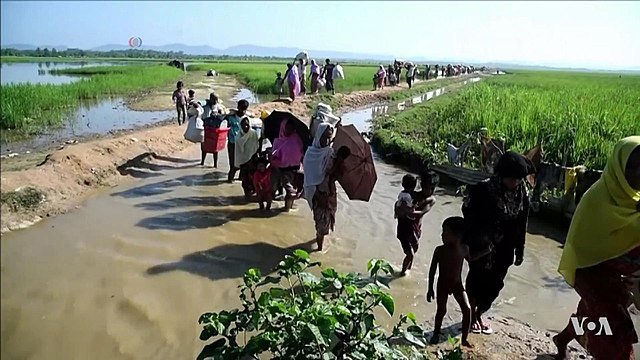
Most of the 1.1 million Rohingya who have fled Myanmar since 2017 have sought safety and shelter in Bangladesh. In the past 18 months, the border town of Cox’s Bazar has taken in 150,000 more Rohingya in already overcrowded refugee camps, which face shortages of water, food, healthcare, and shelter. US cuts in aid have already exacerbated their plight. Rohingya refugees are subjected to restrictions imposed by Bangladesh on their livelihoods, movement, and education.
Bangladesh has never ratified international refugee conventions. Bangladeshi authorities refuse asylum to Rohingya refugees and will not allow them to become citizens of Bangladesh. It is official policy to organize their repatriation to Myanmar. But few Rohingyas want to return for fear of further persecution in Myanmar. A symbolic repatriation of 1,100 refugees to Myanmar’s Rakhine State took place in May 2023. Rohingya activists say this operation was only meant to appease the International Court of Justice's investigation into Myanmar’s genocide.
In May 2025, India detained and deported at least 40 Rohingya refugees living in Delhi, most of whom held identification documents issued by the UN Refugee Agency. Indian authorities forced them onto an Indian naval ship before abandoning them in international waters in the Andaman Sea, near Myanmar. The refugees, including children and elderly people, were only given life jackets with no choice but to attempt to swim to an island in Myanmar territory. Many drowned. Such violations of the principle of non-refoulement must cease.
Starvation is the New Weapon of Genocide
Since November 2023, the Myanmar junta has imposed a blockade on almost all humanitarian aid in the areas it still controls in Rakhine State. The Arakan Army further restricts Rohingya livelihoods in areas they control. This deliberate policy threatens more than 2 million people with starvation in Rakhine State. Over 500,000 belong to the remaining Rohingya community. The destruction of agricultural equipment and the contamination of land with landmines and unexploded ordnance are resulting in rising famine.
The survival of Rohingya people confined to Myanmar internment camps depends on international humanitarian aid. Myanmar authorities refuse to allow the distribution of food and medicine to Myanmar. More than 25,000 people in Pauktaw Township are deprived of food, leading to deaths from starvation.
Denial of humanitarian access is one of the official elements of the Tatmadaw's 'Four Cuts' military strategy. This tactic consists of deliberately targeting unarmed civilians in order to prevent and deter them from supporting or joining the resistance. When starvation deliberately targets a specific ethnic and religious group, as is the case for the Rohingya community, it is an act of genocide.
Due to Myanmar’s apartheid system maintained by the ruling military junta, through the denial of Rohingya citizenship and deprivation of their freedom of movement, Myanmar is at Stage 3: Discrimination. Due to Myanmar’s deliberate obstruction of humanitarian aid intended for the Rohingya community, Myanmar is committing the crime of Stage 8: Persecution. Due to the systematic killing of Rohingya people, Genocide Watch considers Myanmar to be at Stage 9: Extermination. Myanmar is committing Genocide against the Rohingya ethnic and religious group.
Genocide Watch recommends that:
● Nations with universal jurisdiction should prosecute the Myanmar generals primarily responsible for past and present genocide against the Rohingya and other ethnic groups.
● The International Criminal Court (ICC) should ask all ICC States-Parties and the UN Security Council to enforce the ICC’s arrest warrants against General Min Aung Hlaing for his crimes against humanity of deportation and persecution, and the crime of genocide against the Rohingya people.
● Myanmar's neighboring countries should take effective measures to ensure the safe passage and protection of Rohingya refugees fleeing persecution and genocide in Myanmar.
● Bangladesh must ratify the international conventions on refugees.
● Bangladesh authorities must stop pressuring Rohingya to return to Myanmar.
● Bangladesh should allow the Rohingya living in camps near Cox’s Bazar and elsewhere full access to education, freedom of movement, and self-support through work.
● Donor nations should devote more resources to helping Rohingya refugees in Bangladesh.