

Observation of Hazara Persecution in Afghanistan
Flora Tu
October 2026
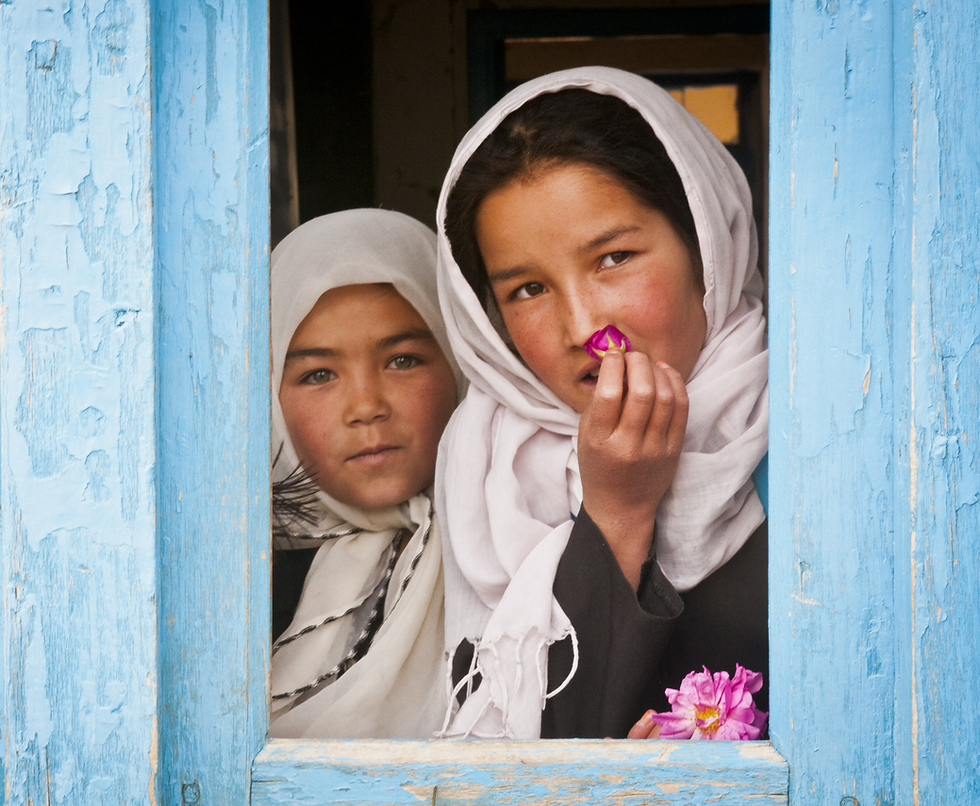
Source: Sgt. Ken Scar (U.S. Armed Forces). Public Domain.
Historical Background
Located in central Afghanistan, the Hazara are an ethno-religious minority as Shia Muslims in a state with a majority Sunni Muslim population, identifiable by their Hazaragi dialect of Dari. Population estimates vary greatly; studies in the late 1990s indicated a 19% constitution of the Afghan population, later officially lowered to 9%.
Since Amir Abdur Rahman Khan's rule (1880–1901), especially during the Hazara War (1891–1893), the Hazara have been subject to state-sponsored massacres, enslavement, forced relocation, and land confiscation, primarily on the basis of their Shia faith. Over 50% of the Hazara population was killed or displaced, and non-Hazara loyalists were given the stolen lands. Subsequently, Hazara communities were politically excluded through the lack of education, land ownership protections, and governmental representation.
More recently, during Afghanistan’s 1998 civil war, Hazara-dominated forces opposed the Taliban before the latter captured the northern city of Mazar-e Sharif. Following the takeover, Taliban fighters embarked on a revenge campaign that killed between 2,000 and 8,000, most victims being Hazara civilians. Witnesses reported that Taliban commanders referred to Hazaras as “infidels” and declared that they should either convert, leave Afghanistan, or die. This massacre included widespread rape, looting, and transportation of victims to detention centres in which most of the detainees asphyxiated or died of heat stroke in the container trucks.
Legality
The United Nations defines genocide in Article II of the Convention on the Prevention and Punishment of the Crime of Genocide as acts committed with “intent to destroy, in whole or in part, a national, ethnical, racial, or religious group, including [...] (b) causing serious bodily or mental harm to members of the group; (c) deliberately inflicting on the group conditions of life calculated to bring about its physical destruction in whole or in part.”
The Hazara constitute an ethnic community by Afghan authorities and are defined by their Shia faith. Under Article II, this assessment finds reasonable grounds to believe that recent and ongoing attacks against the Hazara should signal action and cautious monitoring.
Contemporary Perpetrators and Violence
Two decades after the US-sponsored creation of the Islamic Republic of Afghanistan, the Taliban returned to power in August 2021.
In July 2025, Taliban authorities in Rashak village, Bamiyan province, enforced a land dispute ruling in favor of nomadic Kuchi claimants (historically ethnic Pashtun), resulting in the forced eviction of around 25 Hazara families (about 200 people). They were physically expelled by the Taliban and Kuchis. Their homes were sealed, and were pushed to the margins of the village, forced into temporary shelters. Local Hazara residents reported blocked access to their own housing, and pressure to either leave permanently or rent land back from the Kuchis, striking a resemblance to being cut off from essential resources and subject to conditions of life, but not yet calculated to bring about [the group’s] physical destruction.
Beyond dispossession, Hazara civilians have endured extrajudicial killings, torture, and disappearances, constituting serious bodily harm to the group.
In July 2021, before the fall of Kabul, Taliban forces killed at least nine Hazara men in Mundarakht village in Malistan district, Ghazni province. Witnesses report that the Taliban rounded up the men, tortured and executed them.
In August 2021, a Taliban mission in Kahor village, Daykundi province shot a former Afghan security personnel, while unnecessarily yet additionally executing 13 Hazara civilians, including a 17-year-old girl attempting to flee.
In June 2022, the Taliban conducted a night raid in Ghor province targeting a Hazara family, detaining, torturing, and subsequently executing several men, a woman, and a 12-year-old girl. The victims were documented to be mere civilians from a Hazara family.
The Islamic State – Khorasan Province also killed or injured over 700 Hazara civilians in 13 confirmed and 3 suspected attacks, many targeting women. Hazara women found themselves erased from public life and left without protection against state abuses and extremist violence. Notably, on 30 September 2022, a suicide bombing occurred in the Kaaj Educational Center in Kabul’s predominantly Hazara Dasht-e-Barchi district, in a gender-segregated classroom. 53 people were killed, most of whom were young women. The center was offering one of the few remaining opportunities for girls and young women to continue their education, especially after public secondary schools were closed to girls following the Taliban’s return to power.
State Responsibility and Accountability
Under Article I of the Genocide Convention, states bear responsibility for preventing and punishing genocide. Although the Taliban lack international recognition as Afghanistan’s legitimate government, as de facto authorities they may incur state responsibility for genocidal acts committed under their control or for failing to prevent them.
Conclusion
This body of evidence supports a finding that the current persecutions of fundamental rights are being directed at Hazaras on the basis of their ethnic identity. At this stage, it can be characterized it as ethnic persecution, not yet genocide. It is unclear whether there is a fully articulated plan to physically annihilate the entire group. Yet, recent events resemble a rise in systemic discrimination, dispossession, and terrorization of Hazaras, driven by long-standing prejudice and power politics. Caution must be taken in next steps to prevent an escalation into genocide.


