

Qatar Country Report: July 2026

By Genocide Watch
July 29, 2026
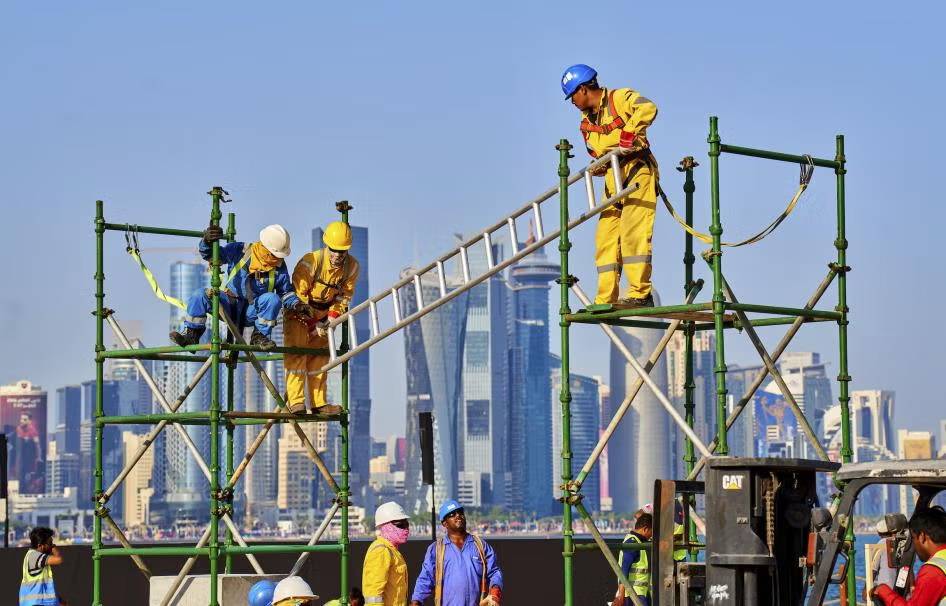
Since Qatar’s establishment in 1971, the country has faced international condemnation for ongoing human rights abuses. Global demands for reform have focused on Qatar’s exploitative treatment of migrant workers through the kafala labor system, restrictions on public expression, threats of arbitrary arrest, and insufficient protection of women’s rights.
Qatar’s hosting of the 2022 FIFA World Cup drew increased international attention to abuses of its workforce, including more than 6,500 worker deaths tied to World Cup construction and broader patterns of exploitative labor. Under the kafala system, employers hold excessive power over employee travel, transfer, and contract length. Workers who fail to adhere can face imprisonment, deportation, or statelessness, with few avenues for recourse. A United Nations (U.N.) report holds that the kafala system institutionalizes racial discrimination by conditioning human rights on nationality and origin.
Although Qatar introduced labor reforms in 2021, weak enforcement after the 2022 FIFA World Cup has left thousands of workers awaiting compensation for injuries and unpaid wages. International organizations continue to demand that Qatar and FIFA investigate worker deaths, which officials have erroneously attributed to natural causes, and publish their findings. The 2021 reforms also ban work in extreme heat, but weak enforcement and the high 32.1°C (89.8°F) threshold inadequately protect workers.
Qatari residents face severe restrictions on public expression and assembly. Authorities criminalize speech perceived as biased, inflammatory, or disrespectful to “social values” through blanket threats against expression and dissent. Violations can incur fines and up to five years in prison. Authorities previously detained global journalists for over 36 hours after they investigated labor conditions.
Minority faith groups face systemic discrimination and restrictions on religious practices. Qatari authorities have subjected the Baha’i community to over 14 cases of deportation and blacklisting based on religious identity. In 2025, the U.N. raised concern over the arrest of Remy Rowhani, chair of the National Spiritual Assembly of the Baha’i in Qatar, as part of a larger pattern of discrimination against Baha’is.
Global organizations have also documented restrictions on Qatari women’s rights. Under Qatar’s family law, women need male guardian approval to travel, marry, work in certain jobs, and access some healthcare. While a woman can request divorce, she must present evidence to a judge for approval. Although Qatari law prohibits a husband from harming his wife, survivors of domestic abuse carry the burden of proof and receive inadequate assistance. Several women with full child custody also report that male guardians have terminated their child’s medical treatment without any clear path to redress.
Because Qatar’s exploitation, restrictions on free speech, and discriminatory policies against religious minorities and women, Genocide Watch places Qatar at Stage 3: Discrimination.
Genocide Watch recommends:
The U.N. Special Rapporteur on Migrants must investigate the status of all migrant workers.
Qatar should establish and enforce the 2021 labor reforms.
Qatar must abolish the kafala system and legislate a just labor framework in replacement.
The U.N. should assist Qatar in enhancing protections for minority communities and women.


