The Case Against Rwanda at the ICJ

Special Report, October 2026
By Grace Harris and Erik Heyman

The Democratic Republic of Congo (DRC) and Rwanda have experienced decades of conflict stemming from unresolved tensions from the 1994 Genocide against the Tutsi and the subsequent Congo Wars. The DRC has now brought forth a case against Rwanda in the International Court of Justice (ICJ) for the crime of genocide and violations of other international treaties. The full application, published on June 26, 2026, delves into a timeline of rights violations by Rwanda-backed armed groups since 1996, including a history of attacks on civilians, brutal massacres, displacement, sexual and gender-based violence, and other atrocities committed by Rwanda-backed armed groups.
The case is primarily based on four treaties: the Convention on the Prevention and Punishment of the Crime of Genocide, the International Convention on the Elimination of All Forms of Racial Discrimination, the Convention on the Elimination of All Forms of Discrimination against Women, and the Convention against Torture and Other Cruel, Inhuman or Degrading Treatment or Punishment.
In its filing at the ICJ, the DRC accuses Rwanda of “abuses committed as part of a campaign of genocide and serious, widespread human rights violations waged by the Rwandan authorities” across much of the eastern part of the DRC. The DRC accuses Rwanda of targeting the Hutu and other regional ethnic groups, including the Nyindu, Bembe, Nande, Lega, Hunde, and Bashi. other regional ethnic groups, including the Nyindu, Bembe, Nande, Lega, Hunde, and Bashi.
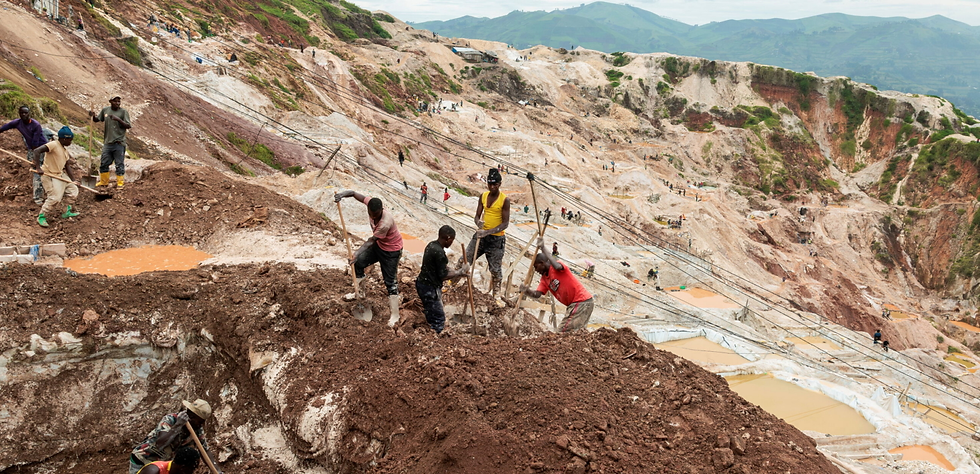
Rwanda’s role in the violence is its reported support for the M23 rebel group, which has violently captured land in eastern DRC in recent years. Rwanda denies the accusations; meanwhile, a 2022 report by United Nations Security Council experts found the opposite. That report concluded that M23 and Rwandan armed forces jointly attacked a DRC army base in Rumangabo, after Rwandan forces crossed the border, exemplifying a direct link between the two. This connection is rooted in the legacy of the 1994 Genocide against the Tutsi in Rwanda, as M23 formed in 2012 around the mission of defending Congolese Tutsis in the region. However, this ideological foundation doesn’t negate the financial motivations behind minerals trafficking, abuses at artisanal mines, abuses against miners, and cases of systematic sexual violence including against children.
An order released by the president of the ICJ on August 4 sets October 4, 2027, as the date of the DRC’s Memorial and December 4, 2028, for Rwanda’s case and its response. At minimum, it will take three or four years to arrive at a decision.
So far, Rwanda has yet to publicly release a statement on this case. However, Rwandan President Paul Kagame recently criticized the DRC for arming, funding, and hosting the Democratic Forces for the Liberation of Rwanda (FDLR), a Rwandan Hutu armed group. Implicitly, this accusation frames the devastation and genocide in the eastern DRC as a security issue rather than a clear instance of Stage 8: Persecution and Stage 9: Extermination. This accusation serves to shift the blame from Rwanda to the DRC, bolstering a legal defense at the ICJ through an attempt at denial.
While this lawsuit is only in the early stages, and it may take years for a ruling to be made, conditions today differ considerably from those that prevented earlier legal action. In 2002, a similar case was brought before the ICJ. Previously, in 1999, the DRC also filed a case against Uganda, Rwanda, and Burundi. The Uganda case resulted in a favorable ruling that ordered $325 million in damages to be paid for territorial invasion and acts of armed aggression. However, Rwanda and Burundi refused to consent to the court’s jurisdiction. Comparing these three cases provides greater insight into the complexities of the application of international law to the crime of genocide. Due to a reservation made by Rwanda when it signed the Genocide Convention, the ICJ lacked legal jurisdiction for this treaty in Rwanda. Under the practice of international law, reservations allow states to exempt themselves from specific elements of treaties when signing. For this reason, neither the 1999 nor the 2002 case was able to proceed, since Rwanda did not give its consent to be put on trial by the ICJ. However, in 2008, Rwanda became a party to the Convention Against Torture and withdrew its reservation to the Genocide Convention. Thus, the limitation facing earlier legal prosecution no longer applies at the present moment.
This lawsuit has significant implications for the future of peace and stability across the Great Lakes region as a whole. After 40 years of conflict, peace remains elusive. Prolonged instability only serves to widen ethnic divisions and maintain unstable conditions for the region’s most vulnerable communities: women, children, ethnic minorities, and informal laborers. With weak domestic systems, international support is critical.
Because of the scope and scale of civilian massacres, particularly the persecution of ethnic minorities such as Nyindu, Bembe, Nande, Lega, Hunde, and Bashi communities, and Rwanda’s denial of accountability, Genocide Watch considers the Democratic Republic of the Congo to be at Stage 8: Persecution, Stage 9: Extermination, and Stage 10: Denial.
Genocide Watch recommends:
The ICJ should hold a fair trial and determine accountability for Rwanda.
All parties must respect and comply with the ICJ ruling.
The government of Rwanda must stop funding M23 and withdraw its own forces.
The government of the DRC must protect at-risk civilian populations.