top of page

Towering landfill collapse kills 30 in Guinea’s capital

By AFP, AP and Reuters


Residents and rescuers use an excavator to search for bodies after the landfill collapse in Conakry. File Photo: AFP.

At least 30 people have been killed after a towering heap of rubbish collapsed at the largest landfill in Guinea’s capital, Conakry, following heavy overnight rains, authorities said.


The landslide struck shortly after 2am (02:00 GMT) on Sunday at the Dar es Salam open-air dump, sending a mountain of waste crashing onto nearby shacks.


Rescue workers dug through debris to reach survivors as six critically injured people were taken to hospital and several homes were reported destroyed.


The main dumping ground for the city of two million people had been scheduled for closure on Sunday, officials said.


Residents had received eviction notices, but many families were still in the area when the collapse happened. “We will ensure that the remaining families are relocated elsewhere,” said Territorial Administration Minister Dienabou Toure who was at the scene.


Despite vast mineral wealth, including the world’s largest bauxite reserves, Guinea remains one of West Africa’s poorest countries, with nearly half the population living below the national poverty line.


Waiting for news after at least 30 people were killed when a mountain of rubbish collapsed at a landfill in Conakry, the capital of Guinea. The landslide happened after heavy overnight rain. File Photo: Souleymane Camara/Reuters.
Heavy overnight rain saturated the unstable dumpsite, triggering the deadly landslide around 2am (02:00 GMT) while most residents were asleep. File Photo: Souleymane Camara/Reuters.
Makeshift homes of wood, tarpaulins and metal sheets were crushed and buried under tonnes of rubbish and mud. File Photo: AFP.
Rescue workers scrambled through the debris at first light, using excavators, shovels and their bare hands to pull bodies and survivors from beneath the collapsed rubbish mountain. File Photo: AFP.
Survivors described scenes of panic in Conakry’s crowded neighbourhoods, with families screaming for missing relatives as the stench of waste and earth filled the air. File Photo: Souleymane Camara/Reuters.

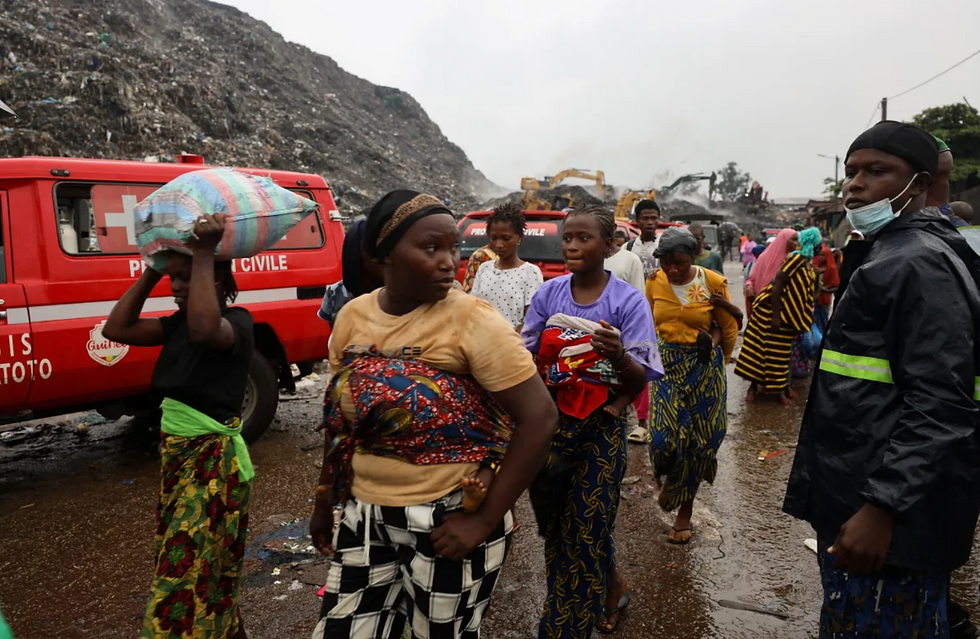
Residents living near the landfill in Dar es Salam in Conakry leave their homes after the landslide triggered by heavy overnight rain. File Photo: Souleymane Camara/Reuters.
The landslide happened less than a week after authorities declared the dump unsafe and announced plans to close it and move the waste mountain outside the capital. File Photo: AFP.

Guinea’s poor infrastructure and rapid urban growth have pushed vulnerable families to settle beside the landfill, despite years of warnings about the risk of landslides and floods. File Photo: Souleymane Camara/Reuters.


Follow Genocide Watch for more updates:

  • Grey Facebook Icon
  • Grey Twitter Icon
  • Grey YouTube Icon
bottom of page