Search Results
Search this site
6561 results found with an empty search
- Growing concerns over Rohingya repatriation deal
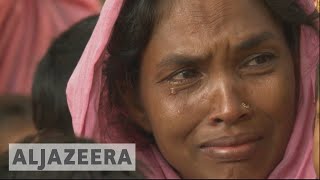
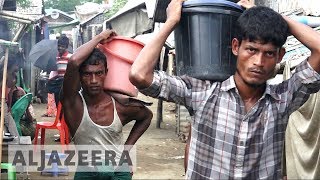
A plan to repatriate Rohingya refugees to Myanmaris due to begin on Tuesday. The repatriation plan involves the returnees being housed in more camps until their destroyed homes are rebuilt. But there's little or no mention of citizenship, security or justice for hundreds of thousands of majority-Muslim Rohingya who say their lives have been destroyed. The UN and the refugees are worried about their safety if they return. Al Jazeera's Charles Stratford reports from Kutupalong refugee camp, Bangladesh. http://www.aljazeera.com/news/2018/01/growing-concerns-rohingya-repatriation-deal-180121075402985.html (c) 2018 Al Jazeera
- Look ahead 2018: Rohingya flee Myanmar crackdown
For the latest report in our series on what we think will be some of the biggest stories of the year, we're in a refugee camp in Bangladesh. It's now home to hundreds of thousands of Rohingya who've fled violence in Myanmar since August. The UN has accused Myanmar's government of "textbook ethnic cleansing", which it denies. Al Jazeera's Charles Stratford reports on what the refugees face in the year ahead. http://www.aljazeera.com/news/2018/01/2018-rohingya-flee-myanmar-crackdown-180106095341087.html (c) 2018 Al Jazeera
- Bangladesh, Myanmar set to implement Rohingya repatriation deal
The repatriation agreement is based on a similar initiative by Bangladesh and Myanmar after a previous crackdown on the Rohingya in 1992. It involves the Myanmar government verifying the identity of refugees who want to return. But thousands of Rohingya have never had sufficient identification documents proving their residency in Myanmar. Aid agencies and the UN have called the agreement a farce. http://www.aljazeera.com/news/2018/01/bangladesh-myanmar-set-implement-rohingya-repatriation-deal-180107110002990.html (c) 2018 Al Jazeera's
- UN official: Too early for Rohingya return
Humanitarian conditions in camps hosting Rohingya refugees in Bangladesh are set to worsen in the next few months, a human rights investigator has told Al Jazeera, while also raising concerns about a plan to repatriate the fleeing minority back to Myanmar. In an interview from Balukhali refugee camp in Cox's Bazar, Yanghee Lee, a UN special rapporteur who was banned from visiting Myanmar, said that with Bangladesh's monsoon season approaching, the crammed camps "will be witnessing landslides and we may see a huge number of casualties". Lee also warned of the possibility of an "outbreak of diseases" that would spread due to heavy rainfall, which may become "impossible to contain from spreading elsewhere". The UN envoy was to visit Myanmar in January to assess the state of human rights across the country, including in Rakhine state, where a brutal military crackdown has sent more than 650,000 minority Rohingya fleeing into neighbouring Bangladesh. People fleeing the violence have told of a systematic campaign of mass killings, rape and arson. The UN has described the situation as "a textbook example of ethnic cleansing". Lee took up the rights monitoring role in 2014, and is required to visit Myanmar two times a year in order to report to the Human Rights Council and the UN General Assembly. She was banned last month from conducting her investigation. In the interview with Al Jazeera, Lee urged the international community to aid in dispersing the overcrowded camps in Bangladesh. "The concentration of people ... it's just not human". As part of the repatriation deal signed by the two Asian neighbours in November last year, Bangladesh and Myanmar officials agreed last week on plans to facilitate the return, over the next two years, of those displaced. Some 1,550 refugees will be sent back each week, which will add up to approximately 156,000 over a period of two years. But Lee said the situation in Myanmar is not conducive for refugees to return. "First of all, where would they go back to? They've lost their livelihood, they've lost their crops, they've lost their fields," she told Al Jazeera. "All the rice now is reportedly being sold elsewhere to other countries. They've lost their homes, so the rebuilding process is going to be huge, and the people should not be subjected to living in another camp-like situation." She also urged that the return of any refugees to their homes be entirely voluntary, stressing there needs to be "informed consent ... so they will know exactly what they are going back to". The current Rohingya crisis started in August, when Myanmar's army launched a bloody crackdown in response to attacks on border posts by the armed group, the Arakan Rohingya Salvation Army. The mainly Muslim minority, living primarily in Rakhine State, is not recognised as an ethnic group in Myanmar, despite having lived there for generations. They have been denied citizenship and are rendered stateless. http://www.aljazeera.com/news/2018/01/official-rohingya-camps-risk-deterioration-180121135652904.html (c) 2018 Al Jazeera
- How Crimean Tatars Defy Moscow's Pressure
Bakhchisaray, Ukraine - Mumine Saliyeva cannot forget how masked, gun-toting pro-Russian security officers pounded on her door last October. They arrived to search her apartment and arrest her husband, Seiran Saliyev. "Every day, I check a hundred times whether the door is locked, I get up at night to check, check again before my morning prayer," the fine-featured 32-year-old woman in a white headscarf told Al Jazeera. "The echo of that knock is still in my ears; I can't do anything about it." This was not Saliyev's first search and arrest. In January 2017, the tour guide and amateur wrestler was sentenced to 12 days of detention for "dissemination of extremist materials" - for posting songs of a Chechen folk singer and former separatist fighter that are banned in Russia. In May 2016, Saliyev used a mosque sound system to announce searches in the apartments of Tatar activists. Dozens gathered to witness the searches, and a court later fined Saliyev 20,000 rubles ($350) for "organising an illegal rally." Now he faces up to 20 years in jail for "membership in a terrorist organisation". Pro-Russian police allege he is an activist of Hizb ut-Tahrir, an organisation that strives to peacefully restore a Muslim caliphate and operates freely in Ukraine and many Western nations. But Russia outlawed it as "extremist." In late January, pro-Russian authorities forcibly placed Saliyev in a psychiatric institution in a move that echoes totalitarian Soviet practices of "punitive psychiatry." A slow genocide? The Turkic-speaking, Muslim ethnic group of 250,000, or about 12 percent of Crimea's population, largely resisted the 2014 annexation of Crimea. They held protests, blocked highways and prevented Russian troops, armoured personnel carriers and tanks from entering their villages. While Crimea's ethnic Russian majority mostly welcomed the annexation, the response of Tatars was based on bitter memories drummed into their collective psyche . Imperial Russia conquered their state, the Khanate of Crimea, in 1783, and over the next century, tens of thousands of Tatars fled to Ottoman Turkey. In 1944, their entire community was deported, mostly to Central Asia, for alleged "collaboration" with German Nazis. Almost half of them died of diseases and starvation. Crimean Tatars held Ukrainian and Tatar flags last year while commemorating the 70th anniversary of the deportation of Tatars from Crimea [ File: Getty Images] "During stops, soldiers yelled, 'Got any dead? Bring them out!'" Nuri Emirvaliyev, a frail, 83-year-old historian who was 10 during the deportation, told Al Jazeera while recalling his family's two-month-long journey in cattle cars to Soviet Uzbekistan. After decades of protests, arrests and activists that united the community, the last Soviet leader, Mikhail Gorbachev, allowed Tatars to return to Crimea. They never got their property back, and in post-Soviet Ukraine, they faced discrimination and were virtually barred from government and police jobs. And then, the annexation came. "In 1944, we were a nation of 'traitors,' now we are a nation of 'terrorists'," Server Mustafayev, an activist of Crimean Solidarity, a group that helps political prisoners and their families, told Al Jazeera. 'They groped our women' Tatars are not the only group targeted for their anti-Kremlin stance. Pro-Ukrainian, anti-corruption activists and Jehovah's Witnesses have been detained, deported, tortured, sentenced to fines and up to 20 years in jail, rights groups say. But Tatars are by far the largest stratum of Crimea's population to face persecution, and their peaceful resistance is seen almost daily. Dozens flock to each search, arrest or court session. They post videos and comments online, triggering squalls of reposts and media reports. Mere witnessing proves harder than it seems. "They provoked us, groped our women, shot in the air," a white-bearded Muslim man in an auburn astrakhan hat told Al Jazeera, describing recent searches and arrests. Hundreds held single-person pickets throughout Crimea holding banners that read "Tatars are not terrorists" and "Return fathers to their children." At least 72 were arrested and fined, although Russian law does not prohibit such pickets. They collect money to pay the fines - and mockingly hand over buckets and plastic containers full of coins. They hire lawyers, send food parcels and postcards to jailed activists and pitch in to help their families and children. Once a month, they bring the children together for drawing and horse-riding lessons, visits to historic sites - and a chance to share their pain. The children "make drawings of their fathers in handcuffs, tell each other, 'Don't worry, your dad is coming back soon,'" Dilyara Ibragimova, a 30-year-old mother of four, told Al Jazeera. Her husband Timur Ibragimov was arrested together with Saliyev and also faces up to 20 years in jail. David vs Goliath The Kremlin praises Crimea's "comeback to Russia" as bloodless and voluntary. But a day before the March 18, 2014 "referendum", Tatar activist Reshat Ametov was found dead - covered in cuts and bruises, with eyes poked out, next to a pair of handcuffs. Three days earlier, the 39-year-old father of three was forced into a car by three camouflage-wearing pro-Russian "self-defence fighters" during his one-man protest. Since then, more than a dozen Tatars have disappeared without a trace; some were seen kidnapped by burly men, US-based Human Rights Watch said in November. Two were found dead. Hundreds of Tatars, most of them observant Muslims, have been arrested and interrogated, had their houses searched and religious books confiscated. At least 26 were sentenced to up to 15 years in jail on charges ranging from "separatism" to "terrorism" to "organisation of mass riots." Moscow banned annual marches to mark the 1944 deportation, outlawed the Mejlis, their informal parliament, and forced community leaders out. Pro-Russian authorities appoint loyal imams to Crimea's mosques - forcing them to compile lists of possible "extremists" and deliver pro-Moscow sermons. But Crimea's pro-Moscow leader denies any pressure on Tatars. Sergey Aksyonov said in televised remarks last June that "Crimean Tatars are not persecuted." His press service declined to comment for this story. Backed by Turkey Secular and apolitical Tatars also face a crackdown. Security services conduct "anti-terrorism" drills next to Tatar villages, frightening residents with gunfire and explosions. A Tatar boy had his fingers blown off by an explosive planted during one such drill; his relative told Al Jazeera on condition of anonymity. Corrupt officials use violence and pressure to expropriate Tatar businesses and assets. Dozens have been fired from state-run clinics and schools because of their ethnicity, and many refuse to work for pro-Russian authorities. It is very likely that tomorrow Crimean Tatars will be declared the most terrible criminals, and this will be a pretext for a new genocide. ZAIR SMEDLYAEV, MEJLIS LEADER Thousands fled for Ukraine and Turkey. Ankara is the most vocal backer of their cause - it finances Tatar groups, lambasts rights abuses and helps release jailed activists, says Timur Akhmetov, an Ankara-based expert on Russia-Turkey ties. "On the other hand, [Turkey's] backing does not harm its ties with Russia in general, and should not create problems for Turkish investments, in Crimea in particular," Akhmetov told Al Jazeera. Community leaders are also worried that pressure and biased coverage in Kremlin-controlled media herald new, bigger purges. "Something similar was happening in Chechnya before the start of the second Chechen campaign, when media actively created an image of a 'terrorist people'," Zair Smedlyaev, a Mejlis leader, told Al Jazeera. "It is very likely that tomorrow, Crimean Tatars will be declared the most terrible criminals, and this will be a pretext for a new genocide." © 2018 Al Jazeera
- Yemen: Diphtheria outbreak 'symptoms of collapsed health system'
Since the disease was first detected six months ago, around 1,300 people have been infected and more than 70 have died. The World Health Organization (WHO) is racing to vaccinate people in Yemen against a rapidly spreading outbreak of diphtheria. Around 1,300 people have been infected and more than 70 have died since the disease was first detected six months ago. https://www.aljazeera.com/news/2018/03/yemen-diphtheria-outbreak-symptoms-collapsed-health-system-180318100611173.html (c) 2018 Al Jeezera
- Boko Haram huntress
Aisha Bakari Gombi has reached real-life superhero status for her battlefield bravery in her fight against Boko Haram. Since the dawn of humanity, hunters have roamed the forests and savannahs of Africa. Fast forward to the 21st century, and there is no big game left in northeastern Nigeria. Artillery fire exchanged between Boko Haram fighters and the Nigerian military has scared the animals away. Now, hunters track and capture rebel fighters. Feared for their superior tracking skills and their belief in the supernatural, they help the military hunt down Boko Haram. With little or no money from the authorities, hunters rely on locally made weapons to fight a heavily armed enemy. Boko Haram, whose name roughly translates to "Western education is forbidden", has waged a 10-year armed campaign to create an Islamic state in northeastern Nigeria. The group has killed tens of thousands, displaced 2.3 million from their homes, and is ranked among the world's deadliest armed groups. Chief among the hunters is Aisha Bakari Gombi. She is the "Queen Hunter", a title given to her for bravery on the battlefield. Aisha and her band of hunters defend their communities. Boko Haram's camps are in the forests and mountains where Aisha went hunting with her father as a child. She knows the Sambisa Forest like the back of her hand. It is a sacred place for hunters, so liberating it from Boko Haram fighters carries a special significance. The hunters have liberated hundreds of people held captive by Boko Haram. Rescuing children is what motivates Aisha. In 2017, she became pregnant for the first time, aged 39. Until then Aisha had thought she was unable to conceive, and every child she helped liberate felt like a surrogate rebirth. When Aisha is not fighting Boko Haram, she conforms to the norms of the village where she lives with her husband. Northern Nigeria is a place where a woman's domain is mainly confined to the home and raising children. Aisha's extraordinary life in recent years has taken her to places where only the bravest of men and women would dare go. Her story has become folklore in northern Nigeria, where the "Queen Hunter" features in real-life superhero stories. Aisha and hunters under her command take a break from tracking Boko Haram deep inside Sambisa Forest. Rosie Collyer/Al Jazeera Aisha was single for many years until her fight against Boko Haram captured the heart of her now husband, Muhammadu. Rosie Collyer/Al Jazeera Aisha grew up hunting antelopes and water buffalo with her father. Now, she hunts Boko Haram fighters. Rosie Collyer/Al Jazeera Hunters know Sambisa Forest better than anyone, so the military uses them to track down fighters who hide there. Rosie Collyer/Al Jazeera Khalid, standing in the background, is the hunter Aisha trusts the most. He is always by her side when they go on missions. Rosie Collyer/Al Jazeera Even when Aisha is not out hunting, she worries about the women and children that have been kidnapped by the group. Rosie Collyer/Al Jazeera Hunters mainly use locally made weapons in their fight against Boko Haram. Rosie Collyer/Al Jazeera Aisha learned about medicinal plants from her father. Her expertise as a medicine woman has earned her the respect of her fellow hunters. Rosie Collyer/Al Jazeera Motorcycles are the easiest way to move around in Sambisa Forest, where Boko Haram have hideouts. Rosie Collyer/Al Jazeera Bukar Jimeta was Aisha’s commander. A hugely respected hunter, he helped authorities track criminals and fighters in Sambisa Forest for three decades until he was ambushed and killed by Boko Haram in July 2017. Rosie Collyer/Al Jazeera Bukar Jimeta was a devout Muslim, and he believed in the African gods of nature and of war. Rosie Collyer/Al Jazeera Aisha continued to hunt even while she was pregnant. Her story has become folklore in northern Nigeria. The 'Queen Hunter' is a real-life superhero for Nigerians. Rosie Collyer/Al Jazeera (c) 2018 Al Jazeera https://www.aljazeera.com/indepth/inpictures/boko-haram-huntress-180410112841843.html
- OPINION: The Rohingya tragedy shows human solidarity is a lie
Nobody argues any more about what is happening in Myanmar. The United Nations, international human rights organisations and world capitals all agree that the war being waged on the Rohingya Muslims is a clear example of ethnic cleansing and genocide. According to international reports, the number of people who have fled Myanmar military operations in Rakhine state have reached approximately 600,000 refugees by October. The crisis continues to get worse, fanned on one hand, by the Myanmar government's intolerance and insistence on continuing their racist exclusionary policies, and on the other hand, by the fact that the world's interest in what is happening in Myanmar is just not deep enough. Human solidarity The most dangerous thing the Rohingya tragedy has uncovered is that the idea of "human solidarity" may be nothing more than a big lie. Those who call and fight for freedoms and human rights regardless of race or religion or colour or ideology - and I am one of those - are facing a huge conundrum. Why is this happening? Why is this human holocaust, happening right before our eyes, not being stopped? Are there unknown conditions that must be met in order to show human solidarity and offer the support needed to end a particular people's suffering? These are questions whose answers, I fear, will be terrifying. Is human solidarity something afforded only to the strong and rich who have political or economic power in the international arena? The Rohingya tragedy has confirmed what we've said about the use of 'terrorism' by dictatorships as a useful excuse to realise political goals and destroy opposition or political opponents. Many are starting to understand that human solidarity does not extend to Muslims. Regardless of how accurate that opinion is, it is an indicator of the doubts that have taken root in the minds of some, and that is not a good thing. And this is not the only loss that has come out of the Rohingya tragedy. The regime in Myanmar, which is perpetrating horrific violations every day, can still find allies who defend what it is doing. The Myanmar regime's responsibility for the extermination of the Rohingya is clear and its statements denying what is happening are mendacious. Sacrificing her past as a fighter for rights and freedom in order to embrace tyranny, Aung San Suu Kyi - leader of the Myanmar government and Nobel Peace Prize laureate - serves as a prime example of the damage that can befall someone we thought would keep her principles no matter what. It is truly tragic that Aung San Suu Kyi is defying reality and denying with confidence the violence and ethnic cleansing, to an extent that Amnesty International has classified her affirmations as "a mix of untruths and victim blaming". Aung San Suu Kyi could have fought and won a victory for human rights or for her own conscience at the very least. But she preferred to fight for her "nation" and its military vision built on exclusion, marginalisation and rejection of diversity. What a tragic end for a woman who so many counted on. The 'terrorism' excuse The Rohingya tragedy has confirmed what we've said about the use of "terrorism" by dictatorships as a useful excuse to realise political goals and destroy opposition or political opponents. The world has seen how entire villages are destroyed and their inhabitants killed or displaced, all atrocities committed in the name of the "war on terror"; who can accept these justifications? I would think no one. The truth is that using "terrorism" as an excuse to suppress opponents and to enable tyrannical political leadership to strengthen its bases is an old ruse that everyone can see through. The UN and international community have to be brave and prevent the use of "terrorism" in this way. Authoritarian regimes must be deprived of the opportunity to use a just cause such as fighting "terrorism" for their own ends. Not only that, but there must also be a real accounting of those who have perpetrated human rights violations for any reason. Fighting racism There are numerous calls to end the military operations against the Rohingya today. This can be seen as a positive development, and although it comes very late - better late than never. In spite of that fact, the regime in Myanmar likely will not respond to these calls unless there is a unified international stance against the crimes against humanity that are being perpetrated there. The military in Myanmar are still the ones who call the shots, and they don't see anything wrong with denying the Rohingya their rights. The Rohingya tragedy has shown how a UN member state can have an internal policy built on racial and religious discrimination without any international consequences. Therefore pressure must be increased on the regime in Myanmar if we are to see real course correction. It is time to take a firm stance on Myanmar. We should not pacify a state promoting apartheid policies. It is time to stop a human tragedy that has persisted for decades. A few days ago, Bangladesh and Myanmar reached an agreement that allows the repatriation of Rohingya refugees, who were subjected to a campaign of persecution and forcible displacement by the Myanmar army only two months ago. But this agreement, even if implemented, is not enough to go on as if nothing happened. It is true that the repatriation of the Muslim-majority Rohingya is very important to put an end to this tragedy, but what guarantees will the Myanmar government provide for not repeating its ethnic cleansing campaign? Nevertheless, this agreement should be a prelude to the end of abhorrent discrimination against the Rohingya who should be given political and civil rights as citizens of Myanmar. The Rohingya have lived for a long time without knowing the true meaning of humanity and justice. Would it not be wonderful if they could find some of that now? We must work to realise that with all our strength, not just for them, but for all of us. _________________________________________________________________________________________________________________________ (c) 2017 Cetus News
- Rohingya crisis brings Turkey and Bangladesh closer
Hundreds of thousands of Rohingya have sought refuge in Bangladesh [Abir Abdullah/EPA] To most Rohingyataking shelter in makeshift refugee camps in southern Bangladesh, the sight of a white crescent and star on a red background - the Turkish flag - symbolises one thing: a hot meal. Turkey's state-run aid agency, the Turkish Cooperation and Coordination Agency (TIKA), has been distributing meals - often rice, lentils, chicken curry and potatoes - to Rohingya refugees here since mid-September. Every day, 2.5 tonnes of ingredients are used to feed about 25,000 Rohingya, an ethnic minority group, hundreds of thousands of whom were forced to flee Myanmar earlier this year amid a deadly crackdown at the hands of the country's military. TIKA has also distributed 10,000 blankets, provided medical care and built the only playground for Rohingya children in the camps. The governments of Turkey and Bangladesh did not always enjoy such a close relationship. But the Rohingya crisis has changed that. "There were times when we were sitting on ... rice and lentils for days as there was no firewood to cook," said Innasur Alam, a refugee in Kutupalong camp." Pointing to a TIKA-run food distribution point, Alam said: "They started giving us cooked meals then." Earlier this week, Binali Yildirim, Turkey's prime minister, described the killing of Rohingya by the Myanmar military a "genocide". Yildirim, who made the comments on a two-day visit to Bangladesh, helped hand out some of TIKA's meals himself, while also inaugurating a medical facility at Balukhali refugee camp in Cox's Bazar. Turkey also donated two ambulances to the local district administration. TIKA was the first foreign organisation to deliver foodstuffs and medicine - an initial shipment of 1,000 tonnes - to the conflict zone of Rakhine state in Myanmar on September 2. After the violence erupted there in late August, the Myanmar government blocked all UN aid to the area. Turkish Disaster and Emergency Management Authority (AFAD) and Turkey's Religious Affairs Directorate are also providing aid and medical care in Rohingya refugee camps in Bangladesh. High-profile visits Yildirim is one of several Turkish policymakers and senior figures who have made high-profile visits to Bangladesh since the Rohingya crisis broke out in August. Emine Erdogan, spouse of Recep Tayyip Erdogan, Turkey's president, visited the camps in September, alongside Mevlut Cavusoglu, Turkey's foreign minister, and Fatma Betul Sayan Kaya, the Turkish family and social policy minister. Erdogan has been an outspoken defender of the Rohingya [Anadolu] Erdogan himself was the first world leader to condemn the Myanmar army for applying a disproportionate use of force to remove the Rohingya from Myanmar, calling it a "textbook case of ethnic cleansing". As the incumbent chief of the Organization of Islamic Cooperation (OIC), Erdogan gathered Muslim leaders across the world in applying pressure on Myanmar to stop its attacks on Muslim-majority Rohingya. He also raised the Rohingya issue at the UN. Turkey has played an "initial key role" to draw international attention to the plight of the Rohingya, explained Imtiaz Ahmed, a professor of international relations at Dhaka University. Ahmed said this is part of the Turkish government's wider push to defend Sunni Muslims against oppression around the world. Turkey's "overwhelming support on Rohingya issue" is part Erdogan's effort to become the "leader of the Muslim world", Ahmed told Al Jazeera. "[Turkey's] stance on the Rohingya issue definitely gives them an edge." Ties between Turkey and Bangladesh became particularly strained over a war-crimes trial in which top leaders of Bangladesh's largest Islamist party, Jamaat-e-Islami, were hanged. Erdogan condemned the execution of Motiur Rahman Nizami, the 73-year-old head of the party, who was hanged in Dhaka on May 11, 2016, and accused European leaders of ignoring the case because Nizami was a Muslim. Turkey also reportedly recalled its ambassador to Bangladesh, Devrim Ozturk, at the time. Three months later, however, Ozturk came back to Dhaka. Last year, Ozturk thanked the government of Bangladesh for "expressing its support to Erdogan’s government after the failed coup attempt" in Turkey on July 15. Officials at Bangladesh's ministry of foreign affairs and the Turkish embassy in Dhaka declined to comment on whether the Rohingya issue had healed the rift between the two countries. But a high-ranking official in the ministry, who spoke to Al Jazeera on condition of anonymity, said Bangladesh and Turkey "want to forget what happened" around the war-crimes trial. The countries "plan to focus on strengthening their bilateral relationship", the official said. With the most prominent war-crimes trials now over, "Turkey is not concerned or bothered about it any more", said Munshi Fayez Ahmed, chairman of the Bangladesh Institute of International and Strategic Studies (BIISS). Ahmed told Al Jazeera he believed Turkey's strong support for Bangladesh on the Rohingya issue has "definitely helped the two countries to improve what was perceived to be a frayed relationship". http://www.aljazeera.com/news/2017/12/rohingya-crisis-brings-turkey-bangladesh-closer-171222140806764.html (c) 2017 Aljazeera
- Court fees and fear: Bosnia war rape victims struggle
Two decades have passed since the war ended in Bosnia and Herzegovina, but Selma - not her real name - still lives in fear. She is a survivor of rape and a former prisoner of the 1992-95 Bosnian war, in which an estimated 100,000 people were killed. Some estimates put the number of women raped during the conflict at up to 50,000. A team of lawyers contacted Selma and other victims of torture 10 years ago to sue Bosnia's Serb-dominated Republika Srpska entity for damages. She paid the requested amount of 25 euros, but didn't expect much from the case. But six years later, she was shocked to learn that she owes 2,500 euros for court fees since the claim for damages was rejected due to the expiration of the statute of limitations. Courts in Republika Srpska had declared that legal cases against the entity had to be filed by 2001. Torture victims face court fees of up to 5,000 euros due to lost civil proceedings, an exorbitant amount for those who are already struggling to make ends meet. Over the past few months, she has been getting more notices regarding her debt. Selma's monthly salary is a mere 250 euros and she worries this will likely be partly deducted to settle the fees. Authorities visited her home last month and wrote up a list of all of her items to be confiscated. "I'd rather be killed than give my money to [President of Republika Srpska] Milorad Dodik. When they pay me for my destroyed life, then I'll pay the [court] fees without another word," Selma told Al Jazeera. "They destroyed me [during the war] and they continue to destroy me today." Selma was held captive as a prisoner three times during the war. She spent time in a concentration camp and the third time that she was held, soldiers from the Republika Srpska army raped her, leaving her pregnant. Over the course of six months, she made 17 attempts to escape to liberated territory held by Bosnian government forces (ARBIH). It wasn't until ARBIH freed the prisoners from the concentration camp run by the Republika Srpska army that she managed to make the two-day trek through forests, mountains and hills to reach free territory in February 1993. Seventeen others who were travelling with her didn't survive; they died overnight due to the freezing cold. To try and recover, Selma spent two months at the psychiatry ward and for six years has been regularly consuming antidepressants. But now, having received the latest court order urging her to pay the fees, she relives her trauma everyday. 'I really don't know how I'll survive this' Another survivor of rape who participated in the civil proceeding is already having her pension deducted, Selma explained. A third woman, she said, had all her assets confiscated, including the plastic chairs on her front porch after authorities broke into her home and raided the house at 3am. Selma waits in anxiety each night, expecting her turn at any moment. "That's how [Bosnian Serb forces] arrived in 1992. If it'll be like that again, then I really don't know how I'll survive this," Selma said. "Whenever a car stops by my house, I think 'It's them.' I already survived this experience in 1992. And now again, even after 25 years, there's still no end to it. After 25 years, I still haven't freed myself from [Serbian] Chetniks. "For a while I was thinking of filling up bottles with gasoline and to welcome [the authorities] this way because I have nothing to lose anymore; I've already lost everything. But then I thought about how my son needs me and I changed my mind." With no legal mechanism in place that would cover victims' court fees, torture victims have appealed to the European Court of Human Rights in Strasbourg, seeking their rights. No rights for victims of torture A state-level law on the rights of victims of torture was first introduced in parliament in 2014, but it wasn't adopted due to a lack of support from Republika Srpska representatives, who claimed that it would discriminate against Serbs. The initiative to implement a law started in 2004 and since then has been drafted at least eight times. If it's adopted, it would regulate compensation for torture victims according to the state's economic ability, as well as provide free healthcare and psychological aid. "We believe that it is morally unacceptable, after dismissing their claims, to further demand the victims be the ones to pay the enormous amounts to the entities and the state they sued, who are responsible for the great suffering and damage caused to the victims during the war," said Adisa Fisic Barukcija, spokesperson for TRIAL International, an NGO that fights for international crimes and supports victims in their quest for justice. "There is no justification for this, especially considering the fact that the incurred costs of the entities' Attorney's Offices are reimbursed through special budgets, regardless of any additional charge." At least 30,000 applications for compensation have been filed; among which 90 percent of them to courts in Republika Srpska. In January 2017, regarding the case of Cindric and Beslic (victims of war crimes) v. Croatia at the European Court of Human Rights, judges ruled that after their compensation claim is dismissed, victims aren't obligated to pay court fees to the state. "Unfortunately, there are few examples in Bosnia and Herzegovina of cases where the judgment Cindric and Beslic is applied, which is why the victims who have started civil proceedings are living with a constant fear of the results of the proceedings and the consequences they might have on them and their families," Fisic Barukcija said. So far 10 victims of sexual abuse during wartime Bosnia have been awarded compensation for damages, according to statistics by TRIAL. However even when the civil proceeding is successful and the perpetrator is found guilty, he's often financially unable to pay for damages. In one case a member of the Republika Srpska army was found guilty and sentenced to eight years in prison along with paying 15,000 euros in damages to his victim that he raped. Since the convict didn't have the money, Bosnia and Herzegovina as a signatory of the UN convention against torture is required to pay compensation for the victim from state funds. The rape survivor could have used the much needed money to help recover as she suffers from schizophrenia and severe post-traumatic stress disorder. However, since Bosnia still does not have a state mechanism in place to do so, TRIAL decided last month to appeal to the UN Committee against Torture for the first time, taking the case to an international level. Selma however lost all hope in the justice system long ago. Her concern is that authorities will make a scene in the neighbourhood when they come to confiscate her items and that she will have to explain her story to the neighbours and to her son. "The authorities can take whatever they want. I'm just worried that [their arrival] will make a mess in my life and for my son. He still doesn't know [that he was born out of rape]. I've been waiting for him to mature a bit more to explain some things to him. I'm scared for him," Selma said. "I've already been through it all; I'm already numb. If you could cut me up right now, I don't think any blood would flow. I'm worried for my son. "I just want this whole ordeal to be done with so I can finally breathe." http://www.aljazeera.com/indepth/features/court-fees-fear-bosnia-war-rape-victims-struggle-171227105627071.html (c) 2017 Aljazeera
- Denial of Genocide Prevails in Dream for 'Greater Serbia'
"Bring me back my son and my family. I'll give you my entire fortune!" Kada Hotic, a mother from Srebrenica shouted out to Vojislav Seselj, leader and founder of the Serbian Radical Party. Surrounded by journalists, Seselj stood outside the Higher Court in Belgrade two weeks ago where a hearing was about to start against eight former Bosnian Serb policemen accused of killing some 1,300 Bosnian Muslims from Kravica, a village near Srebrenica in eastern Bosnia. Seselj had arrived to support the accused and follow the hearing from the gallery. Speaking to reporters, Seselj stated that the murder of Bosnian Muslims in Srebrenica was a "made-up crime". "Hey, I'm holding a press conference here," Seselj replied nonchalantly. "What can I do? Maybe your son was killed as an innocent - maybe, maybe not. I don't know who your son was," Seselj told Hotic. "But there was no genocide and 7,000 to 8,000 weren't killed, rather, 1,200 were killed … that story doesn't pass any more," Seselj reiterated. Hotic lost 56 members of her family in Srebrenica including her husband, son, two brothers and brother-in-law in July 1995, when Serb forces took over the UN-declared "safe area" and systematically killed over 8,000 Bosnian Muslim men and boys within a few days. What happened in Srebrenica has long been internationally recognised as an act of genocide, including by the International Criminal Tribunal for former Yugoslavia and the International Court of Justice. Yet, for Serbs both in Serbia and Bosnia's Republika Srpska (Serbian Republic) semi-autonomous entity, genocide denial is common, both among the public and officials. On Wednesday, the Mechanism for International Criminal Tribunals in The Hague, Netherlands will rule on an appeal and deliver its second-instance verdict for Seselj. Prosecutors argued that Seselj allegedly recruited paramilitary groups and incited them to commit atrocities against non-Serbs. Seselj has long refused to return to The Hague and attend the hearing, having called it an illegitimate, "anti-Serbian" court. A 'fundamental failure' In March 2016, in a 2-to-1 vote, the UN war crimes tribunal found Seselj innocent of crimes against humanity and war crimes committed in Croatia, Bosnia and Serbia during the war in the 1990s, which left more than 100,000 dead. After spending 13 years in detention, Seselj was acquitted of all charges. The judgement ruled that the "Greater Serbia" project was a political plan as opposed to criminal and that Seselj's deployment of paramilitary volunteers was to "protect civilians". The decision shocked many. Human rights groups and legal experts questioned the ruling. The Economist described his acquittal as "a victory for advocates of ethnic cleansing". Prosecutors appealed for a guilty verdict or a retrial, arguing that the majority of judges made so many errors that they "invalidate the judgment as a whole". "There has been a fundamental failure by the Majority to perform its judicial function," wrote prosecutor Serge Brammertz. Dream for 'Greater Serbia' continues Seselj was granted temporary release from detention in The Hague in November 2014 for cancer treatment and received a hero's welcome by hundreds upon arrival at the Belgrade airport. Less than a month after the verdict ruled him innocent, Seselj leads his party's return to parliament after an absence of eight years, having won eight percent of votes in the 2016 elections. His Serbian Radical Party still remains committed to the "Greater Serbia" ideology that fuelled the bloodshed in the early 1990s. "The idea of a Greater Serbia is just as strong with or without me. The idea of a Greater Serbia will live on without me; it's immortal," Seselj told local media after news of his verdict broke. Serbia's resurgence in right-wing nationalism in recent years has caught the international community's attention. Convicted war criminals and allies of the late Slobodan Milosevic - one of the indicted architects of the "Greater Serbia" plan - have been returning to hold official positions in Serbia as well as Republika Srpska. After serving two-thirds of his 14-year sentence for war crimes committed during the military campaign in Kosovo, news broke last October that Vladimir Lazarevic - former chief of staff of the Yugoslav Army's Pristina Corps - will be teaching cadets at the Military Academy in Belgrade. Serbian Defence Minister Aleksandar Vulin told a local newspaper it was "a way to correct the injustice that was inflicted on them in the past years". "The time of shame has passed; this is the time to be quietly proud." Those who have been convicted and released from The Hague make frequent appearances in Serbian media. But the media fails to mention their past, leaving the public largely uninformed about alleged complicity in war crimes. According to an IPSOS poll conducted in October 2011, only 15 percent of residents believed that more than 7.000 people were killed in Srebrenica. For Hotic, try as she might, her words fall on deaf ears. "Serbia embraces its charged and convicted [criminals]; it doesn't consider them to be criminals," Hotic said. "We expect [Seselj] to be convicted; that would bring justice for victims … but I know for Seselj, punishment will never touch him. His Serbs won't allow him to be arrested." Hotic lives in the suburbs of Sarajevo, unable to return to her hometown, which is now largely Serb populated. Its Serb mayor also denies that genocide took place in Srebrenica. "In my building, only one Muslim returned and he was beaten three times. He died in the end. The people that moved into my building are people that I wouldn't like to meet," Hotic explained. "If war criminals are freed, then we survivors would not have freedom any more. They'll be able to provoke, commit crimes if they're given this kind of support - with acquittals. Really, all that's left then is God's punishment." © 2018 | Al Jazeera
- Syria's Yarmouk camp: From a 'war on stomachs' to 'annihilation'
Activists describe scenes of besieged camp in southern Damascus as Syrian forces attempt to drive ISIL out. Activists say Yarmouk has been turned into a 'ghost town' in the wake of the latest offensive [Reuters] There's only one thought that comes to Rami al-Sayed's mind when asked to describe an ongoing Syrian government offensive against an ISIL pocket south of the capital, Damascus. "Doomsday," says the 35-year-old. "It's like Judgement Day." Al-Sayed is a former resident of Hajar al-Aswad, one of the neighbourhoods of the besieged Palestinian refugee camp of Yarmouk which is currently under attack by forces loyal to Syrian President Bashar al-Assad and Russian fighter jets. Activists say at least 15 civilians have been killed and more than 100 wounded since the fierce push to retake Hajar al-Aswad, Tadamun and Beit Sahem - which make up a considerable chunk of Yarmouk - began on April 19. Before the Syrian war started in 2011, the camp was home to Syria's largest Palestinian refugee population. In the years that followed, most of its residents fled to other parts of Syria or neighbouring countries seeking refuge. In 2015 Yarmouk came under the control of the Islamic State of Iraq and the Levant (ISIL, also known as ISIS) group. The six-day operation by Syrian government forces and their allies to drive out ISIL fighters has now turned the camp into a "ghost town", al-Sayed, who is currently based in the nearby rebel-held town of Yalda, told Al Jazeera on Monday. "No clinics, no doctors, no supplies - it's pretty much empty," he added. "People are not able to leave to purchase things they need. If they leave, they have to walk miles before seeing another person in the street; it is that uncommon to see people outside." 'Bigger siege' The United Nations agency for Palestinian refugees (UNRWA) estimates that over the past few days some 5,000 Palestinians from Yarmouk have been displaced to Yalda. The agency, which cited "reports" for the figure, has not been able to provide assistance to the camp since 2015. Local activists say there have been no "formal" evacuations, and those who managed to make it to neighbouring Yalda did so under a rebel-brokered agreement. UNRWA spokesperson Chris Gunness told Al Jazeera that only 1,200 people remain inside Yarmouk, while activists in nearby towns held by rebel factions have given a similar figure. Yarmouk residents have had little access to the outside world, owing to a lack of cell service and a government-imposed siege in place since 2012. Activists in the area say these obstacles have made documenting the number of people killed and wounded in the camp a daunting task. "The humanitarian situation in Yarmouk is simply indescribable," Ammar al-Midani, one of several Yalda-based activists who work on compiling information from Hajar al-Aswad through their communication with trapped civilians, told Al Jazeera on Monday. "From surface-to-surface missiles to barrel and cluster bombs and mortar fire, simply disastrous," al-Midani said. At times, al-Midani says activists like him are unable to reach residents who are hiding underground, other times, he says, they manage to get through to their friends and family in the area. "People are terrified, mostly hiding in man-made bunkers. No one is able to reach those in the heart of the camp because of ISIL's control of the area - it's a new kind of siege." Since last week, Syrian government forces and their allies have intensified efforts to regain all ground near Damascus. Besides Yarmouk, their goal is to also drive out fighters from rebel groups Jaish al-Islam and Hay'et Tahrir al-Sham, which remain in control of pockets such as the towns of Yalda, Babbila, and al-Qadam - all of which lie south of Damascus and only one kilometre away from Yarmouk. Palestinian leadership's silence On Tuesday, government forces launched air raids in Yalda, killing 10 fighters from Jaish al-Islam, according to activists. Meanwhile, state-news agency SANA said on Tuesday that government forces were targeting ISIL "tunnels and trenches" in Yarmouk. According to activists, more than 580 air raids struck Hajar al-Aswad and Tadamun since Thursday evening, the majority of which targeted "civilian basements". On Sunday, Yarmouk's only hospital was totally put out of service after being destroyed in an air raid. Both al-Midani and al-Sayed said the toll of 15 victims so far included only those whose deaths were able to be documented, while others remain "unfound, and unaccounted for under the rubble". Residents of the besieged camp have called on Palestinian leaders, including the Palestinian Liberation Organization (PLO) - an umbrella of major Palestinian political parties - to help bring relief to the people of Yarmouk. A journalist based in neighbouring Babbila, who identified himself only as Youssef, said people in the camp are puzzled as to why no one from the Palestinian leadership has spoken out about recent events affecting thousands of Palestinian refugees. 'A war on stomachs' The escalation is the latest in a series of devastating episodes to have hit civilians in Yarmouk. The camp was home to 160,000 Palestinian refugees before 2011. But as Syria slid into war, fighting between rebels and Syrian forces quickly extended to Yarmouk too, with residents paying the price of a deteriorating humanitarian situation. Residents in Yarmouk line up to receive food supplies in 2014 [AP/UNRWA] Over the years, the lack of food and medicine amid the siege, coupled with heavy battles - including between rebel groups - and the seizure of the camp by ISIL in 2015, pushed many to negotiate evacuation deals. Among those forced to leave was Majd al-Masry. Born in the camp, the Palestinian former paramedic is now based in Yalda and among those documenting violations taking place in Yarmouk. The closure of the camp's only "lifeline", a corridor that led to Yalda, during the siege was one of the cruelest war tactics, al-Masry said. "A war on stomachs; a war on health; and a psychological war," he said, summarising the three years he witnessed at the camp before leaving in 2015. "Managing attacks from multiple fronts, and diseases like salmonella, kidney failure, typhoid fever, and more - this was my life," al-Masry said. 'Annihilation' The Syrian government has since 2015 regained control of the majority of Syria, with opposition groups now restricted to the northern part of the country, namely Idlib province. It has thus far managed to regain large swaths of land through a series of evacuation deals that usually come amid a military offensive. On Monday, Syrian state TV reported that government forces were moving to encircle ISIL fighters from the nearby rebel-held suburbs in an attempt to land an evacuation deal or a withdrawal. Activists Al Jazeera spoke to said the "destruction" campaign in Yarmouk was a "classic" tactic employed by the government before such a deal. Amid similar circumstances earlier this month, the government regained control of Eastern Ghouta, a major Damascus suburb that was once home to 400,000 people. With the offensive in southern Damascus likely to mark the latest rebel defeat, the balance of power in Syria's war- now in its eighth year, keeps tilting in favour of Assad and his allies. However, activists say the situation in Yarmouk cannot be described as a "war". "We can't say this is a war. In war, there are emergency medical teams, hospitals, shelters, a chance for a truce and for safe corridors," al-Sayed said. "But here, it's annihilation." (c) 2018 Al Jazeera