Search Results
Search this site
628 results found with an empty search
- China | genocidewatch
China Country Overview Geology.com Targeted Groups Perpetrators Alert Status Genocide Stage(s) Uyghurs Other Turkic minorities in Xinjiang Government officials/police Emergency Stage 9: Extermination Details Xinjiang, China, serious human rights issues pertaining to its millions of Uyghur Muslim population. Allegations include mass surveillance, forced assimilation, and arbitrary detentions. Religious and linguistic constraints, forced abortion and sterlization of women; forced labour camps guised as "re-education camps". As global attention heightens, calls for comprehensive investigations to address these alleged violations of human rights grow louder. Read Report Page last updated: 07/01/2025 Resources China's Uighur camp detainees allege systematic rape - BBC News Fears Mount In Kazakhstan As Beijing's 'Ethnic Unity Law' Looms Across The Border China: New ‘ethnic unity’ law set to entrench assimilation of minority groups
- Southeast Asia and East Asia Team Report October 21st, 2025 | genocidewatch
< Back Southeast Asia and East Asia Team Report October 21st, 2025 Previous Next
- Nepal | genocidewatch
Nepal Country Overview Relief Web Targeted Groups Perpetrators Alert Status Genocide Stage(s) Indigenous peoples Dalits Women and girls Religious minorities (Christians, Muslims, Buddhists) Nepali Government and Security Forces Watch Stage 3: Discrimination, Stage 4: Dehumanization Details Although the civil war in Nepal ended in 2006, the transitional justice process has largely failed to secure accountability for conflict-era abuses. This atmosphere of impunity has extended to modern-day human rights violations. Nepal is an ethnically, linguistically, and religiously diverse country, and minority groups are particularly vulnerable to ongoing abuses. Indigenous peoples have not been compensated for previous forced evictions, and face persecution for attempting to access their former lands. While caste-based discrimination is outlawed, Dalits remain marginalized, underrepresented, and disproportionately affected by violence. Nepal’s 2015 constitution contains provisions that discriminate against women, and there are high rates of gender-based violence and child marriage across the country. Read Report Page last updated: 05/21/2024 Resources Nepal: A New Beginning The Culture of Impunity in Post-Conflict Nepal Meet the women fighting sexual violence in Nepal
- Philippines | genocidewatch
Philippines Country Overview Maps.com Targeted Groups Perpetrators Alert Status Genocide Stage(s) Impoverished peoples & alleged drug “dealers” Human rights defenders & leftist lawyers Political opposition group leaders Indigenous peoples’ leaders Journalists & left-leaning media companies Duterte Administration, officials, and police Vigilante death squads Warning Stage 5: Organization, Stage 6: Polarization Details Since President Rodigro Duterte’s “War on Drugs” began in 2016, state forces and vigilante death squads have conducted an ongoing campaign of extrajudicial killings of at least 12,000 alleged "drug dealers.” Perpetrators typically fake and plant evidence at the scene. Almost none of the perpetrators have been prosecuted for their crimes. Government police and military personnel target, threaten, arbitrarily arrest, and kill human rights defenders, political opposition group leaders, leftist lawyers, indigenous peoples’ leaders, and environmental activists. Attacks on the free press include politically motivated legal action and sham prosecutions against journalists and left-leaning media companies. Read Report Page last updated: 11/3/2023 Resources Duterte’s Drug War (Full Film) – Frontline PBS Impact of the “War on Drugs” on Children in the Philippines – Human Rights Watch Preliminary Examination: Request for Authorisation of Investigation – International Criminal Court
- Venezuela | genocidewatch
Venezuela Country Overview CIA World Factbook Targeted Groups Perpetrators Alert Status Genocide Stage(s) Political Opposition Venezuelan Citizens Maduro Regime Armed Groups Watch Stage 5: Organization, Stage 6: Polarization, Stage 8: Persecution Details In 2013 Nicolás Maduro became President of Venezuela following Hugo Chávez’s death. Maduro’s party has gained control of most governmental institutions, moving Venezuela away from democracy toward authoritarian rule. The rise in inflation and the persecution of political opponents have resulted in over 7.7 million refugees worldwide. Read Report Page last updated: 12/19/2023 Resources Why are Venezuelan refugees disappearing in Colombia? Venezuela: The Rise and Fall of a Petrostate Venezuela continues crackdown on dissenters
- Nigeria Team Report: October 2025 | genocidewatch
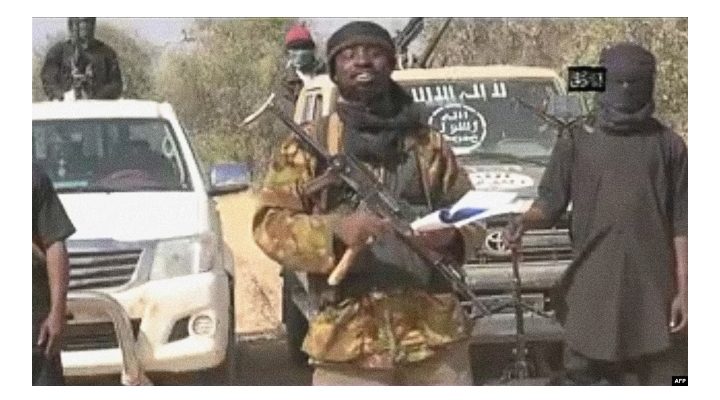
< Back Nigeria Team Report: October 2025 Picture showing Shekau, former Boko Haram leader. Picture Courtesy: Boko Haram online media. Violence and mass killings Recent attacks attributed to Boko Haram continue to claim civilian lives in northeastern Nigeria, highlighting the group’s enduring presence and the state’s limited capacity to protect vulnerable communities. On October 20, 2025, militants invaded the Kwakwahu community in Madagali County, Adamawa State, where they abducted four residents and inflicted severe violence on a 25-year-old man, Yakubu Sunday, described as mentally unstable. According to local sources, Sunday was repeatedly stabbed and left for dead. The assault reportedly lasted for hours without intervention from security forces, reflecting the isolation of rural areas and the difficulties of maintaining safety across Adamawa and Borno States. Residents later raised a ransom of ₦3.1 million (approximately US $2,100) for the release of the remaining hostages. The victims of these attacks are often unarmed farmers and villagers, targeted for ransom, fear, or control of territory. Eyewitnesses describe the attackers as heavily armed and familiar with the terrain, operating freely in forested and mountainous areas. These recurring assaults, marked by kidnappings, killings, and community terrorization, underline the continuing human cost of Nigeria’s prolonged insurgency. Civilians remain the principal victims, suffering loss of life, physical injury, and psychological trauma with little access to protection or justice. U.S. Policy Responses to Nigeria’s Alleged Christian Genocide The persecution of Christian minorities in Nigeria, although not new, has received increased international attention in recent months–particularly from the U.S. and its allies. Conservative voices within the United States, including President Donald Trump, has repeatedly levied allegations of the mass murder and genocide of Christians against the Nigerian government, which President Bola Tinubu has harshly denied. Given the severity of the allegations and stringency of the denials, it is worth examining both the historical and contemporary state of religious violence in Nigeria, as well as the U.S. policy response it is currently eliciting. The intensity of religious violence in Nigeria is largely attributed to its demographic makeup and post-colonial history. Nigeria’s population of over 220 million people is almost evenly divided on religious lines, with Christian’s inhabiting the southern regions and Muslims the northern ones. As a result of migration around the turn-of-the century, Nigeria’s Middle Belt grew increasingly multi-ethnic and multi-religious, prompting grievances from both groups surrounding opportunity, politics, education, and culture. Such grievances grew violent when Hausa-Fulani herdsmen began to attack Christian enclaves in the Middle Belt, prompting Christian farmers to violently retaliate. Boko Haram, an Islamic terrorist group, emerged in the early 2000s, and has repeatedly terrorized both Christians and non-fundamentalist Muslims ever since. Thus, religious conflict in Nigeria bares significantly more nuance than is given credit for, with ethnic, cultural, and resource-based grievances, as well as religious motivations, contributing to the cross-cutting violence. What then accounts for the increased emphasis on Christian persecution in U.S. policy responses? Among the Trump administration’s stated objectives is the rooting out of anti-Christian bias around the world; the situation in Nigeria, where Christians are being murdered in extremist violence, offers the president a politically beneficial case–resulting in the increased attention and interest it receives. Evangelical Christian groups in the United States have also become increasingly vocal about the issue, pressuring elected officials to take action. Among the most prominent advocates of this narrative is Texas Senator Ted Cruz, who recently introduced a resolution that would sanction Nigeria for its lack of response and label it as a Country of Particular Concern. In an escalation of such rhetoric, President Donald Trump accused the Nigerian government of being complicit in the killings and refused to rule out a military intervention in the country. While any attention brought to issues of violence in Nigeria is welcome, it must come with the understanding that both Christian and Muslim populations in the country face genocidal threats. Genocide Watch recommends that any further U.S. policy responses acknowledge the cultural, ethno-religious, and socio-political complexities of the unrest, while promoting narratives of peace and reconciliation. Previous Next
- Nigeria Team Report: July 7th, 2025 | genocidewatch
< Back Nigeria Team Report: July 7th, 2025 Photo from the Daily Post Nigeria continues to face a severe genocidal crisis, particularly targeting Christians and moderate Muslims in the Northeast, Northwest, and Middle Belt regions. Islamist groups such as Boko Haram, ISWAP (Islamic State West Africa Province), and Fulani jihadists are responsible for systematic violence. Despite overwhelming evidence of genocidal acts, both the Nigerian government and key international actors remain in denial, avoiding the legal and moral responsibilities that acknowledgment would require. New Evidence of Genocide On June 14, 2025, Fulani jihadists carried out an overnight attack killing more than 200 Christians in Benue State . A local county official urged replacing military deployments with police, citing security failures. In an analysis titled “Silent Jihadist Genocide,” Intersociety characterizes the massacres of Christians as a “Jihadist Genocide of Christians,” noting 8,222 killed in 2023 and calling Nigeria the second-deadliest genocide country. Denial Government and societal denial remain widespread. Sources such as Save the Persecuted Christians and Daily Post Nigeria highlight this trend. Church leaders and analysts have criticized the government and military for consistently describing Fulani jihadist massacres of Christians as "communal clashes" or "herder farmer disputes," ignoring the explicit religious targeting. Rev. David Azzaman sharply noted: “The military… refers to these attacks as communal clashes or ‘farmer/herder clashes’ … What is going on … is genocide.” Silence Among Christian Elites Voices from the Middle Belt Forum and other clergy lament that many church leaders and politicians avoid calling the killings “genocide”—fearing political backlash. Former Kaduna deputy governor James Bawa Magaji criticized them, stating: “A lot of Christian politicians are afraid … They color the truth because they want to be politically correct.” Local officials in Benue and Plateau have questioned military deployment, recommending police instead, revealing a tacit admission of security failure but no recognition of religiously motivated terror. Truth Nigeria articles repeatedly highlight that while atrocities happen within view of military bases, responses remain muted or delayed. Intersociety on Political Denial in Southeast Intersociety warned that Southeast governors are engaging in “deafening denial” by ceding land to Fulani herdsmen, despite risking jihadist encroachment. They lament that, as of 2021, more than 700 communal lands had been taken over. International Misrepresentation Save the Persecuted Christians, via Truth Nigeria, emphasized that global advocacy is undermined when Western governments echo religious neutral narratives. Dede Laugesen stated: “Nothing will change … until the Nigerian people unite with one voice … It’s not … climate change … This is genocide pure and simple. All who try to explain it otherwise are culpable.” Previous Next