Search Results
Search this site
7105 results found with an empty search
- Libya: Dozens Executed, Scores Remain at Imminent Risk
By Amnesty International September 11, 2026 At least 50 men under sentence of death in eastern Libya are at imminent risk of execution as the Libyan Arab Armed Forces (LAAF), the de facto authorities in the region, have resumed executions for the first time in Libya since 2010. Since 23 August 2026, the LAAF have carried out arbitrary executions of at least 30 individuals sentenced to death following grossly unfair torture-tainted and secretive trials before military courts. Some of those executed and at risk were convicted of murder and terrorism-related offences in relation to the armed conflict between LAAF and opposing armed groups between 2014 and 2018. Several of them reported being tortured upon arrest by LAAF-affiliated armed groups to extract “confessions”, which were used as “evidence” to prosecute them. The LAAF authorities must immediately halt all executions. © 2026 Amnesty International
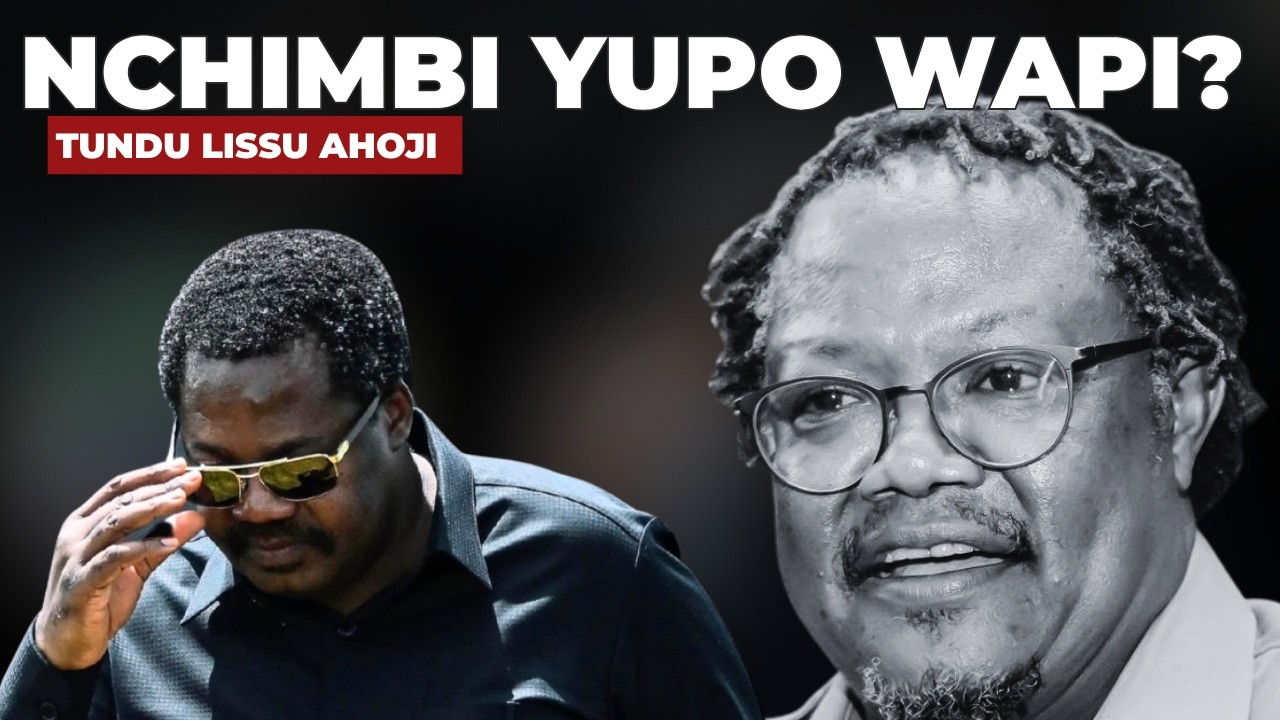
- Tanzania: Jailed Opposition Asks, Where Is Ousted VP?
Jailed opposition leader Tundu Lissu has joined growing public calls for answers over the whereabouts of former Vice President Emmanuel Nchimbi, who has not been seen publicly since his resignation and subsequent expulsion from CCM The Chanzo Reporter September 26, 2026 Dar es Salaam-The jailed Tanzanian opposition leader, Tundu Lissu, has used the minutes after court sessions and during breaks to ask about the whereabouts of ousted Vice President Emmanuel Nchimbi. Lissu first raised the question on September 24, 2026, and reiterated it on September 25. “You Tanzanians, I am in prison, and I hear that Dr. Emmanuel Nchimbi cannot be found. Where is he? Where is Dr. Nchimbi?” Lissu asked on September 24, 2026, at the court where he is being tried for treason. Lissu’s inquiry echoes conversations on social media, particularly after it was noticed that Nchimbi has missed Sunday church services, something that has attracted attention given his reputation as a devout Catholic. Nchimbi’s last public appearance was three days before the announcement of his resignation, on August 22, 2026, during the inauguration of the Julius Nyerere Hydropower Project (JNHPP) in Pwani, alongside President Samia Suluhu Hassan. After the event, Nchimbi posted about his resignation on his dormant Instagram account on August 25, 2026. He was subsequently expelled from the ruling CCM party on August 26, 2026. Many linked the developments to disagreements between Nchimbi and President Samia over the country’s direction. Talking to party supporters at court, Lissu emphasized the need to demand answers about Nchimbi’s whereabouts, regardless of his party affiliation. “Let us not remain silent. If you remain silent when it comes to Nchimbi, tomorrow it will be you. Do not remain silent just because he is not a member of our party. He is a Tanzanian, and he deserves to be free and safe. Do not remain silent because Nchimbi is a CCM member,” Lissu emphasized on Thursday. So far, there has been no official statement explaining Nchimbi’s absence. Unlike other former senior government officials, including vice presidents and prime minister, who often appear at various state functions, Nchimbi has not been seen publicly since his resignation. When CCM spokesperson Kenani Kihongozi was asked during an interview on September 5, 2026, about Nchimbi’s whereabouts, he said he did not know, comparing the question to being asked about the whereabouts of any other leader, which he said would be difficult to ascertain. However, he emphasized that he believed Nchimbi was “there.” Tundu Lissu is not the first prominent person to express concern about Nchimbi’s whereabouts. Former Vice President Joseph Warioba, who has described Nchimbi as someone who is like a son to him and said their families are close, also expressed concern after failing to reach him following his expulsion from CCM. Speaking on August 28, 2026, Warioba said he had spoken to Nchimbi to confirm his resignation, but after Nchimbi was expelled from the party, he could no longer reach him. Warioba described this as unusual, saying Nchimbi normally responded quickly. “Then in the morning I saw reports that his phones had been confiscated. That surprised me a bit, because I’ve been in the party myself, and in the party, disciplinary action is taken but after that a person is free. So when I was told he might be detained or something, I still didn’t believe it, because I don’t see any grounds for it,” Warioba told his audience at a democracy dialogue function on August 28, 2026. For Tundu Lissu, this is not the first time he has used his platform to demand answers about the whereabouts of ruling-party members. On October 25, 2025, Lissu inquired about former Ambassador Humphrey Polepole, who had become a critic of the ruling party ahead of the 2025 election and was abducted and has been missing since October 6, 2025. Lissu again raised the question of Nchimbi’s whereabouts on Friday, September 25, 2026. “Has Nchimbi been found, or has he not been found? Ask the bishops to speak about this in their churches. Let religious leaders speak. Religious leaders should not remain silent about these outrageous things,” he said. Tundu Lissu Ahoji Tena: 'Yuko Wapi Nchimbi?', Asisitiza 'Tusinyamaze, Ana Haki Kama Mtanzania'. Translation: Tundu Lissu 'Where is Nchimbi? Let's Not Be Silent, He Has Rights As A Citizen'. Source: The Chanzo Reporter The Chanzo, 2026 © All Rights Reserved
- At least 49 dead after airstrike in Myanmar’s Rakhine state
By The Associated Press Sept. 29, 2026 The Arakan Army, the powerful ethnic armed group based that controls Kyauktaw, Myanmar, said it "will take effective retaliatory measures soon." AFP via Getty Images An airstrike carried out by Myanmar’s military near a market in territory controlled by a powerful rebel group killed at least 49 people and wounded 58 others Monday, the group and a rescue official said. The attack in western Rakhine state was the latest in a series of deadly airstrikes against pro-democracy resistance forces and ethnic armed groups across the country. Myanmar has been in turmoil since the military seized power from the elected government of Aung San Suu Kyi on Feb. 1, 2021, triggering widespread opposition. After security forces suppressed peaceful protests with lethal force, many opponents of military rule took up arms, plunging large parts of the country into conflict. Monday’s attack occurred in Kyauktaw township, about 210 miles west of Mandalay, the country’s second-largest city, according to the Arakan Army, a powerful ethnic armed group based in Rakhine that controls Kyauktaw. It was impossible to independently confirm details of the attack. The Arakan Army said in a statement released early Tuesday that a fighter jet dropped two bombs near a local market around noon, killing vendors, shoppers and pedestrians. The group said 58 other people were injured, 22 of them critically. The military didn't immediately comment on the attack.AFP via Getty Images The statement said the group “will take effective retaliatory measures soon against the individuals and organizations directly responsible for the attacks involving deliberate airstrikes that have caused mass casualties.” Wai Hun Aung, a senior rescue official in Rakhine, confirmed the casualties to The Associated Press, citing rescue workers at the scene. He said the market was the region’s main wholesale center, drawing traders and shoppers from across the state. “This is one of the most severe airstrikes in Rakhine,” he said. Photos and videos posted on social media showed buildings on fire, damaged vehicles and parts of a nearby bridge destroyed. The military did not immediately comment on the attack. It has previously said it strikes only legitimate military targets and has accused resistance groups of terrorism. The Arakan Army is the well-trained and well-armed military wing of a movement seeking autonomy for Rakhine’s ethnic minority from Myanmar’s central government. It launched an offensive in Rakhine in November 2023 and has since captured a strategically important regional military headquarters and 14 of the state’s 17 townships. The military has imposed severe restrictions on trade routes since fighting intensified in Rakhine, worsening food shortages. In December, a military airstrike on a hospital in Rakhine’s Mrauk-U township killed at least 34 people and wounded 80 others. © 2026 NBCUniversal Media, LLC
- Malian Army And Wagner Group Accused Of War Crimes
By Justin Tuminello | U. Pittsburgh School of Law, US September 29, 2026 File Photo: BelTA - News. CC BY 3.0, via Wikimedia Commons. Amnesty International on Tuesday condemned the Malian armed forces and its partners from the Russian private military company Wagner Group for perpetration of war crimes, including the murder and torture of civilians. The report detailed the killings of at least 34 civilians in seven localities in Mali between June 2023 and December 2025 in the Mopti, Segou and Timbuktu regions of the country. It additionally accuses the Malian Armed Forces (FAMa) and Wagner Group of carrying out other serious violations of international humanitarian law, such as torture, enforced disappearances, and the pillaging and destruction of civilian property. Commenting on the need for accountability and justice for the victims of war crimes committed by Malian soldiers and allied forces, Marceau Sivieude, Amnesty International’s regional director for West Africa, stated: We urge the Malian authorities to ensure comprehensive accountability for war crimes committed against all communities. They must ensure that the FAMa, foreign military partners and members of armed groups suspected of war crimes are investigated and prosecuted as required in proceedings that comply with the right to a fair trial, without recourse to the death penalty. IGOs and NGOs have repeatedly raised alarm over the situation in Mali. In January 2023, UN experts called for an independent investigation into the possible commission of war crimes and crimes against humanity in the country. In March 2025, UN experts criticized the use of arbitrary executions in Mali and expressed concern over the FAMa General Command’s statement characterizing the claims as “false allegations.” The UN Working Group on the use of mercenaries has also warned that the ruthless tactics of private military and security companies (PMSCs) have exacerbated the climate of violence and impunity in several countries, including Mali. Similarly, Human Rights Watch (HRW) has criticized the actions of the FAMa and Russian mercenaries in carrying out the summary executions of dozens of ethnic Fulani men, describing it as part of a campaign of ethnic cleansing. HRW also condemned the use of violence against civilians, and warned that a deadly Russia-linked airstrike in Kyrnia earlier this year was a gross violation of human rights law. Amnesty International recently cautioned that Mali’s formal notification of withdrawal from the International Criminal Court’s Rome Statute removes the right for survivors to get reparations and denies them of the right to truth and justice. Nonetheless, FAMa has refuted allegations of wrongdoing, such as when 24 civilians were reportedly killed in an attack on February 17, 2025, in the Gao region. The Robert Lansing Institute pointed out that the Russian operational model in Mali places reliance on systematic violence in order to force entire populations into submission. The Armed Conflict Location & Event Data Project (ACLED) noted that the Wagner Group’s activity in Mali is only the latest in its string of such endeavors across different international crises—such its deployment to support Bashar al-Assad’s regime in Syria starting in 2015, and its support of President Faustin Archange Touadéra against rebel offensives in the Central African Republic. Wagner and its successor organization, the Africa Corps, is believed to have had operations in up to 30 countries across the globe. This April, a landmark human rights case was filed before the African Court on Human and Peoples’ Rights (ACtHPR) by TRIAL International, the Pan African Lawyers Union (PALU) and the International Federation for Human Rights (FIDH) against FAMa and the Wagner Group for their role in repeated massacres, most famously that at Moura in March 2022. Copyright © 2026, JURIST Legal News & Research Services, Inc.
- India’s crisis of legitimacy
By Muqtedar Khan September 29, 2026 A cycle of governance failures, official denials, and attacks on critics is eroding public trust and deepening the Modi government’s crisis of legitimacy. The Election Commission controversy is its latest example. An illustration of former Chief Election Commissioner T.N. Seshan and current Chief Election Commissioner Gyanesh Kumar. | Photo Credit: Illustrated by Sarthak Bagchi India is once again embroiled in a controversy that follows a familiar pattern: a failure of governance manifests itself; those responsible initially deny the problem and resist calls to address it; as the evidence mounts, the public comes to view the government’s denial and resistance as a betrayal of its trust; frustration turns to anger and culminates in mass protests. We saw this during the farmers’ protests, the Shaheen Bagh protests, the Jantar Mantar protests, and the protests against the Agnipath scheme for short-term military recruitment. Only with protests does the government begin to concede what should have been acknowledged at the outset. The latest controversy concerns the Election Commission of India (ECI), a constitutional body entrusted with conducting elections and protecting their integrity. Questions about the ECI’s conduct have cast a shadow over public confidence in the electoral process. They especially invite scrutiny of recent elections: the 2024 Lok Sabha election, followed by the Assembly elections in Haryana and Maharashtra in 2024, Delhi and Bihar in 2025, and West Bengal in 2026. The questions, however, did not begin with the Special Intensive Revision (SIR) launched in Bihar in June 2025. Before that exercise, opposition parties, led by Rahul Gandhi, had alleged irregularities in electoral rolls and polling data, which raised serious questions about the credibility of both. They alleged arbitrary deletions, questionable additions of voters, and anomalies in reported turnouts: all of which they described as “vote chori” or vote theft. The ECI rejected the allegations and maintained that changes to the rolls followed established procedures. The dispute over electoral integrity, therefore, predates SIR, even though SIR has brought it to a new scale. The Indian Express’ recent investigation revealed a disturbing institutional dimension. It reported that Election Commissioners Sukhbir Singh Sandhu and Vivek Joshi placed at least 14 objections on record over ten months. Their concerns went to the heart of the ECI’s functioning: changes to voter registrations, deletion and restoration of names, and control of the electoral roll database. They said some decisions and instructions were issued without their knowledge or approval, even though the law calls for the ECI to seek unanimity and resolve disagreements by majority votes. The ECI acknowledged the objections but maintained that its decisions were ultimately unanimous. It is yet to explain how the reported objections were resolved. SIR and the voter rolls The lack of transparency in decision-making processes within the ECI is not the only problem. The far larger problem is its nationwide SIR, an exercise in which the ECI re-examines electoral rolls and requires voters whose entries are flagged to establish their eligibility to remain on the rolls. SIR has removed more than 13 crore names from draft voter rolls across 30 States and Union Territories. Some names will be restored; others may remain excluded through no fault of the voters. The consequences can extend beyond the ballot. In some places, access to welfare benefits is tied to inclusion on the electoral roll. A voter’s removal can also raise fears in them about future challenges to their citizenship. Critics therefore call SIR a backdoor route to the National Register of Citizens, a register intended to identify citizens, which was proposed alongside the Citizenship (Amendment) Act, 2019, which provides a path to citizenship for non-Muslim migrants from Afghanistan, Bangladesh, and Pakistan. The figure of 13 crore deletions (roughly the population of Mexico) establishes the staggering reach of a process whose safeguards demand urgent and intense examination. In my view, the BJP’s political gains from SIR together with the fact that a selection committee dominated by the Prime Minister and a Union Cabinet Minister had chosen the ECI Commissioners point to a disturbing possibility of collusion between the ruling party and an institution that should be independent of it. There should be a firewall between the two. Instead, the ECI’s actions and the BJP’s public defence of the Election Commissioners make any possible firewall appear non-existent. Activists from the All India Students’ Association and the Revolutionary Workers’ Party of India demanding the resignation of Gyanesh Kumar and calling for re-elections, at Jantar Mantar in New Delhi on September 25. | Photo Credit: Karma Bhutia/PTI The crisis within the ECI is a manifestation of a wider crisis of legitimacy. It has shown how deeply citizens’ faith has been shaken in the country’s electoral process, its voter rolls, and, to a great extent, the outcomes of recent elections. Many are no longer confident that decisions affecting regional and national elections were made lawfully, in keeping with India’s Constitution. Calls for the Chief Election Commissioner’s resignation reflect the depth of that distrust, but a resignation in itself would not repair the damage. India needs an independent accounting of the disputed decisions, a transparent review of the voter rolls, immediate re-enrolment of people wrongly excluded, and compensation for the needless hardship they have suffered. Where an investigation establishes that wrongful exclusions affected an election’s outcome, there may be no alternative but to nullify that election and hold a fresh vote. If this crisis were an isolated case, perhaps we could blame a few bad apples and move on. Unfortunately, under the current dispensation in New Delhi, crises arising from bad governance and public distrust have become frequent. They follow the pattern described at the beginning: when irregularities are exposed, the government first denies them, while ignoring or demonising those who exposed them as anti-national. Only when public outcry grows too loud to be dismissed does the government retreat and scramble to salvage its position. The late German political theorist Jürgen Habermas described this phenomenon as a crisis of legitimation. Such a crisis arises in a democratic society when the government loses the trust, loyalty, and support of its citizens. At first, citizens obey its authority, often passively, in exchange for material and welfare benefits, and accept its decisions without challenge because they trust it to govern well. When the government fails to deliver those benefits and violates the trust placed in it, legitimacy erodes and a crisis emerges. Under the current dispensation, failure to deliver benefits and clear violation of citizens’ trust have become frequent, creating a crisis of legitimacy. Exam leaks, temple theft, and murky growth figures The student protests of July offer another example. Anger over the question paper leak and cancellation of the 2026 National Eligibility cum Entrance Test-Undergraduate medical entrance examination brought students onto the streets across India, sustained by the protest at New Delhi’s Jantar Mantar. Students had prepared for years for this exam, on which their futures depended, and its cancellation led many to take their own lives. The police used batons, tear gas, and pellet guns against the protesters to subdue them. The government promised reforms, but students continued to demand accountability, including the then Education Minister’s resignation. After weeks of protests, he resigned, while demands for compensation for bereaved families and the police crackdown remained. Illustrated by Sarthak Bagchi Previous competitive-exam leaks had exposed the wider failure to protect students’ futures. But the protests and the response to them now made one thing clear: the government had lost the students’ trust, was willing to use force against them, and conceded only when the protests continued despite the government’s brutality. In June this year, it also came to light that cash and valuables given as offerings by devotees had been stolen at the Ram Mandir in Ayodhya while being counted. The temple, inaugurated in 2024 on the ground where the Babri Masjid had stood for nearly five centuries, symbolised the culmination of a Hindu nationalist struggle that lasted more than a hundred years. Those entrusted with collecting and counting the temple donations were found to have been siphoning them off. The first response of the Ram Mandir Trust was denial: the charges were called a false narrative, and those asking questions were accused of acting in bad faith. The Uttar Pradesh government, a BJP administration that had long championed the temple, also rejected the allegations before it formed a special investigation team and arrested the counting staff implicated. Evidence then piled up, and the official line turned. But by then, trust in the running of what many now regard as the most sacred Hindu temple in India had already been badly shaken. Illustrated by Sarthak Bagchi On August 31, the government announced that India’s economy grew by 7.8 per cent in the first quarter of the financial year, from April to June. It presented the figure as a spectacular result in spite of global headwinds: the supply-chain strain, the US-Israeli war on Iran, the continuing war in Ukraine, and re-globalisation. For the BJP government, it was meant to be a moment of achievement, coming after a sharp loss of public faith over the Ram Mandir donation theft and exam paper leaks. To its surprise, former officials and prominent economists immediately challenged the claim. If growth was that rapid, they asked, why was there a jobs crunch, inflation, dearer fuel, and a cost of living crisis which most Indians felt every day and which the official growth story did not seem to reflect? That scepticism was sharpened by the fact that, about a year ago, the IMF gave India’s national accounts data a “C” grade for methodological weaknesses; and separately, revised figures and a weaker rupee had already seen India slip in IMF rankings from the claimed fourth-largest economy to the sixth position, even while it remained among the fastest-growing economies. Regardless of the veracity of the government data, the intensity of the public debate underlined that trust in official numbers, too, had eroded. The less credible narrative of ‘Modi magic’ abroad A significant narrative of the government is of “Modi magic” in foreign policy: the claim that India’s rising weight in the world is owed, above all, to the Prime Minister’s personal diplomacy, the relationships he has cultivated, and the popularity he is said to enjoy abroad. Of late, that claim has seemed thinner. During Operation Sindoor in May 2025 (India’s strikes after the Pahalgam attack), New Delhi discovered that it was quite alone. No major country or power stood with it or backed its position. Even the US, India’s so-called comprehensive strategic partner, did not really stand with India. On the contrary, it demanded de-escalation, while Pakistan, which India has long sought to portray as outcast, drew open backing from Türkiye, Azerbaijan, and China. In the diplomatic war that followed, India’s efforts to isolate Pakistan through its all-party delegations failed. Pakistan became central to negotiations to resolve the US-Israeli war on Iran, and states in the region are increasingly seeking it as a security partner. For more than a year, US President Donald Trump has taken public credit for the India-Pakistan ceasefire, including at the UN this month, contradicting India’s insistence that it had halted the fighting at Pakistan’s request and without third-party mediation. Meanwhile, Trump has both praised and cultivated closer relations with China and Pakistan. Both are India’s geopolitical rivals. He has also used tariffs to punish India. The government still tells the country that India remains central to a multipolar order. What is becoming harder to miss is a more bipolar pattern in which China is treated as the US’ peer competitor and India as a lesser pawn in the US’ grand strategy. Trump rarely speaks of the Indo-Pacific in the old way. A Quad leaders’ summit has not been held since 2024. Foreign ministers still meet; the heads of government do not. India’s self-congratulatory and triumphalist discourse on its own growing relevance in world politics sounds less and less credible. The pattern is clear. The government is governing badly, as is evident from its foreign and economic policies and even from the more basic task of administering examinations on which students’ futures depend. Even when faced with overwhelming evidence of failure, it denies that anything is wrong. Rather than investigate and fix the problem, it attacks those who scrutinise it as disloyal or even anti-national. Failure, denial, and demonisation: these have become its tactics. The frequency of such episodes has produced a crisis of legitimacy. The public is no longer fooled by a captured media or highly scripted government narratives; the realities of daily life expose the limits of the government’s claims. It cannot talk its way out of any crisis anymore. Trust, once lost, is not easily regained. The Modi government can recover some legitimacy only by acknowledging its errors, investigating failures, punishing those responsible, and making palpable changes. If it does not, India’s democracy, economy, social harmony, and political institutions will suffer. Muqtedar Khan is a professor of international relations at the University of Delaware and a senior non-resident fellow of the Middle East Policy Council. He hosts a YouTube show on world affairs called Khanversations. Copyright © 2026, THG PUBLISHING PVT LTD. or its affiliated companies. All rights reserved.
- UNSC Extends Gang Suppression Force Mandate For 6 Months
By Merve Aydogan 29 September 2026 Draft resolution, penned by Panama and US, receives 12 votes in favor, 3 abstentions The UN Security Council on Tuesday adopted a draft resolution extending the mandate of the Gang Suppression Force (GSF) in Haiti for another six months, until March 31, 2027. The resolution, penned by Panama and the US, received 12 votes in favor, with China, Pakistan and Russia abstaining. There were no votes against. It also asks the UN secretary-general to continue providing logistical and operational support through the UN Support Office in Haiti. The GSF was first authorized on Sept. 30, 2025, succeeding the Multinational Security Support mission. Speaking after the vote, US envoy to the UN Mike Waltz said: “For decades, the international community has watched Haiti cycle through crisis after crisis. Missions have come and gone.” “Today marks the next stage and a new chapter in Haiti, or I’m proud to say we’re trying something genuinely different, and we certainly, along with our co-pen, appreciate your support in trying a new model and a new approach,” he said. According to Waltz, the GSF currently has “more than 1,500 troops on the ground and 4,000 more are slated to come in the coming months.” Anadolu Ajansı © 2026
- Exile has not broken young Rohingya people
By Ajas Khan September 28, 2026 Rohingya in Cox's Bazar, Bangladesh, mark the ninth anniversary of the attacks that forced them to flee their home in Rakhine State, Myanmar, 25 August. Photograph: Anadolu/Getty Images Nine years ago, I was forced to flee my home in Maungdaw township, Rakhine state, Myanmar. I was 13 years old. I remember how quickly an average day turned into a day when life felt extinguished, leaving behind the place where I grew up with my family. Even now, when I go to sleep, what comes into my mind is the memory of that journey, the fear of not knowing what awaited me. It took three days to reach refuge. With so many others, my family and I crossed the Naf River into Bangladesh. But survival came at a high price: the price of my home, my liberty, my life. I am Ajas Khan, a climate activist, youth leader and Rohingya genocide survivor. Nine years is a long time for a child to grow up, to feel at home, or not to feel at home if the place you are staying in is not your country. It is a long time for the whole family to wait, in exile, seeing another generation grow up in the camps. The people of Bangladesh have given us a safe place to stay, which we are incredibly grateful for and can never forget. Humanitarian organisations have saved many lives. However, a plastic shelter is not a permanent solution. It can provide a place to sleep, but little else in the way of home, citizenship, freedom or dignity. But the exile has not broken us. Young Rohingya people are studying, caring for each other, and survivors are telling their stories. We are not just victims; we have a history, a culture, a home and dreams for the future. When we speak of justice, we do not seek revenge. Survivors want the truth to come out about those who have committed genocide against the Rohingya people, and for the international community to continue to provide all possible support. Those responsible for these crimes must be brought to justice, which will allow us a future away from the brutality of the past. It makes no difference if the perpetrators are soldiers or politicians, state actors or non-state actors. If they destroy homes, expel people, take away their lives and nothing happens to them, they will do the same again. Nine years is more than enough. Time must never become an excuse for impunity. I’ve never for one second let go of the hope of returning to my home. Going home doesn’t mean just crossing back over the Naf River. It means going home with full human rights in our motherland, without fear, with our citizenship, security, equality, land and livelihood restored. Our healthcare and education. There is no choice between being rendered stateless and living in the camps, or repatriation without rights. Return without citizenship is no solution at all. On this ninth anniversary, I would like to raise the point that decisions over the fate of the Rohingya people must no longer be made by any entity other than the Rohingya themselves. The government of Bangladesh and NGOs have made immense sacrifices to care for Rohingya refugees, navigating the immense humanitarian and economic implications of hosting more than a million Rohingya in Bangladesh. It is understandable that the government of Bangladesh might want to make concessions in its negotiations to ensure solutions can be brokered, and to engage with anyone claiming authority in Myanmar who could contribute to this goal. But such concessions should not come at our expense. The Rohingya are not a footnote; we are a people with a history, and our future can no longer be dictated either by governments or armed groups. Should the governments of Bangladesh or Myanmar, or the Arakan Army in Rakhine, or any other interlocutor, make decisions, then Rohingya representatives must be at the table. We give our breath to our future. And through all these years of fighting, our identity is still there and our dreams have not gone away, despite the pain. I remember all the people who were lost during the 2017 massacres, and those who survived but are still being chased and hated. I think about the people whose families are broken, who have injuries, and those whose childhood was taken away. Rohingya children should grow up with different stories – not of loss, but tales of returning home. We need justice; we need to be recognised as humans; we need our citizenship; we need accountability. And we need to go home. I want our next generation to hold their lives in their own hands and not in those of strangers. I want them to see our land, not just hear stories. For me, I have spent nine years in a foreign refugee camp without a future, in an open jail, and I’m still waiting for hope to return.
- Polarization In Costa Rica Is Rooted In Ancient History
By Guest Author (The Tico Times) September 29, 2026 Image: Harvey Whitehouse At the University of Oxford, we have been helping to build a vast database of world history capable of explaining why some civilizations grow and flourish – while others fall apart. One of the most remarkable findings is that when societies grow beyond around a million individuals – what we call the mega-society threshold – their survival often depends on developing new ways of pulling together to avoid being torn apart by the kind of polarization rooted in divisions of ethnicity, class, and religion. Many large civilizations in the past that failed to find ways of enabling cooperation beyond that threshold came to a sticky end. Earlier this year, I went to meet some of Costa Rica’s most influential leaders who helped make the country an idyllic, peaceful exception in Latin America – the “Switzerland of Central America”, admired for its stable democracy, high literacy rates, abolished military, and buoyant economy. I had lengthy conversations with former politicians, including Miguel Angel Rodriguez (President from 1998-2002), Ana Elena Chacon (vice-president form 2014-2018), as well as a variety of distinguished government ministers, business leaders and academics. We talked not only about their role in building the country we know today but also why things are starting to fall apart. And these conversations were interlaced with lessons from ancient history. I soon learned from these conversations that Costa Rica passed the mega-society threshold around 1960 at a time when agricultural and cattle ranching intensification was seen as the future. Back then, being Costa Rican had less to do with being green and more to do with being peaceful, egalitarian, agrarian, and Catholic. But few were able to foresee the risks lurking just beneath the surface. As the metropolitan region around San Jose grew, an urban-rural divide began to develop. Little by little, people realized they no longer knew their neighbours. Among other things, this meant that the reputational cost of not going to church decreased and society secularized. Schools that had once brought together children from different backgrounds became increasingly segregated and waves of immigration created ethnic divisions. Little by little, the number of people living in poverty increased, the rich became a lot richer, and the middle class shrank. If there is one thing history tells us about societies that have passed the mega threshold, it is that there will always be new ways for old divisions to resurface. Way back in first millennium BCE, new ethical philosophies and moralizing religions appeared, enabling a succession of glorious civilizations to rise and spread from Egypt, the Levant, and Mesopotamia in the West and China and South Asia in the East. The secret to their success had to do partly with the ways in which the Abrahamic traditions of Western Eurasia and karmic systems spreading from the East enabled people from very diverse backgrounds to cooperate based on shared identities, values, doctrines, and narratives. This kind of cooperation is not easy to achieve, even – in fact perhaps especially – today. Some of the threats to cohesion in Costa Rica in the twenty-first century are familiar to many other democracies. A media industry providing click bait for ad agencies has created a frenzy of anxiety around narcoculture, gang violence, and drug cartels. Fears of mugging and home invasions have deepened divisions in society and anger at the state for failing to maintain law and order. Social media has become central to daily life, with everybody’s heads buried in phones delivering bad news stories rather than engaging more positively with people around them. Bureaucracy has become increasingly bloated, slow, and inefficient, stoking further alienation towards the state. And as the political ideology of educated liberals has grown increasingly disconnected from the norms and values of ordinary people, the gap between the haves and have-nots has also become a battle ground for culture wars. And then there was the pandemic. By 2020, Costa Rica had a large and growing population living in poverty who depended on their extended families and social networks for survival. Imagine the costs to such people of having to observe social distancing rules. Lockdowns were so unpopular that the ruling party became unelectable by the end of its term. And since the main opposition party was led by a controversial figure who had spent years abroad while under scrutiny in a corruption investigation, the way was open for a new kind of leader to sweep to power in 2022. Populism around the world has astutely capitalized on disillusionment with the establishment and created new methods of communicating directly to the people. Since environmental policy is generally associated with leaders and institutions in which trust has been declining, continued support for green policies is no longer guaranteed. In Costa Rica, gas and oil reserves are now increasingly seen as potentially attractive options for future investment and Pentecostal churches backed by Texan oil money are now spreading fast, spreading climate change scepticism. Does this spell disaster for the future of environmentalism in Costa Rica? In next week’s article, I team up with former Minister for the Environment and Energy Carlos Manuel Rodriguez, to explore the implications of this history for the fate of the country’s carbon footprint. © 2026 The Tico Times
- Malaysia Begins Repatriation of Asylum Seekers to Myanmar
By Jonathan Head September 29, 2026 The repatriation represents a striking shift in Malaysia's attitude towards the refugees The Malaysian government has started repatriating around 5,000 asylum seekers from Myanmar, under a controversial deal agreed with Myanmar's military ruler Min Aung Hlaing. Three ships from the Myanmar navy are scheduled to leave Malaysia later today carrying the first 1,476 returnees. Human rights groups have condemned the repatriation, saying the returnees face violence, persecution and forced conscription into the Myanmar army. Malaysia has described the repatriation as voluntary, but has barred the UN refugee agency from seeing or screening the returnees, who have been kept in detention centres. According to Malaysian prime minister Anwar Ibrahim, these returnees will include Rohingyas: a persecuted Muslim minority who have sought sanctuary in Malaysia in large numbers after being driven out of Myanmar, where they are not recognised as citizens. Anwar, whose popularity has fallen sharply this year, says he is responding to growing public hostility towards the large Rohingya population in Malaysia and has no choice but to negotiate with the Myanmar government over their return. But the move signals a striking shift in attitude. Anwar, a former political prisoner, has previously presented himself as a defender of human rights and freedom, and called for more to be done to help the Rohingyas. Under him, Malaysia has refused to recognise Min Aung Hlaing's regime, and has been one of the strongest voices in South East Asia pushing for a negotiated end to Myanmar's civil war. What has changed? Two things. First, increased economic strain on lower-income Malaysians since the Covid pandemic, which has stirred resentment of the Rohingyas. Second, the febrile state of Malaysian politics since 2018, when a historic election unseated the United Malays National Organisation (UMNO), the ethnic Malay party which had monopolised power for more than 60 years, leading to a revolving door of unstable coalition governments. Shifting sentiments For many years there was strong public sympathy among Malaysians for their fellow Muslims in Myanmar. In August 2017, a brutal campaign by the Myanmar military drove three quarters of a million Rohingyas out of their homes in Rakhine State and into neighbouring Bangladesh. In the years since, dire conditions in Bangladeshi refugee camps have driven those with enough money to make the perilous sea journey to Malaysia in search of sanctuary and work. While the Malaysian navy and coastguard have long tried to block Rohingya boats from landing in Malaysia, many gotten in via other routes, and for a long time were tolerated. More than 200,000 are now believed to live there, most eking out basic livings from manual labour. Sentiment among Malaysians started to shift during the pandemic, which hit the country's economy hard. At a time of heightened public fear over the new coronavirus, accusations against Rohingya migrants spread on social media, with demands for their deportation. In response, the then-government hardened its attitude, saying Malaysia could accept no more refugees and ordering raids on communities believed to be harbouring illegal immigrants. Much the same has happened in 2026. In May, an online complaint claimed that Rohingyas had failed to dispose of animal waste properly after the Muslim Eid al Adha festival, igniting a viral social media campaign falsely accusing Rohingya leaders of demanding land and citizenship in Malaysia. Shortly thereafter, an online petition on Change.org calling for Rohingyas to be kicked out of Malaysia received more than 400,000 signatures, before being taken down. A PM under pressure Given Anwar's one-time reputation as a champion of liberal values, he might have been expected to push back against this wave of hate and disinformation. He has said the Rohingyas should be treated humanely. "We can arrest them, but do not beat, intimidate or humiliate them," he said in a recent podcast interview - although this is exactly what human rights groups have accused Malaysian officials of doing in immigration detention centres. Nonetheless, Anwar insists that the Rohingya must be expelled. "They have clearly become a burden," he said in the same interview. "A security burden, an economic burden and a source of hostility among the people." Some of his former supporters have accused him of betraying his principles. The former head of the Malaysian Anti Corruption Commission, Latheefa Koya, says his decision is "disgraceful, amoral, and shames the nation in the eyes of the international community". Anwar says Rohingya refugees have become a burden for Malaysia Anwar, though, is under great political pressure. Once described as a perpetual prime minister-in-waiting, he finally got the top job in 2022, but only by forming an uneasy coalition with his one-time adversaries UMNO. Since then he has seen his own popularity plunge and his party lose seats in recent local elections. He must call a general election by early 2028. "He is in a corner, at his weakest point", says Tricia Yeoh, Director of the Asian Institute for Policy and Engagement at the University of Nottingham Malaysia. "He has been forced to make concessions to his UMNO partners... There have been several corruption scandals, and his own party is divided. And after four years of telling voters this is what is required to maintain his fragile coalition, they are no longer willing to go along with that narrative." Instead, Yeoh says, ethnic Malays, who make up more than half of the electorate, are responding to the well-trodden UMNO narrative that they need special support and protection from the state - the kind of racial politics which she says feeds fear and resentment of outsiders. "It's the same narrative you hear in the rest of the world, about immigrants taking jobs, that we should not be spending our public funds on facilities for them." Forced home However, it is not clear how any Rohingyas can be repatriated to Myanmar, where they are not recognised as citizens. Rohingyas are not permitted to travel inside Myanmar, and are only allowed to live in Rakhine State, which borders Bangladesh. But nearly all of Rakhine State is now under the control of the insurgent Arakan Army, and subject to sustained bombardment by the Myanmar air force. On Monday, the day before the repatriation, the Arakan Army said two bombs killed 49 people at a market in the town of Kyauktaw. The only place Rohingyas could conceivably be returned to is the state capital Sittwe - but it is besieged and isolated, and even there Rohingyas are confined to wretched camps which are critically short of food and medicine. Rights groups also fear that any men in the group could be forcibly conscripted into the army to fight in the civil war. Neither Malaysia nor Myanmar have explained how these formidable obstacles can be overcome, nor how their planned repatriation can be consistent with humanitarian principles. "We all dream of being able to return home one day," said Nur Sadek, a Rohingya refugee rights advocate, "but we want to return because it is safe and because we choose to — not because we are forced to. "For me, the most important thing is that Rohingya and other refugees affected by this decision are listened to and treated with dignity." Copyright 2026 BBC. All rights reserved. The BBC is not responsible for the content of external sites.
- Philippines Drug War Victims Seek Justice
By Barnaby Lo August 14, 2026 Families of drug war victims testify before the Truth Commission, seeking answers and closure after years of silence. Luzviminda Siapo (L), whose son Raymart is believed to have been a victim of an extrajudicial killing in March 2017 during former President Rodrigo Duterte's anti-illegal drugs campaign, reacts at the close of a Truth Commission session at a Catholic facility in Manila, Philippines, August 14, 2026 [Rolex Dela Pena/EPA] Manila, Philippines – One moment, Luzviminda Siapo had been chatting with his teenage son, Raymart. Hours later, relatives were sending her messages of condolence. Raymart had been found dead in a semi-abandoned part of their Manila neighbourhood, covered in blood, with a gun and a packet of methamphetamine near his body, she was told. “I told my relatives I want to see proof. So, the morgue sent me a photo of Raymart with blood that looked like it was still dripping. There was no denying at that point that he was gone,” she said. It was 2017, at the height of former President Rodrigo Duterte’s war on drugs, when people who were on a watchlist were often killed by police in anti-narcotics operations or by suspected vigilantes. Luzviminda was working in Kuwait at the time, and her contract did not allow her to leave. For days, she begged her employer to allow her to return home and see her son for one last time. “My boss would usually sit on the couch with her feet up. So, I kissed her feet so she would pity me and let me go home,” Luzviminda said. When Luzviminda finally made it back to the Philippines, she went straight to the village hall. There, she was able to confirm that a neighbour had filed a complaint against Raymart, accusing him of dealing cannabis. Witnesses told her Raymart was taken by 14 masked men. They ordered him to run, but he couldn’t because his feet were deformed, so they told him to sit instead, before shooting him dead. Drug War Truth Commission Raquel Fortun, a forensic pathologist at the University of the Philippines, confirmed that Raymart was shot at close range. She has been examining the teenager’s remains as part of her work in the Drug War Truth Commission, a civil society-led independent body launched in May to investigate extrajudicial killings linked to Duterte’s campaign. The government says approximately 6,000 people were killed, but rights groups say the death toll may be between 20,000 and 30,000. Duterte, who was in power between 2016 and 2022, was arrested and sent to the International Criminal Court in March 2025. He is currently detained at the Hague and is facing trial for crimes against humanity linked to the drug war. On Friday, the Truth Commission began public hearings that it intends to conduct regularly over the course of the next several months, with families of victims, witnesses and survivors testifying one at a time to a livestreamed audience. Luzviminda was the first to take the stand. In an interview with Al Jazeera a few days before Luzviminda testified, she said she is not hoping to take anyone to court, and is content to be able to tell her story. “I just want to make my fellow Filipinos understand that there were innocent people who were killed and that even those accused of dealing or using drugs deserve due process,” Luzviminda said, adding she believes police planted evidence and insisting Raymart was never involved in illegal drugs. Fortun says the commission is not seeking to prosecute – nor does it have the power to – but is open to helping the government and the International Criminal Court. “We are looking for information. If the courts, whether in the Philippines or outside, would find it useful, then they have access to that. So, it’s up to them,” she said. Philippines opens impeachment trial against Vice President Sara Duterte Why did they kill? Several other families also attended the hearing on Friday. Among them was Randy delos Santos, whose 17-year-old nephew, Kian delos Santos, was killed by police officers in 2017. His case is one of only a handful where police have been held accountable for an extrajudicial killing. As in most other cases, the officers said they killed Kian in self-defence. But security camera footage shows them dragging the teen into dark, narrow alleyways, and across a basketball court before shooting him three times. The surveillance video was critical to a murder conviction. But Randy says there is more to the story that the Truth Commission can help bring to light. “We sued them not only for murder but for planting evidence – a gun and drugs. They were only convicted for murder, but they should have been convicted for all three crimes,” he said. For nearly a decade now, both Luzviminda and Randy have been asking the same questions. “Why did they have to kill my son? There should’ve been an investigation first. Or if he was jailed, that would’ve been acceptable. But one day someone accuses him of dealing marijuana, the next day, he’s dead,” Luzviminda said. But whether or not the commission is able to answer these questions, both Luzviminda and Randy say being heard is a step towards closure. Philippines ICC arrest warrant: Manhunt underway for Duterte ally Ronald Dela Rosa © 2026 Al Jazeera Media Network
- ICC Convicts ex-Seleka Leader of Crimes Against Humanity
By Reuters September 23, 2026 Mahamat Said Abdel Kani oversaw brutal detention tactics, including torture, at Bangui facility, ICC judges rule. Seleka commander Mahamat Said Abdel Kani sits in The Hague courtroom during a hearing in the case in which he is accused of crimes against humanity and war crimes allegedly committed in Bangui in 2013 [Remko De Waal/Pool Photo via AP] The International Criminal Court (ICC) has convicted a Central African Republic militia commander of crimes against humanity, including torture. Judges in The Hague on Wednesday found Mahamat Said Abdel Kani guilty over his role of running a Seleka detention facility in Bangui, where supporters of then-President Francois Bozize were rounded up and tortured during the country’s 2013 civil war. Said, 56, was acquitted of three war crimes charges as the judges ruled that the armed conflict had already ended when some of the alleged crimes happened. A separate hearing will determine his sentence. Judge Miatta Maria Samba said Said oversaw the torture at the Central Office for the Repression of Banditry, where detainees were whipped, waterboarded and bound using a method called “Arbatacher”, in which detainees’ hands, elbows and feet are tied together behind their backs. Some prisoners were held in underground cells with no bathrooms or showers. “The floor was covered in waste, and it smelled of faeces and urine,” Samba said. She said a victim described how his life had been destroyed by the mistreatment. Said, who denied the charges, appeared in court in jeans and a blue sweatshirt, looking unbothered as he shook his head when the verdict was read. He was a senior figure in the Seleka coalition, which ousted Bozize in 2013, plunging the country into a conflict that killed thousands of people. Bozize’s response, arming the “anti-Balaka” militia, fuelled more bloodshed before French troops helped secure the country in 2014 under a United Nations mandate. The ICC has investigated violence in the Central African Republic since 2014 and has already convicted two anti-Balaka leaders, including former Sports Minister Patrice-Edouard Ngaissona, who was sentenced to 12 years, and former MP Alfred Yekatom who was sentenced to 15 years. Said is the first Seleka member to be convicted. The country has experienced relative stability since a 2019 peace agreement. © 2026 Al Jazeera Media Network
- Gabon Opposition Leader Kept Behind Bars
By Dominic Wabwireh with AFP June 3, 2026 FILE - Gabon’s Foreign Minister Alain-Claude Bilie-By-Nze addresses the 74th United Nations General Assembly at UN headquarters in New York, Sept. 26, 2019. Gabon’s main opposition figure, Alain-Claude Bilie-By-Nze, will remain in detention after an appeals court rejected his bid to invalidate legal proceedings against him. The decision deepens concerns over judicial independence and political freedoms in the Central African nation. Former Gabonese Prime Minister Alain-Claude Bilie-By-Nze will remain in prison after the Libreville Court of Appeal rejected his request to nullify the legal proceedings brought against him. The ruling, delivered on June 2, marks a significant setback for the opposition leader, who has been detained since April 16. Bilie-By-Nze is under investigation for alleged breach of trust and fraud linked to events dating back to 2008. His legal team argues that the accusations are legally prescribed and therefore should no longer be subject to prosecution. Defense denounces arbitrary detention The opposition politician’s lawyers have sharply criticized the court’s decision, describing the case as legally flawed and politically troubling. Defense attorney Arthur Vercken said the continued detention constitutes a serious violation of Gabonese law, fair trial guarantees and the country’s international commitments. He called for Bilie-By-Nze’s immediate release. According to his party, Ensemble pour le Gabon, the opposition leader was arrested under “brutal” and irregular circumstances. Party officials allege that he was held for 24 hours without access to legal counsel before being formally detained. President rejects claims of interference Speaking in an interview with France 24, President Brice Oligui Nguema denied any involvement in the case and insisted that Gabon’s judiciary operates independently of the executive branch. “I have nothing to do with it. It is a private matter,” the president said, arguing that foreign observers often question judicial independence in African countries while accepting the principle of separation of powers elsewhere. Arrest fuels political tensions Bilie-By-Nze, who served as prime minister under former president Ali Bongo Ondimba, emerged as one of Oligui Nguema’s strongest challengers during the 2025 presidential election, which he ultimately lost. His arrest came after a series of public criticisms directed at the government, including opposition to the suspension of social media platforms and objections to reforms of Gabon’s nationality code adopted without parliamentary debate. Growing scrutiny of democratic freedoms The case has intensified debate over political freedoms and the rule of law in Gabon. Supporters of Bilie-By-Nze view the prosecution as an attempt to silence a prominent critic of the government, while authorities maintain that the investigation is a matter for the courts alone. With legal avenues narrowing and political tensions rising, the detention of the country’s leading opposition figure is likely to remain a focal point of national and international scrutiny. Credit: © Africanews