Search Results
Search this site
6514 results found with an empty search
- Bangladesh sees fresh influx of Rohingya from Myanmar
This photo taken on July 14, 2017 shows border police standing guard at Tinmay village, Buthidaung township in Myanmar's northern Rakhine state Hundreds of Rohingya Muslims have crossed into Bangladesh in recent days following a fresh military build-up in Myanmar's Rakhine state, community leaders said Wednesday. They said at least 500 Rohingya had made the difficult journey into Bangladesh, some claiming they had been abused by soldiers in Myanmar. The latest influx follows a months-long bloody military crackdown on the mainly Muslim minority in Myanmar last year that led tens of thousands to flee across the border. The United Nations has said the violence may amount to ethnic cleansing. Abu Toyyob said he escaped with his seven-member family as the army vandalised Rohingya houses and detained young men. "They arrested my younger brother from home and injured my two-year-old son by kicking him with boots," the 25-year-old told AFP. "I immediately set off with my family and crossed the Naf two nights ago," he added, referring to the river that divides the two countries. Dhaka estimates that nearly 400,000 Rohingya refugees are living in squalid refugee camps and makeshift settlements in the resort district of Cox's Bazar, which borders Rakhine. Their numbers swelled last October when more than 70,000 Rohingya villagers began arriving, bringing stories of systematic rape, murder and arson at the hands of Myanmar soldiers. Bangladesh border guards said they had stepped up patrols after reports of a military build-up on the other side of the river. Last week, the UN special rapporteur Yanghee Lee voiced alarm at reports that an army battalion had flown into Rakhine to help local authorities boost security in the region. Buddhist-majority Myanmar has long faced criticism for its treatment of the more than one million Rohingya who live in Rakhine, who are seen as interlopers from Bangladesh, denied citizenship and access to basic rights. But they are also increasingly unwelcome in Muslim-majority Bangladesh, where police often blame them for crimes such as drug trafficking. Dhaka has floated the idea of relocating tens of thousands of Rohingya refugees to a remote, flood-prone island off its coast, despite opposition from rights groups. An official with the UN International Organisation for Migration (IOM), which looks after settlements for unregistered Rohingya refugees, said the organisation was aware of new arrivals. The numbers were "not as alarming as the October influx," the official said. __________________________________________________________________________________________________________________________________________________________ (c) 2017 Daily Mail
- Govt, Military Discuss ‘Terrorist’ Label for Rakhine State Militants
State Counselor Daw Aung San Suu Kyi has been holding talks with military leaders regarding the labeling of militants in northern Rakhine State as terrorists, government spokesperson U Zaw Htay told The Irrawaddy. “There have been discussions between the State Counselor and military leaders about labeling them as a terrorist organization,” he told The Irrawaddy on Thursday. “As a result of the meeting, we have released a statement. In the English version of the statement, we used the term ‘terrorist act.’ The leaders are still discussing details,” he added, referring to the killing of civilians in Maungdaw Township. The National League for Democracy government of initially used the terms “extremist” and “terrorist activities” in an Aug. 11 press release by the State Counselor’s Office on Rakhine State. The statement said that 59 people had been murdered in the area and 33 had gone missing, noting that village heads and those believed to be cooperating with the government or speaking to the media appeared to have been targeted. Specifically mentioned were seven ethnic Mro—a sub-group of the Arakanese—who were found dead of gunshot and machete wounds in early August. Of those believed to be responsible, the State Counselor’s Office said: “They are making death threats in order to prevent the people from cooperating with the government as well as to disrupt the national [citizenship] verification process and the peace and security of the region.” The Myanmar government is still investigating whether the Arakan Rohingya Salvation Army (ARSA) has established connections with groups based outside the country, and with individuals who have released statements online calling for attacks in the region. “We have yet to be sure whether the ARSA and the group which committed the destructive acts in Maungdaw are the same group…We need evidence. Only then, will we be able declare certain groups as terrorists,” U Zaw Htay told The Irrawaddy. The ARSA released its own statement of demands in March, which included the provision of Myanmar citizenship, and access to education, aid, and freedom of movement for the Rohingya population. It also stated that its target is the “oppressive Burmese regime.” During the Upper House session on Wednesday, military representative Lt-Col Ye Naing Oo urged the Parliament and government to label militants in Maungdaw as terrorists. He suggested that this would deter local and international organizations from providing them with “support” on the pretext of protecting human rights in the region, as well as stop the international media from “spreading propaganda” about them. “Since they are connected with international terrorist organizations, only when we designate them as a terrorist group, will we be able to raise the issue to the UN Security Council with the assistance of international counter-terrorism agencies,” said Lt-Col Ye Naing Oo. “Only then can we get help to effectively deter the support for [local] terrorist organizations,” he said as he discussed a proposal put forward by the Arakan National Party’s (ANP) U Khin Maung Latt which urged the Union government last week to identify and take action against militants active in Maungdaw, Buthidaung and Rathedaung townships under the 2014 Counter-Terrorism Law. It would not be the first time that a Myanmar legislature has debated the use of the terrorist label: in early December 2016, the Shan State parliament voted to brand the Kachin Independence Army, the Ta’ang National Liberation Army, and the Myanmar National Democratic Alliance Army as “terrorist organizations,” following an urgent Union Solidarity and Development Party proposal to do so, citing offensives by the groups against the Myanmar Army. A similar proposal was previously voted down in the Union Parliament. A total of 24 parliamentarians have registered for the current debate concerning militancy in northern Rakhine State, and only five have debated the proposal so far. According to a July 21 statement from the State Counselor’s Office, a group called Aqa Mul Mujahidin conducted fatal attacks on Burmese border police outposts along the Bangladesh-Myanmar border last October, and in March of this year, merged with the Rohingya National Security Committee, re-forming as the Arakan Rohingya Salvation Army. Links between the groups are still being investigated. ____________________________________________________________________________________________________________________________________________________ (c) 2017 The Irrawaddy
- Malaysia: Drop Censorship of Documentary Films on Human Trafficking and Refugees
Malaysian authorities should abolish film censorship and immediately repeal the Film Censorship Act, said Fortify Rights today. On August 11, the Malaysian government wrongfully censored a documentary film on the human trafficking of Rohingya girls to Malaysia and banned a documentary on refugees in Kenya. “This censorship is unconstitutional and violates the rights of the filmmakers,” said Amy Smith, Executive Director of Fortify Rights. “Malaysia’s censorship law is inconsistent with human rights law and Malaysia’s own constitution, suppressing free speech and expression—the bedrocks of a free society. These films are in the public interest and deserve a wide audience.” The Malaysian Home Ministry’s Film Censorship Board censored select scenes from Malaysian investigative journalist Mahi Ramakrishnan’s film “Bou,” which means “bride” in the Rohingya language and is a film about the human trafficking of Rohingya girls from Myanmar into forced marriage in Malaysia. Government censors banned a scene from “Bou” implicating Immigration Department of Malaysia officials in the human trafficking of Rohingya girls. Malaysian authorities also banned in its entirety “Kakuma Can Dance,” a film by Swedish filmmaker Duc Mallard about refugees and hip-hop dance in Kenya. Both films were scheduled for showings during the second-annual Refugee Festival in Kuala Lumpur, August 10 to 13—an event organized by Ms. Ramakrishnan to give visibility to refugees in Malaysia and showcase their talents. Ms. Ramakrishnan screened a censored version of “Bou” at the Refugee Festival on August 13, while the screening of “Kakuma Can Dance” was cancelled. Mr. Mallard was not in Malaysia at the time of the event. During the event, Fortify Rights also screened a short film entitled “In Limbo” on the plight of refugees in Malaysia. Section 6 of the Film Censorship Act provides that no person shall “possess” or “circulate, exhibit, distribute, display, manufacture, produce, sell or hire” any film that has not been approved by the Film Censorship Board. The penalty for violating this section includes up to three years’ imprisonment and/or 30,000 Malaysian Ringgit (US$6,980). “The Film Censorship Act is an archaic law that encroaches on the civil liberties of filmmakers, robs them of their creative license, and makes the Constitutional right to freedom of expression a mere illusion,” Mahi Ramakrishnan told Fortify Rights. “'Bou' has the potential to instigate serious national and regional conversations about complicity in the trafficking of children. The government shouldn't be afraid of such a discourse.” At 2 p.m. on August 10, an hour before the opening of the Refugee Festival, Film Censorship Board officials arrived at the festival venue—the Black Box at Publika Shopping Center—and ordered Ms. Ramakrishnan to obtain clearance under the Film Censorship Act in order to screen “Bou.” The next day, Board officials reviewed the film and issued Ms. Ramakrishnan a written order to mute the audio and erase subtitle translations of select scenes. In the uncensored version of the documentary, a human trafficker is filmed explaining that passports of potential child brides are forged in Bangladesh and that “the trafficker will [then] pay money to clear [Malaysian] immigration.” In another scene that was subsequently censored, the Rohingya-refugee husband of a trafficked child-bride explains that Malaysian police routinely extort money from him during his daily commute to work, saying, “I pay the police 10 to 20 Ringgit all the time.” The authorities also cut a scene from “Bou” showing Malaysian Prime Minister Najib Razak walking with other Government Ministers. The authorities verbally explained to Ms. Ramakrishnan that Prime Minister Najib had nothing to do with the subject of the film. Officials also verbally informed Ms. Ramakrishnan to cut an additional scene showing Ganesha, the Hindu elephant god. The Guidelines on Film Censorship set out a list of topics in films that require further scrutiny by the Board to avoid creating “any controversy and doubt among the general public.” The Guidelines also prohibit the screening of three categories of films: those that are “seditious, anti-religious, insult the beliefs or customs of a particular community or group, have elements that contradict the policies of the government, excessive violence and cruelty;” films that may “cause foreign countries to have a poor perception of the socio-culture and noble values of the local population;” and a film that “smears the good name and image of the country and its people.” The Board required Ms. Ramakrishnan to pay 81.20 Malaysian Ringgit (US$19) for the Board’s time. The Board subsequently granted her a Film Censorship Certificate to screen the censored version of the film. On August 11, the Board additionally verbally ordered Ms. Ramakrishnan to completely refrain from showing the documentary film “Kakuma Can Dance,” without reviewing the film or providing reasons for prohibiting it. A Board officer threatened Ms. Ramakrishnan with arrest, saying that they would “come and nab” her if she screened “Kakuma Can Dance” during the festival. Board officials came to the festival during the scheduled screening times for both films to ensure compliance with their orders. Under Section 21 of the Film Censorship Act, Ms. Ramakrishnan has 30 days to appeal the Board’s censorship decisions. Malaysian authorities previously infringed on the right to freedom of expression through the Film Censorship Act. On March 22, the Kuala Lumpur Magistrates’ Court sentenced Ms. Lena Hendry to one-year imprisonment or a fine of 10,000 Malaysian Ringgit (US$2,500) for screening an award-winning documentary on the Sri Lankan civil war entitled “No Fire Zone: The Killing Fields of Sri Lanka.” She paid the fine to avoid detention. On September 14, 2015, Malaysia’s highest court rejected a constitutional challenge that the charge against Ms. Hendry violated Articles 8 and 10 of the Malaysian Federal Constitution, which protect equality before the law and the right to freedom of speech and assembly and association, respectively. This was the first case involving the Film Censorship Act to reach the Federal Court. Article 10(a) of the Malaysian constitution states that “every citizen has the right to freedom of speech and expression.” The vague dictates of the Film Censorship Act should not supersede constitutionally protected rights, Fortify Rights said. The right to freedom of opinion and expression is also protected under Article 19 of the Universal Declaration of Human Rights and Article 19 of the International Convention on Civil and Political Rights. The right includes the freedom to “seek, receive and impart information and ideas through any media and regardless of frontiers.” Under international law, restrictions on freedom of expression are permissible only when provided by law, proportional, and necessary to accomplish a legitimate aim. According to a 2013 report by the United Nations Special Rapporteur in the field of cultural rights, Farida Shaheed: “A system whereby content automatically requires official clearance before it can be released [is] unacceptable, as its harm to freedom of artistic expression and creativity would by far outweigh the benefit of its goals. In countries where prior censorship bodies exist, the immediate abolition of these bodies should be envisaged, as regulating access for children and youth can best be implemented through rating and classification procedures.” The Malaysian authorities should immediately drop the censorship of "Bou" and "Kakuma Can Dance" and Parliament should immediately repeal the Film Censorship Act and protect the right to freedom of expression, Fortify Rights said. “The government uses the vague provisions of this law to suppress vital information about human rights violations,” said Amy Smith. “The law obstructs artistic freedom and violates the rights of all Malaysians. It should be scrapped without delay.” __________________________________________________________________________________________ © 2017 Fortify Rights International
- India: Rohingya fleeing persecution need support, not threats of arbitrary expulsion
Indian authorities labelling all Rohingya refugees and asylum-seekers in India as illegal immigrants and ordering deportation to Myanmar where they are at risk of serious human rights violations is an abject dereliction of India’s human rights obligations and an egregious violation of international law, Amnesty International India said today. In an interview with the Reuters news agency published on 14 August, Minister of State for Home Affairs Kiren Rijiju said his government considers all Rohingya refugees and asylum-seekers in India as illegal immigrants, including those registered with the United Nations High Commissioner for Refugees (UNHCR). Earlier, in a circular issued to all state governments and union territory (UT) administrations on 8 August, the Union Ministry of Home Affairs (MHA) said the “detection and deportation of such illegal immigrants from Rakhine state, also known as Rohingyas is a continuous process”. The MHA advised all states and UTs to “sensitize all the law enforcement and intelligence agencies for taking prompt steps in identifying the illegal immigrants and initiate the deportation process expeditiously and without delay”. “Characterising Rohingya refugees and asylum-seekers as illegal immigrants and ordering their immediate deportation takes no account of the reasons why they had to flee their homes and the grave risks they may face if forcibly returned. It also shows blatant disregard for India’s obligations under international law,” said Raghu Menon, Advocacy Manager at Amnesty International India. The Rohingya, who are largely Muslim and live in Myanmar’s Rakhine State, are a minority group who have faced decades of discrimination, repression and violence at the hands of the Myanmar authorities. In December 2016, Amnesty International published a report describing a brutal campaign of violence against the Rohingya by security forces in Myanmar following fatal attacks on border police posts in October 2016 in northern Rakhine State. The organization found evidence of a wide range of human rights violations, including unlawful killings, arbitrary arrests, enforced disappearances, torture and other ill-treatment, notably rape and other sexual violence, and the burning down of hundreds of Rohingya homes and buildings, which may amount to crimes against humanity. In February, the UN Office of the High Commissioner for Human Rights (OHCHR) published a report which also concluded Myanmar security forces likely committed crimes against humanity during security operations. Forcing Rohingya asylum-seekers and refugees back to Myanmar would violate the international principle of non-refoulement - which is part of customary international law and is binding on India - that forbids states from forcibly returning people to a country where they would be at real risk of serious human rights violations. India is also a state party to other international treaties under which it must comply with this principle, including the International Covenant on Civil and Political Rights and the UN Convention on the Rights of the Child. “Indian authorities are well aware of the human rights violations Rohingya Muslims have had to face in Myanmar and it would be outrageous to abandon them to their fates. India should also urgently accede to the Refugee Convention and bring an end to such arbitrary decision making on the fates of those fleeing persecution,” said Raghu Menon. In March 2017 the UN Human Rights Council, of which India is a member, adopted without a vote a resolution that called for an international fact-finding mission “to establish the facts and circumstances of the alleged recent human rights violations by military and security forces, and abuses, in Myanmar, in particular in Rakhine State.” “As a close neighbour, India is in a position to exert influence on Myanmar and should use this to convince the Myanmar government to grant full access to a UN mandated Fact-Finding Mission in order to investigate the horrific allegations of human rights violations in Rakhine State and elsewhere in the country,” said Raghu Menon. “The people of Myanmar, and the international community, have the right to know the full truth of events in Rakhine State.” Background Despite being home to thousands of refugees, India is not a signatory to the 1951 Refugee Convention or the 1967 Protocol Relating to the Status of Refugees, and does not have a domestic legal refugee protection framework. The treatment of refugees falls largely under the Foreigners Act of 1946, which makes no distinction between asylum-seekers, refugees and other foreigners. The Act makes undocumented physical presence in the country a crime. The Indian government has mandated the office of the United Nations High Commissioner for Refugees (UNHCR) to register and provide assistance to refugees from non-neighbouring countries and Myanmar. According to UNHCR, there are around 14,000 registered Rohingya people in India, including 3,000 asylum-seekers and 11,000 who have been granted refugee status by the organization. However the Indian government does not officially recognize these people as refugees _____________________________________________________________________________________________ (c) 2017 Amnesty International
- US racism on the rise, UN experts warn in wake of Charlottesville violence
Racism and xenophobia are on the rise across the USA, a group of United Nations human rights experts* has warned in the wake of the far-right demonstrations and violence in Charlottesville, Virginia. “We are outraged by the violence in Charlottesville and the racial hatred displayed by right-wing extremists, white supremacists and neo-Nazi groups,” said the experts in a joint statement. “We view these events as the latest examples of increasing racism, racial discrimination, Afrophobia, racist violence and xenophobia observed in demonstrations across the USA. “We are deeply concerned at the proliferation and increasing prominence of organized hate and racist groups. Acts of hatred and racist hate speech must be unequivocally condemned. Hate crimes must be investigated and the perpetrators prosecuted.” The human rights experts made an urgent renewed call to the US authorities to step up its work to tackle the issue. “We call upon the US Government and State authorities to adopt effective policies as a matter of priority, to urgently tackle the manifestations of incitement to racial violence, and to understand how they affect social cohesion,” the experts said. “The government must be vigilant in combating all acts of racism, xenophobia and racist violence, wherever they occur. Recent incidents in California, Oregon, New Orleans and Kentucky, as well as Charlottesville, demonstrate the geographical spread of the problem.” The experts noted that the Charlottesville far-right demonstrators had chanted anti-Black, anti-Semitic, and anti-immigrant slogans, and said it was of critical importance for those who had committed racist crimes or violence to be held to account. “We call for the prosecution and adequate punishment of all perpetrators and the prompt establishment of an independent investigation into the events,” they noted. The experts condemned the “horrific” act of a car being driven into a crowd of protesters, killing one and injuring others. They also noted with sadness that two Virginia State Police officers were also killed in a helicopter crash while monitoring the ongoing situation in Charlottesville. (*) The experts: Mr. Sabelo Gumedze, Chairperson of the Working Group of Experts on People of African Descent; Mr. Mutuma Ruteere, Special Rapporteur on contemporary forms of racism, racial discrimination, xenophobia and related intolerance; and Ms. Anastasia Crickley, Chairperson of the Committee on the Elimination of Racial Discrimination. The Working Groups and Special Rapporteurs are part of what is known as the Special Procedures of the Human Rights Council. Special Procedures, the largest body of independent experts in the UN Human Rights system, is the general name of the Council’s independent fact-finding and monitoring mechanisms that address either specific country situations or thematic issues in all parts of the world. Special Procedures’ experts work on a voluntary basis; they are not UN staff and do not receive a salary for their work. They are independent from any government or organization and serve in their individual capacity. For further information and media requests, please contact Mr. Niraj Dawadi (+41 22 928 9151 / ndawadi@ohchr.org / africandescent@ohchr.org) or Ms. Karin Hechenleitner Schacht (+41 22 917 9408 / khechenleitner@ohchr.org / racism@ohchr.org) The Committee on the Elimination of Racial Discrimination (CERD) is the body of independent experts that monitors implementation of the Convention on the Elimination of All Forms of Racial Discrimination by its State parties. For further information and media requests, please contact Ms. Nicoleta Panta (+41 22 917 9310 / npanta@ohchr.org) _______________________________________________________________________________________________ © 2017 OHCHR
- What Science Tells Us About Good and Evil
After a killing and a violent neo-Nazi rally in Charlottesville, the nation wrestles with why we commit such unspeakable acts. The horrific footage of a car plowing into a crowd in Charlottesville, Virginia, this past weekend—a purposeful attack that killed one person and injured many others—has sparked a national conversation about the roots of evil. The victim was protesting a rally by white supremacists, including neo-Nazis and the Ku Klux Klan. “We should call evil by its name. My brother didn't give his life fighting Hitler for Nazi ideas to go unchallenged here at home," tweeted Orrin Hatch, a Republican senator from Utah. Hostility and hatred have fueled unspeakable evil, including genocides such as the one engineered by Nazi Germany. But humankind also is capable of astonishing acts of kindness. We at National Geographic have been working on a story about what science tells us about good and evil. Given last weekend’s events, we’ve decided to publish the story now. A version will also appear in a future issue of the magazine. Pulse nightclub shooting: Orlando, Florida: 49 dead, 58 wounded, June 12, 2016 Ashley Aldridge became an exemplar of extreme altruism with a heroic act that she performed reflexively. The 19-year-old mother ran barefoot to a railroad crossing to rescue a man whose wheelchair was stuck on the tracks. She pulled him free just before a train would have hit them. From the kitchen window of her trailer in Auburn, Illinois, Ashley Aldridge had a clear view of the railroad crossing a few hundred yards away. When the 19-year-old mother first saw the man in the wheelchair, she had just finished feeding lunch to her two children, ages one and three, and had moved on to washing dishes—one more in an endless string of chores. Looking up, Aldridge noticed that the wheelchair wasn’t moving. It was stuck between the tracks. The man was frantically waving his arms as a motorcyclist riding past barely slowed down. Aldridge hurried out to ask a neighbor to watch her kids so she could go help. But then she heard the clanging of the crossing gate as it came down, signaling a train was on its way. She ran, barefoot, over the gravel path along the tracks. When she got to the man, the train was less than half a mile away, bearing down at about 80 miles an hour. Failing to dislodge the wheelchair, she wrapped her arms around the man’s chest from behind and tried to lift him, but couldn’t. As the train barreled toward them, she pulled with a mighty heave. She fell backwards, yanking him out of the chair. Within seconds, the train smashed the wheelchair, carrying fragments of steel and plastic half a mile up the track. The man Aldridge saved that afternoon in September 2015 was a complete stranger. Her unflinching determination to save him despite the threat to her own life sets her apart from many, including, most strikingly perhaps, the motorcyclist who didn’t stop. Aldridge’s heroic rescue is an example of what scientists call extreme altruism—selfless acts to help others at the risk of grave personal harm. Not surprisingly, many of these heroes—like Roi Klein, an Israeli army major who jumped on a live grenade to save his men—work in professions where endangering one’s life to protect others is part of the job. But others are ordinary men and women—like Rick Best, Taliesin Myrddin Namkai Meche, and Micah David-Cole Fletcher, who intervened to defend two young Muslim women, one wearing a hijab, from a man spewing racist abuse at them on a commuter train in Portland, Oregon. All three were stabbed; only Fletcher survived. Micah David-Cole Fletcher came close to losing his life by intervening to protect two women from racist verbal abuse by a man aboard a train in Portland, Oregon. Fletcher suffered a deep wound to his neck, while two other men were killed in the incident. Contrast these noble acts with the horrors that humans perpetrate: murder, rape, kidnapping, torture. Consider for a moment—unsavory as it may be—the chilling remorselessness of a psychopathic serial killer like Todd Kohlhepp, a real estate agent in South Carolina, who appears to have left a clue about his murderous habit in an online review for a folding shovel: “Keep in car for when you have to hide the bodies.” Or think of the sustained brutality inflicted by Ariel Castro, who abducted three young women and imprisoned them in his house in Cleveland, subjecting them to sexual slavery for 10 years, until one finally escaped. In spite of how aberrant these cruelties are, they occur often enough to remind us of a dark truth: Humans are capable of unspeakable cruelty. Extreme altruists like Aldridge and psychopaths like Kohlhepp exemplify our best and worst instincts. On one end of the moral spectrum, sacrifice, generosity, and other ennobling traits that we recognize as good; on the other end, selfishness, violence, and destructive impulses that we see as evil. At the root of both types of behaviors, researchers say, is our evolutionary past. They hypothesize that humans—and many other species, to a lesser degree—evolved the desire to help one another because cooperation within social groups was essential to survival. But since groups had to compete for resources, the willingness to maim and kill opponents was also crucial. Commuter train stabbing: Portland, Oregon: two dead, one wounded, May 26, 2017 “We are the most social species on Earth, and we are also the most violent species on Earth,” says Jean Decety, a psychologist at the University of Chicago. “We have two faces because these two faces are important to survival.” For centuries the question of how good and evil originate and manifest in us was a matter of philosophical or religious debate. But in recent decades researchers have made significant advances toward understanding the science of what drives good and evil. Both seem to be linked to a key emotional trait: empathy, which is an intrinsic ability of the brain to experience how another person is thinking and feeling. Researchers have found that empathy is the kindling that fires compassion in our hearts, impelling us to help others in distress. Studies have also traced violent, psychopathic, and antisocial behaviors to a lack of empathy, which appears to stem from impaired neural circuits. These new insights are laying the foundation for training regimens and treatment programs that aim to enhance the brain’s empathic response. Researchers once thought young children had no concern for the well-being of others—a logical conclusion if you’ve experienced a toddler’s tantrums. But recent findings have established that babies feel empathy long before their first birthday. Maayan Davidov, a psychologist at the Hebrew University of Jerusalem, and others have conducted some of these studies, analyzing the behavior of children as they witness somebody in distress—a crying child or their own mother pretending to be hurt. Emanuel African Methodist Episcopal Church shooting: Charleston, South Carolina: nine dead, three wounded, June 17, 2015 At just six months, most children respond to such stimuli with facial expressions reflecting concern; some also exhibit caring gestures such as leaning forward and touching the one in distress. By 10 months, many children also show signs of “cognitive empathy,” that is, trying to understand the suffering they’re seeing. Upon seeing a child cry after bumping his knee against a chair, for instance, the kids might shift between looking at the child’s face, the hurt knee, and the chair. Eighteen-month-olds translate their empathy into pro-social behavior like giving a hug or a toy to comfort the hurt child. That’s not true of all children, however. In a small minority, starting at ages two and three, researchers see what they term an “active disregard” of others. “When someone reported having hurt themselves, these children would kind of laugh at them or even kind of swipe at them and say, ‘You’re not hurt,’ ” says Carolyn Zahn-Waxler, a professor at the University of Wisconsin-Madison who collaborates with Davidov. “Or they would say, ‘You should be more careful’—saying it in a tone that was judgmental.” Following these toddlers into adolescence, the researchers found they had a high likelihood of developing antisocial tendencies and getting into trouble. Other studies have measured callousness and lack of emotional expression in adolescents using questions like whether the subject feels guilty upon doing something wrong. Those with high scores for “callous-unemotional” traits tend to have frequent and extreme behavioral problems—showing unusual aggression in fights, vandalizing property, torturing animals. Some end up committing major crimes such as murder, rape, and violent robbery. A number are on their way to becoming full-blown psychopaths as adults—men with cold, calculating hearts who wouldn’t flinch while perpetrating the most horrific acts imaginable. Sandy Hook Elementary School shooting: Newtown, Connecticut: 26 dead (20 children, six adults), two wounded, December 14, 2012 If the empathy deficit at the core of psychopathic behaviors can be traced all the way back to toddlerhood, does evil reside in the genes, coiled up like a serpent in the DNA, waiting to strike? The answer isn’t a categorical yes or no. As it is with many illnesses, both nature and nurture have a hand in shaping the psychopath. Studies of twins have established that callous--unemotional traits in many young children and adolescents are inherited from parents, confirming a strong genetic component. Yet in a study of nearly 600 children born to parents with a history of antisocial behaviors, researchers found that the kids who were raised by adoptive families that provided a warm and nurturing environment were far less likely to exhibit callous traits than were those brought up by their biological parents. Children born with a lack of empathy, says Essi Viding, a psychologist at University College London, often are unable to get a break. “You can imagine that if you have a child who doesn’t show affection in the same way as a typically developing child, and doesn’t show empathy, that child will evoke very different reactions in the people around—the parents, the teachers, the peers—than a child who’s more empathetic,” she says. “And many of these children, of course, reside within their biological families, so they often have this double whammy of having parents who are perhaps less well equipped to parent, less good at empathizing maybe, less good at regulating their own emotions.” Dragged to death: Jasper, Texas: One dead, June 7, 1998 The firefighters tried desperately to save the six Philpott children from their burning house in Derbyshire, England, in the early hours of May 11, 2012. But the heat and smoke were so intense that only one of the kids was alive when rescuers finally made their way upstairs where they were sleeping. That boy, too, perished days later in the hospital. The police suspected arson, based on evidence that the fire had been started by pouring petrol through the door’s mail slot. Their investigation would lead them to a psychopath. Derbyshire residents raised thousands of pounds to help the children’s parents—Mick and Mairead Philpott—arrange a funeral. At a news conference to thank the community, Philpott made a brief statement about how grief-stricken he and his wife were, sobbing and dabbing his eyes with a tissue that remained curiously dry. Leaving the event, Philpott collapsed, but Derbyshire’s assistant chief constable, walking a few steps behind, was struck by the unnaturalness of the behavior. Two weeks later, the police arrested Philpott and his wife. Investigators determined that they had set fire to the house with an accomplice to frame Philpott’s mistress. A court found the Philpotts guilty of the crime. Philpott’s faking of grief and his lack of remorse are among the characteristics that define psychopaths, a category of individuals who have come to embody evil in the popular imagination. Psychopaths have utter disregard for the feelings of others, although they learn to mimic emotions. “They really just have a complete inability to appreciate anything like empathy or guilt or remorse,” says Kent Kiehl, a neuroscientist at the University of New Mexico who was drawn to studying psychopathy in part because he grew up in a neighborhood that was once home to the serial killer Ted Bundy. “These are people who are just extremely different than the rest of us.” Like her husband, Melissa Ewing donated a kidney to a stranger. Her only reward was the good feeling that she got from making the donation. Researchers have found that altruistic kidney donors, like Ewing, have larger amygdalas, making them more responsive to the emotions of others. Kiehl has spent the past two decades exploring this difference by scanning the brains of prison inmates. (Nearly one in every five adult males in prison in the U.S. scores high on psychopathy, measured using a checklist of 20 criteria such as impulsivity and lack of remorse, compared with one out of every 150 in the general population.) Since 2007, using an MRI scanner installed inside a tractor trailer, he and his colleagues have imaged more than 4,000 prison inmates as they perform certain tasks, measuring the activity in their brains as well as the size of different brain regions. Psychopathic criminals show reduced activity in their brain’s amygdala—the primary center of emotional processing—compared with non-psychopathic inmates when recalling emotionally charged words they were shown moments earlier, such as “misery” and “frown.” In a task designed to test moral decision-making, researchers ask inmates to rate the offensiveness of pictures flashed on a screen—a cross burning by the Ku Klux Klan, a face bloodied by a beating. Although the ratings by psychopathic offenders are not that different from those by non-psychopaths, psychopaths tend to show weaker activation in brain regions instrumental to moral reasoning. Based on these and other, similar findings, Kiehl is convinced that psychopaths have impairments in a system of interconnected brain structures—including the amygdala and the orbital frontal cortex—that help process emotions, make decisions, control impulses, and set goals. “There is basically about 5 to 7 percent less gray matter in those structures in individuals with high psychopathic traits compared to other inmates,” Kiehl says. The psychopath compensates for this deficiency by using other parts of the brain to cognitively simulate what really belongs in the realm of emotion. “That is, the psychopath must think about right and wrong while the rest of us feel it,” Kiehl wrote in a paper he co-authored in 2011. Columbine High School shooting: Littleton, Colorado: 13 dead, 23 wounded, April 20, 1999 When Abigail Marsh, a psychologist at Georgetown University, was 19, her car skidded on a bridge after she braked suddenly to avoid hitting a dog. The vehicle spun out of control and finally came to a stop at an angle to the traffic. Marsh couldn’t get the engine to start and was too afraid to get out, with cars and trucks swerving past the vehicle. A man driving by pulled over, ran across the highway, and helped start the car. “He took an enormous risk running across the freeway. There’s no possible explanation for it other than he just wanted to help,” Marsh says. “How can anybody be moved to do something like that?” Marsh kept turning that question over in her head. Not long after she began working at Georgetown, she wondered if the altruism shown by the driver on the bridge wasn’t in some ways the polar opposite of psychopathy. She began looking for a group of exceptionally kind individuals to study and decided that altruistic kidney donors would make ideal subjects. These are people who’ve chosen to donate a kidney to a stranger, sometimes even incurring financial costs, yet receive nothing in return. Marsh and her colleagues contacted donors through the Washington Regional Transplant Community and brought 19 in from around the country for the study. The researchers showed each one a series of black-and-white photographs of facial expressions, some fearful, some angry, and others neutral, while their brains were scanned using MRI to map both activity and structure. Kent Kiehl, a neuroscientist at the University of New Mexico, has found striking abnormalities in the brains of psychopaths. He has scanned more than 4,000 inmates, measuring the activity in their brains as well as the size of different brain regions. Donors showed a greater response in the amygdala than a control group when looking at fearful faces. Separately, the researchers found that the donors had amygdalas that were, on average, 8 percent larger than those of the controls. Similar studies done previously on psychopathic subjects had found the opposite: The amygdalas in psychopathic brains are activated less than those in controls while reacting to frightened faces. “Fearful expressions elicit concern and caring. If you’re not responsive to that expression, you’re unlikely to experience concern for other people,” Marsh explains. “And altruistic kidney donors just seem to be very sensitive to other people’s distress, with fear being the most acute kind of distress—maybe in part because their amygdalas are larger than average.” The majority of people in the world are neither extreme altruists nor psychopaths, and most individuals in any society do not ordinarily commit violent acts against one another. And yet, there are genocides—organized mass killings that require the complicity and passivity of large numbers of people. Time and again, social groups organized along ethnic, cultural, and religious lines have savaged other groups. Nazi Germany’s gas chambers extinguished millions of Jews, the Khmer Rouge slaughtered Cambodians in the killing fields, Rwandan Hutus wielding machetes slaughtered several hundred thousand Tutsis, and Islamic State terrorists massacred Iraq’s Yazidis—virtually every part of the world appears to have witnessed a genocide. Events like these provide ghastly evidence that evil can hold entire communities in its grip. Workplace shooting: Fresno, California: two dead, two wounded, November 6, 2012 How the voice of conscience is rendered inconsequential to foot soldiers of a genocide can be partly understood through the prism of the well-known experiments conducted in the 1960s by the psychologist Stanley Milgram at Yale University. In those studies, subjects were asked to deliver electric shocks to a person for failing to answer questions correctly, increasing the voltage with every wrong answer. At the prodding of an experimenter, who was actually an actor in a lab coat, the subjects dialed up the shocks to dangerously high voltage levels. The shocks weren’t real and the cries of pain heard by the subjects were prerecorded, but the subjects only found that out afterward. The studies demonstrated what Milgram described as “the extreme willingness of adults to go to almost any lengths on the command of an authority.” Scholars studying genocides have identified the stages that can cause otherwise decent people to commit murder. It starts when demagogic leaders define a target group as “the other” and claim it is a threat to the interests of supporters. Soon the leaders characterize their targets as subhuman, eroding the in-group’s empathy for “the other.” Northern Illinois University shooting: Dekalb, Illinois: five dead, 18 wounded, February 14, 2008 Next, society becomes polarized. The target group is discriminated against. “Those planning the genocide say, ‘You are either with us or against us,’ ” says Gregory Stanton, a former U.S. State Department official and founder of Genocide Watch, a nonprofit that works to prevent mass murder. Members of the out-group are sometimes forced to move into designated areas or ghettos that can be easily targeted. This is followed by a phase of preparation, with the architects of the genocide drawing up death lists, stocking weapons, and planning how the rank and file are to execute the killings. Then the massacres begin. Many of the perpetrators remain untouched by remorse, not because they are incapable of feeling it—as is the case with psychopathic killers—but because they find ways to rationalize the killings. James Waller, a genocide scholar at Keene State College in New Hampshire, says he got a glimpse of this “incredible capacity of the human mind to make sense of and to justify the worst of actions” when he interviewed dozens of Hutu men convicted of slaughtering Tutsis. Some of them had axed children to death. Their rationale, according to Waller, was: “If I didn’t do this, those children would have grown up to come back to kill me. This was something that was a necessity for my people to be safe, for my people to survive.” Sikh temple shooting: Oak Creek, Wisconsin: six dead, four wounded, August 5, 2012 Our capacity to feel empathy and channel that into compassion may be innate but it is not immutable. Neither is the tendency to develop psychopathic and antisocial personalities so fixed in childhood as to be unchangeable. In recent years researchers have shown the feasibility of nipping evil in the bud as well as enhancing our pro-social instincts. The possibility of preventing violent young boys from hardening into lifelong criminals has been put to the test at the Mendota Juvenile Treatment Center in Wisconsin, a facility that houses serious offenders but is run more as a psychiatric unit than as a prison. The adolescents referred to the center come in with already long criminal histories—teenagers who are a threat to themselves and to others. “These are folks who essentially have dropped out of the human race—they don’t have any connection to anyone, and they are in a real antagonistic posture with everybody,” says Michael Caldwell, a senior staff psychologist. The center attempts, first and foremost, to build a connection with the kids despite their aggressive and offensive behaviors. Even when an inmate hurls feces or sprays urine at staff members—a common occurrence at many correctional institutions—the staff members keep treating the offender with kindness. Based on their conduct, the kids are scored on an anger scale every day. If they do well, they earn certain privileges the following day, such as a chance to play video games. If they score badly, say, by getting into a fight, they don’t get penalized. That’s different from most correctional institutions where bad behavior invites punishment Trolley Square mall shooting: Salt Lake City, Utah: five dead, four wounded, February 12, 2007 Over time the kids start to behave better, says Greg Van Rybroek, the center’s director. Their callous-unemotional traits diminish. Their improved ability to manage their emotions and control their violent impulses seems to endure beyond the walls of Mendota. Adolescents treated in the program committed far fewer offenses over a five-year period after release than those treated elsewhere, a study found. “We don’t have any magic,” Van Rybroek says, “but we’ve actually created a system that considers the world from the youth’s point of view and tries to break it down in a fair and consistent manner.” Over the past decade, researchers have discovered that our social brain is plastic even in adulthood and that we can be trained to be more kind and generous. A pioneer of studies that have demonstrated this potential is Tania Singer, a social neuroscientist at the Max Planck Institute for Human Cognitive and Brain Sciences in Leipzig, Germany. Several years ago, Singer and her colleagues found that the brain’s empathic response to watching another person suffer doesn’t automatically lead to a desire to help. It can result in what’s known as empathic distress—a negative emotion that makes the onlooker want to turn away from the sufferer to preserve his or her own sense of well-being. Jeremy Richman, father of a six-year-old daughter killed in the 2012 shooting at Sandy Hook Elementary School, runs a foundation named after Avielle. It funds researchers to study the connection between mental health and violence. He laments the closure of institutions like Fairfield Hills State Hospital (above right), which once housed up to 4,000 patients considered criminally insane. Singer and others have tested the effects of various training exercises to enhance compassion. A prominent exercise, derived from Buddhist traditions, involves having subjects meditate on a loved one—a parent or a child, for example—directing warmth and kindness toward that individual, and gradually extending those same feelings towards acquaintances, strangers, and even enemies, in an ever widening circle of love. Singer’s group has shown that subjects trained in this form of loving-kindness meditation had a more compassionate response—as measured by the activation of certain brain circuits—than untrained subjects, when watching short film clips of people in pain. In another study, Singer and her colleagues tested the effects of compassion training on helpfulness using a computer game in which subjects guide a smiley emoticon on a computer screen to a treasure chest, opening gates along the way. They can also choose to open gates for other smileys wandering about, looking for treasure. The researchers found that subjects who underwent compassion training were more helpful than those in a control group toward the other smileys—the equivalent of strangers. That we might be able to mold our brains to be more altruistic is an ennobling prospect for society. One way to bring that future closer, Singer believes, would be to introduce compassion training in schools. “Having empathy, becoming more cooperative, more altruistic, more caring about others, learning to accept your difficult emotions—to equip children with these fundamental capacities will help make them into more responsible citizens,” she says. The result could be a more benevolent world, populated by people like Ashley Aldridge, such that reflexive kindness loses its extraordinariness and becomes a defining trait of humanity. __________________________________________________________________________________________________________________________________________ © 2017 National Geographic
- Libya: Videos Capture Summary Executions
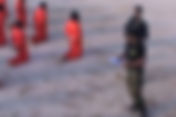
Forces loyal to the Libyan National Army (LNA) in eastern Libya appear to have executed captured fighters in Benghazi and desecrated corpses, Human Rights Watch said today. Video recordings posted online since January 2017 seem to show LNA fighters carrying out seven distinct unlawful executions of “extremists.” The most recent video, which appeared on social media on July 24, 2017, shows the apparent summary execution on July 17 of 20 blindfolded men with their hands tied behind their backs in orange jumpsuits, whom the commander in charge accuses of “terrorism.” The executioners appear to be members of a special forces unit headed by Mahmoud al-Werfalli. The Army Special Forces in Benghazi, under the command of Wanis Bukhamada, are linked to the LNA, which is commanded by Gen. Khalifa Hiftar. The LNA is allied with the Interim Government, one of the three governments vying for legitimacy, international recognition, and control of territory in Libya. The above image is a screenshot from a video posted on July 24, 2017 showing the apparent summary execution by LNA fighters of 20 prisoners, whom the commander, believed to be ICC suspect Mahmoud Al-Werfalli (wearing cap), accuses of “terrorism.” The original video can be found here. On August 15, the International Criminal Court (ICC) issued an arrest warrant for al-Werfalli for the war crime of murder. He is wanted by the court for his alleged role in the killing of 33 people in seven incidents that took place in and around Benghazi between June 2016 and July 2017. The Interim Government should take immediate steps to facilitate the surrender of al-Werfalli to the ICC, Human Rights Watch said. “The posted videos suggest that LNA-linked forces committed a series of grave war crimes over many months,” said Eric Goldstein, deputy Middle East and North Africa director at Human Rights Watch. “The ICC warrant for al-Werfalli is a wake-up call to other abusive commanders in Libya that one day their serious crimes could land them in a prison cell in The Hague.” Human Rights Watch reviewed seven videos and several still images that appear to show distinct incidents of LNA-affiliated soldiers executing prisoners in their custody. Some of these videos and images show fighters desecrating the bodies of supposed fighters who opposed the LNA, including the burning and kicking of a corpse and posing for photographs with another corpse that had a leash tied around its neck. In the video that was posted on social media on July 24, al-Werfalli and LNA soldiers are seen wearing the insignia of the Army Special Forces. Al-Werfalli reads out the execution judgment, identifies the unit, the date of July 17, and the capital offenses attributed to those in custody. He is the main executioner or supervisor of executions in six more video recordings of apparent summary executions of people accused of “terrorism” and committing crimes against the LNA. The summary execution of fighters who have been captured or who have surrendered is a war crime. Despite a commitment to investigate alleged crimes by its forces, the LNA has yet to announce the findings of any investigations or sanctions it has imposed on any of its members found to have committed violations. In a July 20 statement, the LNA rejected allegations made by the United Nations on July 18 that soldiers under al-Werfalli’s command were responsible for summary executions and that captured fighters in Benghazi were at “imminent risk of torture and even summary execution.” The LNA said in its response that there was no evidence to substantiate the accusations of torture and executions and that any conclusions of the LNA’s investigative commission to uncover abuses in “unverified videos” would be made public. Human Rights Watch was not able to verify the date when the videos and photos were taken, or the location where they were recorded. However, an analysis of the imagery revealed no indications that they had been doctored or were otherwise inauthentic. Human Rights Watch sought comment from the LNA spokesman but was unable to reach him. On August 8, Human Rights Watch emailed the LNA for comment on the videos and photographs that appear to show al-Werfalli presiding over or carrying out the execution of prisoners. Human Rights Watch did not receive a response. Three of the seven videos appear to show al-Werfalli himself executing captured and unarmed men, individually or in groups. In three other videos, he appears to give orders to men in military uniform to execute unarmed detainees. In the seventh and most recent video to surface, a commander, who appears to be al-Werfalli, both gives orders and participates in the execution of the 20 unarmed, blindfolded prisoners in orange jumpsuits with their hands tied behind their backs. The video starts by showing several incidents of crimes the captured men allegedly committed. The commander, who is dressed in fatigues, a black t-shirt, and black cap, then reads out the judgment of execution by firing squad against 18 of the men kneeling in four rows. The commander refers to the men as “terrorists” and says that a “field court” has found them guilty of “kidnapping, torturing, killing, bombing, slaying, and torturing the sons of the military establishment in particular and the Libyan people in general.” The commander does not name any of the captured men or cite their affiliations. He says the date is July 17. Once the reading of the judgment is over, he orders armed men in military uniforms to execute the captured detainees row by row. The recording shows them doing so. Two more individuals are executed in the same way at the end of the video. In another video recording posted on social media in June, a man who appears to be al-Werfalli is seen reciting religious texts and then ordering four men in fatigues, black t-shirts, and face-masks to shoot in the head four men kneeling in an open field. The captives are hooded and appear to have their hands bound behind their backs. Al-Werfalli does not name the victims but accuses them of crimes, including assassinations, and calls them Kharijites – a term for Muslims who rebelled against the Caliphate in the early ages of Islam. Al-Werfalli says that it is the month of Ramadan, which would mean June 2017. Another undated video appears to show al-Werfalli reciting religious verses in a room while a man kneels on the floor with his arms behind his head. Other soldiers can be seen and heard in the background. Al-Werfalli accuses the man of being a member of the Islamic State (also known as ISIS), and then pulls out a handgun and shoots him in the back of the head, apparently killing him. Another undated video shows the apparent interrogation of this same man, who says he is Algerian. On May 22, an undated video appeared online showing the apparent execution of two men: Emad Eddin al-Jazawi, a fighter with the Benghazi Revolutionaries Shura Council, a coalition of fighters including extremists who oppose the LNA, and the son of a minister of the National Salvation Government, another of the rival governments. The video begins with al-Jazawi being interrogated and later shows him in a cage with another man, Haitham Jomaa al-Kafrawi, identified in the video as an Egyptian member of Al-Qaeda, who is also being interrogated. The recording ends with al-Jazawi and al-Kafrawi kneeling on the ground, backs to the camera, as al-Werfalli gives two soldiers an order to execute them. A photo bubble appears above the heads of the victims, showing photos of both men. On May 15, al-Werfalli announced his resignation from the special forces, after he and his forces were accused of abuses, including looting and burning homes, as well as attacking a rescue division linked with the Interior Ministry in Benghazi that resulted in the killing of an officer. Al-Werfalli denied responsibility for those acts. However, the next day, the commander of the Special Forces, Wanis Bukhamada, rejected al-Werfalli’s resignation due to the “many sacrifices al-Werfalli” had made, and kept him in his position. Armed conflict, insecurity, and political divisions have plagued Libya since May 2014, when General Hiftar announced a war to root out “terrorism” in Benghazi. As a result of armed conflicts in both the east and west, central authority collapsed and the three competing governments emerged, including the Interim Government, which the House of Representatives supports. Key institutions, most notably law enforcement and the judiciary, are dysfunctional in most parts of the country. On July 5, General Hiftar announced the complete “liberation” of Benghazi from armed groups opposing the LNA, including extremists, but pockets of resistance remain. The ICC prosecutor, Fatou Bensouda, has a mandate to investigate crimes against humanity, war crimes, and genocide committed in Libya since February 15, 2011. Human Rights Watch’s research in Libya since 2011 has found rampant violations of international human rights and humanitarian law, including mass long-term arbitrary detention, torture and other ill-treatment, forced displacement, and unlawful killings. In the face of mounting atrocities, Human Rights Watch has called on the ICC prosecutor to urgently pursue an investigation into ongoing grave crimes by all sides, including possible crimes against humanity. In May, Bensouda said her office was committed to making the Libya situation a priority in 2017. Given the serious crimes committed in Libya and the challenges facing the authorities, the ICC’s mandate remains crucial to ending impunity in Libya, Human Rights Watch said. ______________________________________________________________________________________________________ (c) 2017 Human Rights Watch
- Extra troops in Myanmar’s Rakhine will advance 'Rohingya genocide': rights group
The decision to deploy more troops to Myanmar's troubled Rakhine state will further the "Rohingya genocide," a group representing the Muslim minority said Tuesday. The army last Thursday dispatched a battalion of around 500 soldiers to the Maungdaw area of northern Rakhine, where Rohingya Muslims form the majority. Hla Kyaw, chairman of the European Rohingya Council, said the troops were from the 33rd Light Infantry Division, which he described as "the most notorious military unit when it comes to the serious violation of human rights against ethnic communities." He said the deployment was designed to establish a permanent military presence in Rakhine as well as "the advancement of Rohingya genocide." In emailed comments to Anadolu Agency, he added: "The advancement of Rohingya genocide is the primary goal of the army. The instability in Rakhine state is used as an excuse for the heavy and permanent presence of the army in Rakhine state." Rising tensions were exacerbated by the killing of seven villagers in the Maungdaw area late last month. The government blamed "extremists" for the killings and said it had found "terrorist hideouts" in the state's northern May Yu mountains. However, Kyaw said the killings were a pretext created by "high-level military intelligence," citing unspecified sources. "First, the military intelligence created a pretext or problems," he said. "Then the state propaganda media spread rumors that the Rohingya are involved in the killing[s]… without any evidence or proper investigation." Tens of thousands of Rohingya have sheltered in refugee camps in Rakhine since communal violence flared in mid-2012. The state is home to around 1.2 million Rohingya, who have long been officially labelled "Bengali" -- a term suggesting they are illegal immigrants from Bangladesh. - Suu Kyi complicit Despite having lived in the area for generations, Rohingya have been effectively denied citizenship by a 1982 nationality law and have restricted basic rights such as freedom of movement. Last October, a security crackdown was launched after nine police officers were killed in Maungdaw. In a report on the four-month operation, the UN said it had uncovered human rights violations by security forces in Rakhine that indicated crimes against humanity. During interviews with Rohingya refugees in neighboring Bangladesh, the UN documented mass gang rape, killings, including of babies and children, brutal beatings and disappearances. Representatives of the Rohingya minority have said approximately 400 people were slain during the operation. The government has refused entry to a UN team probing the allegations. "We have been documenting an extraordinary escalation of daily abuse of Rohingya by the army since the mobilization of the army," Kyaw said. He accused State Counselor Aung San Suu Kyi of complicity in abuses again Rohingya. "Unfortunately, Aung San Suu Kyi is on board with the army in the advancement of the Rohingya genocide agenda. To make the situation worse, the West is completely silent on this matter," Kyaw said. "We urge the EU, the UN and regional governments to pressure the Myanmar government to end the complete destruction of the Rohingya community." At the weekend, Buddhist protests called for international aid agencies to be thrown out of Rakhine state, claiming they supported militant groups. Last month, the World Food Program said nearly 226,000 Rohingya were on the brink of starvation. Its report said nearly a third of the population in northern Rakhine were identified as severely food-insecure and in need of humanitarian assistance. Among them were an estimated 80,500 children under the age of five. ________________________________________________________________________________________________________________________________________________________ © 2017 Tüm hakları saklıdır
- If sent back forcibly, we’ll be killed: Rohingya Muslims on deportation
Children belonging to Rohingya Muslim community at a refuge in Hyderabad.(HT Photo) The Centre’s decision to deport an estimated 40,000 Rohingya Muslims to their native country Myanmar has triggered panic among 4,000-odd members of the ethnic group taking refuge in the old city of Hyderabad for the past six years. Moulana Hameed-ul-Haq (50), a cleric at one of the Rohingya settlements in Balapur, says, “It will be better if we are killed in India than in our own country. We will anyway be killed if we are forcibly sent back.” Moulana had fled Myanmar after 2011 violence in which thousands of Muslims were allegedly massacred by the Myanmar military and radical Buddhist monks. He reached Hyderabad through Bangladesh along with hundreds of other Rohingyas. “The Indian government was kind enough to acknowledge us as refugees. The Telangnaa government has been looking after us really well and we feel safe and secure here. Now, suddenly the news about we being sent back has caused a lot of panic among us,” said Moulana . Sultan Mohammad (70), who arrived in India three years ago after deserting his agricultural land at Rakhine state in Myanmar, works as a teacher in Hafiz Baba Nagar. “The military personnel attacked my house and destroyed all my property. I came to Hyderabad along with my wife and two sons. We are thankful to the Narendra Modi government for allowing us to stay here as refugees. I am nearing death and I want my family to survive,” said Sultan. Though the government estimates say there are 40,000 Rohigya Muslims in India, Mazher Hussain, director of Confederation of Voluntary Associations, an NGO which has partnered with United Nations High Commission for Refugees (UNHCR), says the number is not more than 16,000. “They are not illegal migrants as claimed by the government, but are refugees as per the UN convention. In Hyderabad, all of them have been given identity cards by the UNHCR,” said Hussain. The Rohingya Muslims have been living in subhuman conditions in the slums of Balapur, Hafeezbabanagar, Pahadishareef, Mir MominPahadi and Kishanbagh. Each family pays around ~600 as rent per month. “Nearly 80% of the Rohigya Muslims living in these settlements are rag pickers or daily wage workers,” Mohammad Moosa Azmi, a registration officer working with UNHCR. “I get work only twice a week and earn ~450 per day. With that I have to feed the entire family,” said Dil Mohammad (53), who came to Hyderabad from Bouthidoung in Myanmar. ______________________________________________________________________________________________________________________________________________________ (c) 2017 Hindustan Times
- Border patrol beefed up following increased Myanmar military presence in frontier
An increased number of Border Guard Bangladesh (BGB) personnel have been deployed in Bangladesh-Myanmar border following the same move initiated by Myanmar side. Commander of BGB’s Teknaf battalion Lt Colonel SM Ariful Islam said: “Myanmar military forces have boost up their presence in Mongdu, Buthidong and Rathidong, the villages adjacent to the Bangladeshi border. So, we have strengthened our border patrol to avoid any sort of untoward situation.” “We have been preparing ourselves as history shows military presence in the Myanmar border means a possible inflow of Rohingya refugees into Bangladesh,” the BGB commander added. Asked whether the Rohingyas were still entering Bangladesh, Ariful replied: “The situation has improved a lot and we push back the refugees who arrive here once in a while.” “A battalion comprised of 500 BGB personnel has been deployed in the Bangladesh-Myanmar border areas and their targets are not the Rohingyas,” said Ariful. Meanwhile, a government official of Bangladesh seeking anonymity said: “Myanmar has been deploying military forces since the October but the number has been increased manifold in recent times.” “But the Myanmar government has not informed its Bangladeshi counterpart before shooting up its military deployment.” “According to international law, a country has to inform its neighbouring state before strengthening the former’s border patrol, which has not been done in this case. We have inquired about the issue from government level but they are yet to make any reply,” the official added. _______________________________________________________________________________________________________________________________________ (c) 2017 Dhaka Tribune
- USDP-Led Coalition Calls on Govt to Reject Rohingya Ethnicity
A Myanmar border guard police officer stands guard in Taung Bazar village, Buthidaung Township, northern Rakhine State, on July 13, 2017. A coalition of 20 political parties led by the Union Solidarity and Development Party (USDP) called on the Myanmar government to declare to the international community that there is “no Rohingya ethnicity” in the country. Party representatives—largely from minor groups currently unrepresented in Parliament, including the Democratic Party Myanmar, National Democratic Force, and the National Development Party—discussed issues in northern Rakhine State on Monday at the USDP head office in Yangon. After the talks, they signed the statement, which contained four demands: improve general security in the region, provide increased security for government staff, enforce the 2014 counter-terrorism law, and reject the term “Rohingya” to describe a population of more than 1 million Muslims. The self-identifying Rohingya are widely labeled throughout Myanmar as “Bengali,” implying that they are immigrants from neighboring Bangladesh, rather than belonging to Rakhine State. The United Nations High Commissioner for Refugees estimated in May that 168,000 Rohingya had fled violence and persecution Myanmar in the last five years, mostly seeking refuge in Bangladesh and Malaysia. Most recently, following militant attacks on police outposts in October 2016, Myanmar security forces carried out clearance operations in Rakhine State, displacing nearly 70,000 Rohingya to Bangladesh. Myanmar State Counselor Daw Aung San Suu Kyi has been criticized for not speaking out on behalf of the group, and has previously labeled both the terms “Rohingya” and “Bengali” as “emotive.” She told UN Special Envoy for Human Rights in Myanmar Yanghee Lee in June 2016 that these “controversial terms should be avoided.” Speaking to The Irrawaddy on Tuesday, USDP central executive committee member U Hla Thein chastised the international community for “complaining about human rights violations to the government” while “ethnic Rakhine and members of the security forces are being killed by militant terrorists.” In early August, seven ethnic Mro—a sub-ethnicity of the Buddhist Arakanese in the region—were found dead of gunshot and machete wounds in the Mayu mountains of Maungdaw Township in northern Rakhine State. While no one has been arrested for the murders, local sources have said they suspect militants active in the borderlands of committing the murders. Hundreds of troops were deployed to Rakhine State last week after a meeting between military commander-in-chief Snr-Gen Min Aung Hlaing and a seven-member delegation from the Arakan National Party (ANP) in Naypyitaw. The Irrawaddy reported on Monday that the Myanmar military gave a verbal order to villagers in the state’s northern townships to avoid entering the Mayu mountains for any reason, in order to “avoid fatalities” while they conduct clearance operations in the area. U Hla Thein told The Irrawaddy that the recent mission “was not enough, if further attacks potentially happen in the area.” ____________________________________________________________________________________________________________________________________________________ (c) 2017 The Irrawaddy
- The Unliberated Liberated in Iraq
During a trip to northern Iraq last week, I was reminded of the plight that the religious and ethnic minorities face three years since ISIS began its murderous march across the region. In March of 2016, the U.S. Congress unanimously passed a resolution identifying the acts of ISIS against Christians, Yezidis and other ethnic and religious minorities as genocide, crimes against humanity and war crimes. Just a few days after the Congress passed the resolution, Secretary of State John Kerry made an official statement recognizing that genocide had taken place. However, now that most of the Christian and Yezidi villages in northern Iraq, including Mosul, have been liberated, there is an ever-increasing concern that many of the ethnic and religious minority communities will be unable to return home or return to a sense of normalcy unless there is a concerted effort by the international community. While in northern Iraq, our delegation travelled to Erbil, Duhok, Mosul, Sinjar Mountain, Sinjar City, Bartella, and Qaraqosh. Throughout the trip, I was again struck by the difficulties that many of the religious minorities face, particularly the women. In speaking with a representative from one NGO, we were alerted to the increasing suicide rate that is threatening the lives of many Yezidi women and young girls affected by ISIS. Many of these women are unable to obtain proper psycho-social care due in part to a lack of available programming, but primarily as a result of a deeply entrenched honor culture that views psychological treatment as taboo and any form of sexual impurity as shameful. Even though Yazidi leaders have made an effort to ensure that girls taken by ISIS are able to return to their families safely, families and communities are still ashamed by the situation. Most of the girls fear that no man will ever take them in marriage, denying them financial stability and physical protection. The international community needs to develop unique counseling programs in order to assist women and girls suffering from the memories of their traumatic experiences. One of the most heartbreaking personal accounts that I heard was that of a Christian woman, named Maryam*. She was sold as a sex slave more than 20 different times, raped hundreds of times, beaten and abused. At one point while trying to escape, she jumped out of a third story window and broke her leg. When her captor realized what had happened, he came outside, beat her and left her lying on the ground. When she was eventually smuggled out of Raqqa, she thought her family would welcome her back; instead, her family rejected her because of honor culture tradition. Now she lives by herself in a barren one-room apartment provided by a local NGO and is afraid to walk on the street in her own community. Maryam’s story – and many of these victims’ similar plights – serve as vivid reminders of how much work must be done in order to help those who have been persecuted for their faith. However, more than just stories, these are individuals who have hopes, dreams and lives full of meaning. As Americans, I believe that we have a covenant to uphold. President Reagan said the words in the Declaration of Independence and in the Constitution were a covenant we have made not just with those gathered in Philadelphia in 1776 and 1787, but with the world. We have an obligation to advocate for those who are oppressed and persecuted. We cannot forget these individuals in a time of such great need. Frank R. Wolf Distinguished Senior Fellow ____________________________________________________________________________________________________________________________ (c) 2017 Wilberforce