Search Results
Search this site
6509 results found with an empty search
- Call for Vietnamese blogger’s release on eve of her trial
Reporters Without Borders (RSF) urges the Vietnamese judicial authorities to release Tran Thi Nga, an internationally recognized human rights defender and blogger who is due to go on trial tomorrow in Phu Ly, the capital of the northern province of Ha Nam. Detained since 21 January, when she was arrested at her Phu Ly home, this mother of two is facing up to 12 years in prison on a charge of violating article 88 of the penal code by “using the Internet to spread propaganda videos and writings.” Blogging under the name of Thuy Nga, she defends migrant workers and people whose land has been seized by the state. She is also a member of Vietnamese Women For Human Rights, which supports and helps human rights defenders. In September 2013, Nga walked into a complaints bureau in Phu Ly and accused several people there of being plainclothes police officers who had persecuted her and other citizens. She took care to film the scene and the video can be seen on YouTube, where it is has been reposted many times under different pseudonyms. Although detained since January, Ngo saw her lawyer for the first time in May. He reported that her health has worsened steadily in prison. She is suffering from complications from an injury in May 2014, when five men beat her with steel rods after she visited Nguyen Tuong Thuy, a blogger who had just spoken about human rights at visiting US President Barack Obama’s residence. “We are outraged by the detention of this activist, who has always fought courageously to protest against Vietnamese government persecution,” RSF said. “The authorities must free Tran Thi Nga, who has committed no crime and whose health is very worrying. She is not receiving adequate medical care and is eating very little.” Vietnam’s one-party state is cracking down more and more on bloggers and activists, who are the only source of independently-reported news and information for the public. As a result, Vietnam is now the world’s second biggest prison for citizen-journalists, after China. Last month, the dissident Pham Minh Hoang was deported to Franceafter being stripped of his Vietnamese citizenship, and the blogger Nguyen Ngoc Nhu Quynh was sentenced to ten years in prison. The media are entirely government-controlled and just provide state propaganda. _______________________________________________________________________________________________________________________________________________ (c) 2017 Reports without Borders
- An Open Letter to Dr. Tedros Adhanom Ghebreyesus, Director General of the UN’s World Health Organiza
Dr. Tedros Adhanom Ghebreyesus: The mandate of the UN’s World Health Organization (WHO) could hardly be clearer; in the words of the Organization: Our primary role is to direct and coordinate international health within the United Nations’ system. Our goal is to build a better, healthier future for people all over the world. Working through offices in more than 150 countries, WHO staff work side by side with governments and other partners to ensure the highest attainable level of health for all people. And yet this impressive mandate is daily made a mockery of by WHO’s refusal to refer to the cholera epidemic raging in Sudan by name. Neither your organization nor the UN’s Office for the Coordination of Humanitarian Affairs will refer explicitly to the fact that what you continue to call “Acute Watery Diarrhea” is in fact cholera, Vibrio cholera—a fact established by laboratory tests in Sudan. What is most troubling in the present crisis is WHO’s failure to confirm the findings of Sudanese labs tests in Geneva, using stool samples appropriately transferred from Sudan. As you well know, this is entire practicable; by failing to conduct such laboratory tests, you are grossly failing in fulfilling your mandate. Of more immediate consequence, you are failing the people of Sudan, who have suffered so much at the hands of the current regime. The practicability of laboratory testing of stool samples in Geneva has been confirmed to me by several physicians, including an infectious disease specialist at a major American research hospital: “Cholera is easy to diagnose unequivocally in stool samples by bacterial culture. Many labs across the world can easily do this using a sample shipped to them. However, this would require special conditions for shipping (e.g., specimen has to be collected and stored in a special fluid called transport media to keep the bacteria alive).” (email received July 24, 2017) Why has such an “unequivocal diagnosis” not been rendered by WHO, given the massive spread of cholera in Sudan since August 2016? To be sure, the Khartoum regime has made clear that it will punish Sudanese journalists and health officials who dare to use the word “cholera,” and no doubt threats have been issued to WHO, demanding that you be complicit in silence about this terrible disease. The regime’s motive is transparently a desire that the “reputation” of Sudan not be compromised by associations the regime perceives would inhere in any accurate designation of a disease that is clearly out of control. But the effect of WHO’s silence is to ensure that Sudan has not received international medical resources necessary to combat cholera—preeminently massive supplies of re-hydration equipment; medical epidemiologists as well as specialists in treating cholera epidemics; and water/sanitation equipment and engineers. By yielding to the Khartoum’s regime’s threat, you are complicit in the failure to respond to a disease that currently threatens many hundreds of thousands of Sudanese civilians—and is currently active in twelve Sudanese states. As you are no doubt aware, the current National Islamic Front/National Congress Party regime—which came to power my means of a military coup in June 1989—is guilty of continuous assaults on its own people for almost three decades. Among the most barbaric means used in serial genocidal counter-insurgencies has been the thoroughly documented denial of humanitarian assistance to desperately need civilians—in Darfur, in the Nuba Mountains of South Kordofan, in Blue Nile, and in South Sudan during the long civil war. Eastern Sudan has also been systematically denied critically needed humanitarian resources. Equally well-documented are the Khartoum’s military assaults on humanitarians—most recently and notoriously, bombing of hospitals in South Kordofan (MSF—twice—in Frandala, as well as the repeated bombings of Mother of Mercy Hospital near Kauda in the center of the Nuba Mountains). Bombings and assaults on humanitarian sites were commonplace during the North/South civil war (see http://wp.me/p45rOG-Pv/). Your silence about what is clearly a massive cholera epidemic in Sudan is reprehensible. Your failure to transport stool samples from victims in Sudan to Geneva for official confirmation of cholera makes you fully complicit in the terrible suffering and dying that continues to spread, out of control, with daily new reports confirming that this is indeed a cholera epidemic. The inevitable history that will be written of this epidemic will surely cast you in an unforgiving light. Sincerely, Eric Reeves _____________________________________________________________________________________________________________________________________________________ (c) 2017 Eric Reeves
- Journalists kept at bay during Papua New Guinea elections
Reporters Without Borders (RSF) condemns the many media freedom violations during the general elections held in Papua New Guinea from 24 June to 8 July, including a gag order on a well-known blogger as a result of a complaint by the head of the electoral commission. Journalists who went to cover the elections in the northern province of Madang were kept at bay by the police and the electoral commission. In the capital, Port Moresby, the media were not allowed to film or take photos in the city’s main vote- counting centre. Amid many reports on social networks of vote-buying and violence, the authorities also took alarming measures against citizen-journalists, most notably blogger Martyn Namorong after he referred to electoral commissioner Patilias Gamato as a “tomato” in one of his many posts criticizing the chaotic elections. Gamato brought a suit claiming that he had been “seriously injured in his character, credit and reputation” in Namorong’s post, which went viral. Defending his decision to sue, Gamato said: “I don't look like a tomato, I'm a human being. So that's defamatory, so I had to take him to court.” The national court, located in the Port Moresby district of Waigani, responded by issuing a gag order, banning Namorong from publishing further “defamatory remarks” on Facebook and Twitter. “Journalists and citizen-journalists have a duty to inform the public about what has gone wrong during an election.” RSF said. “The courts and the authorities must recognize that Martyn Namorong committed no crime and must therefore lift the censorship order imposed on him.” An international NGO that defends the freedom to inform, RSF added: “A country cannot claim to be democratic just because it holds elections. It must also respect and protect media freedom, which is the cornerstone of every democracy.” Namorong’s lawyer, Christine Copland, said her client had no chance to speak when the gag order was imposed because court officials said they could not locate him to serve the documents. Namorong’s response to the order was to post a photo of himself blindfolded and gagged. After another hearing was scheduled for tomorrow, he tweeted: “I am as cool as a cucumber about tomorrow’s hearing as my lawyers are no couch potatoes.” __________________________________________________________________________________________________________________________________________________________ (C) 2017 Reports wWithout Borders
- Myanmar: UN expert lists catalogue of concerns as human rights slide in worsening conflict
A United Nations Special Rapporteur has issued a strongly worded statement accusing the Government of Myanmar of policies reminiscent of the previous military government, and of presiding over a worsening security and human rights situation. Yanghee Lee, ending a 12-day visit to the country, listed a catalogue of concerns including reports of killings, torture, the use of human shields by security forces, deaths in custody and an ongoing humanitarian crisis for the Rohingya people and other minorities forced from their homes. Her own movements had been severely restricted, she added, and access to crisis-hit areas remained off-limits even to international organizations. People who met her faced harassment, and the Government had sought to place unprecedented pre-conditions on her visit. “I am disappointed to see the tactics applied by the previous Government still being used,” said Ms. Lee, launching her statement as her visit drew to a close. “I understand the new Government wishes to normalize its relations with the United Nations, but Myanmar must first become a country that deserves less attention and scrutiny. “We are told not to expect Myanmar to transition into a democracy overnight - that it needs time and space,” she noted. “But in the same way, Myanmar should not expect to have its close scrutiny removed or its special monitoring mechanisms dismantled overnight. This cannot happen until there is real and discernible progress on human rights.” Ms. Lee said the situation of the Rohingya people from Rakhine State, many of whom have been forced from their homes amid reports of grave human rights violations, had hardly improved since her last visit in January. “I continue to receive reports of violations allegedly committed by security forces during operations. There also appear to be incidents of Rohingya being targeted for applying to be verified as citizens, as well as village administrators and other Muslims targeted for being ‘collaborators’ for working with the authorities – leaving many Rohingya civilians terrified, and often caught between violence on both sides,” she said, adding that she was severely concerned about the treatment of prisoners. The Special Rapporteur noted that the authorities have already recognised that State protection and security must extend not only to the Rakhine but also the Muslim communities. However, she said, “the Government must take concrete steps in this regard, including investigating all alleged violations, ending discriminatory practices and restoring freedom of movement.” She said around 120,000 people from the area were still living in camps after fleeing their homes, and there was little prospect of a long-term solution. “Some people were told they would be in the camps for three days, but this has turned into five long years,” she added. Concern was growing over a worsening situation in Kachin and Shan states, the Special Rapporteur noted, with lack of access for international organizations a worsening feature in both. “I was particularly dismayed to learn that the situation in northern Shan State is deteriorating, with reports of more conflict, more alleged rights violations by security forces and armed groups, and inadequate assistance for civilians. “There have been numerous reports of killings, torture, even the use of human shields by the armed forces, allegedly in some cases accompanied by threats of further violence if incidents are reported,” said Ms. Lee. The Special Rapporteur, who visited Yangon and Nay Pyi Taw as well as parts of Rakhine, Shan and Kayin States, said she had been “astonished” at Government attempts to limit her activities and movements. She was not permitted to visit Hsipaw in Shan State, where three journalists are being held in prison, even though it is a tourist destination. Other areas of the country were also placed off-limits. The Special Rapporteur also highlighted the confiscation of land to create so-called Special Economic Zones. “Farmers and fishing communities described having their land confiscated with little or no consultation or compensation, with efforts to seek redress often gone unanswered,” said Ms. Lee. “In some cases farmers still have to pay tax on confiscated land. Others are told they can buy back their own land at an inflated price. I heard similar stories in a number of areas, showing this to be a truly nationwide problem.” During the visit, which took place from 10-21 July at the invitation of the Government, the Special Rapporteur met a broad range of officials including political and community leaders and civil society representatives, as well as victims of human rights violations. It was her sixth fact-finding mission to the country, and the third since the new Government came to power. Ms. Lee will present a full report on her visit to the UN General Assembly in October 2017. Ms. Yanghee Lee (Republic of Korea) was appointed by the UN Human Rights Council in 2014 as the Special Rapporteur on situation of human rights in Myanmar. She is independent from any government or organization and serves in her individual capacity. Ms. Lee has served as the Chairperson of the Coordinating Committee of Special Procedures of the Human Rights Council (2016-2017). Ms. Lee served as member and chairperson of the UN Committee on the Rights of the Child (2003-2011). She is currently a professor at Sungkyunwan University, Seoul, and serves on the Advisory Committee of the National Human Rights Commission of Korea. Ms. Lee is the founding President of International Child Rights Center. The Special Rapporteurs are part of what is known as the Special Procedures of the Human Rights Council. Special Procedures, the largest body of independent experts in the UN Human Rights system, is the general name of the Council’s independent fact-finding and monitoring mechanisms. Special Procedures mandate-holders are independent human rights experts appointed by the Human Rights Council to address either specific country situations or thematic issues in all parts of the world. They are not UN staff and are independent from any government or organization. They serve in their individual capacity and do not receive a salary for their work. _________________________________________________________________________________________________________________________________________________________ (c) 2017 United Nations Human Rights
- Year in Review
Hey, Thanks to you, this past year was a great success! STAND activists across the nation have participated in numerous campaigns, a national conference, four regional conferences, and individual chapter activities. Because of your hard work, 26 Syrian students were awarded scholarships to universities across the nation, nearly $5,000 was raised for young peacebuilders in Burma, and we witnessed the release of political prisoners in the Democratic Republic of the Congo. We honored the victims of global genocides in our annual Together We Remember name readings across the country, fought back against human rights infringements and violence within our own country, and pushed critical legislation through Congress piece by piece. As always, STAND students have been at the frontlines of these actions. Read below for some snapshots of the work you’ve done this year. Save Aleppo In the winter, the situation in Syria notably worsened in the besieged city of Aleppo. As the Assad regime stepped up its use of sieges and rebels lost territory, many called for action to help the individuals of Aleppo. STAND activists responded to the crisis by writing op-eds, urging Members of Congress in the US to vocally and vigorously push for civilian protection measures, including evacuating civilians, and fast-tracking the Caesar Syria Civilian Protection Act, which we will continue to support in the coming school year. http://www.tennessean.com/story/opinion/2016/12/05/sen-corker-syrian-civilian-protection-bill-deserves-vote/95018516/ This year, STAND continued our partnership with Students Organize for Syria, working with students to urge universities to create scholarships for Syrian refugees. This campaign has been a huge success. The petition has gained over 20,000 signatures, three universities have committed to create scholarships for refugees, and a fellowship has been developed to assist refugee students with supplementary funding for their education. To learn more and get involved, visit www.books-not-bombs.com. Free Jean-Marie Last spring, STAND launched a campaign to bring attention to the unlawful imprisonment of young activists by the Congolese government. We particularly focused on Jean-Marie Kalonji, a recent law graduate and young pro-democracy organizer who was kidnapped by the Congolese intelligence agency in December 2015. Using the hashtag #FreeJeanMarie, STAND students engaged senators using the power of social media to raise Jean-Marie’s plight. Earlier this semester, Jean-Marie and other activists were released from prison. While advocacy for human rights in Congo is ongoing, this campaign demonstrated the impact student activism can have in pressuring foreign governments. #IlEstTemps In December, Congolese elections were held. As the deadline for President Joseph Kabila to step down approached without an announcement that he would leave, Congolese took to the streets to call for free and fair elections. The STAND Managing Committee took action, issuing a statement of solidarity with pro-democracy protesters, and working with Friends of the Congo to encourage students to stand in solidarity with Congolese activists who were calling “Il Est Temps” - “The Time is Now” for democracy in Congo. Together We Remember Throughout history, the month of April has been both a celebration of life and renewal and a month of horrible carnage and loss, and has long been recognized as Genocide Awareness and Prevention Month. For the second year, STAND partnered with #TogetherWeRemember to host over 25 commemorative name-readings at schools and in communities across the U.S. From the University of Southern California to Brooklyn Tech High School in New York City, students across the country read aloud names of victims of genocide and mass atrocities throughout history to honor the lives lost - and to take action to prevent future atrocities. Sign up to host your own #TogetherWeRemember event this April at www.togetherweremember.org! STANDFest STAND worked this semester to partner with filmmakers to offer screenings of films related to genocide and mass atrocities to chapters across the country. Along with the films, STAND provided action items for students to make a difference. Terre Haute South Vigo High School STAND partnered with the CANDLES Holocaust Museum in Indiana to hold the first “STANDFest,” a film festival of learning and action. Interested in planning a screening or STANDfest in your community? Get in touch with us at info@standnow.org! R2P Journal Collaboration This year, STAND partnered with The Responsibility to Protect (R2P) Student Journal, a global, student-led, free online journal founded in 2015 by a group of students from the University of Leeds and the Graduate Institute of International and Development Studies. The journal aims to provide a platform for undergraduate and postgraduate students to publish academic work on R2P and related topics, including international humanitarian law, human rights, international criminal justice, and genocide and mass atrocity prevention. You can check out our first joint issue here, including an article by former STAND Student Director Francesca Freeman! Elie Wiesel Genocide and Atrocities Prevention Act The Elie Wiesel Act seeks to improve the U.S. ability to protect civilians around the world by creating a governmental working group focused on genocide and atrocities prevention, and authorizing the Complex Crises Fund (CCF), a small funding pot that allows the U.S. to quickly allocate funds to alleviate emerging crises. While a similar bill failed to pass last year, we have continued to build support. Last semester, STAND activists across the country asked Members of Congress to cosponsor the legislation. All the pressure paid off: the Senate bill, S. 1158 led by Senators Thom Tillis (R-NC), Todd Young (R-IN), and Ben Cardin (D-MD) has 26 cosponsors, and a House companion bill, H.R. 3030, was recently introduced by Representatives Ann Wagner (R-MO) and Joe Crowley (D-NY) and has 30 cosponsors. We hope you will join us this year in pushing for this vital policy issue! Caesar Syria Civilian Protection Act The Caesar Syria Civilian Protection Act aims to alleviate violence currently transpiring in Syria by implementing targeted sanctions on individuals with ties to the Assad regime in order to promote accountability to those perpetrating and financing atrocities. In addition to sanctions, the bill calls for an assessment of the potential effectiveness of both safe zones and no fly zones. Throughout the school year, STAND student leaders lobbied their representatives in favor of this legislation, leading to its passage in the House of Representatives last fall. As there was not time to build support and pass the bill in the Senate before the end of the year, we are continuing to work on this bill in the coming school year. #StopArmingSaudi Since the Yemeni civil war began in 2015, the Saudi government has intervened on behalf of the government while using American and European weapons to deliberately target Yemeni rebels and civilians. Both the Obama and Trump administrations have nevertheless persisted in selling arms to Saudi Arabia. Providing the Saudi government with more arms will only exacerbate the conflict and lead to more civilian harm. This spring, STAND students in key states urged their Congressional representatives to oppose the Saudi arms deals. While a 2016 bill to condemn the arms deal only received 27 “Yes” votes in the Senate, the 2017 resolution received 47, showing a significant increase in opposition to selling arms to Saudi Arabia. #NoMuslimBan Shortly into his first term, President Trump signed an Executive Order (EO) to drastically reduce refugee admissions and grind resettlement to a halt, specifically targeting refugees from seven Muslim-majority countries: Syria, Iraq, Iran, Sudan, Yemen, Libya, and Somalia. The EO, in what ultimately amounts to a Muslim Ban, threatened our refugee friends, family, and communities based on faulty and discriminatory premises. STAND students were vocal in opposing the ban, urging their Congressional representatives, local officials, governors, and beyond to make public statements against it, and by welcoming new arrivals at airports across the country. The EO is still being fought in court, and we will continue to advocate against this inhumane order. #Don’tBlockadeAid This spring, the Trump Administration proposed a budget that would implement enormous cuts to funding for the State Department, foreign aid, and the United Nations. STAND students wrote letters, op-eds, and called Congressional representatives to insist that we should invest more, not less, in peacekeeping, development, and US diplomatic efforts. STAND’s grassroots network will continue to speak up on budget issues in the coming year, protecting the world’s most vulnerable people who benefit from this funding and bolstering America’s capacity to make “Never Again” a reality. Kayla Mueller Medical Supply Drive In honor of Kayla Mueller, a dedicated STAND alumna who was tragically killed in 2015 while doing aid work on the border of Syria, STAND has partnered with Students Organizing For Syria and the Syrian American Medical Society to organize the Kayla Mueller Medical Supply Drive. The goal of this drive is to collect donated medical and dental supplies and machines from generous hospitals and practices. STAND students are writing to and visiting local hospitals in their communities to request donated materials. SOS and SAMS are coordinating to ship these materials overseas. #RiseForRohingya This year, STAND, in partnership with The Nexus Fund, asked activists to #RiseforRohingya by fundraising for youth leadership programs in Burma, where the Rohingya minority ethnic group is at severe risk of genocide. We have raised nearly $5,000 to train young Burmese leaders to identify and respond to various threats to peace in their communities, focusing especially on the effects of hate speech. With your help, STAND hopes to reach its goal of $7,500 this summer! Check it out and donate here. As always, the success of STAND relies on the activism of individual students and chapters across the country. As we enter our 13th year of anti-atrocity work, we want to give a direct, sincere, and deep thank you to every single one of you that has helped carry this mission with you in your day-to-day life and actions. In solidarity, Savannah Wooten Student Director University of North Carolina at Chapel Hill '18 ______________________________________________________________________________________________________________________________________________(c) 2017 STAND
- Faith Keepers Documentary; Iraqi Christians in Distress
We are proud to report that the seeds of the making of the following faith keepers documentary in the US started with the ICAE Insitiute consulting and interview three years ago were we also helped in identifying the many individuals impacted by ISIS and the local community institutions working with them for interviews. Please do your best to attend this event. ______________________________________________________________________________________________________________________________________________(c) IRAQI CHRISTIANS ADVOCACY AND EMPOWERMENT INSTITUTE (ICAE)
- Yazidi survivor: 'I was raped every day for six months'
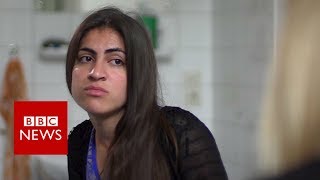
Nearly three years ago, so-called Islamic State fighters swept through northern Iraq, where the country’s oldest ethnic minority were living - the Yazidis. Many of the men were shot, while the women and children were kidnapped, taken as hostage and raped. The Victoria Derbyshire programme’s reporter Fiona Lamdin has spent a couple of days with a small group of women who have been resettled in Germany, and are trying to rebuild their lives. ______________________________________________________________________________________________________________________________________________(c) 2017 BBC News
- Russian parliament certifies free Internet’s death
Russia’s parliamentarians have given final approval to two lawsintended to ban software that bypasses online censorship and tighten government control of search engines and messaging services. Reporters Without Borders (RSF) thinks they certify the death of a free Internet in Russia. The two laws marking a turning-point in Russian Internet censorship were among the torrent of bills that legislators approved in a rush yesterday, the last day of the parliamentary session before the summer break. The first law aims to plug the gaps in Russia’s Internet censorship by obliging services that circumvent website blocking – such as VPNs, proxy servers or the Tor network – to block websites that are banned in Russia. Those that do not comply will be rendered inaccessible in Russia. This law also requires search engines to remove all references to sites that are blocked in Russia. The second law will require the identification of users of messaging services such as WhatsApp and Telegram by means to their telephone numbers and will allow the authorities to block certain subscribers or messages. “The free Internet has just hours to live in Russia,” said Johann Bihr, the head of RSF’s Eastern Europe and Central Asia desk. “As we feared, the Duma has decided to step up censorship and surveillance of Internet users. We again condemn this escalation in draconian legislation, which tramples on the rights of Russian citizens and threatens the digital sector.” The approval of these laws by the upper chamber and their promulgation by President Vladimir Putin are formalities. The anti-VPN law should take effect on 1 November, the law on messaging services on 1 January. Their implementation nonetheless faces major technical challenges. ______________________________________________________________________________________________________________________________________________ (c) 2017 Reporters without Borders
- IDC Announces New Religious Advisory Board
______________________________________________________________________________________________________________________________________ (c) 2017 IDC
- Syria peace talks come to a close with "no breakthrough" as battle for Raqqa continues
The seventh round of Syria peace talks held in Geneva ended in a stand-still, with UN Syria envoy Staffan de Mistura describing the process as having "no breakthrough, no breakdown.” He added that the Syrian government is still unwilling to discuss political transition, with Syrian President Bashar al-Assad's representatives continuing their focus on the “fight against terrorism.” Syria's main opposition group, which believes that the end of "terrorism" would not be possible without stability in Syria, has failed to put the peace talks' spotlight on political transition in Syria. At the same time, France has asked major powers involved in the Syrian crisis to join a contact group that would make proposals to warring parties in order to break a deadlock in political negotiations, the French foreign minister said. France’s policy on Syria has changed recently, as President Emmanuel Macron no longer sees Bashar al-Assad’s step down as a precondition for talks, despite other French officials insisting he cannot be involved in the Syrian government long-term. "Mr. Macron knows well that Bashar al-Assad is the enemy of the Syrian people, but he at the same time is also the enemy of humanity. We cannot ignore a criminal like Assad who used chemical weapons on civilians," said Nasser al-Hariri, the lead opposition negotiator. Furthermore, in a move suspected to appease the Russian government, President Trump has ended the CIA’s covert program assisting and arming anti-Assad rebels, a program installed under the Obama Administration. The decision was made with CIA Director Mike Pompeo and national security advisor HR McMaster under an administration whose decision has been interpreted as a concession to the Russian government to some US officials. While the Obama Administration had considered this option, it chose to remain in the region out of strategic positioning. Now that it has been pulled by the Trump administration, experts believe radical groups may be encouraged by this news. Some have argued that this decision also risks other countries meddling in Syria to provide arms to dangerous groups. Meanwhile, fierce fighting between US-backed forces and the Islamic State (ISIL) hascontinued in Raqqa this past week, as ISIL has continued defending its stronghold in the city. According to the Syrian Observatory Observatory for Human Rights, an estimated 35 percent of Raqqa is now under the US-backed Syrian Democratic Forces’ (SDF) control. Observatory director Rami Abdel Rahman stated that a steady stream of civilians have been fleeing ISIL-held districts, adding that “whenever there is a lull in the fighting, they leave towards areas held by the SDF.” For its part, the SDF said on its social media accounts that its forces "managed to free about 500 civilians who were trapped inside the Al-Daraiya and Al-Tayar neighborhoods, as well as 150 others from the Old City." The UN estimates that up to 50,000 civilians remain trapped inside the city, down from around 100,000 people estimated at the end of June. ___________________________________________________________________________________________________________________________________________ (c) 2017 RtoP Weekly
- Venezuela: Video Footage Exposes Brutal Repression
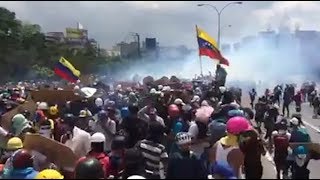
Human Rights Watch issued a multimedia report today that shows the scale and brutality of violent repression of protests by Venezuelan security forces in recent months. Since early April 2017, tens of thousands of Venezuelans have taken to the streets to protest the government’s growing authoritarianism. The government has responded with a brutal crackdown. Security forces have shot demonstrators at point-blank range with riot-control munitions, run over demonstrators with an armored vehicle, brutally beaten people who offered no resistance, and broken into homes of suspected opponents. The security forces have also arbitrarily arrested hundreds of demonstrators, bystanders, and critics and prosecuted them in military courts. “When you see images of the repression, the government’s narrative about a violent coup-plotting opposition falls apart,” said José Miguel Vivanco, Americas director at Human Rights Watch. “Regional leaders should use this evidence to send a clear message to Venezuelan officials and security forces that these actions will not be tolerated and that those responsible will eventually be held accountable.” The video includes images of egregious human rights violations by members of the Bolivarian National Police and the Bolivarian National Guard. In many cases, armed pro-government groups, called “colectivos,” have carried out the abuses with collaboration or acquiescence of security forces. The abuses include: Brutality during massive anti-government demonstrations. Security forces have used a variety of riot control munitions – pellets, marbles, teargas canisters, and other so-called non-lethal cartridges – in response to demonstrations. In several cases these munitions have been used inappropriately, at too close a range or directly targeting people, causing deaths or severe injury. Security forces have also shot toward demonstrations from rooftops and run over demonstrators with an armored vehicle. In many cases, the victims clearly posed no imminent threat and offered no resistance. Some were not even participating in demonstrations. Security forces have fired teargas canisters directly toward demonstrators, health workers, and the Red Cross building in Caracas, and into malls, homes, universities, and health facilities. Arbitrary arrests and prosecutions. More than 4,000 people have been arrested since early April, according to the Venezuelan Penal Forum, a local nonprofit group that provides legal support to detainees. Those arrested include demonstrators, bystanders, and people who have been taken away from their homes without judicial warrants. In many cases, security forces and colectivos have stolen detainees’ personal belongings and subjected them to physical and psychological abuse. Security forces have severely abused detainees in detention, including ill-treatment that may amount to torture. Military courts have prosecuted more than 470 civilians. Breaking into homes. Security forces and colectivos have broken into residential buildings and raided homes without a judicial order, destroying doors and cars, stealing, and beating and detaining residents. Breaking into the National Assembly. On July 5, security forces allowed armed thugs to assault the National Assembly, which is controlled by the opposition, and beat up opposition legislators in broad daylight. The attack was coordinated between colectivos and members of the National Guard, according to audio recordings released onJuly 7. Street demonstrations have been largely peaceful, yet security forces have repeatedly used extreme force against peaceful protestors. There have been some incidents of violence by some demonstrators, including throwing rocks and Molotov cocktails, but in no way do these actions justify the killings or other acts of brutality by security forces, Human Rights Watch said. Since early April, more than 90 people have been killed in the context of demonstrations, including several members of the security forces, according to the Attorney General’s Office. Attorney General Luisa Ortega Díaz has opened investigations for the alleged violation of fundamental rights in more than half of the 1,500 recorded injury cases. The attorney general has also published official information regarding ongoing investigations, many of which point to officials’ responsibility for rights violations. Despite the overwhelming evidence of abuse, there is no evidence to indicate that any key high-level officials other than the attorney general have taken steps to prevent and punish violations. On the contrary, officials have downplayed the abuses or issued implausible blanket denials, often blaming demonstrators for all violence. Government officials and supporters threatened to remove the attorney general from office. In late June, President Nicolás Maduro declared that his government will never give in to its opponents, and that any future political defeat would result in violence. “What we couldn’t do with votes,” he warned, “we would do with arms.” On July 30, the government is planning to hold elections for a Constituent Assembly that would rewrite the Venezuelan Constitution. Over 7 million Venezuelans voted against the government’s initiative in a plebiscite organized by the opposition on July 16. Opposition leaders have vowed to stay on the streets to stop the government from moving forward with the Constituent Assembly proposal. “For years, Maduro has been operating under the assumption that he can commit abuses without any meaningful oversight, given the absolute concentration of power and lack of judicial independence in the country,” Vivanco said. “Unless Latin American leaders redouble the pressure and show him that this will no longer be tolerated, the flow of horrific images like these will only continue.” ____________________________________________________________________________________________________________________________ (c) 2017 Human Rights Watch
- Watch List 2017 – Second Update
Nigeria: Growing Insecurity on Multiple Fronts Nigeria is facing a time of uncertainty and peril. President Muhammadu Buhari’s failing health – he has spent more than 110 days battling an undisclosed illness in the UK – is prompting intense manoeuvring regarding who will run for president in 2019, particularly among loyalists and others seeking to preserve Northern rule. The eight-year-old insurgency by the radical Islamist group Boko Haram persists. An older problem, Biafra separatist agitation in the South East, is provoking dangerous domino effects in the north and Niger Delta, while deadly clashes between herders and farmers are escalating across the central belt and spreading southward. Defence chief, General Abayomi Olonishakin’s recent comment that the military is battling at least fourteen challenges across the country underscores the widespread insecurity. House of Representatives speaker, Yakubu Dogara, said Nigeria ‘‘is effectively permanently in a state of emergency’’. For the European Union (EU), which is already largely engaged in the Niger Delta and the North East, this means that it should also watch closely political, social and security developments in other regions in Nigeria, and work with other international actors to push for much needed reforms that will address these challenges. President Buhari’s Health Crisis The president’s health has deteriorated significantly, particularly since February 2017; government secrecy about his condition has only fuelled diverse speculation. Most observers doubt he can effectively complete his first term, scheduled to end in 2019. As constitutionally mandated, Vice President Yemi Osinbajo is filling in, but several important government decisions and appointments are stalled, awaiting the president’s attention. More troubling, some of Buhari’s Northern and Muslim loyalists are ill-disposed toward Osinbajo, from the South West and Christian. They fear that in 2019 Osinbajo might run for and win the presidency, as former President Goodluck Jonathan did following President Umaru Yar’adua’s death in 2010. That would violate an informal understanding to rotate the two-term presidency between the mostly Muslim north and largely Christian south, which has been in place since the return to multi-party democracy in 1999 as a way to address Nigeria’s delicate ethnic-religious balance. The agreement itself is in dispute, however, and those who argue it is unconstitutional, non-binding and divisive will encourage Osinbajo to run. The South East, where complaints of political marginalisation increasingly are stoking Biafra separatism, also is likely to make a stronger claim to the presidency. The influential Northern Elders Forum has declared that a Northerner must complete Buhari’s second term, signalling a serious north-south power struggle in 2019. Adding to these, army chief General Tukur Buratai’s warning in May that troops should steer clear of politicians approaching them for ‘‘undisclosed political reasons’’ raises fears of military intervention. To renew confidence and further reduce north-south suspicions, as well as ensure stable federal governance, the EU, along with member states most closely engaged with Nigeria, should: Encourage transparency about the president’s health as a matter of public accountability to dispel rumours of a Northern conspiracy to keep him in power even if incapacitated. Send strong private or public messages to both military and regional political leaders, against unconstitutional actions, particularly military intervention. Press all parties to abide by constitutional provisions, particularly to achieve a smooth transition if Buhari is unable to continue in office. The Stubborn Boko Haram Insurgency President Buhari’s December 2016 declaration that the army had conquered Boko Haram’s last stronghold raised hopes the conflict was ending. But, seven months on, the insurgency remains very much alive. Fighters continue to attack civilians and military targets with new ferocity. June’s casualty rate – more than 80 – topped those for earlier months of the year. In April, there were indications that Boko Haram was establishing new forest camps in Borno and Taraba states, and setting up new cells in Kaduna, Kogi and Niger states. There are also indications that the military, which has units deployed in 28 of the 36 states, is overstretched and unable to provide troops with sufficient resources. Some exhausted troops are complaining of not being rotated. The rainy season could further hamper operations, enabling Boko Haram to regroup and rearm. The conflict’s humanitarian fallout is worsening: about 4.5 million people lack sufficient food. On 8 June, the government launched a new food intervention plan for internally displaced persons (IDPs) in Maiduguri, but it remains impossible to reach many of the needy. Despite the February Oslo donor pledging conference, UN officials reported the US$1.05 billion Nigeria humanitarian response plan was only 37.8 per cent funded as of 7 July 2017. Insecurity is also constraining aid efforts, as Boko Haram carried out 97 suicide and vehicle borne attacks between March and June 2017 according to Nigerian military authorities. The Borno state government’s shelving of its earlier plan to close all IDP camps by 29 May underscored that large areas of the state are still unsafe. If aid efforts are not stepped up, expanded and sustained, Borno state in particular could slide deeper into humanitarian crisis. The EU most recently announced a €143 million support package for early recovery and reconstruction, bringing its total support in Borno state alone to €224.5 million for 2017. Delivering this package requires safe access, but many humanitarian aid agencies complain that convoys are not effectively secured, exposing them to ambushes and abductions. To help improve confidence and guarantee safer space, the EU should: Prod the government to intensify military and other security efforts to ensure safer humanitarian access. Prioritise humanitarian assistance with operational presence, fast-track food assistance and cash-based transfers wherever feasible. Biafra Agitation Sparking Dangerous Domino Effects Deepening separatist agitation in the Igbo-dominated South East, spurred by perceived political and economic marginalisation, is producing dangerous ripple effects. A successful sit-at-home action called by agitators on 30 May – the 50th anniversary of the declaration of an independent Biafra – provoked sixteen northern youth groups to demand a week later that Igbos leave the north by 1 October. This in turn prompted a call by a coalition of eight Niger Delta militant youth groups for all Northerners leave the delta by the same date. Although northern state governors disavowed the declarations while Acting President Osinbajo consulted with both northern and south-eastern leaders to defuse tensions, the youth groups have not withdrawn their demands. Should they seek to enforce them, or should mobs take matters into their own hands, there could be violence and large-scale population displacements. Militants in the Niger Delta have not launched any major attacks on oil installations since the federal government engaged the region’s ethnic and political leaders last November, pledging to revive infrastructure projects, clean up the polluted Ogoni environment and allow local communities to set up modular refineries. Yet the region’s situation remains fragile. Attacks against Igbos or other southerners in the north might lead some delta militants to target oil companies, either to pressure the federal and northern state governments to stop anti-Igbo violence, or to cover criminal activities. The EU, especially its delegation in Abuja, and its member states should encourage the government to continue consultations with regional leaders and other stakeholders. In particular, it should: Encourage the government to strengthen measures to protect citizens, working with the military, police but also community leaders and associations. Engage with leaders of relevant south-eastern, northern and Niger Delta youth groups, and organise forums with the goal of halting inflammatory rhetoric, withdrawing quit orders and publicly denouncing violence. Urge the National Assembly (federal parliament), presently divided over the 2014 National Conference Report and its recommendations, to commence deliberations on suggested federal reforms that could help prevent conflicts and curb separatist agitation. The Herder-Farmer Tinderbox Violent conflict between largely Muslim Fulani herders and ethnically diverse farmers in predominantly Christian areas has taken on tribal, religious and regional dimensions. Clashes across the central belt and spreading southward, are killing some 2,500 people a year. The conflict is now so deadly that many Nigerians fear it could become as dangerous as the Boko Haram insurgency. Escalating internally, the conflict could also spread regionally: herders might seek to draw fighters from their kin in other West and Central African countries, as some Fulani leaders have warned. This in turn could undermine a fragile region already struggling to defeat the Boko Haram insurgents. In the absence of a strong federal response, states have been devising their own policies, including bans on open grazing that are vehemently opposed by herders and cattle dealers. Because state governments do not control the police and other security agencies, community vigilantes might be mobilised to enforce these bans, which could spark violence, particularly in Benue and Taraba states. In the short term, the EU should: Urge state governments to exercise caution in considering – or enforcing – these new laws, and urge cattle herders’ and dealers’ associations wishing to protest to use lawful channels. Press the federal government and its security agencies to strengthen measures to detect and pre-empt potential unrest among both community vigilantes as well as herders and cattle dealers, particularly in Benue and Taraba states. In the longer term, EU member states should support, through funding, capacity building and technical aid, the Federal Ministry of Agriculture’s proposed National Ranching Development Plan, which seeks to promote cattle breeding only in ranches, as a permanent solution to herder-farmer friction. Pressuring Qatar: What Happens in the Gulf Doesn’t Stay in the Gulf In early June, Saudi Arabia, the United Arab Emirates (UAE), Egypt, Yemen, Bahrain and the Maldives broke diplomatic relations with Qatar and moved to isolate it. More than a month later, the rift shows no sign of abating. Tension among a number of these states – especially the main protagonists, Qatar, Saudi Arabia, and the UAE – is not new, but with the Middle East polarised, conflicts persisting around the region and the Gulf states themselves projecting their power, their dispute risks making an already bad situation worse. The threat of direct violence in the Gulf itself may be low, but with the U.S. unable to mediate an end to the dispute, the EU and its member states, particularly France, should also lend their efforts to defusing the situation lest it metastasise into subsidiary venues and proxy fights. Exactly what precipitated the move is unclear. Doha was given no warning. In conversation with Crisis Group, Saudi and Emirati officials cited no specific catalyst but rather spoke about an accumulation of frustration and unkept pledges. Two issues apparently vexed them in particular. First, some officials alleged that Qatar had cosied up to Iran, though Qatar’s policies largely fall within the stated Arab consensus of confronting Tehran’s proxies, maintaining economic ties, and planning to negotiate at some future point when the Arab hand has been strengthened. Second, and more importantly, officials accused Doha of backing “extremists”, by which they mean a range of both jihadist and political Islamist groups and particularly the Muslim Brotherhood, which their governments tend to see on a continuum with groups such as al-Qaeda and the Islamic State (ISIS). Despite Doha’s commitments since 2014 to change its policies, an Emirati official said, “they say one thing and do something else”, leading Riyadh and Abu Dhabi to take a stronger stance. As for timing, it hardly appeared a coincidence that the Saudi move occurred on the heels of a successful visit to Riyadh by U.S. President Donald Trump. This almost certainly emboldened the royal family, particularly then Deputy Crown Prince (now Crown Prince) Mohamad Bin Salman, who is determined to break with what he views as a tradition of Saudi passivity and assert the kingdom’s regional leadership. If the ferocity of the Saudi-led campaign against Qatar is unprecedented, its complaints are longstanding. Tension across their mutual border grew in the late 1990s, when Doha began to use its financial wherewithal to extend its regional political clout. It pursued an iconoclastic and at times seemingly contradictory foreign policy, at the centre of which was mediation of conflicts; strong ties with the U.S., whose important military base it hosted; sponsorship of a powerful, often combative pan-regional media instrument (Al Jazeera); as well as patronage of groups with an Islamist bent, notably the Muslim Brotherhood but also, later, some in the salafi-jihadist orbit. For Doha, this policy was a mix of what it considered sound political principles, ally cultivation and an assertion of independence. For Riyadh and some other Gulf capitals, this amounted to a leadership challenge and, in some cases, a potential threat to their established domestic order. With the 2011 Arab uprisings, intra-Gulf competition intensified as Doha on the one hand and Riyadh as well as Abu Dhabi on the other lined up on opposite sides of the regional divide pitting the Muslim Brotherhood against established regimes. The various capitals tried to shape the emerging order to their advantage. Qatar doubled down on its support for Hamas and the Brotherhood even as it continued to cultivate a partnership with the U.S.; Saudi Arabia and the UAE pushed in the direction of restoring the former order, nowhere more so than in Egypt. If the immediate causes of the rift are not clear, the potential consequences are. The human and economic impact on Qatar and its citizens aside, perpetuation of the crisis risks diverting Gulf Cooperation Council (GCC) countries from other pressing needs – whether domestic or regional. Moreover, with Qatar, Saudi Arabia and the UAE having extended their reach into other conflict theatres – including in particular Libya and the Horn of Africa, regions of particular interest to the EU – what happens today in the Gulf is not likely to stay there: The U.S.-led anti-ISIS campaign is run from Qatar’s Al Udeid airbase, which has been exempt from severe restrictions imposed by Saudi Arabia and its allies on the rest of the country. A long-running crisis could have unintended consequences, however, and divert attention from the fight against ISIS. In Syria, while Qatar and Saudi Arabia both have cultivated influence among the opposition, Doha has tended to fund harder-line groups (though they were not alone in doing so, nor was it ever easy to tell exactly who was funding whom). Competition among opposition backers was contained, though never eradicated, once the U.S. started coordinating weapons flows and established operations rooms. But should Riyadh and Doha discontinue cooperation and prioritise the fight against each other, the campaign could be weakened and internecine fights among rebels aggravated. Libya remains fractured. Qatar, along with Turkey, supports Brotherhood-aligned groups and Islamist militias that control Tripoli and the west, whereas the UAE and Egypt devote even greater resources to backing and arming forces in Libya’s east loyal to General Haftar. For the moment, Qatar seems to have diminished its support, but should it find itself pressed as the standoff drags on, the proxy war between Doha and Abu Dhabi could intensify. Doha, Riyadh and Abu Dhabi have made substantial investments in the Horn of Africa – military, economic and political. The neutral stance on the conflict adopted by Ethiopia and Somalia (though not its federal state governments, notably Somaliland) has been received coldly in Riyadh and Abu Dhabi; the UAE withdrawing its support from Somalia as a result would be a blow to its weak, cash-strapped government. Conversely Eritrea and Djibouti by contrast have lined up with Saudi Arabia and UAE, which prompted Qatar to withdraw its 400-plus ceasefire monitoring contingent from Doumeira, the disputed Red Sea island. The Gulf interest in the Horn has the potential to promote stability there, but, especially if their Gulf backers push their partners in the Horn to take positions that prove unpopular with local groups, it could have the opposite effect. At this writing, the main protagonists appear unwilling to budge. Saudi Arabia and its allies have presented a list of demands almost impossible for Qatar to accept –which Doha dutifully rejected. The EU and its member states potentially could play a role in de-escalating the situation. Under normal circumstances, the U.S. would step in strongly, all the more so at a time when it wishes to consolidate its partnership with the GCC against Iran. But these are not normal circumstances, and there is discord as well as confusion in the U.S. administration. President Trump has tweeted his support for Riyadh even as the secretaries of state and of defence counselled restraint and de-escalation. Secretary Tillerson’s round of diplomacy notwithstanding, Washington’s muddled and internally contradictory responses have left everyone unclear about its capacity or willingness to resolve this dispute. The EU and its member states by contrast have issued relatively consistent and constructive statements. Should U.S. mediation fail, they, and especially France under President Macron’s leadership, given the country’s traditionally strong relations with both Riyadh and Doha, could seek to play a more active part. They should be modest about their capacity to do so, particularly as long as the U.S. position is unclear, since that lack of clarity will encourage the antagonists to maintain their current positions. But once the parties begin to tire of their standoff and look for a way out, Europe could mount its own mediation effort. Thailand: Malay-Muslim Insurgency and the Dangers of Intractability The occurrence of Islamic State in Iraq and Syria (ISIS)-linked or inspired violence in Jakarta, Mindanao, and Puchong, near Kuala Lumpur, has raised fears of a new era of transnational jihadist terrorism in South East Asia. To date, ISIS has used Thailand as a transit point rather than a target; indeed, there is no known case of a Thai citizen joining the group. But the persistence of a Malay-Muslim separatist insurgency in the kingdom’s southernmost provinces, where roughly 7,000 people have been killed since 2004, is a source of concern among some Western governments, Thai officials, local people and even some within the militant movement. Repeated, if poorly substantiated reports of ISIS activity in Thailand, from foreign fighters transiting through Bangkok to allegations of Malaysian ISIS members buying small arms in southern Thailand, have prompted questions about the insurgency’s susceptibility to radicalisation along transnational jihadist lines. Yet even absent intervention by foreign jihadists, the insurgency’s own dynamics could lead to greater violence. Thus far, the separatist insurgency has had little in common with jihadism. Rooted in the country’s nearly two million Malay Muslims, who constitute a majority in the provinces of Narathiwat, Pattani and Yala, its aspirations are nationalist in nature: liberation of Patani, the homeland they consider to have been colonised by Thailand, and defence of Patani-Malay identity against so-called Siamification. Moreover, the insurgency draws support from traditionalist Islamic leaders, upholders of a syncretic, Sufi-inflected Islam who oppose the rigid views propagated by jihadists. Even the relatively small Salafi minority rejects ISIS’s brutal tactics and apocalyptic vision; some among them claim that ISIS is a product of Western machinations. For Barisan Revolusi Nasional Patani Melayu (BRN, Patani-Malay National Revolutionary Front), the main Malay-Muslim militant group, in other words, association with transnational jihadists would risk cutting them off from their base while triggering greater isolation. It could also internationalise efforts to defeat them. Dangers of an Intractable Conflict Yet perpetuation of the conflict risks altering its trajectory which, in turn, threatens to change the nature of the insurgency. In principle, this could potentially open opportunities for foreign jihadists, who have proven adept at exploiting other protracted conflicts. That remains for now a theoretical threat: little evidence thus far suggests jihadist penetration in Southern Thailand. As noted, neither the insurgency nor the broader Malay Muslim community has shown any inclination toward jihadism. Without progress in peace talks or an inclusive dialogue, insurgents might resort to more dramatic acts of violence however. They already have shown they can stage attacks outside the deep south, as they did in August 2016 when they conducted a series of coordinated, small-scale bombings in seven resort areas, wounding European tourists among others. Militant groups also might splinter, with rival factions competing to demonstrate their capabilities to potential supporters and the government. In turn, increased violence or attacks against civilians – particularly outside the conflict zone – could fuel an anti-Islamic backlash and stimulate Buddhist nationalism, creating tensions between Muslim and Buddhist communities throughout the country. A prolonged conflict means more young Malay Muslims will have grown up in a polarised society and experienced traumatic events. This could split a more pragmatic elder generation from a more militant younger one. Stalled dialogue The surest way to reduce these risks would be to bring the insurgency to an end – a task at present both daunting and long-term. The ruling, military-led National Council for Peace and Order, which seized power in a May 2014 coup, is engaged in a dialogue with MARA Patani (Majlis Syura Patani, Patani Consultative Council), an umbrella group of five militant organisations whose leaders are in exile. But many perceive the dialogue, facilitated by Malaysia, essentially as a public-relations exercise through which Bangkok intends to signal its willingness to peacefully resolve the conflict without making any concessions. Likewise, there are doubts that MARA can control most fighters: although the BRN has the top three slots in MARA Patani’s leadership, BRN’s information department insists these members have been suspended and do not speak for the organisation. After a year-and-a-half, the MARA process remains stuck. In April 2016, the Thai government balked at signing a Terms of Reference agreement to govern talks, which remain unofficial. At the time, Prime Minister Prayuth Chan-ocha argued that MARA lacked the necessary status to act as the government’s counterpart. After a hiatus, the two sides resumed their meetings in August and, in February 2017, they agreed in principle to establish “safety zones”, district-level compacts in which neither side would target civilians. They also agreed to form inclusive committees to investigate violent incidents, although details still need to be worked out and they have yet to announce a district for pilot implementation. For its part, BRN insists on impartial international mediation and third-party observers as conditions for formal talks with Bangkok. In a 10 April 2017 statement, BRN’s information department reiterated these prerequisites and noted that negotiating parties themselves should design the process, a jab at Malaysia’s role as facilitator. Demonstrating that they exercised control over fighters, the BRN implemented an unannounced lull in attacks from 8 to 17 April, a period preceded and followed by waves of coordinated attacks across several districts. In late June 2017, a senior Thai official said that the government might re-examine the issue of the identity of its counterpart, a rare public sign of high-level deliberation and possible flexibility. Although this could suggest willingness to consider BRN’s conditions – including the sensitive question of Malaysia’s role and that of any internationalisation – which it previously had rejected outright, it could also constitute another delaying tactic. The National Council for Peace and Order apparently still clings to the conviction that the conflict can be resolved through attrition, enemy surrenders and economic development, without any fundamental change in state/society relations in the deep south. The military, whose entire ethos is based on the image of national unity and whose senior officers tend to view enhanced local power as a first step toward partition, is loath to contemplate autonomy or political decentralisation. Since taking power, it has suppressed once-lively public debate about decentralisation models, such as proposals for elected governors or sub-regional assemblies. Options for the European Union In this context, one of the international community’s longer-term goals should be to encourage Bangkok to accept some degree of political decentralisation as fully compatible with preservation of national unity. For the European Union (EU) and those EU member states that are engaged in the country such as Germany, in particular, an important objective would be to encourage the government to establish a more inclusive dialogue and to support it, when possible, through capacity building for both parties. Admittedly, their influence with the National Council for Peace and Order is limited. After the 2014 coup, the EU suspended official visits to and from Thailand, as well as negotiations for the Free Trade Agreement and the Partnership Cooperation Agreement, pending a return to elected government. Restrictions on popular representation, codified in the new constitution and laws, mean that even a general election, now scheduled for 2018, might not satisfy the EU’s requirement of functioning democratic institutions. Moreover, Bangkok is not yet prepared to countenance an EU role. That aside, relations with Bangkok are not hostile; Thailand and the EU held a Senior Officials Meeting 9 June 2017 in Brussels, the first since 2012. When conditions permit, the EU should be well placed to support a peace process, given perceptions in Thailand of its impartiality. In the meantime, the EU and member states should continue encouraging the parties to deal with each other constructively. This could include sharing experiences in sub-national conflict resolution and political power devolution or offering training on matters such as negotiations, communication and conflict management. In the near term, the EU and member states should urge the Thai government to restore civil liberties and freedom of expression to allow more open discussion and debate. Among other benefits, such steps would facilitate a public conversation within Malay Muslim communities that, in turn, might diminish risks of radicalisation. Already, the EU backs civil-society organisations’ endeavours to promote community and youth engagement in peace building. This ought to continue. Venezuela: “Zero hour” Venezuela approaches a key moment in its protracted political crisis: the government is preparing to replace the country’s ailing democracy with a full-fledged dictatorship by means of an all-powerful constituent assembly, due to be elected on 30 July under rules that effectively exclude the opposition. Nearly 100 people have died in over three months of street demonstrations across the country, many of them shot dead by police, national guard or civilian gunmen. Beginning a week before polling day, the army will be deployed on the streets to guard against any disruption. There is a grave danger of violence on a scale so far unseen, and a fresh wave of emigration is probably imminent. The accelerating breakdown of health services and other vital infrastructure, growing hunger and shortages of basic goods, along with surging rates of violent crime, pose an evident threat not only to Venezuelans but to neighbouring countries and the international community generally. Democracy Dismantled In December 2015, the opposition Democratic Unity (MUD) alliance won a two-thirds majority in the single-chamber National Assembly, but the government has used its control of the Supreme Court to block every move by parliament since then. When the opposition responded by attempting to trigger a recall referendum against President Maduro, this too was blocked, using the courts and the government-controlled electoral authority (CNE). Elections for state governors, due in December 2016, were suspended. Some opposition leaders have been banned from holding office and/or banned from leaving the country. Others have had their passports annulled and some have been imprisoned. In late March, the Supreme Court attempted to transfer to itself all the assembly’s powers, causing the once loyal attorney general, Luisa Ortega, to declare that constitutional rule had been interrupted and the Organization of American States (OAS) to invoke the Inter-American Democratic Charter, devised to deal with the breakdown of democracy in a member state. The opposition alliance launched a campaign of mass demonstrations to demand the restoration of democracy, but the response from the government has been violent. In addition to the deaths, thousands have been injured and thousands more arrested; security forces and civilian gunmen have invaded private residences, destroying and stealing property and carrying out warrantless detentions. Hundreds have been subjected to trial by military courts, and the legal aid organisation Foro Penal puts the number of political prisoners at around 400. On 1 May, Maduro announced he was convening an assembly to rewrite the constitution. The assembly, to be elected on 30 July, will be supra-constitutional and there is no time limit on its authority. Government leaders have said it will be empowered to close down parliament, stripping members of their parliamentary immunity, and “turn upside down” the attorney general’s office, which has declined to prosecute peaceful demonstrators and charged senior military figures with human rights abuses. Around two fifths of constituent assembly members will be elected by “sectors” (including trade union members and “communes”) largely controlled by the government. The remainder will be elected by municipality, under a system that vastly over-represents the rural areas where the government is strongest. The MUD is boycotting the election, which it says the president has no right to convene without a prior referendum. Polls suggest only around 20 per cent of the electorate intend to vote. Fringe elements in the opposition (collectively referred to as La Resistencia), frustrated with the MUD’s non-violent approach, talk in private of armed resistance. With millions of illegal weapons in private hands, arming urban guerrillas might not be difficult. Nor is the MUD itself united: while some parties support a negotiated transition, others are opposed. Despite abundant evidence of discontent in military ranks (including dozens of arrested officers), there has so far been no split in the armed forces. The officer corps would nonetheless be faced with a dilemma if the army were called on to restore public order. Such a move would inevitably bring much higher casualty figures and some would be reluctant to obey. A ray of light came on 16 July with a massive turnout for a “consultation” of voters ordered by the National Assembly. Over seven million voted to reject the constituent assembly, call on the armed forces to obey the constitution, not the government, and mandate parliament to appoint a new Supreme Court and electoral authority and form a government of national unity. While the government sought to downplay the event, it strengthened demands both internal and external for a last-minute u-turn. Growing Hunger Economists project that by the end of 2017 the Venezuelan economy will have shrunk by around 30 per cent in three years. Manufacturing industries are producing at 20-30 per cent of capacity and the main farmers’ federation says only about a quarter of the normal acreage will be planted, due to lack of seeds, fertilizers and pesticides, as well as agricultural equipment. Outbreaks of mass looting in many cities have badly hit wholesale and retail food outlets, while imports of food have slumped. The government’s failure to provide enough emergency rations through its CLAP (Local Provision and Production Committee) system of food parcels has led to protests in many poorer areas. Studies show half the population living in extreme poverty. Rare official figures show an alarming increase in infant and maternal mortality. Child malnutrition rose by over 11 per cent from 2015-2016 and nutritionists are beginning to predict famine if trends continue. Shortages of essential medicines continue at critical levels and hospital infrastructure is collapsing. A shortage of vaccines has contributed to outbreaks of formerly eradicated diseases such as diphtheria, while farmers warn that livestock too is vulnerable to epidemics due to the lack of veterinary vaccines. In the medium term there is a possibility that the Venezuelan government might collapse under the burden of an unpayable foreign debt and domestic ungovernability, although without necessarily triggering a restoration of democracy. While most analysts believe Caracas can make this year’s debt service payments, it faces a severe challenge in October/November, when around US$3.5 billion come due. Responding to the Emergency The OAS has so far failed to reach consensus on how to approach the crisis. A handful of mostly Caribbean states, beholden to Caracas for cheap energy supplies and other benefits, have blocked what they call an excessively “interventionist” approach. Without a split in the government (and in particular the military), the constituent assembly plan appears unstoppable, and further violence is likely; the 8 July release into house arrest of opposition leader Leopoldo López notwithstanding, the government’s attitude does not appear to have changed. Still, concerned governments nonetheless should prepare a negotiating structure for when conditions change. In this context, the European Union (EU) should back a proposal by a large group of OAS members, including the U.S., Canada, Mexico, Peru and Colombia, to form a “contact group” comprising four or five governments agreed on by both sides to the conflict; its goal would be to promote negotiations aimed at averting more violence and restoring democracy. This group probably would have to be created outside the formal framework of the OAS. The EU and EU member states with close ties to the region (in particular to the Caribbean) should use their influence to widen support for this proposal, especially among OAS countries close to the Maduro government. In addition, the EU, with regional governments in the lead, should develop a concerted response and attempt to bring Russia and China on board insofar as they have greater leverage over Caracas and hold large quantities of Venezuelan debt. Involvement by either or both of these countries in a plan to avert violence and promote genuine negotiations would have a major positive impact. On 16 July, Colombian President Juan Manuel Santos reportedly sought Cuban government support for a regional plan to resolve the crisis. As Venezuela’s closest ally, Cuba is in a unique position to influence the outcome, and Santos’ initiative should be supported by the EU and member states. As an immediate response, the EU and the wider international community should assist front-line states in dealing with the humanitarian and security consequences of the crisis. Colombia, with its delicate post-conflict situation, is highly vulnerable to refugee flows, possible border clashes if the Caracas government seeks an external distraction, and increased activity of non-state armed groups. Although the Venezuelan government has consistently rejected humanitarian aid, some NGOs have been permitted to provide small-scale humanitarian assistance on condition it is not publicised. The EU should seek ways to facilitate this process even as it continues to press publicly for aid to be allowed in. The EU should make plain that free and fair elections and the restoration of constitutional rule are essential pre-requisites for normal relations as well as for emergency financial support. The EU and member states also should be prepared to offer advice and technical assistance to a transitional government, should one be set up. There is no quick fix for the multi-layered crisis Venezuela is facing. But inaction is no longer an option. ______________________________________________________________________________________________________ (c) 2017 International Crisis Group