Search Results
Search this site
6507 results found with an empty search
- WATCH: Story on gay men tortured in Chechnya
If you missed it when it aired earlier this week on HBO, you can now see (for free on YouTube) the Vice News segment about how gay men were allegedly tortured at Argun prison in Chechnya. The officials deny it, of course — one honcho, named Kataev, bizarrely offering correspondent Hind Hassan the contradictory argument that gay men are so disgusting, his men would never even touchone, so how could they beat them? (Imagine all gay bashings defended that way: I hate gays so much, I would never beat one up cuz I don’t want to be that close.) _____________________________________________________________________________________________________________________________________________ (c) 2017 dallasvoice
- South Sudan must end war, UN chief says on refugee visit
South Sudan's leaders must end a civil war that has killed tens of thousands and displaced millions, the United Nations secretary-general said Thursday while visiting what has become the world's fastest-growing refugee crisis. United Nations Secretary-General Antonio Guterres, center, serves maize meal to refugees in the food distribution tent of the Imvepi reception center for South Sudanese refugees in northern Uganda, Thursday, June 22, 2017. Guterres visited ahead of a U.N.-backed summit in Uganda that is aimed at raising global awareness of the world's fastest-growing refugee crisis and urged South Sudan's leaders to end a civil war that has killed tens of thousands and displaced millions of people. (AP Photo/Rodney Muhumuza) "The leaders of South Sudan have not deserved the people they have," Antonio Guterres said after touring a refugee reception center in northern Uganda. More than 900,000 refugees are sheltering in Uganda, most of them women and children. Most have arrived in the past year. "The people (are) suffering enormously with this endless war," Guterres said. "It is time for the war to end." He spoke ahead of Friday's U.N.-backed summit in Uganda that is aimed at raising global awareness of the crisis. Uganda and the U.N. have said they need $8 billion to help the refugees and host communities over the next four years. Uganda has warned it is near the "breaking point" in taking in the refugees. The European Union on Thursday announced 85 million euros ($94 million) in aid. More than 1.8 million people have crossed into neighboring countries since the start of South Sudan's conflict in December 2013. Guterres heard the accounts of refugee children who spoke of everything from medicine shortages to the long line at the communal toilet. Many spoke of hunger amid a reduction in U.N. food rations. The U.N. children's fund in Uganda this week said it requires nearly $50 million this year as well as $30 million each year from 2018 to 2020 to provide critical services, including education and child protection, to both refugees and host communities. Although Uganda has been praised for its generous policy toward refugees, including the allocation of plots of land on which refugees can grow food, national authorities say the continuing influx is straining local resources. Sam Wadri, the elected leader of Arua, the district hosting the Imvepi refugee reception center, told the U.N. chief that the already impoverished local community was overwhelmed. "The source where the problem comes from must be addressed," Wadri said. ____________________________________________________________________________________________________________________________________________________ (c) 2017 ABC News
- Peace accord in CAR breaks down hours after its signing with renewed violence in Bria
Earlier this week, officials from the government of the Central African Republic met with representatives from the major rebel groups in the country in an effort to formalize a path to peace. The discussion culminated in an “immediate ceasefire” accord on Monday, 19 June, which guaranteed the rebel groups political representation in exchange for their ending of violence and blockades against the CAR government and civilians. The effort to secure a formal peace in CAR was prompted by UN Secretary-General Antonio Guterres’ declaration this month about rapidly deteriorating security and stability in the country. Therefore, the parties to the accord seemed to be committed to transparency when they explicitly called for monitoring by the international community as part of the agreement. However, mere hours after the agreement was signed, violence broke out yet again in the CAR town of Bria, which rebel group clashes have continuously plagued since 2013. Tuesday’s violence included the looting and burning of residents’ houses, leading to around 100 casualties, although the toll is expected to rise. A spokesman for the Popular Front for the Rebirth of CAR, a group formerly affiliated with the Muslim Seleka coalition, asserted that his group must protect itself from attacks despite signing the accord. It remains unclear which armed group is being blamed for renewing the violence in the city. However, experts in the country had been pessimistic about the agreement’s chances of success since even before its signing. According to the President of the Central African League of Human Rights, Joseph Bindoumi, the most recent peace deal was just one of many that had also previously fallen through, and therefore he did not believe the armed groups saw the current deal as actually binding. Lewis Mudge, a researcher in the African Division of ICRtoP member Human Rights Watch, had questioned if the leaders of the rebel groups even had enough control over their men to force them to stand down from the violence. It is unclear when the two sides will seek to create another deal, if any. ____________________________________________________________________________________________________________________________________________ (c) 2017 RtoP Weekly
- UN says Congo withdrawing troops from Central African Republic mission
The United Nations said on Wednesday that Congo Republic will withdraw its troops from a U.N. peacekeeping mission in Central African Republic after a review sparked by sexual abuse accusations found "systemic problems in command and control." The country has some 630 troops on the ground in Central African Republic, according to the latest U.N. figures. A U.N. database of sexual abuse and exploitation accusations showed three reported incidents involving Congo Republic troops in Central African Republic this year. Nine were reported in 2016. "The review of the deployment of uniformed military personnel from the Republic of Congo found that the nature and extent of existing allegations of sexual exploitation and abuse, in their totality, point to systemic problems in command and control," the United Nations said in a statement. "These problems have also been compounded by issues related to the preparedness, overall discipline, maintenance of contingent owned equipment, and logistical capacity of these troops," it said. The world body said the review was shared with the Congo Republic authorities who then "decided to withdraw their military personnel." The 13,000-strong peacekeeping mission is seeking to contain violence in a multi-year conflict driven by ethnic and religious grievances and vying over vast diamond resources. The United Nations said some 140 Congo Republic police would remain part of the peacekeeping mission in Central African Republic because "failures identified with the military contingent are not reflected by the performance of the police." ________________________________________________________________________________________________________________________________________________________ © 2017 Reuters
- South Sudan must end war, UN chief says on refugee visit
South Sudan's leaders must end a civil war that has killed tens of thousands and displaced millions, the United Nations secretary-general said Thursday while visiting what has become the world's fastest-growing refugee crisis. "The leaders of South Sudan have not deserved the people they have," Antonio Guterres said after touring a refugee reception center in northern Uganda. More than 900,000 refugees are sheltering in Uganda, most of them women and children. Most have arrived in the past year. "The people (are) suffering enormously with this endless war," Guterres said. "It is time for the war to end." He spoke ahead of Friday's U.N.-backed summit in Uganda that is aimed at raising global awareness of the crisis. Uganda and the U.N. have said they need $8 billion to help the refugees and host communities over the next four years. Uganda has warned it is near the "breaking point" in taking in the refugees. The European Union on Thursday announced 85 million euros ($94 million) in aid. More than 1.8 million people have crossed into neighboring countries since the start of South Sudan's conflict in December 2013. Guterres heard the accounts of refugee children who spoke of everything from medicine shortages to the long line at the communal toilet. Many spoke of hunger amid a reduction in U.N. food rations. The U.N. children's fund in Uganda this week said it requires nearly $50 million this year as well as $30 million each year from 2018 to 2020 to provide critical services, including education and child protection, to both refugees and host communities. Although Uganda has been praised for its generous policy toward refugees, including the allocation of plots of land on which refugees can grow food, national authorities say the continuing influx is straining local resources. Sam Wadri, the elected leader of Arua, the district hosting the Imvepi refugee reception center, told the U.N. chief that the already impoverished local community was overwhelmed. "The source where the problem comes from must be addressed," Wadri said. ___________________________________________________________________________________________________________________________________ (c) 2017 Associated Press
- Neglected but not over: Burundi crisis continues to bite
Burundian President Pierre Nkurunziza announced his intention to seek a disputed third term more than two years ago, spawning a period of unrest marked by extrajudicial killings, a failed coup, and ethnic division. Given repeated assurances from government officials and the dearth of media coverage, you would be forgiven for thinking that period ended some time ago. It did not. The country’s population continues to face armed violence, civil and human rights abuses, while food insecurity and economic hardship persist. People are still fleeing to neighbouring countries: The UN predicts the number of Burundian refugees will top 500,000 by the end of the year. On 14 June, the Commission of Enquiry on Burundi set up by the UN Human Rights Council reported that violations such as the excessive use of force, disappearances, and arbitrary detention by security services – which all surged amid street protests in the weeks after Nkurunziza’s April 2015 announcement – have been continuing. According to government figures, some 720 people have lost their lives since the start of the crisis – many during the heavy-handed crackdown around a failed coup attempt in May 2015. Human rights workers put the number at more like 1,200. The level of violence has subsided but there continue to be sporadic killings from gunshots and grenades, which the police often attribute to criminal activity. Fatsah Ouguergouz, who chairs the commission of enquiry, told the Human Rights Council that testimonies collected in refugee camps “show that since late 2016, human rights violations are often committed in a more clandestine, but equally brutal, manner” than in 2015. “For example, a victim told us that in 2016, a police commander threatened him in the following terms: ‘I can kill you. I can bury you and no one will know,’” Ouguergouz said, explaining that his team had not been given permission to carry out investigations inside Burundi itself. “There are continuing reports of disappearances. Dead bodies are also still regularly discovered,” he added. “According to several testimonies, it is often difficult to identify the bodies. The modus operandi seems to be the same: the victims have their arms tied behind their backs and sometimes their bodies are weighed down with stones to make them sink once they are thrown into a river.” The disappeared In Bujumbura, residents gave IRIN first-hand accounts of loved ones going missing. “My husband received a phone call from people he doubtless knew. He left in our car with a friend and never came back. Even the car was never found,” said the wife of a man close to the government who asked not to be named. “I contacted his old friends – the police, the army, the intelligence services – but to no avail. I’m losing hope, and what [bothers] me the most is that some of his old friends in the police and army don’t answer my calls.” Another woman in the capital told IRIN about her brother, who had been a policeman for a long time. “He was arrested as he came home from work, after meeting some relatives,” she said. “Up to now, I have no information about where he went. I don’t know what to do. We haven’t even been allowed to conduct customary mourning rituals. We are crying in secret.” The commission said refugees had told its investigators of torture sessions carried out by the National Intelligence Service and the police, sometimes assisted by the Imbonerakure – the ruling party’s youth wing. The testimony was graphic: “clubs, rifle butts, bayonets, iron bars, metal chains and electric cables [used] with the result that some victims' bones were broken and other victims lost consciousness; long needles stuck into victims' bodies or unidentified products injected into them; nails ripped out with pliers; burns; and many abuses inflicted on male detainees' genital organs.” The commission also noted that those in exile included many journalists as well as the leaders of most opposition parties, one of which, the Movement for Solidarity and Democracy, was slapped with a six-month suspension in April. Humanitarian crisis Dwindling food supplies have left more than a quarter of Burundi’s population, 2.56 million people, in a state of severe food insecurity. Some three million Burundians require humanitarian assistance. In April, four people died of starvation in Muyange II, an area close to the capital, according to local leader Augustin Ntirandekura. Asked to explain the lack of doors and windows on some of the houses in Muyange II, one resident said they had been sold to pay for food. Yields from the first of the country’s two annual agricultural seasons were down an average of 25 percent, but experts at the Integrated Food Security Phase Classification (IPC) system say this only partly explains the widespread food insecurity. “The current socio-economic crisis characterised by inflation, shortage of jobs, the depreciation of the Burundian franc and a shortage of foreign currency, aggravated by a malaria epidemic and the displacement of populations are factors which influence the level of food insecurity and create a need for a coordinated multi-sectoral approach,” the latest IPC bulletin says. Market prices of basic foods are between 30 and 50 percent higher than the same period last year, according to the IPC, which did, however, project much better yields from 2017’s (just beginning) second harvest. More supply can’t come a moment too soon. At foodstalls in the capital, IRIN found maize selling for 1,200 francs ($0.70) per kilogramme, against 400 francs less than two years ago, while green beans were up from 700 to 1,200 francs over the same period. Depressed economy “When the current crisis started, the expatriate family I had been working for since 2010 left the country and my husband lost his job because his boss said he didn’t have enough money to pay him,” said Nicelate Ngayabosha, who lives in the northern Bujumbura district of Kamenge. She said she struggles to feed her family now and that her children only eat one meal a day, which makes it hard for them to concentrate at school. Adrienne Niyubuntu, a mother of three who said her husband had travelled to the Democratic Republic of Congo because he could not bear to see his children go hungry, explained how she now has to rely on charity. “These days, it’s my relatives who try to give me food, because I have no income,” she said. Budgetary aid suspensions imposed by the European Union and some of its member states in 2016 are also having a serious impact on Burundi’s economy, according to analyst and anti-corruption activist Faustin Ndikumana. “The sanctions have deprived the government of a major source of foreign currency,” he told IRIN. The EU suspension affects a 43-million-euro package of direct support destined mainly for projects in energy, rural development, public finances, health, and justice reform. The European Union had been funding about half of Burundi’s annual budget. Knock-on effects Ndikumana said the lack of foreign currency had led to shortages of fuel, medicines, and other essential goods. “The national agricultural investment programme has not received its planned funds and the agricultural sector is unable to pay dividends,” he said. “We are in a situation where people are impoverished yet certain dignitaries continue to believe that things are normal because they are receiving their salaries or allowances.” The International Monetary Fund has projected zero growth in Burundi in 2017 and 12.4 percent inflation. Fuel shortages and electricity cuts have eased now but in April and May they were severe. “We had to queue outside petrol stations. Sometimes, we even waited all day without getting any,” said taxi driver Thomas Ndayiragije. The fuel shortages also exacerbated food inflation. According to the national statistics institute, food prices went up more than 10 percent in less than a month in April. All this has grave implications for jobs and livelihoods. “I’m having trouble making ends meet every month because so I have so few customers,” said shopkeeper Josue. “I think I will have to try to find another source of revenue because commerce is not working well.” Innocent, who works at a market stall, said her boss had had asked her to look for customers to buy his potatoes. “He has already told me that if things go on like this I will lose my job,” she said. “We used to sell around 200 kilogrammes or more of potatoes a day. Now I sell less than 20.” A cement trader in downtown Bujumbura said his sales had also fallen by a similar 90 percent. “I think fewer people are building houses,” he explained. No way forward For exiled anti-corruption activist Gabriel Rufyiri, there is only one way forward. “Only inclusive negotiations will provide a favourable solution to these problems of food shortages. Because once the political issues are sorted out, donors will be quick to lift sanctions against the government,” he said, speaking to IRIN from Belgium. A government-led “inter-Burundian dialogue” involving 26,000 citizens and 600 hours of meetings produced a final report in May, asserting that the population backed various constitutional changes and putting an end to presidential term limits. But opposition parties, which were not involved, have dismissed the process and the subsequent establishment of a constitutional review commission as a sham. Meanwhile, mediation efforts led by the East African Community are at a standstill, both because some in the opposition regard the facilitator, Tanzanian former president Benjamin Mkapa, as biased and because Nkurunziza sees the process as a violation of Burundi’s sovereignty. This week, UN Assistant Secretary-General Tayé-Brook Zerihoun told the Security Council that implementing the report’s recommendations would likely lead to an escalation of the crisis. Government denial, meanwhile, showed no sign of abating. Albert Shingiro, Burundi’s ambassador to the UN, told the council: “the entire country is calm,” that 150,000 refugees had returned home, and that there was no longer a political crisis at all. ________________________________________________________________________________________________________________________________________________________ (c) 2017 IRN
- Double vision: dark times for the Rohingya echo past horrors – in pictures
In this photography project, Never Again, every picture combines two images – one of Myanmar’s Rohingya Muslims superimposed on that of a different tragedy, from the Armenian genocide through the Balkans war to current-day refugees A young boy inside the Rohingya refugee camp in Bangladesh. More than 74,000 Rohingya have fled from neighbouring Myanmar since October 2016. In the superimposed image, the hands are those of an Afghan asylum seeker, living in an abandoned brick factory in Subotica, near the Serbia-Hungary border, in 2015 Sajida has been living in Kutupalong refugee camp in Bangladesh, but wants to go to Ireland to be with a friend there. ‘Our future depends on UNHCR, which can relocate us to another country,’ she says. The other image shows a destroyed building in Sarajevo. The siege of the city was the longest in modern history – almost four years – during which more than 10,000 people died Abdul Rahim is a refugee from Myanmar. He lives in Bangladesh, in Naziratek village, near Cox’s Bazar. Unregistered asylum seekers living outside the camps do not hold refugee status or have the right to food rations. Rahim’s son, Mohammed Yasin, tried to reach Malaysia by boat, where the situation for refugees is better. But he was captured by mafia and his family had no money to pay a ransom. They have not heard from him since. The other image is of the ship El Venizelos, used to take refugees and migrants to Athens from the Greek islands In Myanmar, a woman walks inside a camp for displaced people. In the superimposed image, in Yerevan, Armenia, another women cleans the monument built in memory of the 1.5 million people killed in thegenocide in what is now Turkey, from 1915 to 1917 A gravestone in Sittwe city, one of the very few reminders of its former residents – Rohingya. The Muslim minority were forcibly displaced, ending up in camps inside and outside the country. The layered image is of a soldier going to the frontline in the dispute over Nagorno-Karabakh, a region in the South Caucasus, which has seen a bloody conflict between Armenia and Azerbaijan from the late 1980s to the present day A Burmese man stands next to the ruins of his former neighbours’ home, after the Rohingya family who lived there were forcibly taken to a camp in Myanmar. In the other image, of Mariupol, Ukraine, the inscription on the wall remembers a soldier who lives there but is on duty at the eastern front. It reads: ‘We are waiting for you’ Children play in a Rohyinga camp in Bangladesh. Between 300,000 and 500,000 Rohingya are estimated to be living in the country. The superimposed image is of gates in the town of Góra Kalwaria, Poland, a site where many Jews were shot dead during the second world war. Bullet traces can still be seen. The gates were relocated to the city’s Jewish cemetery Rohingya children play in abandoned buildings in a Myanmar camp. The other image is from Moldova – a statue of a Soviet soldier. Conflict over the breakaway enclave of Transnistria has made the former Soviet republic one of the poorest countries in Europe Dala Banu fled Myanmar with her husband when violence erupted. They spent several days hiding in the jungle, before reaching the Kutupalong camp in Bangladesh. Her daughter was raped by a criminal gang there. Banu appears against the image of Spac, Albania’s forced labour camp and prison, where the communist regime of Enver Hoxha placed ‘enemies of the state’. Women imprisoned in Spac faced sexual harassment and abuse Nurul Islam fled Myanmar in 2013 after he was attacked by Buddhists, who broke into a mosque. The superimposed image is of a wall of a cell in Cambodia. Bureau S-21 – known as the ‘killing machine’ – was a centre for interrogation, torture and extermination during the Khmer Rouge regime (1975-79). The wall bears prisoners’ numbers. Of 17,000 people detained, only 12 survived Aung Tuin Tay, a Buddhist, lives in the city of Sittwe, once inhabited mostly by Rohingyas. Also shown is the bridge on the frontline of the Abkhazia-Georgia dispute. In this conflict, 250,000 Georgians were driven from their homes, and some 15,000 Georgians and 3,000 Abkhaz died ____________________________________________________________________________________________________________________________________________ © 2017 Guardian News and Media Limited
- Burma’s courts must not help military to persecute journalists
Reporters Without Borders (RSF) calls for the release of Kyaw Min Swe, the editor of The Voice Daily, who is being held under Burma’s 2013 Telecommunications Law as a result of a complaint by the military about a satirical article, and again urges the authorities to amend the law without delay. A court ruled on 16 June that Kyaw Min Swe should remain in detention pending trial on 23 June, but ordered the release of Kyaw Zwa Naing, The Voice Daily journalist who wrote the article, because it was Kyaw Min Swe who posted the offending article online. Kyaw Min Swe and Kyaw Zwa Naing, who is better known by the pen name of British Ko Ko Maung, were arrested on 2 June under article 66(d) of the Telecommunications Law for allegedly defaming the armed forces in an article mocking a military propaganda film. The Voice Daily is one of Burma’s leading newspapers but the scope of article 66(d) is limited to content posted online. RSF urges Burma’s justice system to dismiss the military complaint and to release Kyaw Min Swe at once. RSF also condemns the frequent abusive recourse to article 66(d) to censor those who dare to criticize the authorities. This article, which penalizes “extorting, coercing, restraining wrongfully, defaming, disturbing, causing undue influence or threatening to any person by using any telecommunications network”, is too often used as the grounds for unfounded prosecutions. Eleven Media’s CEO and editor were arrested under article 66(d) in November 2016 over a story about alleged regional government corruption. Researcher Myo Yan Naung Thein was given a six-month jail sentence under article 66(d) on 7 April 2017 for criticizing the head of the armed forces on Facebook. He was released five days later. ______________________________________________________________________________________________________________________________________________________ (c) 2017 Reporters Without Boarders
- Sudan, Libya, and Support for Radical Islamic Militants: A Vignette
In October 2014, I analyzed some of the implications of minutes reflecting the deliberations of the most senior military and intelligence officials of the National Islamic Front/National Congress Party regime during a “Joint Military and Security Committee Meeting held at the National Defense College on 31/08/2014” (see | http://wp.me/p45rOG-1wk ). These minutes have been repeatedly and authoritatively confirmed by a wide range of sources (see | http://wp.me/p45rOG-1w5 ). They were leaked to me by a Sudanese source of unimpeachable character and honesty, although his identity—and those who assisted him in this extremely dangerous undertaking—must remain confidential for obvious reasons. The minutes are highly revealing on various counts, including what at the time was the vehement insistence that Iran was Khartoum’s singularly vital ally in the region. This insistence is a virtual refrain, appearing in the comments of nearly every senior official present, including First Vice President Bakri Hassan Saleh, who presided at the meeting. The ongoing implosion of the Sudanese economy has forced that Khartoum regime to abandon Iran and side with Saudi Arabia and the Gulf States; but ideologically—as the minutes clearly reveal—the regime is very much on the side of Tehran. Only the possibility of immense financial assistance from the Saudis and Gulf States compelled the abandonment of Iran. Notably, the Iranian-backed Houthis in Yemen, mentioned in the minutes as recipients of aid from Khartoum, are now being targeted by Sudan Armed Forces in concert with the Saudi-led campaign. General and First Vice President, perhaps the most powerful man in the Khartoum regime—certainly he is essential to President al-Bashir’s grip on power. He was director of the National Intelligence and Security Services for a number of years follow the National Islamic Front military coup of June 1989. This is the context in which to see the import of a dispatch in today’s Sudan Tribune, concerning the repatriation of Sudanese nationals who had gone to Libya to fight with ISIS (Sudan Tribune, June 21, 2017). This is obviously a delicate issue for Khartoum’s security services, something reflected clearly in the Sudan Tribune analysis. But let’s return to the views of the Khartoum regime in late 2014, and the question of how that regime saw the opportunities presented by Libya in chaos. I offered contemporaneous commentary on particular passages from the minutes, reproduced here without change or editing. The leaked minutes obviously put Khartoum in an extremely awkward position in communicating with recognized Libyan authorities, and this is where I began. Although reflecting only one issue in a very wide-ranging set of topics covered in the meeting of senior officials, let us remember that there is not a shred of evidence that ideologically the NIF/NCP has changed its views about radical Islamic militants: “Fallout from Leaked Minutes of August 31 2014 Military/Security Meeting: Khartoum’s Obligatory Lies” | 29 October 2014 | http://wp.me/p45rOG-1wo (Speakers in each case are identified; all bold emphases in the quoted texts have been added; my commentary is in blue italics followed by my initials, ER; important dates are in bold red) Traveling to Khartoum this month [October 2014], the Libyan Prime Minister Abdullah al-Thani undoubtedly had the August 31 minutes much on his mind when meeting with regime officials. Libya comes up frequently in these minutes, and at several points in ways that must be deeply disconcerting to the struggling Libyan government, and reveal yet again the depth of the mendacity that characterizes the regime. On 7 October 2014 Sudan Tribune reported: The head of the Libyan government, Abdullah al-Thani, will visit Khartoum in response to an invitation extended by Sudanese president Omer al-Bashir, a government source disclosed this week. “The Libyan government welcomes the invitation received from president al-Bashir. (The government) considers it as a step in the right direction and a confirmation of Sudan’s support to the democratic process in Libya,” a Libyan official told the Libyan Bawabat Alwasat on Monday. The official further said that al-Thani accepted the invitation after Khartoum’s full recognition of the House of Representatives as the sole legitimate body representing the will of the Libyan people. Observers in Khartoum says the public acceptance of the invitation is seen by the Sudanese government as the first positive signal from Tripoli after repeated Libyan accusations of supporting extremists groups in the north African nation. On 2 October, Sudan’s foreign ministry for the second time within a less than three weeks summoned the Libyan ambassador in Khartoum to protest against these accusations. Earlier, on 2 October 2014, the Sudan Tribune reported more particularly on the accusations by Libya against Khartoum: The Sudanese foreign ministry announced on Thursday that it summoned the Libyan charge d’affaires to protest recent remarks by an army general in which he accused Khartoum of backing extremist groups in the North African nation. This follows a similar move on September 15th by the ministry in which the acting Libyan CDA was summoned to complain over same allegations made by Prime Minister Abdullah al-Thinni. The latter warned that Tripoli may sever ties with Khartoum as well as Doha if they continue aiding these militias. Sudan’s foreign ministry reiterated its denial of meddling in Libyan internal affairs or taking sides in the ongoing conflict. “The misleading information transmitted by media that is attributed to Libyan [army] officer claimed Sudan’s interference in the internal affairs of his country,” the ministry said in a statement adding that this information is “unfounded.” It denounced attempts seeking to involve Sudan in the Libyan conflict and noted the Sudanese government’s recognition of the legitimacy of the elected Council of Representatives, which meets in Tobruk. So Khartoum would appear to be ready to bluster with denial of what is revealed clearly in the minutes of the 31 August 2014 meeting of senior regime officials: “We have intensified the work to train and graduate Libyan [Islamist rebels] Military Intelligence cadres. Currently, they are doing an advanced course on Internet operation, deciphering of codes, interception of telephones and wireless radios. Their leadership requested us to train and establish for them a strong Military Intelligence system.” (General Siddiq Amer, Director General of Intelligence and Security) General Siddiq Amer, Director General of Intelligence and Security “Our intelligence and security files can play a role in the improvement of our economy [how is never explained—ER] and diplomatic relations. They can also be used to abort the conspiracies of the rebellion against us. The victory of our people [Islamists of the Libya Dawn rebel movement—ER] in Libya is an indication that we will also achieve victory over the New Sudan Project [“New Sudan Project” is Khartoum’s catch-all phrase for any movement toward democratization, press freedoms, equality in citizenship, and secular governance—ER] And there seems no way to deal with this assertion by General Imad al-Din Adawy, Chief of Joint Operations: “The Libyan border is totally secured, especially after the victory of our allies [Libya Dawn forces] in Tripoli. We managed to deliver to them the weapons and military equipment donated by Qatar and Turkey and we formed a joint operations room with them under one of the colonels in order to coordinate and administer the military operations. Turkey and Qatar provided us with information in favor of the revolutionaries on top of the information collected by our own agents so they can control the whole country.” Radio Dabanga reported very recently (28 October 2014) on further details of the Libyan accusations: [In] late September, Libyan army officers intercepted a Sudanese convoy with Yemeni fighters at El Kufra on the Sudanese-Libyan border. On 6 September, a Sudanese military aircraft was grounded at El Kufra airport, “laden with weapons bound for [Libya Dawn] rebels.” The week before, the Sudanese military attaché in Tripoli was declared persona non grata, after being accused of supporting Libyan militia groups. Our best news account of what is really at stake here, and the character of Libya Dawn militias is The Guardian [Tunis], 7 September 2014: Libya has expelled the Sudanese military attaché after accusing Khartoum of flying weapons to Islamist rebels in Tripoli, raising fears of a widening regional conflict. The government, which has fled Tripoli for eastern Libya, accused Khartoum of sending a transport plane loaded with munitions for the Islamist-led Libya Dawn militias who control the capital. “Sudan is interposing itself by providing arms to a terrorist group that is attacking the headquarters of the state,” said a government statement. “This also represents a clear violation of international resolutions, and the latest UN Security Council resolution.” The government said the plane entered Libyan airspace without permission on Thursday, making a refueling stop in the southern oasis town of Kufra, where the weapons were discovered. It said the weapons were destined for the Tripoli airport of Mitiga, controlled by Libya Dawn. Sudan, which is sympathetic to Libya’s Islamists, confirmed sending the plane but insisted the weapons were intended for legitimate border forces patrolling the southern desert. This is who the NIF/NCP was and remains. And if we want to know the face of radical Islam in Libya in 2014, I can think of no more telling image than one showing some twenty Egyptian Coptic Christians being led to their beheadings on a beach near in November 2015: Sudan and Terrorism In Senate testimony of July 2009, the Obama administration’s first special envoy for Sudan, Air Force Major-General (ret.) Scott Gration, declared that: “There’s no evidence in our intelligence community that supports [Sudan] being on the state sponsors of terrorism. It’s a political decision,” Gration said. Obama administration’s first special envoy for Sudan, Air Force Major-General (ret.) Scott Gration; no greater fool or more ignorant buffoon has ever served in an important American diplomatic role. He was given the position of Special Envoy for Sudan by President Obama as a reward for Gration’s stalwart support among the U.S. military during the 2008 presidential campaign. His ultimate goal was the ambassadorship to Kenya, which he would soon get–and be fired within a year for incompetence by the State Department. The damage in Sudan had already been done, although the Trump administration seems quite capable of finding someone as absurdly unqualified as Gration was. At the same hearing, former Senator Russ Feingold, chair of the Senate Foreign Relations Committee subcommittee on Africa rightly pushed back: Gration said Sudan, once home to Osama Bin Laden, has been helpful in counterterrorism efforts. However, Sen. Russ Feingold, a Democrat from Wisconsin, said Sudan’s cooperation is always overstated in this area. More fully, Feingold had issue a strong statement in May of that year (2009): “I take serious issue with the way the report [on international terrorism by the U.S. State Department] overstates the level of cooperation in our counterterrorism relationship with Sudan, a nation which the U.S. classifies as a state sponsor of terrorism. A more accurate assessment is important not only for effectively countering terrorism in the region, but as part of a review of our overall policy toward Sudan, including U.S. pressure to address the ongoing crisis in Darfur and maintain the fragile peace between the North and the South.” (Statement by Senator Russell Feingold, Chair of the Africa Subcommittee of the Senate Foreign Relations Committee and member of the Senate Intelligence Committee, May 1, 2009) Gration was spectacularly ignorant about Sudan and was simply wrong in his claim about what U.S. intelligence knew at the time—and on multiple counts, including Khartoum’s assistance in Iran’s movements of weapons to Gaza—well reported at the time in The Guardian (December 6, 2010)—and the bald fact that Hamas was allowed to operate freely in Khartoum, despite being on the list of terrorist organizations compelled by a wide range of countries besides the U.S. There were many other examples as well that Gration simply chose to ignore. Rightly, Sudan remains one of only three countries on the State Department’s list of “state sponsors of terrorism,” including Syria and “best-strategic-ally-for-life” Iran. All this becomes particularly important as a Trump administration, easily as ignorant as former special envoy Gration and even more cynical, approaches a decision about whether or not to lift U.S. economic sanctions on Khartoum permanently (the deadline for a decision is July 13, 2017). The terribly misguided and mendaciously justified decision by the Obama administration in January 2017 provisionally to lift sanctions can still be reversed. But depending on the administration of a xenophobic, pathologically narcissistic, and profoundly ignorant President Trump seems to make reversal a distinct long shot. And although the Trump administration that will make the decision, it was President Obama that set the clock ticking. In rewarding Khartoum’s génocidaires, he is a disgrace to the campaign statement he made in running for the presidency in 2008—“that genocide in Darfur was a “stain on our souls” and that he would not “avert his eyes from human slaughter” (see | https://www.youtube.com/watch?v=QEd583-fA8M ). Unctuous words that meant nothing for the eight years of his administration, which concluded with Obama’s decision to begin the process of lifting longstanding U.S. economic sanctions on a regime guilty of serial genocides. __________________________________________________________________________________________________________________________________ (c) 2017 SUDAN Research, Analysis, and Advocacy
- Remarks by Ambassador William A. Heidt at the Iftar dinner hosted by the U.S. Embassy
Good evening and Ramadan Kareem – thank you Your Excellency Sem Sokha for your remarks. I am honored to mark the holy month of Ramadan with so many friends from Cambodia’s Muslim community. Ramadan is the holiest month in Muslim faith and is a good time to reflect on the values of religious freedom, faith and love of family that both Cambodians and Americans share. The Holy Qur’an teaches the importance of compassion, tolerance, justice, mercy, and peace. Likewise, America places strong value in openly accepting men and women of all faiths. We commend the Cambodian government for also taking measures to ensure the protection of these values, and we appreciate efforts to ensure that Muslim children are allowed to wear their traditional dress in schools and men and women can wear traditional dress in official identification photos. This sends a strong message of tolerance, love, brotherhood, and compassion, which is what we are celebrating tonight, and I thank you very much for spending part of this evening with us. The Embassy takes pride in its long history of working with Cambodia’s Muslim minority community. We have supported English language education, and built community centers, schools, and medical clinics. We have partnered with local mosques, schools, and community centers to promote Cham and Cambodian Muslim culture. We further seek to contribute to the community by developing Cham language classes, which have trained both teachers and school children to read and write in this storied language. We do this because we want to create bridges between our two cultures, to encourage our shared goals of peace, tolerance, prosperity, and freedom, and to learn more about you, our friends. Thank you and Ramadan Mubarak and we wish you a blessed Eid holiday. ___________________________________________________________________________________________________________________ (c) 2017 U.S. Embassy in Cambodia
- International Association of Genocide Scholars slams SBS for appeasing Armenian Genocide denial
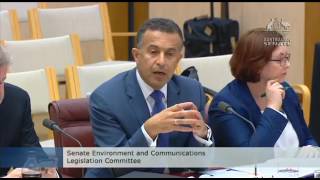
The International Association of Genocide Scholars (IAGS) has written an open letter to Head of Australia’s Special Broadcasting Corporation (SBS), Michael Ebeid, slamming his mischaracterisation of the Armenian Genocide during Federal Senate questioning last month. This letter, from the foremost global historical authority on genocides, pours cold water over SBS’s editorial policy not to refer to the Armenian Genocide as “genocide”, saying: “Genocide denial is not history: it is ideological. And we are disappointed that a reputable organisation, such as SBS, has chosen this route.” During Australian Parliament’s Senate Estimates in May 2017, Ebeid was grilled on the broadcaster’s unacceptable editorial position on the Armenian Genocide during an Australian Parliament Senate Estimates hearing by Greens Senator, Scott Ludlam. Ludlam, who is the Foreign Affairs spokesperson for the Australian Greens, asked Ebeid to shed light on a May 15th article in The Australian, which claimed: “…SBS News and Current Affairs has a specific policy on referring to the Armenian genocide that prohibits its reporters from naming it as such. Instead reporters are instructed to refer to the event not as a genocide but as a ‘mass killing of Armenians considered by many to have been a genocide, which Turkey denies’.” Ebeid responded: “We at SBS refer to it as ‘mass killing of Armenians considered by many to have been a genocide’ and I think that way we make sure that our viewers understand that this is a matter of contention that historians the world over dispute…” The IAGS open letter, signed by its President, Professor Andrew Woolford says: “During this hearing, you were asked by Greens Senator Scott L udlam about SBS’s policy regarding the naming of the Armenian genocide, which you called the “Armenian situation”. This is akin to calling the Holocaust the “Jewish situation”.” “The Armenian genocide is also referred to as “mass killings”, which, of course, was the intent of the genocide, but framing any genocide in terms of the perpetrators’ intent, ignores the people that Senator Ludlam argues you are offending: the survivors and generations of victims. Genocide is about destruction, which continues for decades after the event, especially if the genocide is continually denied.” “Your reasoning behind SBS’s policy is threefold: that a) the Australian government does not recognise the genocide, b) the UN does not recognise it and c) that historians “world over dispute” the genocide and there is a “lot of debate” regarding the existence of the genocide.” “The sticking point for SBS is a) – that SBS would probably “change our stance” if the Australian government officially recognised the genocide. Does this apply to all Australian government policy, such as the difference between migrants and refugees, which the Australian government often muddles for political purposes?” “The sticking point for us as genocide studies scholars is your argument that academically recognised historians dispute the genocide. This is a falsity. There are a handful of historians who deny the genocide who are not recognised as scholarly academics by the majority of genocide studies scholars.” “We enclose the official IAGS policy on the Armenian genocide to counter SBS’s damaging denial claims and ask you to reconsider your policy. We also thank Senator Ludlam for his recognition of the genocide.” Armenian National Committee of Australia (ANC-AU) Managing Director, Vache Kahramanian thanked the IAGS for their support. “Denial of the Armenian Genocide is based on the myth that historical consensus has not been achieved on this matter,” Kahramanian said. “There is no greater global historical authority on genocides than the International Association of Genocide Scholars, and SBS will recognise that they have erred in their judgment when determining this offensive editorial position.” Kahramanian added: “We hope SBS can admit this error by correcting it, and we will continue to make that case on behalf of Armenian-Australians and all who have suffered from genocide.” The Ebeid hearing can be watched below: ___________________________________________________________________________________________________________________________________________ (c) 2017 Public Radio of Armenia
- A Nonviolent Strategy to Defeat Genocide
It is a tragic measure of the depravity of human existence that genocide is a continuing and prevalent manifestation of violence in the international system, despite the effort following World War II to abolish it through negotiation, and then adoption and ratification of the 1948 Genocide Convention. According to the Genocide Convention, genocide is any act committed with the intent to destroy, in whole or in part, a national, ethnic, racial or religious group by killing members of the group, causing serious bodily or mental harm to members of the group, deliberately inflicting on the group conditions of life calculated to bring about its physical destruction in whole or in part, imposing measures intended to prevent births within the group and/or forcibly transferring children of the group to another group. While this definition is contested because, for example, it excludes killing of political groups, and words such as ‘democide’ (the murder or intentionally reckless and depraved disregard for the life of any person or people by their government,) and ‘politicide’ (the murder of any person or people because of their political or ideological beliefs) have been suggested as complementary terms, in fact atrocities that have been characterized as ‘genocide’ by various authors include mass killings, mass deportations, politicides, democides, withholding of food and/or other necessities of life, death by deliberate exposure to invasive infectious disease agents or combinations of these. See ‘Genocides in history’. While genocide and attempts at genocide were prevalent enough both before World War II (just ask the world’s indigenous peoples) and then during World War II itself, which is why the issue attracted serious international attention in the war’s aftermath, it cannot be claimed that the outlawing of genocide did much to end the practice, as the record clearly demonstrates. A Rwandan boy covers his face from the stench of dead bodies in this July 19, 1994 file photo. (Source: About Rwanda) Moreover, given that the United Nations and national governments, out of supposed ‘deference’ to ‘state sovereignty’, have been notoriously unwilling and slow to meaningfully respond to genocides, as was the case in Rwanda in 1994 and has been the case with the Rohingya in Myanmar (Burma) for four decades – as carefully documented in ‘The Slow-Burning Genocide of Myanmar’s Rohingya’ – there is little evidence to suggest that major actors in the international system have any significant commitment to ending the practice, either in individual cases or in general. For example, as official bodies of the world watch, solicit reports and debate whether or not the Rohingya are actually victims of genocide, this minority Muslim population clearly suffers from what many organizations and any decent human being have long labeled as such. For a sample of the vast literature on this subject, see ‘The 8 Stages of Genocide Against Burma’s Rohingya’ and ‘Countdown to Annihilation: Genocide in Myanmar’. Burma’s Rohingya genocide (Source: The Cutting Edge) Of course, it is not difficult to understand institutional inaction. Despite its fine rhetoric and even legal provisions, the United Nations, acting in response to the political and corporate elites that control it, routinely fails to act to prevent or halt wars (despite a UN Charter and treaties, such as the Kellogg-Briand Pact, that empower and require it to do so), routinely fails to defend refugees, routinely fails to act decisively on issues (such as nuclear weapons and the climate catastrophe) that constitute global imperatives for human survival, and turns the other way when peoples under military occupation (such as those of Tibet, West Papua, Western Sahara and Palestine) seek their support. Why then should those under genocidal assault expect supportive action from the UN or international community in general? The factors which drive these manifestations of violence serve a diverse range of geopolitical interests in each case, and are usually highly profitable into the bargain. What hope justice or even decency in such circumstances? Moreover, the deep psychological imperatives that drive the phenomenal violence in the international system are readily nominated: in essence, phenomenal fear, self-hatred and powerlessness. These psychological characteristics, together with the others that drive the behaviour of perpetrators of violence, have been identified and explained – see ‘Why Violence?’ and ‘Fearless Psychology and Fearful Psychology: Principles and Practice’– but it is the way these (unconsciously and deeply-suppressed) emotions are projected that is critical to understanding the violent (and insane) behavioural outcomes in our world. For brief explanations see, for example, ‘Understanding Self-Hatred in World Affairs’ and ‘The Global Elite is Insane’. Given the deep psychological imperatives that drive the violence of global geopolitics and corporate exploitation (as well as national, subnational and individual acts of violence), we cannot expect a compassionate and effective institutional response to genocide in the prevailing institutional order, as the record demonstrates. So, is there anything a targeted population can do to resist a genocidal assault? Fortunately, there is a great deal that a targeted population can do. The most effective response is to develop and implement a comprehensive nonviolent strategy to either prevent a genocidal assault in the first place or to halt it once it has begun. This is done most effectively by using a sound strategic framework that guides the comprehensive planning of the strategy. Obviously, there is no point designing a strategy that is incomplete or cannot be successful. A sound strategic framework enables us to think and plan strategically so that once our strategy has been elaborated, it can be widely shared and clearly understood by everyone involved. It also means that nonviolent actions can then be implemented because they are known to have strategic utility and that precise utility is understood in advance. There is little point taking action at random, especially if our opponent is powerful and committed (even if that ‘commitment’ is insane which, as briefly noted above, is invariably the case). There is a simple diagram presenting a 12-point strategic framework illustrated here in the form of the ‘Nonviolent Strategy Wheel’. In order to think strategically about nonviolently defending against a genocidal assault, a clearly defined political purpose is needed; that is, a simple summary statement of ‘what you want’. In general terms, this might be stated thus: To defend the [nominated group] against the genocidal assault and establish the conditions for the group to live in peace, free of violence and exploitation. Once the political purpose has been defined, the two strategic aims (‘how you get what you want’) of the strategy acquire their meaning. These two strategic aims (which are always the same whatever the political purpose) are as follows: 1. To increase support for the struggle to defeat the genocidal assault by developing a network of groups who can assist you. 2. To alter the will and undermine the power of those groups inciting, facilitating, organizing and conducting the genocide. While the two strategic aims are always the same, they are achieved via a series of intermediate strategic goals which are always specific to each struggle. I have identified a generalized set of 48 strategic goals that would be appropriate in the context of ending any genocide here. These strategic goals can be readily modified to the circumstances of each particular instance of genocide. Many of these strategic goals would usually be tackled by action groups working in solidarity with the affected population campaigning in third-party countries. Of course, individual activist groups would usually accept responsibility for focusing their work on achieving just one or a few of the strategic goals (which is why any single campaign within the overall strategy is readily manageable). As I hope is apparent, the two strategic aims are achieved via a series of intermediate strategic goals. Not all of the strategic goals will need to be achieved for the strategy to be successful but each goal is focused in such a way that its achievement will functionally undermine the power of those conducting the genocide. It is the responsibility of the struggle’s strategic leadership to ensure that each of the strategic goals, which should be identified and prioritized according to their precise understanding of the circumstances in the country where the genocide is occurring, is being addressed (or to prioritize if resource limitations require this). I wish to emphasize that I have only briefly discussed two aspects of a comprehensive strategy for ending a genocide: its political purpose and its two strategic aims (with its many subsidiary strategic goals). For the strategy to be effective, all twelve components of the strategy should be planned (and then implemented). See Nonviolent Defense/Liberation Strategy. This will require, for example, that tactics that will achieve the strategic goals must be carefully chosen and implemented bearing in mind the vital distinction between the political objective and strategic goal of any such tactic. See ‘The Political Objective and Strategic Goal of Nonviolent Actions’. It is not difficult to nonviolently defend a targeted population against genocide. Vitally, however, it requires a leadership that can develop a sound strategy so that people are mobilized and deployed effectively. ___________________________________________________________________________________________________________________________________ (c) 2017 Global Research