Angola: Chronic Oil Spills Poison Coast And Communities
By Journalismfund Europe
September 28, 2026
LUANDA - A cross-border investigation reveals European, British and US oil giants have been routinely spilling oil in Angola’s oceans for 13 years, leaving residents ill and unable to eat. Multiple complaints have been ignored, while fishermen are asked to clean up under ‘voluntary work agreements’.
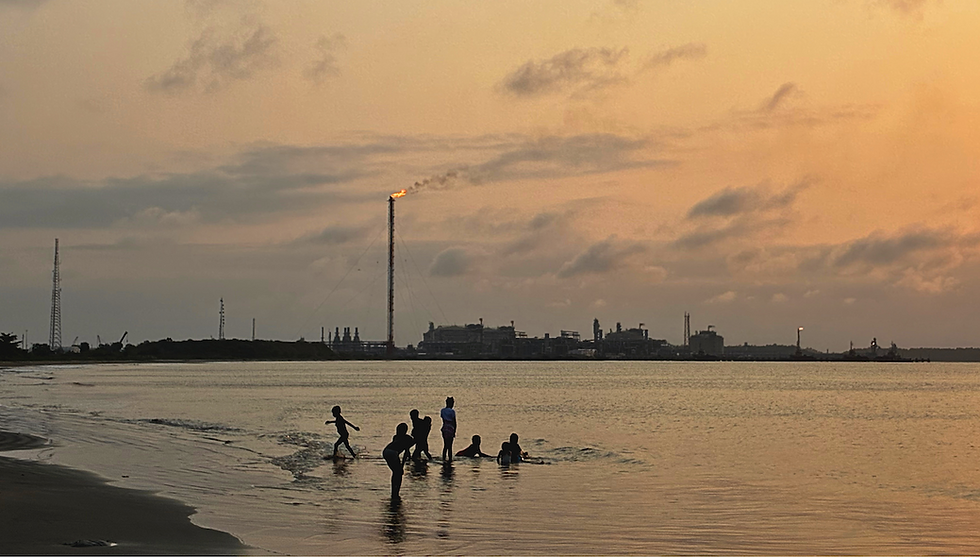
While Western oil majors pledge a “zero-spill mindset” at home, a year-long investigation - combining on-the-ground reporting from Zaire and Cabinda, exclusive satellite data, and internal documents - reveals a hidden human and environmental crisis along the Angolan coast.
Exclusive satellite analysis of Block 15 (operated by ExxonMobil, and owned by BP, Eni, Equinor and Sonangol) exposes chronic spills covering an area equivalent to at least the size of Montenegro over the past 13 years, vastly contradicting official state figures. On the ground, field interviews show how routine spills poison essential crops, ruin fisheries, and expose residents to carcinogens and toxic hydrogen sulfide gas. Local fishermen reveal they are informally hired to clean up toxic crude with no formal contracts or health insurance, while behind-the-scenes extrajudicial interference stymies legal accountability.
Supported by original field testimony, legal documents, and unpublished satellite imagery, this investigation lays bare the stark double standards and corporate impunity of Big Oil in West Africa.
Key findings
Satellite imagery analysis revealed chronic and unreported oil spills around Angola’s Kizomba A field in Block 15 over 13 years. It is operated by ExxonMobil and co-owned by BP, Eni, Equinor and Sonangol.
The size of the spill ranges from a minimum cumulative total of 89538 barrels to a possible 4476908 barrels - nearly as much as BP’s Deepwater Horizon disaster. The range occurs because it is not possible to determine the thickness of the oil without physically testing it.
The gap between these figures and official records from Angola and the oil giants is stark. Reporting of spills over one barrel is required by Angolan law, but the national oil and gas agency ANPG reports an average of just 450 spilt barrels a year across every offshore block. Similarly, reporting by the oil giants showed very low figures. All of them have state policies of no harm.
Wind and current data analysis suggests a portion of the oil may be travelling to the shore. Residents' testimonies support this, noting severe health and agricultural impacts - although they cannot trace the source of the oil to a single block.
Residents and health officials report an increase in skin infections, gastrointestinal distress and nausea from the smell of toxic hydrogen sulfide. Health officials shared registries documenting this. Food and fish are blackened by the oil, but many residents are left without any option but to eat them. Cabinda’s ex-health secretary believes there has been a rise in skin cancer because of exposure to the oil.
The availability of fish has also drastically decreased, affecting fishermen’s livelihoods as well as available protein sources.
Documents show Chevron asked fishermen to clean up a spill under ‘voluntary work agreements’. Workers were given basic rubber boots, gloves and masks, but no formal contracts and no insurance. One ambulance was kept on standby, they reported. They added that this incident was indicative of clean-ups for bigger spills in general across the coast.
At least 13 countries worldwide benefit from the oil, including China, India, the United States, Canada, Spain, and Italy. More than 370 million barrels of oil have been shipped to refineries and installations. The chain has links with some controversial entities, such as Trafigura and Glencore as charterers. TotalEnergies, Shell, ConocoPhillips, Sinopec and Sinochem have also acted as charterers, while Sinopec, IOC, Sinochem, Nayara Energy, Repsol and Petronas have bought from the block.
Methodology
This investigation combined open-source and data journalism with on-the-ground reporting.
The team analysed satellite imagery, literature and expert testimony to assess oil spills and their environmental impact. Trade data, ship tracking, corporate records and regulatory research were used to trace the oil, identify companies involved and examine legal and reporting obligations.
Over the course of a year, the team built relationships with Angolan residents and experts before reporting from affected communities along the coast. This included interviews, photo and video documentation, access to health records and closed-source legal documents.
The team worked with a whistleblower organisation to ensure informed consent, and protected identities where necessary for safety.
Publication
ONLINE
Oil giants’ systematic spills are poisoning Angola’s coast and its communities, Voxeurop, 28/09/2026
“Quelle” del blocco 15, il petrolio a perdere che avvelena l’Angola, Domani, 28/09/2026
Os derrames sistemáticos das gigantes petrolíferas estão a envenenar a costa de Angola e as suas comunidades, Expresso, 28/09/2026