

Angola: Opposition Calls For Oversight Of 2027 Elections
By Angola24horas
September 30, 2026
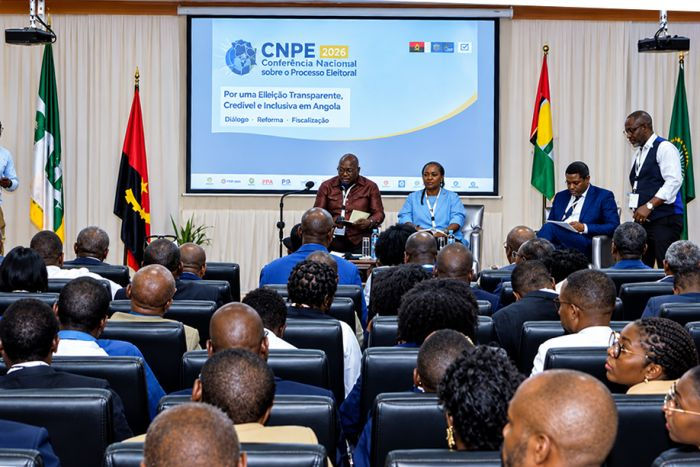
LUANDA — Opposition parties in Luanda advocated for the adoption of independent mechanisms to oversee voter registration and the counting of results for the 2027 general elections, an initiative that placed transparency, trust, and conflict prevention at the center of the political debate.
The position was adopted during the National Conference on the Electoral Process in Angola, held on September 29 and 30, with the participation of political parties, civil society organizations, academics and experts.
The meeting discussed proposals related to auditing the electoral register, access to electoral rolls, decentralized counting, delivery of minutes to list delegates, and conducting a parallel count. For the participants, the existence of electoral rules will not be sufficient if the various stakeholders do not have the means to independently monitor and verify the different stages of the process.
At the opening of the conference, the former executive secretary of the Inter-Ecclesiastical Committee for Peace in Angola, Reverend Ntoni-Nzinga, argued that transparent, fair, and well-conducted elections are one of the pillars of political stability. The religious leader called on the parties to meet and identify in advance the weaknesses of the electoral process, with the aim of preventing failures likely to generate disputes and distrust.
Ntoni-Nzinga also defended the presence of international observers in the 2027 elections, assigning them the role of impartial witnesses to the process. In his view, observation should contribute to ensuring conditions of transparency, fairness, legality, and credibility in an election that will be crucial for citizens' trust in electoral institutions.
The president of the Democratic Bloc (BD), Filomeno Vieira Lopes, linked the quality of the electoral process to the very capacity for renewal of institutions. According to the leader, the alternation and change of power through constitutional and electoral mechanisms should not be understood as factors of instability, but as instruments through which different social sensibilities and political projects can express the popular will.
“ Preparing elections well in a country is the greatest and most effective preventive fight against electoral fraud ,” stated Filomeno Vieira Lopes, simultaneously advocating for greater transparency and the creation or reform of independent oversight bodies. The leader also considered that the preparation for the 2027 election should contribute to overcoming the current political impasse and strengthening democratization, decentralization of power, and peace.
Along the same lines, the president of the PDP-ANA, Abreu Capitão, advocated for an independent audit of the electoral register and the tabulation of results, as well as greater public decentralization of the process. Among the proposals presented is the immediate delivery of the minutes to the list delegates, after they have been signed and stamped at each polling station, allowing the parties to have documentary evidence to monitor the results.
The president of the Angolan Pacific Party (PPA), Eduardo Garcia, in turn, pointed out doubts related to previous electoral processes, namely regarding registration, electoral rolls, the handling of complaints, and access to minutes. According to the leader, it is not enough for certain mechanisms to be provided for in legislation: it is necessary to guarantee their effective application and ensure that parties, civil society, and voters can verify the transparency of the process.
The demand for an independent audit of the electoral register had already been advocated by opposition parties, who proposed a technical verification of the database with the participation of experts appointed by political groups and civil society. Angolan electoral legislation also provides for an independent, specialized technical audit, carried out through a public tender, aimed at testing and certifying the integrity of the source programs, data transmission and processing systems, and control procedures used in the counting and scrutiny of votes.
The debate takes place while the electoral register is being updated for the 2027 general elections. According to data presented during the discussion, the process began on June 15, 2026, and is expected to cover more than 16 million citizens. For the leaders and experts gathered in Luanda, the challenge now lies in transforming the guarantees provided by law into concrete oversight mechanisms capable of monitoring registration, voting, and the counting of results. The central concern is that transparency is verifiable and that trust in the electoral process is built before election day, thus reducing the scope for contestation and confrontation after the results are announced.
Copyright © 2003 Angola24horas.com - All rights reserved


