Search Results
Search this site
6564 results found with an empty search
- Russian crimes of sexual violence in Ukraine
By Liz Cookman Survivor Relief Centre staff in Dnipro, Ukraine. Photograph: Alina Smutko/Reuters “Sexual violence is low attention,” she said. “It’s not treated the same as torture or other war crimes because there is no proper mechanism, no laws.” Halyna and Maryna are two of what activists believe could be thousands, perhaps tens of thousands, of women, children and men who have been subjected to sexual violence – a war crime under international humanitarian law – since Russia’s invaded Ukraine last year. They are among the few so far, however, to have come forward to report what happened to them. Ukraine’s prosecutor general has recorded more than 97,000 reports of alleged war crimes committed by the invading forces. They include torture, summary killing and the targeting of civilian infrastructure. Yet, as of August, it was investigating just 208 cases of sexual violence. While Ukraine is making efforts to record and prosecute war crimes, the figures show that sexual violence remains a hidden crime. Rape has been used as a weapon of war in conflicts worldwide, but holding people to account for it is rare. It is difficult to find the perpetrators and to prove there were orders by someone in command. In Ukraine, survivors face a long road to justice. An overwhelmed legal system, social stigma, a lack of awareness about what constitutes sexual violence and the need for legislative reform could all prevent people from coming forward. “People live in small communities and they want to keep what happened to them inside the family,” said Halyna. “Some people, including police officers, pass the blame. They say: ‘Well, you decided to stay [under occupation], if you had left this wouldn’t have happened’. It frustrates people and they don’t encourage others to report.” Kateryna Pavlichenko, the deputy minister of internal affairs, coordinates the work of police units investigating conflict-related sexual violence. She said the brutality and intensity of the full-scale war presented police with challenges they had not faced before, and they have had to adapt quickly. “It’s been a learning process,” she said. “We have documented instances of sexual violence since 2014 [when Russia-controlled forces seized Crimea], but after the invasion, the scale of crimes spiralled. We have gained experience now and when the counteroffensive liberates new areas we will be more efficient.” The majority of sexual violence reported so far took place under occupation, in areas such as the Kyiv and Kharkiv regions and Kherson. Police have no access to areas still under Russian control, so they can only wait for Ukraine to make military advances. In the meantime, Pavlichenko said, they had established eight specialist working groups, made up mostly of women, who tour previously liberated areas to encourage survivors to come forward. Investigators undergo training in how to handle cases sensitively, while a hotline and a website to report cases have been set up. Ukraine is trying to push through changes on a legislative level that would grant survivors of sexual violence special status and make them eligible for state financial support, something that could encourage people to report crimes in the future. The country’s criminal code does not outline conflict-based sexual violence, which is separate from other forms of sexual violence and abuse under international law. That means survivors do not receive the same legal status as victims of other types of war crimes, such as unlawful detention, property loss or torture, which come with state financial support. Uliana Tokarieva, the deputy minister of social policy, said the Verkhovna Rada parliament was processing a law to grant this special status, as well as a number of bylaws that outline conflict-related sexual violence. The adjustments will make way for the provision of social, medical and psychological services and will better punish offenders. Officials and international groups, such as the UN, have called Russia’s use of sexual violence in Ukraine a strategic programme of dehumanisation. Horrific accounts already shared publicly have spanned the elderly, children as young as four, civilian detainees and military prisoners of war. While women bear the brunt of sexual violence, around a third of cases recorded both by Ukraine’s prosecutor general and anecdotally by UNFPA, the UN’s sexual and reproductive health agency, were against men. “Men can be subjected to extra social stigma. They don’t want to be seen as a victim or as weak, so few are ready to speak publicly,” said Volodomyr Shvherbachenko, the head of the East-Ukrainian Centre for Civil Initiatives (EUCCI), an NGO that documents conflict-related human rights violations. Shvherbachenko, who has been documenting sexual violence since 2014, was the first to take a case from Ukraine to the international criminal court. He said reported crimes have included gang rape, the rape of parents in front of children and vice versa, the placing of cameras in the toilets of detention facilities, and sexualised torture, such as the electrocution of genitals and castration. “Several survivors reported that, after they were abused, they were told: ‘You will not be able to have children now’, or: ‘We’re doing this to stop Ukrainians from reproducing’,” said Shvherbachenko. “These acts ruin people’s lives.” Ukraine and UNFPA have recently launched an awareness campaign to encourage people who may have been subjected to lesser-known examples of war-related sexual violence to come forward. These include the threat of rape, the witnessing of sexual violence against others, being stripped naked, a gun being pointed at reproductive organs and any act with a sexual undercurrent. “People might not consider what happened to them sexual violence until they have had help processing what happened,” said Alona Sychova, a psychologist at UNFPA’s Zaporizhzhia Survivor Relief Centres, one of 11 across the country. Those who do not get help risk severe psychological effects, such as post-traumatic stress disorder. The slow path to justice can also have profound mental health effects. Pavlichenko’s office said 71 of the 208 cases of sexual violence, involving 81 survivors, were undergoing criminal proceedings. In some cases, the perpetrator had been identified but could not be found, and in others, they had already been killed on the battlefield. That can be disappointing for survivors. “People go to law enforcement, report a case and expect judgment right away, and punishment for those who harmed them,” said Sychova. “But if it takes a long time, or the case doesn’t go forward as expected – it leads to added frustration and anxiety.” Some may choose not to take the case as far as court due to the trauma of giving repeated detailed testimony. For Halyna and Maryna, justice would allow them to move on, to feel confident that Ukraine is a democratic state that serves their needs, and to regain a sense of certainty in their lives. “I just want to get justice, I want everyone to be punished,” said Maryna. “It would help me recover psychologically.” © 2023 Guardian News & Media Limited or its affiliated companies.
- My Last Lecture by Dr. Elihu Richter
Dr. Elihu Richter, MD, MPH , Hebrew University of Jerusalem, Faculty of Medicine, School of Public Health My Last Lecture: Putting Moral Agency and the Precautionary Principle to Work for the Prevention of Genocide and its Incitement Elihu D Richter MD, MPH (Associate Professor) Hebrew University - Hadassah School of Community Medicine and Public Health and the Jerusalem Center for Genocide Prevention, Jerusalem, Israel Human Choice and Bystander Indifference: The Core Issues Students and colleagues: remember -- moral agency is central to the definition of the crime of genocide, defined as any act committed with the intent to destroy a national, ethnical, racial, or religious group, in whole or in part.[1] In short, we are talking about human choice and bystander indifference. Note that all of Gregory Stanton’s Ten Stages of Genocide (Classification, Symbolization, Discrimination, Dehumanization, Organization, Polarization, Preparation, Persecution, Extermination, and Denial[2]) have to do with human choice and bystander indifference. Innate aggression, Malthusian pressures, poverty, imperialism, capitalism, communism, fascism, colonialism, racism, sexism, north-south inequality, and global climate change all have explanatory power. However, human choice is the driving force in all genocides. As a Talmudic aphorism states,"everything is foreseen, but choice is given." It neatly frames the relationship between all the foregoing so-called deep causes and the role of individual actors with moral agency. Intervention is the difference between having moral agency and being a bystander—the earlier the intervention, the better. The clock is always ticking, even as I give this lecture. Pre-empting Genocide: The Precautionary Principle In this Last Lecture I make the case for the essential role of the Precautionary Principle—a proactive concept from public health and environmental epidemiology—to operationalize our mission to predict and prevent genocide.[3] This principle states that the case for intervention is triggered by early indicators of catastrophic outcomes, even if the outcomes are uncertain. My special focus is the use of the Precautionary Principle to prevent genocide, the greatest of all man-made catastrophes, by preventing word pollution or incitement to genocide. Indeed, there is no better example of the ethical case for the use of the Precautionary Principle. The Precautionary Principle states that when there is uncertainty concerning the possibility of the occurrence of a major catastrophic event, the costs of inaction far outweigh those of anticipatory preventive action. The Precautionary Principle shifts the burden of proof from those suspecting a catastrophic risk to those denying it. The Precautionary Principle states that it is better to be safe than to be sorry.[4] The case for using the Precautionary Principle is that genocide prevention is an oxymoron once the killing starts. From Public Health to Genocide Prevention I come from a background in public health and environmental medicine, which is all about prediction and prevention. We were taught that “a fence at the top of a cliff is better than an ambulance at the bottom.” I left the study of history–which is all about what was, for a career in medicine, which is about decisions and changing things here and now. The Holocaust and genocide interested me very little until 1991, shortly after the First Gulf War and its missile attacks on Israel and gas mask alerts, when my wife and I accompanied a group of Holocaust survivors on a trip to my father’s hometown in Ostroleka, Poland. I was humbled by their unassuming modesty and stories of courage and survival as they retraced their flight from the Nazis into the forests of Belarus near Pinsk, where they discovered the mass grave of their murdered friends and family. On the day we returned to Israel from Poland, we saw the first TV reports of Serbian paramilitaries burning villages and carrying out forced expulsions. I was revolted by the term “ethnic cleansing.” Then in 1994, we saw the TV images of thousands of murdered victims floating down Rwandan rivers. Organized Hutus hacked 800,000 Tutsis to death over a three-month period, motivated by the dehumanizing words of radio broadcasters. As an epidemiologist, I could understand how repeated daily exposure to motifs of hate turns ordinary people into murderers. However, I could not comprehend the inaction of the world’s leaders, even with TV coverage of the barbarism and brutality in real time. The numbers of the murdered made me question the moral agency of world leaders: Srebreniča in 1995, where more than 8000 Bosnians were butchered as UN Peacekeepers stood by; the slow “ethnic cleansing” in Darfur and the "international community's" late and ineffective response (estimated death tolls have now reached more than 400,000[5]). During these years Palestinian terrorists carried out genocidal terror against Israel using rockets, missiles, and suicide bombs, targeting civilians at wedding halls, cafeterias cafes, schools, food markets and homes—climaxed by the massacre of a group of elderly worshipers celebrating the Passover Seder. And then came the genocidal terror of 9/11 perpetrated by Al Qaeda (2994 killed immediately and thousands more first responders dying from exposure to the toxins). Then there was the United States’ invasion of Iraq—itself ruled by Saddam Hussein, a genocidal leader who had carried out gassings, massacres and forced expulsions of the Kurds and Marshland Arabs, with an estimated 50,000-100,000+ murdered during the 1988 Al-Anfal campaign, another 25,000 civilians and rebels killed in the Barzani genocide of 1983, more thousands in the Feyli genocide, and 50,000 more in the 1991 uprisings. On October 27, 2005, I was stunned to hear the genocidal threats of Mahmoud Ahmadinejad, recycling the motifs of Mein Kampf, as Iran rushed towards nuclearization, exported terror, and suppressed human rights. I tracked the timeline of unrelenting indoctrination and incitement by Iran’s leaders. I discovered that Iran's incitement increased in intensity when the world relaxed its vigilance but decreased when the world increased its vigilance—a powerful yet tragically overlooked lesson in the possibilities for prevention.[6] We now live in the era of world-wide threats from Jihadist, Islamofascist and authoritarian governments and movements. Syria has committed butchery, barbarism, and genocide with over 500,000 dead and millions of refugees. ISIS’s (Islamic State of Iraq and Syria) evil wars of extermination have spread its ideology across Africa and the Middle East. I asked: what went wrong? Can I—an epidemiologist—use the models and tools of public health and epidemiology to predict and prevent genocide and genocidal terror? Can early warning signs of catastrophic outcomes (i.e. indoctrination and incitement) trigger intervention? My interest as an epidemiologist in predicting and preventing led me to years of work on incitement and the potential for prevention of genocide and genocidal terror by preventing incitement. I was forced to ask two more basic questions: What leads to the incitement? What can public health professionals do about it? First, we need a professional Code of Ethics. Consider the ethics of medicine and public health. Our core value is respect for life and dignity. Therefore, we reject ideologies that dehumanize the other and that glorify mass murder, conquest, forced expulsions, rape as an instrument of conquest and all other crimes against humanity. But let’s never forget that public health language has actually been used to promote genocide. The best and the brightest practitioners of public health advocated using Eugenics to improve public health. The results were the "racial hygiene" of Nazi medicine,[7] unethical human experimentation, and mass murder. Nazi medicine promoted euthanasia as an act of mercy for the sick and helpless. Eradicating sickness morphed into killing sick persons, which resulted in genocide of “sick” populations. Nazi medicine preceded the Holocaust. Karl Astel, a medical school dean at the University of Jena and ardent Nazi racial theorist organized euthanasia programs that murdered 200,000 people. He was then active in planning what was euphemistically called “the Final Solution to the Jewish Question”—i.e. murdering Jews—while simultaneously pioneering anti-smoking programs to protect the Master Race.[8] During the Armenian genocide, Turkish doctors gassed children in order to protect the purity of Turkishness.[9] In the 1920’s and 1930’s eugenicists in the US lobbied for compulsory sterilization of African Americans and restrictive immigration to protect the “racial stock” of the US population.[10] In the 1930’s and 1940’s, Japanese microbiologists supervised horrific programs to spread highly contagious and lethal plague and anthrax, producing massive epidemics, and carried out vivisections on live prisoners.[11] In 2016, Dr. Basher Assad, a Syrian physician, carried out gas warfare against his own subjects in Syria, three decades after the Anfal gassings by Saddam Hussein in Iraq. The sordid history of public health’s role in producing genocide teaches us that we need a Code of Ethics to keep us from doing harm on behalf of the greater good.[12] My concern: could neo-Malthusian concerns send public health down a new slippery slope condoning coercive or selective population restriction based on advances in genetic screening? But there are other concerns. A Code of Ethics must proscribe undeclared conflicts of interest—which have blighted the field of genocide prediction and prevention. We need to import the rigorous norms and standards of epidemiology and public health for investigating and reporting genocidal scenarios. The stakes are enormous. Totten’s pioneering work showed how poor protocols and sloppy supervision led to an official UN Report that manufactured doubt concerning whether there was sufficient organization to prove the Sudanese government's genocidal intent in Darfur.[13] Key Concepts from Public Health: Precaution, Prediction and Prevention The prediction and prevention of genocide is not a spectator sport. Therefore, I propose using epidemiologic counterfactual what-if timelines of trigger points for human choices by perpetrators, enablers, responders, bystanders, and victims in the timeline of the choices and decisions that have led to genocide and how they impacted cumulative death tolls in the early years of the genocidal civil war in Syria.[14] But let’s turn to some comments based on a statement that Professor Gregory Stanton and I submitted in 2007 to the US Genocide Prevention Task Force.[15] Those engaged in Genocide Prevention should develop and apply public health-based models for the control of preventable diseases for the prediction and prevention of genocide and politicide—which have killed more than 70 million people since World War II. Genocidal terror must be included as part of the spectrum of genocidal massacres.[16] Stanton and I noted that “applying the Precautionary Principle to make genocide prevention effective presupposes an international network for the surveillance of hate language and prosecution of incitement to commit genocide. Until now, the 1948 Convention on the Prevention and Punishment of the Crime of Genocide has resulted in some punishment but almost no prevention. Its implementation has been rooted in post-hoc criminal law. Because it is based on the proof of intent after the event, international criminal law cannot be relied upon to prevent and stop genocide. The Precautionary Principle should be the fulcrum for a paradigm shift from a reactive to a proactive response. Let me reiterate, in genocide prevention, as in environmental health and disaster prevention, the case for action in applying the Precautionary Principle is the catastrophic ethical cost of delaying prevention—which, as in natural disasters, can be measured in massive loss of human lives. We will achieve nothing in prevention unless we advance the temporal focus of genocide law and preventive decisions from a proof of intent after the event to prediction and prevention.” The UN Convention on the Prevention and Punishment of the Crime of Genocide, as well as the ICC's Rome Statute, specify that incitement to genocide is an act of genocide. Both specify that incitement—before the killing, raping, expulsion and other crimes—can itself be prosecuted as an act of genocide. This is the available platform for advancing use of the Precautionary Principle. Incitement to commit genocide is the classic predictive indicator and promoter of genocide. As Dr. Barbara Harff has proven, “certain circumstantial indicators predict and promote impending genocide: a past genocide or politicide followed by impunity; civil war or political upheaval; an authoritarian regime; ethnic exclusivity in the ruling elite; an aggressively exclusionary ideology; a lack of trade and information openness; and an indifference to crimes against humanity by "the international community."[17] Extreme competition for limited resources may also contribute to genocidal agendas. But contrary to conventional wisdom, poverty, climate change, and so-called Malthusian pressures by themselves are not triggers for genocide. There have been wars over water in Africa, but regional sharing of limited water sources drip irrigation, and desalination have turned a zero-sum scenario into one of live and let live between Israel and Jordan. This win-win success is an example of moral agency using knowledge and technology to override so-called deterministic Malthusian scenarios. Genocide deniers ascribe jihadist massacres of Christian farmer villages in Nigeria to "climate change" The deniers ignore the religious indoctrination and sponsorship by large scale, often military, cattle owners that motivate the jihadists to massacre Christian villages while leaving Muslim villages nearby unharmed. This is not to deny that climate change and increased competition for resources may be factors that make armed conflict more likely.[18] The core of a program for the prevention of genocide and genocidal terror should be based on applying models and tools of public health and epidemiology, for prediction and prevention. This means surveillance, prevention, and control of early genocidal conditions. Based on the lessons of the Armenian Genocide, the Holocaust, the genocides of the former Yugoslavia, Rwanda, Darfur, and Myanmar, it is clear that state-sponsored indoctrination, incitement and hate language are highly specific early warning signs that should trigger preventive legal and diplomatic action, instead of waiting for prosecution after the genocide is over—as happened in the trials at Nuremberg, the ICTY, and the ICTR. Proactive epidemiologic models for tracking source, distribution, spread and effects of incitement can be applied to address early warning signs of genocide and to respond to genocidal threats, notably including incitement. The goal must be to stop incitement without waiting for the genocide or the genocidal terror to start. Today, stopping incitement means strong proactive challenges to the ideologies, indoctrination, and organization of movements that use incitement to inspire their followers. Applying the Precautionary Principle to prevent genocide and genocidal terror by preventing incitement advances the temporal locus of intervention to a stage even earlier than the creation of rapid deployment forces for response and rescue. The Last Decade: A Darker, More Evil and Dangerous World Order? Ten years ago, the foregoing comments would have been my Last Lecture. Today, those comments need to be updated by the need to counter ever more brutal assaults on the four foundational legal pillars of the post-Holocaust vision for a better world: 1. The UN Charter prohibiting aggression of one nation against another; 2. the UN Convention on the Prevention and Punishment of the Crime of Genocide; 3. the Universal Declaration of Human Rights; and 4. the Geneva Conventions Prohibiting Chemical and Biological Warfare. Since 2011, Bashar Assad, a doctor with medical training in London, has perpetrated horrific crimes against humanity against his own people resulting in an estimated 450,000 dead, at least 4,815,360 refugees, indiscriminate bombing of civilian populations and the use of chemical warfare. Since 2014, ISIS has perpetrated genocidal mass extermination of Yezidis, Christians, Shi’a Muslims and other minorities, with over 33,000 dead and hundreds of thousands driven from their homes.[19] Iran’s theocratic leadership, the major protector and enabler of Syria and Hezbollah—a terrorist organization—has itself been empowered and emboldened by the P5+1’s craven, Chamberlainesque nuclear deal and the US’s capitulation to Iran's hostage blackmail to release billions in frozen assets that Iran can use to support terrorism and build nuclear weapons. Iran remains the world’s leading state sponsor of terrorism. Iran incites to genocide against Israel and suppresses domestic human rights. Iran will eventually be permitted to go nuclear, a grave threat to peace in the Middle East and the world. Russia annexed Crimea as world leaders projected a willful neglect of the threats. Now Russia has brazenly invaded and is openly committing genocide against Ukraine's citizens. We see the emergence of a new bloc of totalitarian and authoritarian world powers and their allies, the enablers, and perpetrators of evil in Syria, Sudan, Saudi Arabia, Iran, North Korea, and China, as the world's democracies remain serial bystanders. Has no one noticed that every one of the BRIC group of nations has committed genocide in the twentieth century? The unifying bond of the BRIC bloc is that they share contempt for the fundamental principles and treaties that were designed to promote world order and human rights? The BRIC bloc says they are against "Western imperialism." They are really for unrestrained nationalism and state power. Meanwhile in the US and Europe, there has been a withering of moral agency at the top—where it matters most. I see ominous trends, recalling the build-up to World War II. Has pacifism become a fig leaf for bystanderism?[20] Has the new pacifism brought on the wars and crimes against humanity that it seeks to avoid—as Churchill warned after Munich?[21] Genocide—like open sewage in the streets of 19th century London—seems to have become acceptable in the 21st century. Is there a Churchill among world leaders who believes that genocide is "unacceptable" and is determined to prevent genocide with forceful action? Classic models of early response (e.g. Charny’s Rapid Deployment Forces) were visionary, but they are useless without the will of powerful nations to act, which in turn presupposes moral agency and urgency. Recall the disgraceful failure of the UN and the US State Department to respond to UNAMIR Commanding General Roméo Dallaire’s call for reinforcements so UNAMIR could defeat the genocidaires in Rwanda. That failure foreshadowed the US failure to stop Syria in 2013 following the use by Assad’s forces of Sarin to gas Syrian civilians—when the death toll from Syria's genocidal war was already “only” 100,000. Today the Precautionary Principle should give a new vision and mission to the Rapid Deployment Force concept. Articles 43 through 47 of the UN Charter would create a world police force. But they have never been implemented because the Perm-5 don't want rivals to their own armies. We need the tools of epidemiology for detecting incitement, starting with the big perpetrators, all the way to terror movements and so-called lone wolves. Using Epidemiologic Models to Apply the Precautionary Principle Epidemiologic models state the case for measures to prevent and deter population-wide exposure to indoctrination and incitement—even before there are genocidal threats on the ground. For example, the “iceberg model” of disease shows how, for every individual patient sitting in the hospital with severe heart disease, there are thousands out there with subclinical disease—the walking sick—who are the targets for effective intervention, and tens of thousands more without subclinical disease, with poor nutrition and exercise who will be at future risk. Melting the bottom of the iceberg is more effective than slicing off the top. Other epidemiologic models show how strategic population-wide promotion of health and removing recognized risks protect far more people and produce better and more enduring results than individual screening. For example, population-wide measures to reduce salt in our diet will be much more effective than screening for high blood pressure in individual cases. Here are some other key models: repeated dose-response; group and individual susceptibility; increased susceptibility of young and intergenerational transmission; and, most importantly, the role of short incubation periods. We can apply these epidemiologic models to population-wide exposure to incitement. These models predict that high population-wide exposure to low levels of background incitement increases individual susceptibility to commit genocide. To operationalize the Precautionary Principle, we need to apply “positive deviance” by identifying the minority in every population who seem immune to incitement, find out what makes them tick, and empower them. In summary, these simple but powerful epidemiologic models offer the potential for population-wide pre-emptive approaches to prevention and deterrence of genocide and genocidal terror everywhere without restriction to time and space. Anti-Semitism: The Elephant in the Room of Genocide Prevention Anti-Semitism is the mother of all hatreds. The obsessive demonization and delegitimization of Israel, now in the guise of anti-Zionism, has distracted and diverted attention from the big real evils of today.[22] The most striking official example: The Orwellian UN Human Rights Council has condemned Israel 61 times—versus 55 for all other countries combined. There have been 15 condemnations for Syria, 12 for Myanmar, 8 for North Korea, 2 for Sudan, and 0 for Russia, China, and Pakistan.[23] Last year the UN General Assembly passed only 3 resolutions against all other countries worldwide, but a shocking 20 resolutions against democratic Israel. Without such obsessive distraction and distortion, could it be that the world would begin to address its energies to stopping continuing horrors in Syria, Darfur, and the imploding of Sudan and South Sudan in genocidal civil wars? Institutionalized anti-Semitism has drained the international order of what little energies it has for real moral agency for genocide prevention. Word Pollution: The Pandemic of Jihadist Incitement Word Pollution is the use of words, phrases and motifs that incite, defame, delegitimize, dehumanize, intimidate, and threaten with the intent to indoctrinate, coerce, and direct huge populations to hate, kill, plunder, and rape. Word pollution glorifies evil leaders and inspires people to follow them. In totalitarian or authoritarian theocracies, word pollution is pandemic and pervasive. In Rwanda, the phrase used for incitement was “heating up the heads.”[24] As with air pollution, everyone was exposed to its effects. The pandemic spread of Jihadist and lslamist theocratic inter-generational indoctrination and incitement recognizes no conventional geographic or political boundaries. Today the new threats are directed against Jews, Christians, Kurds, Yezidis, Bahai, Armenians, Copts, and Zoroastrians throughout the Middle East. Ideological surrogates export genocidal terror to the West. For this newer scenario, the boots on the ground of Rapid Deployment Forces—which usually were not rapid, rarely deployed, and had little force—cannot stop the spread of evil motifs which Inspire (the name of Al Qaeda’s magazine) and motivate millions. The theatres of engagement are no longer restricted to specific locations. They are global. In the airwaves of cyberspace, they are transmitted immediately to the most remote internet café or smart phone. Words kill, more than ever, in an era of instant spread. They now reach hundreds of millions via the internet, word of mouth, classrooms, places of worship, and mass and social media. If guns, knives, rockets, and missiles are the hardware, words are the software—and they permeate the world. We can operationalize the Precautionary Principle to counter the new genocidal terrorism. To do so, we will have to counter the movements that produce indoctrination and incitement that precede genocide. We must recognize that the term incitement hardly captures the power of Jihadist Islamofascist totalitarian and authoritarian systems that indoctrinate, intimidate, and coerce their subjects. Iran: Epicenter of Islamofascist Incitement Today’s Iranian propaganda still uses Mein Kampf-style motifs that demonize, dehumanize, threaten, arouse, indoctrinate, instruct, motivate, and direct hate against the State of Israel. Over the years, Ayatollah Khamenei, the powerful Supreme Leader of theocratic Iran, has referred to Jews as "rabid dogs", "sinister and unclean", "merciless and inhuman beasts" that are "doomed to collapse." He has proclaimed that the elimination of Israel is the most important issue in the Islamic World. He has announced that without destroying Israel, victory is incomplete. Khameni has proclaimed: “The only accepted treatment for the wound of Palestine is to cut and remove the cancer gland of the Zionist movement. Israel is a cancer gland. What do people do with a cancer gland? Aside from cutting and removing it, what other treatments are available. This is not a slogan it is logic.”[25] These genocidal threats are accompanied by denials of the Holocaust. Khamenei's website promotes Israelophobia. Khamenei’s language is not unique to him. It is pandemic in much of the Muslim world and can be heard throughout Europe and Middle Eastern UNRWA refugee camps. Yet the world remains a bystander to Iran’s genocidal threats and dehumanization against Israel. The P5+1 has been a bystander to Iran’s enabling the butchery and barbarism in Syria by Assad and Hezbollah—a terror organization whose charter commits it to the destruction of Israel. The story in Syria poses the following question: Could repeated cradle-to-grave indoctrination in the motifs of hate and word pollution result in addiction to the behaviors it fosters? The Vision: Redefining the Unacceptable and Zero Tolerance for Incitement Word pollution can be defined, measured, tracked, and stopped.[26] In principle, eradication of such incitement is achievable because its source and transmission is man-made—as in the campaigns against smallpox and polio, which have been eradicated. Here is a good precedent for advocacy: The 2007 Resolution of the International Association of Genocide Scholars, written by Gregory Stanton and me, which called for referral of the President of Iran to the International Criminal Court for Incitement to Genocide.[27] This resolution was the basis for an even stronger resolution (HConRes21) from the US House of Representatives.[28] We have seen success stories from the use of text messaging to counter inciting text messaging (Kenya and Ivory Coast). Sanctions have been shown to reduce Iranian incitement. These examples show how precautionary and proactive strategies can generate effective intervention in the era of Internet indoctrination and incitement. In an era of official bystanderism, the initiatives for preemptive and proactive intervention will have to come from those of us working on prediction and prevention of genocide. If we don’t act, no one will act for us. If not now, when? We must go from being spectators (a.k.a. passive genocide scholars) to being agents projecting moral agency. We can do so by implementing the Precautionary Principle to make our interventions much earlier and more effective in our increasingly complex, difficult, and dangerous world. We must trigger interventions that can prevent genocide by stopping incitement to genocide. The Takeaway Message Here is the challenge: we must counter the evil ideologies and belief systems that indoctrinate, coerce, intimidate, instruct, and incite people to commit genocide, terrorism, and crimes against humanity. We can do so by reasserting life, dignity, and respect for the other as core values. We need to protect and empower besieged people who affirm these values, especially our colleagues harassed by the anti-Israel politically correct. Members of groups targeted for genocidal persecution should be singled out for protection from these threats. We need to show leadership in repudiating belief systems that glorify terror and death and dehumanization of the "other." We need to redefine Word Pollution as unacceptable—to use the great Sir Geoffrey Vickers’ iconic phrase—just as 19th-century European public health leaders redefined open sewage in the streets and water pollution as unacceptable.[29] It is imperative that we in our field promote a new norm of zero tolerance for incitement, notably the pandemic of Islamofascist Jihadist anti-Semitism. We must counter coercive indoctrination and intimidation by figures of authority in governments, movements, theocracies, political parties and international agencies. And now, more than ever, we need a Code of Ethics for Genocide Scholars to ensure integrity as we carry out our investigations and interventions. Conclusion Colleagues, moral agency implies urgency. Because lives are at stake, ethics do not permit delay. We must reassert the post-Holocaust vision of a moral order based on universal human dignity. The Precautionary Principle, public health’s gift to genocide prevention, gives us a tool for minimizing delay by promoting prevention. It is triggered by validated warning signs of threats, even before shots are fired. The time is short, and the Master of the House is waiting. Be strong. Be courageous. Remember: the clock is always ticking. Acknowledgements: Prof. Ilana Belmaker, MD Prof. Elliot Berry, MD Rony Blum, PhD Prof. Israel Charny, PhD Prof. Irwin Cotler, LLM Prof. Yoram Finkelstein, MD Joel Fishman, PhD Prof. Gregory Gordon, JD Or Nativ, MSc Rev. David Pileggi, MA Marc Sherman, MSc Casey Tait, MA Prof. Gregory Stanton, JD, PhD Endnotes [1] UN Convention on the Prevention and Punishment of the Crime of Genocide: http://oas.org/dil/1948_Convention_on_the_Prevention_and_Punishment_of_the_Crime_of_Genocide.pdf [2] Stanton, Gregory H. (2016). Ten Stages of Genocide. McLean, VA: Genocide Watch: https://www.genocidewatch.com/tenstages [3] European Environment Agency. Late Lessons from Early Warnings: The Precautionary Principle 1896-2000: www.eea.europa.eu/publications/environmental_issue_report_2001_22 [4] Richter, Elihu, and Stanton, Gregory (2007).”The Precautionary Principle: A Brief for the Genocide Prevention Task Force”: http://www.genocidewatch.org/images/By_GS_The_Precautionary_Principle_A_Brief_ for_the_Genocide_Prevention_Task.doc. See also: https://www.genocidewatch.com/articles-by-dr-stanton [5] Reeves, Eric. “Reckoning the Costs: How Many Have Died during Khartoum’s Genocidal Counter-Insurgency in Darfur? What Has Been Left in the Wake of this Campaign?” Sudan: Research, Analysis, and Advocacy. March 16, 2016: http://sudanreeves.org/2016/03/18/reckoning-the-costs-how-many-have-died-during-khartoums-genocidal-counter-insurgency-in-darfur-what-has-been-left-in-the-wake-of-this-campaign [6] Richter, Elihu D., and Barnea, Alex (2009). “Tehran’s Genocidal Incitement against Israel.” Middle East Quarterly 16(3): 45-51. https://www.meforum.org/2167/iran-genocidal-incitement-israel [7] Blum, Rony, Stanton, Gregory H., Sagi, Shira, and Richter, Elihu D. (2007). “‘Ethnic Cleansing’ Bleaches the Atrocities of Genocide.” The European Journal of Public Health 18(2): 204-209. See: https://www.genocidewatch.com/articles-by-dr-stanton [8] Hamilton, Tracy Brown (2014). “The Nazis' Forgotten Anti-Smoking Campaign: The Third Reich Viewed Tobacco as a Threat to the Health of the "Chosen Folk”." The Atlantic, July 9, 2014. http://www.theatlantic.com/health/archive/2014/07/the-nazis-forgotten-anti-smoking-campaign/373766/ [9] Richter, Elihu. “The Long Shadow: From Turkish Doctors Gassing Armenian Children to Nazi Medicine.” Symposium Commemorating the 99th Anniversary of the Armenian Genocide, Jerusalem, Israel, April 22, 2014: https://www.youtube.com/watch?v=jh-GyhXBlwM [10] Gardiner, Anne Barbeau (2008).”The Darwinian Basis for Eugenics.” New Oxford Book Reviews: http://www.newoxfordreview.org/reviews.jsp?did=0908-gardiner [11] Tatlow, Didi Kirsten (2015). “A New Look at Japan’s Wartime Atrocities and a U.S. Cover-Up.” The New York Times, October 21, 2015: http://sinosphere.blogs.nytimes.com/2015/10/21/china-unit-731-japan-war-crimes-biological/ [12] Richter, Elihu D. (2008). “Commentary: Genocide: Can We Predict, Prevent, and Protect?” Journal of Public Health Policy 29:265-274. https://www.jstor.org/stable/40207189 [13] Totten, Samuel (2009). “The UN International Commission of Inquiry on Darfur: New and Disturbing Findings.” Genocide Studies and Prevention 4(3): 354-378: http://scholarcommons.usf.edu/cgi/viewcontent.cgi?article=1126&context=gsp [14] Pileggi, Tamar, and Richter, Elihu D. (2012). “Butchers and Bystanders in Syria.” The Times of Israel, July 26, 2012: http://www.timesofisrael.com/butchers-and-bystanders-in-syria/ [15] Richter, Elihu, and Stanton, Gregory (2007).”The Precautionary Principle: A Brief for the Genocide Prevention Task Force”: http://www.genocidewatch.org/images/By_GS_The_Precautionary_Principle_A_Brief_ for_the_Genocide_Prevention_Task.doc See also: https://www.genocidewatch.com/articles-by-dr-stanton [16] Izenberg, Dan (2008). “What We're Facing is 'Genocidal Terror'“. The Jerusalem Post, March 27, 2008: Genocide Watch: http://www.genocidewatch.org/images/Genocide_27_Mar_08_What_We_ve_Facing_is_Genocidal_Terror [17] Harff, Barbara (2003). "No Lessons Learned from the Holocaust? Assessing Risks of Genocide and Political Mass Murder since 1955," The American Political Science Review, Vol. 97, No. 1 (Feb., 2003), 57-73. https://www.jstor.org/stable/3118221 [18] Richter, Elihu D., Blum, Rony, Berman, Tamar, and Stanton, Gregory H. (2007). “Malthusian Pressures, Genocide and Ecocide.” International Journal of Occupational and Environmental Health 13(3): 331-341. https://www.researchgate.net/publication/5928558_Malthusian_Pressures_Genocide_and_Ecocide [19] Miller, Erin. "How Many People Has ISIS Killed? Terrorist Attacks Linked to Islamic State Have Caused 33,000 Deaths", International Business Times, Aug 19, 2016. https://www.start.umd.edu/news/start-in-the-news/international-business-times-how-many-people-has-isis-killed-terrorist . For killings outside Syria and Iraq: https://www.nytimes.com/interactive/2016/03/25/world/map-isis-attacks-around-the-world.html [20] Richter, Elihu D., Blog: “The Ethical Import of Delay: Kobani and Srebrenica.” The Times of Israel, October 15, 2014: http://blogs.timesofisrael.com/the-ethical-import-of-delay-kobani-and-srebrenica/ [21] Churchill, Winston. “You were given the choice between war and dishonor. You chose dishonor and you will have war.” [Churchill’s remark after Chamberlain returned from signing the Munich pact with Hitler]. Military Quotes [n.d.]: http://www.military-quotes.com/churchill.htm [22] Richter, Elihu (2016). Selective, Biased and Discriminatory: The American Anthropological Association Task Force Report on Israel-Palestine. Washington, DC: Louis D. Brandeis Center: http://brandeiscenter.com/blog/tag/elihu-d-richter/ [23] UN Watch. “Total of all Human Rights Council Condemnations”: http://blog.unwatch.org/wp-content/uploads/11796181_10152949125906561_9101587258728718693_n.png [24] Thompson, Allan (2007). The Media and the Rwanda Genocide. Pluto Press, Fountain Publishers, IDRC: https://books.google.com/books?isbn=0745326250; McCormack, Timothy, and McDonald, Avril (2006). Yearbook of International Humanitarian Law - 2003. Cambridge, UK: Cambridge University Press: https://books.google.com/books?isbn=906704203. See also: Human Rights Watch. “Genocide.”: https://www.hrw.org/reports/2004/ij/ictr/3.htm [25] “Ayatollah Ali Khamenei's Hate Speech and Threats from 2012-2015”. Israel Resource Review: http://israelbehindthenews.com/ayatollah-ali-khameneis-hate-speech-and-threats-from-2015/13722/ [26] Stein, Yael, and Richter, Elihu D. (2012). Incitement and Hate Language, Hate Education and their Role in Promotion of Violent Conflict and Atrocity Crimes – an Epidemiologic Perspective. Jerusalem, Israel: Jerusalem Center for Genocide Prevention: http://jcpa.org/wp-content/uploads/2013/02/COREVALUES_Yael_for_publish_31jan13_v1.pdf [27] International Association of Genocide Scholars. “Resolution Condemning Iranian President Ahmadinejad’s Statements Calling for the Destruction of Israel and Denying the Historical Reality of the Holocaust, and Calling for Prevention of Iranian Development of Nuclear Weapons.”: https://genocidescholars.org/publications/resolutions/ [28] US Congress, 110th Congress (2007-2008). H.Con.Res.21 - Calling on the United Nations Security Council to Charge Iranian leader Mahmoud Ahmadinejad with Violating the 1948 Convention on the Prevention and Punishment of the Crime of Genocide and United Nations Charter because of His Calls for the Destruction of the State of Israel: https://www.congress.gov/bill/110th-congress/house-concurrent-resolution/21. [29] Cork, Kerry (2010). “Expanding the Field of Public Health Law and Redefining the Unacceptable.” NALBOH Newsbrief 17(2):10: http://publichealthlawcenter.org/sites/default/files/resources/article-cork-nalboh-05-10.pdf
- What is the Abaya, the Garment France Wants to Ban?
France's education minister is seeking to ban the traditional over-garment on the grounds that it is an ostensibly religious symbol. In front of a Strasbourg high school during the baccalauréat results in June 2023. [FREDERICK FLORIN / AFP] By William Audureau August 29, 2023 "I have decided that it is no longer permissible to wear the abaya to school," Minister of National Education and Youth Gabriel Attal announced on French television channel TF1 on Sunday, August 27. "When you enter a classroom, you must not be able to identify the students' religion by looking at them." "Wherever the Republic is tested, we must stand together," the national education minister had already told education officers firmly in his meeting with them on Thursday. What is an abaya? An abaya (Arabic for "toga" or "cloak") is an over-garment, often loose and light, worn from the shoulders to the feet. It is similar to the djellaba worn in North Africa or the qamis worn in West Africa. Although it is a women's garment, it can also be worn by men, albeit with a different cut. Though largely neutral in color, the abaya has also developed into fashion apparel with brighter hues. How can you tell it apart from similar garments? The djellaba, of Berber origin, is distinguished by its usually brighter colors and more elaborate ornamental motifs. The qamis, often considered the male equivalent of the abaya, has straighter lines. Loose-fitting dresses (qamis, abaya, djellab) are traditional garments that can be worn by men and women alike, as seen in Arles, France, during the Aïd-el-Kébir festival in June 2022. [HESHAM ELSHERIF / GETTY IMAGES] On the social network X (formerly Twitter), former Minister for Equality of Territories and Housing Cécile Duflot asked her followers whether a long covering dress of which she posted a photo was an "attack on secularism." It was in fact a "2,980 Gucci dress," Duflot later specified after someone mistook the luxury dress for an abaya, thus proving her point that it can be hard to tell the difference between a long-covering dress and an abaya. Why is this garment so controversial? According to a government memo seen by Le Monde, reports of breaches of secularism in schools have been on the rise over the past year (4,710 in 2022-2023, compared with 2,167 the previous year), and over 40% of monthly reports now concern clothing that may be both cultural and religious – such as the qamis or djellaba for men, or the abaya for women. These reports concern around 150 schools, out of several thousand primary and secondary schools. Some see this as a breach of the 2004 law, which prohibits "the wearing of signs or clothing by which pupils ostensibly express a religious affiliation." The previous education minister, Pap Ndiaye, had issued a directive in November 2022, leaving it up to individual school principals to decide whether or not such dress was religious. This stance was deemed too moderate, indeed lax, by the right-wing and far-right opposition. Is it a religious garment? This is one of the main questions facing national education staff. The abaya is first and foremost a traditional garment. In his Detailed Lexicon Of Clothing Names Among Arabs (1845), the Dutch orientalist Reinhart Dozy defined it as "the characteristic garment of the Bedouin at nearly all times." Simple and rustic, it spread throughout the Persian Gulf and surrounding areas. Until the late 1970s, short and even colorful abayas were accepted in Saudi Arabia. Following a hostage-taking incident by fundamentalist rebels in Mecca in 1979, King Khal Aziz Al Saud made a number of pledges to the supporters of one of the most literalist and strict visions of Islam. Among the landmark laws was the compulsory wearing of the black abaya by women, who also lost many of their freedoms. The garment became a fixture in Saudi Arabia and a hallmark of Salafist Islam in the Western imagination. Seen from France, where the Wahhabi trend gained influence in the 2010s, the abaya can appear as a sign of religious affiliation. This interpretation has been disputed by the French Muslim Council, which, through vice president Abdallah Zekri, has simply described as "a kind of fashion." As things stand, school principals' assessment of the religious nature of the abaya depends above all on the context and the intention of the wearer. The handbook on secularism in schools, published in 2021 by the French Ministry of Education, specifies that "a sign or outfit that is not, strictly speaking, religious, may thus be prohibited if it is worn to ostensibly manifest a religious affiliation." A piece of clothing or a garment is considered to show signs of religious value if it is provocative, worn repeatedly, or a student refuses to remove it. Have other countries banned the abaya? France is the first Western country to announce its intention to ban the abaya from schools. But the first country to actually do so was Saudi Arabia, which, under the impetus of Crown Prince Mohammed Ben Salman, has undertaken a liberal turn in recent years. Since 2022, the Wahhabi kingdom has outlawed the wearing of abaya for women during examinations. This is one of a number of measures aimed at modernizing society in the oil-rich monarchy, such as the lifting of the driving ban for Saudi women. © Le Monde
- Tibetan Children Forced to Assimilate in China
Roughly one million Tibetan minority children in China have been separated from their families and placed into Government-run boarding schools, forcing their assimilation into the dominant culture, three independent UN human rights experts said on Monday. © UNICEF/Palani Mohan. A woman carries a child in Barkhor, in the Tibet Autonomous Region. February 6, 2023 “We are very disturbed that in recent years the residential school system for Tibetan children appears to act as a mandatory large-scale programme intended to assimilate Tibetans into majority Han culture, contrary to international human rights standards,” they said in a statement. Erosion of identity Residential schools provide educational content and an environment centred around Han culture, according to the independent experts: Fernand de Varennes, Special Rapporteur on minority issues; Farida Shaheed, Special Rapporteur on the right to education, and Alexandra Xanthaki, Special Rapporteur in the field of cultural rights. They said children from the Tibetan minority are forced to complete a “compulsory education” curriculum in the Mandarin Chinese language, or Putonghua, with no access to traditional or culturally-relevant learning. Government schools also do not provide for substantive study of Tibetan language, history and culture. “As a result, Tibetan children are losing their facility with their native language and the ability to communicate easily with their parents and grandparents in the Tibetan language, which contributes to their assimilation and erosion of their identity,” they added. School numbers increasing The experts also were concerned about a reported substantial increase in the number of residential schools operating in and outside of the Tibet Autonomous Region, and the number of Tibetan children living in them. While residential schools exist in other parts of China, their share in areas with Tibetan minority populations is much higher, and this percentage has been increasing in recent years. Nationally, the percentage of students boarding is more than 20 per cent, but the experts said information they received, points to the vast majority of Tibetan children being in these institutions, nearly one million. Far from home The increase has been achieved through closing rural schools in areas that tend to be populated by Tibetans, replacing them with township or county-level schools where teaching and communications are almost exclusively in Putonghua (standard Mandarin), and students are usually required to board. “Many residential schools are situated far from the family homes of students boarding in them,” the experts continued. “We are alarmed by what appears to be a policy of forced assimilation of the Tibetan identity into the dominant Han-Chinese majority, through a series of oppressive actions against Tibetan educational, religious and linguistic institutions,” they added. Suppression and persecution These policies run contrary to the prohibition of discrimination and the rights of the Tibetan people to education, linguistic and cultural rights, freedom of religion or belief, and they represent a reversal of measures that were more inclusive or accommodating. The experts recalled that in August 2021, China’s Central Conference on Ethnic Affairs called on all ethnic groups to be guided to always place the interests of the nation, above all else. “This call re-affirmed the idea of building a modern and strong socialist State based on a single Chinese national identity,” they said. “In this context, initiatives to promote Tibetan language and culture are reportedly being suppressed, and individuals advocating for Tibetan language and education are persecuted.” The experts wrote to the Chinese Government in November and remain in contact with the authorities regarding the issue. Role of UN Rapporteurs Special Rapporteurs are appointed by the UN Human Rights Council in Geneva to monitor and report on thematic issues or specific country situations. They operate in their individual capacities and are independent from any government or organization. They are not UN staff and do not receive payment for their work. © United Nations News
- Mexico's Rising Femicides Linked to Organized Crime
Pink Crosses in Mexico, symbolizing the women killed. A symbol of the "Ni Una Mas" (Not One More) movement too. [Source: Global Citizen] Lara Loaiza July 11, 2023 Increased militarization and the so-called “war on drugs” have played a key part in the recent increase in gender-based violence in Mexico, according to a policy brief published by the Wilson Center. Violence against women in Mexico has been growing steadily for years. Between 2006 and 2021 almost 43,000 women were killed in Mexico according to official numbers from the National Public Security System, which also show the number of femicides and female homicides increasing steadily year by year. Feminist and civil society organizations like Intersecta and Data Cívica, as well as scholars in Mexico, have argued that the rise in femicides and female homicides is directly related to organized crime and Mexico’s security policies, which have become more focused on militarization during this period and have changed the ways and spaces in which gender-based violence occurs. InSight Crime spoke with the authors of the recent policy briefing on new trends in gender-based violence in Mexico and the gendered impacts of the country’s war against organized crime. Gema Kloppe-Santamaría is a Mexico Institute Global Fellow at the Wilson Center and Assistant Professor of Latin American History at George Washington University. Her research focuses on violence, crime, religion, and gender in Mexico and Central America. Julia Zulver is a Marie Curie Research Fellow who specializes in high-risk feminism, examining how and why women in Colombia and Mexico mobilize despite the high risk of violence. InSight Crime (IC): What role has organized crime played in the increase of gender-based violence in Mexico? Gema Kloppe-Santamaría (GKS): Women have become more vulnerable as a result of confrontations between criminal organizations, and confrontations between state actors and non-state armed actors. There has been a very important shift in terms of more overt involvement of state security forces, like police or military, in fighting organized crime that is putting women at risk. In the process of militarizing security, which is increasing the circulation of weapons, the lethality of violence against women has increased. But the mechanisms behind these killings are not entirely clear. I haven't read any research pointing to a linear cause-effect relationship between organized criminal organizations openly targeting women. I think it's more of an indirect effect of confrontations between these groups. Julia Zulver (JZ): We know that women and their bodies have been strategically targeted with violence as a way to control communities. We see this in conflict zones around the world. But this is not something that I have necessarily found to be as clear-cut in the communities where I've been working in Mexico. What we do see is that, where there is heightened violence between communities and organized crime, where there are clashes with the state, there are patterns around who is criminalized. So many of the women and the mothers I've worked with, their children have nothing to do with organized crime. And yet they were disappeared and killed because they were young, poor, and of a certain skin color. We also see that hyper-violence is normalized through hyper-militarization. Violence is seen every day in newspapers, in popular culture, on TV. As it becomes more and more normal, we see a transition into how this is impacting the home in terms of domestic partner violence and murders. IC: How has gender-based violence in the country changed in recent years? GKS: Femicides and overall killings against women have been increasing in Mexico since the 1980s. The biggest change is that homicides against women didn't necessarily follow the same tendency as homicides against men. But with the war on drugs, especially starting in 2007-2008, recent studies suggest the graph of homicides against men and homicides against women has the same shape. That's an indicator that the drivers behind the killings against women and the killings against men are becoming similar. The other more qualitative aspect of these killings, which has been pointed out by feminist organizations in Mexico, is that more than half of them happen with a firearm -- which wasn't the case before -- and they happen in the public space. That indicates that the relationship between the perpetrator and the victim has changed. This has important policy implications: it is not enough to increase prevention efforts at the level of domestic or intra-family violence. Women are now being killed in the public sphere, suggesting that this whole militarization of security responses and the war on drugs is affecting them directly. There are also things that haven't changed, in the sense that the public perception is that these women were “involved in something,” that they were perhaps connected to organized crime, or they were somehow related to criminal networks that put them at risk. So it's this very toxic cocktail between the criminal organizations that are targeting women or women that are just in the crossfire of these encounters between criminal organizations and the state. And then on top of that, the continuity of these cultural dynamics. IC: How is gender-based violence in Mexico measured? Do the numbers reflect reality accurately? GKS: Data gathering -- especially from a feminist viewpoint -- needs to improve. There is an issue of under-reporting. And different levels of government have different data collection practices. They classify femicides differently in different states and at the federal level. That complicates our understanding of the phenomenon. JZ: Having more data doesn't necessarily mean that there's going to be a change in response. All the way back into the 1990s, we saw that one of the first data collection efforts around femicide in Ciudad Juárez was by a mother who started to hear about all these cases -- missing daughters and missing women -- and saw that they weren't being registered. So she started making her own files and taking a very grassroots approach to documenting what was happening. We need to try and bring together both the quantity of data, in terms of registering the cases, and also the quality, in terms of giving us more information about the circumstances of femicides and disappearances. IC: Are the ways in which women are dealing with the presence and actions of criminal groups changing? GKS: Very recently we have seen a trend of mothers of the disappeared working with activists who are in dialogue with criminal groups to call for a truce to allow them to search for their disappeared family members. Allegedly there has been a positive response on behalf of these criminal organizations. There was even one video that circulated where this criminal group was asking President AMLO to engage in a dialogue for a ceasefire. This trend adds nuance to the narrative that simply says that these women are being victimized by these groups. JZ: It’s a very complicated dynamic when women have to make these kinds of deals or agreements with criminal actors in order to be allowed permission to go and look for children who potentially have been killed by these same actors. It's very uncomfortable for a lot of these women. But again, it's not as though it's simply drug trafficking or criminal organizations that are responsible for disappearances and murders. There are huge levels of complicity between criminal actors and the state. IC: What can be done to address gender-based violence in Mexico? GKS: Femicides and disappearances are strongly concentrated in certain municipalities. There is an opportunity there for targeted interventions, where investigative policing and prevention programs are strategically designed in order to work with high-risk communities. JZ: So much of the work that I've seen in terms of policies that have been designed to address this gendered violence are responsive or reactive. Someone is missing, someone has been murdered, a body has been found. But in my view, it’s a question of prevention. How do you look at these multi-pronged factors, at culture, at social norms, and at education, at different alternatives around conceptualizing masculinities and femininities? Those kinds of projects are expensive, long-term, and hard to measure in terms of quantifiable results. But we know how effective they can be in terms of bringing down some of the driving factors behind femicides and disappearances. ©,Insight Crime
- What Future do Armenians Have in Nagorno-Karabakh?
After Surrender in Nagorno-Karabakh, Leaders Discuss Armenians’ Fate The New York Times Sept. 21, 2023 By Ivan Nechepurenko Reporting from Yerevan, Armenia One day after Azerbaijan used force to assert its authority over Nagorno-Karabakh, a mountainous region in the South Caucasus, its officials met with representatives of the pro-Armenian enclave on Thursday to discuss the future of the residents there under new rule. Escorted by Russian peacekeepers, a delegation of the government of Nagorno-Karabakh arrived in the town of Yevlakh in Azerbaijan to meet with representatives of the Azerbaijani government. Officials of the region met with representatives of Azerbaijan to talk about the future of its residents, many of whom strongly resist the idea of coming under Azerbaijani rule. Azerbaijan’s brisk military recapture of Nagorno-Karabakh — a strategic slice of land slightly bigger than Rhode Island that is internationally recognized as part of Azerbaijan — could further alter power dynamics in the combustible region where interests of Russia, Turkey and Western states collide. Azerbaijan’s victory also posed a humanitarian challenge for tens of thousands of Armenians living there. Citing multiple historic grievances, many Armenians have been adamantly opposed to coming under Azerbaijani rule. And while President Ilham Aliyev of Azerbaijan, in an address on Wednesday, promised to create “a paradise” for Armenians in Karabakh who could “finally breathe a sigh of relief,” few were persuaded by a message coming from the leader of a nation many Armenians see as bent on destroying them. “The biggest problem now is what to do with the many displaced people who cannot return to the villages that were captured by Azerbaijan,” said Olesya Vartanyan, an analyst who assesses the region for the International Crisis Group. She said there were thousands of people in Nagorno-Karabakh who cannot decide what to do: hide in their basements, stay at Russian peacekeeping bases and observation points, or try to flee the region. “People are in panic and the humanitarian situation there is horrendous,” she said. The shift in control also raised serious questions about the apparent waning of Russia’s influence in the region. Following a 44-day war in 2020, in which Azerbaijan recaptured much of its land, Russia sent about 2,000 peacekeepers to monitor the situation and prevent ethnic clashes. But lacking a clear mandate, peacekeepers could not prevent a new stage of fighting that flared over the summer and culminated in this week’s Azerbaijani victory. Authorities in the breakaway government reported on Thursday that at least 200 people had died in the fighting, including 10 civilians; the rest were army servicemen. Those figures could be independently verified. A photograph released by the Nagorno-Karabakh human rights ombudsman on Wednesday showed a damaged car in the Nagorno-Karabakh region. Authorities there said at least 200 people had died in the fighting.Credit...Artsakh/Nagorno-Karabakh Human Rights Ombudsman/EPA, via Shutterstock Separately, the Russian defense ministry reported that several of its peacekeepers were killed on Wednesday when their car came under small-arms fire as they returned from an observation point in Nagorno-Karabakh. Thousands of people gathered on Wednesday evening on the main square of Yerevan, the capital of Armenia, to urge their government to intervene. Prime Minister Nikol Pashinyan of Armenia has been trying to distance his government from the conflict. To many protesters, Mr. Pashinyan’s approach was a sign of betrayal. They chanted “Arstakh!” — the Armenian name for Nagorno-Karabakh — and called for Mr. Pashinyan to be arrested. Some protesters blocked streets leading to the square and a group of them attacked the main government building. But in interviews, people seemed resigned to the idea that Nagorno-Karabakh might be lost, even if not forever. A smaller crowd in front of the Russian embassy in Yerevan demanded that Moscow take a more assertive stance. The string of defeats has forced many in Armenia to reconsider the traditional view that Moscow was the country’s main protector. “We cannot simply rely on others to defend us,” said Rebecca, a 65-year-old protester, who declined to give her last name for fear of repercussions. Standing in front of the government building, she said that she “cannot accept” that Nagorno-Karabakh would be lost forever. “A miracle must happen,” she said. In recent years, Mr. Pashinyan has been distancing Armenia, a part of a Russia-led security alliance, from Moscow. This month the Armenian government decided to start the process of ratification of the Rome Statute — which could eventually require it to arrest President Vladimir V. Putin under a warrant from the International Court of Justice if he stepped on Armenian soil. Protesters in Yerevan, Armenia, on Wednesday, urging the government to intervene in the Nagorno-Karabakh region. To many protesters, the prime minister’s approach was a sign of betrayal. Credit...Karen Minasyan/Agence France-Presse — Getty Images Anna Hakobyan, Mr. Pashinyan's wife, made a visit to Ukraine this month, meeting with President Volodymyr Zelensky. Armenian army servicemen conducted drills with American soldiers in the same month. All of that prompted anger in Moscow, which summoned the Armenian ambassador to express its displeasure with “a number of unfriendly steps.” Azerbaijan’s victory also came at a time when Moscow is distracted by its invasion of Ukraine and is unable to use political and military resources in two regions at once. The conflict between Armenians and Azerbaijanis flared at the end of the 1980s as the Soviet Union was weakening. Two nations that lived as friendly neighbors for decades, with their children sharing meals and playing together, suddenly turned into archenemies, taking up arms against each other and engaging in pogroms. A bloody war ended with Armenia emerging victorious in 1994, capitalizing on Azerbaijan’s internal political chaos. The war produced hundreds of thousands of refugees as Armenians fled Azerbaijan and Azerbaijanis fled Armenia, as well as areas around Nagorno-Karabakh that were captured by the Armenian forces. Backed by Turkey and its oil and gas wealth, Azerbaijan was able to gradually rebuild its army and eventually defeat Armenia in 2020. A cease-fire brokered by Moscow was signed, and tens of thousands of Armenians concentrated in the last remaining slice of disputed land, Nagorno-Karabakh. Over the past year, mindful of Russia’s distraction in Ukraine, Azerbaijan continued to increase its footprint in the area, eventually blocking the only road that linked Nagorno-Karabakh with Armenia. Its residents have been essentially sealed off from the outside world, leading to severe food and fuel shortages, difficulties with medical care and other humanitarian hardships, leading to accusations of genocide. Ivan Nechepurenko has been a Times reporter since 2015, covering politics, economics, sports and culture in Russia and the former Soviet republics. He was raised in St. Petersburg, Copyright 2023 The New York Times Company
- Australian Senator says Colonialism had 'Positive Impact'
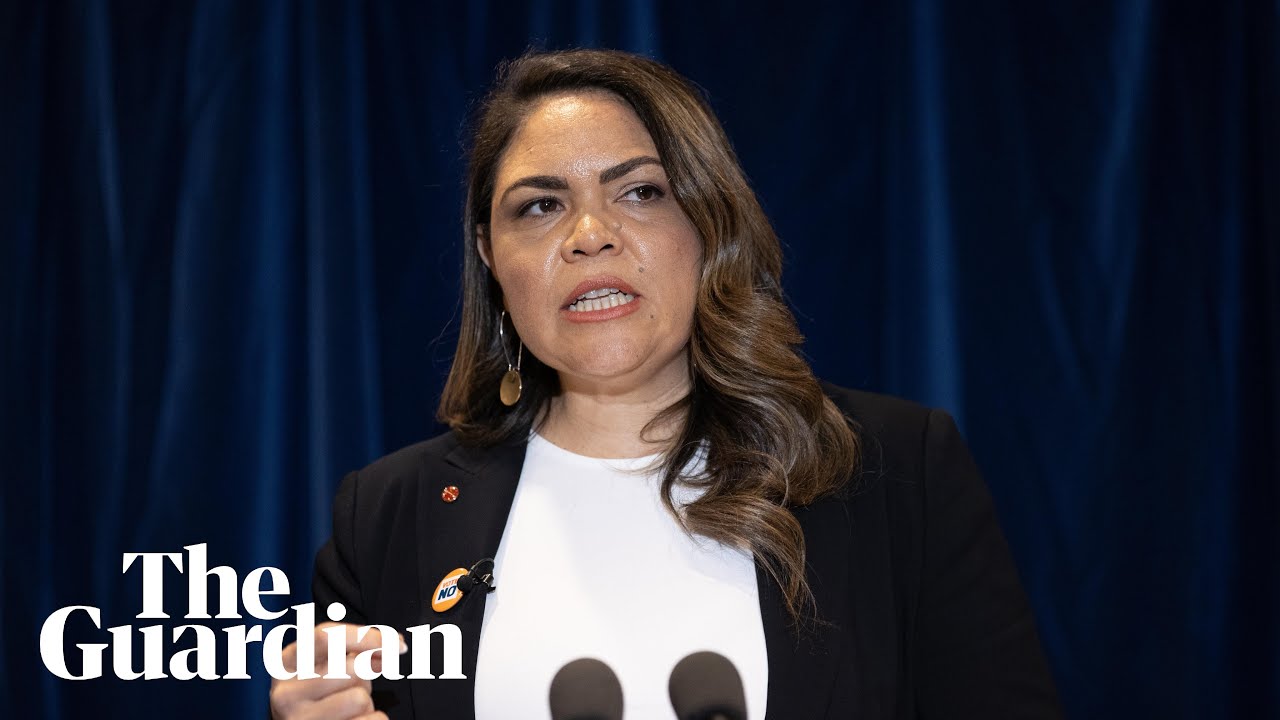
‘A betrayal’: Burney condemns Price claim colonisation had no ongoing negative impacts Burney says Price’s comments are ‘offensive’ and deny the experience of many First Nations families By Josh Butler and Lorena Allam Colonialism had 'positive impact' on Indigenous Australia, says Senator Price – video Jacinta Nampijinpa Price has said there are no negative ongoing impacts of British colonisation on Indigenous Australians, dismissing concerns about intergenerational trauma. The leader of the Indigenous voice to parliament no campaign and shadow Indigenous Australians minister spoke at the National Press Club in Canberra on Thursday, when she repeatedly declined to endorse Peter Dutton’s policy for a second referendum on constitutional recognition – further confusing the Coalition’s alternative policies on Aboriginal affairs. Indigenous Australians minister Linda Burney called Nampijinpa Price’s comments about colonisation “a betrayal” and strongly opposed her stance. In a wide-ranging speech, Price criticised Indigenous organisations, which she claimed sought to “demonise colonial settlement in its entirety and nurture a national self-loathing about the foundations of modern Australian achievement”. When asked to clarify whether she thought any Indigenous people were suffering negative impacts of colonisation, Price responded: “No.” “I’ll be honest with you, I do not think so. A positive impact, absolutely. I mean, now we have running water, readily available food,” she said. “If we keep telling Aboriginal people that they are victims, we are effectively removing their agency and giving them the expectation that someone else is responsible for their lives. That is the worst possible thing you can do to any human being, to tell them that they are a victim without agency. And that is what I refuse to do. “No, there is no ongoing negative impacts of colonisation.” Burney gave a scathing response on Thursday afternoon. “Those comments are offensive. It denies the experience of so many First Nations families,” she said. “We only have to look at the Stolen Generations and the impacts that has had, in terms of ongoing trauma and pain. Her comments are a betrayal of so many people’s stories.” Price’s speech made a case against the need for the voice, arguing against a focus on issues related to intergenerational trauma. She called for a greater focus on the exposure of Indigenous young people to domestic violence, abuse, neglect and lack of education. “This relates to any person of any background, but the reality is that Aboriginal children are exposed to all of the factors at a greater rate than any other group of Australian children. Separatism attributing causes to racism and colonisation does little to nothing to address the true causes,” Price said. “When we are led by grievance before fact, we overlook the opportunity to execute pragmatic commonsense approaches capable of realistic and positive outcomes.” The Northern Territory senator singled out the Victorian government’s truth and justice commission, which she claimed sought to “misrepresent” pre-colonial Indigenous Australia. In a following Q&A session, Price said she did not believe there were any ongoing negative effects of colonisation. The senator, who identifies as a Warlpiri-Celtic woman, joked about her own family history: “I guess that would mean those of us whose ancestors were dispossessed of their own country and brought as convicts in chains are suffering from intergenerational trauma. So I should be doubly suffering from intergenerational trauma.” The remark was met with laughter from no campaign supporters and fellow Coalition MPs. In a 2022 report, the federal government’s Australian Institute of Health and Welfare wrote that “colonisation has had a devastating impact on Aboriginal and Torres Strait Islander communities and culture”, and that such factors have a “fundamental impact on the disadvantage and poor physical and mental health of Indigenous peoples worldwide, through social systems that maintain disparities”. “Violence and epidemic disease caused an immediate loss of life, and the occupation of land by settlers and the restriction of Aboriginal people to ‘reserves’ disrupted their ability to support themselves,” the report said. “Together with the forcible removal of Indigenous children from their families and communities, Indigenous Australians have suffered ongoing inter-generational trauma.” The State Library of New South Wales reports a smallpox outbreak, associated with the arrival of British settlers in 1789, “killed at least HALF of the local Aboriginal people living in the Sydney area”. “They had no immunity to this destructive disease, and it spread rapidly,” the library said. The Central Land Council chief executive, Les Turner, said after the speech that elected grassroots representatives of Aboriginal people across the southern half of the Northern Territory had made it “very clear that they need a voice to parliament because they do not feel heard by politicians such as Senator Price”. “They have consistently said she does not represent them and has no record of working constructively with them on solutions that make a difference on the ground.” Price was also asked several questions about Dutton’s call for a second referendum, which he has said would be solely on symbolic recognition of Indigenous Australians. It has been longstanding Coalition policy, but the latest airing of the plan for a second referendum – resurfaced in recent weeks – was seen by some government sources as a strategy to further erode support for a yes vote. Price has previously declined to publicly back the call, saying her focus was on the current referendum. On Thursday, she again stopped short of fully endorsing Dutton’s call, saying she would not commit to holding another referendum in the first term of a future Coalition government. “As the Coalition, we have had a long-held commitment to recognition, but we would want to absolutely follow the appropriate processes to ensure that those conversations had taken place right across the country involving everybody, that is what needs to be done and hasn’t happened,” she said. © 2023 Guardian News & Media Limited or its affiliated companies. All rights reserved. (modern)
- CSI calls for Evacuation of Armenians Trapped in Artsakh
120,000 Armenian Christians Are Trapped as Azerbaijan Takes Nagorno Karabakh Christian Solidarity International , a Christian Human rights group urges Biden to initiate air rescue of endangered civilians. Thousands of Armenians have taken shelter at Stepanakert Airport, hoping planes will come to evacuate them. Photo: Andranik Shirinyan Today, Christian Solidarity International (CSI) can confirm, based on firsthand reports from partners on the ground, that thousands of Armenian Christians are now amassed at Nagorno Karabakh’s only airport, in the hope of being rescued by an international humanitarian airlift. Others are hiding in cellars and the heavily wooded mountains as atrocity crimes cause mounting civilian deaths, injuries, displacement and trauma. Meanwhile, Azerbaijan’s shelling of Nagorno Karabakh’s capital Stepanakert and other towns and villages continues, despite announcements of a cease-fire yesterday. Azerbaijan’s latest military assault caps a nine-month blockade to deny Nagorno Karabakh’s civilian population the necessities of life. This population is also terrorized by the memory of the beheadings, rapes and mutilations that accompanied Azerbaijan’s 2020 invasion and massacres of Armenians in Azerbaijan in 1988-1990. This morning, CSI’s International President Dr. John Eibner urged President Joe Biden to propose a four-point emergency response at today’s UN Security Council meeting: An immediate humanitarian airlift to evacuate trapped civilians to safe locations The establishment of a cease-fire The withdrawal of Azerbaijan’s military forces from the territory of the former autonomous republic of Nagorno Karabakh Reaffirmation of Nagorno Karabakh’s right to self-determination as found in the US approved OSCE Madrid Principles. CSI furthermore called on Biden to sanction Azerbaijan’s dictatorial President Ilham Aliyev and other architects, perpetrators and financers of Azerbaijan’s policy of ethnic-religious "cleansing". Eibner reminded Biden that the United States has had ample notice of the forced deportation that is now unfolding in Nagorno Karabakh, starting with Genocide Watch Emergency Alerts in 2020, 2021, 2022, and a Genocide Warning issued by the Save Karabakh Coalition n December 2022. These warnings were followed by two Genocide Emergency Alerts issued Genocide Watch in 2023, and a declaration of genocide by the first Chief Prosecutor of the International Criminal Court, Luis Moreno Ocampo. On September 7, the Azerbaijani president’s spokesman declared menacingly in a Deutsche Welle interview that “a genocide may happen” should Nagorno Karabakh refuse to submit to Azerbaijan’s demands. In conclusion, CSI's Eibner stated: “You were the first U.S. president to officially acknowledge the Armenian Genocide, thereby earning the gratitude of the Armenian people and all who abhor genocide. Let it not be said that, on your watch, Azerbaijan – a strategic partner of the United States – successfully executed another phase of the historic Armenian Genocide.” Christian Solidarity International (CSI) is a Christian human rights organization promoting religious liberty and human dignity.
- Genocide Alert:Artsakh surrenders to Azerbaijan
Genocide Emergency Alert: Artsakh Surrenders to Azerbaijan's Aggression On Tuesday, September 19, 2023, Azerbaijan began the bombardment of Stepanakert the capital of Armenian Nagorno-Karabakh (Artsakh). 27 people were killed; 138 people injured. Within two days, Artsakh surrendered to Azerbaijan. Artsakh authorities said they had no alternative. Nagorno-Karabagh is on its knees after a nine-month blockade of the Lachin Corridor, the only road connecting it to Armenia. Before the blockade, 90% of Artsakh’s food was imported from Armenia. In February 2023, the International Court of Justice ordered Azerbaijan to open the Lachin Corridor. Instead, Azerbaijan installed a security checkpoint, sealing off the “Road of Life." Artsakh has run out of flour to make bread. Hospitals are out of medicines. Stores have no baby formula. Artsakh's dialysis units have shut down. One in three deaths is due to malnutrition. Former prosecutor for the International Criminal Court, Luis Moreno Ocampo, says Azerbaijan is using starvation as a strategy to commit a silent genocide. Acts of genocide include not just mass killing. They include "deliberately inflicting on the group conditions of life calculated to bring about its physical destruction in whole or in part." (Genocide Convention Article 2(c)) Azerbaijani President Aliyev’s dictatorial regime's objective is to drive all Armenians out of Artsakh through war and genocide. Aliyev wants full integration of Artsakh into Azerbaijan. Armenians claim integration will lead to genocide, repeating past Baku and Sumgait pogroms. Aliyev's genocidal intent is often expressed in his dehumanization of Armenians. The silent genocide has become overt. Azerbaijan has mobilized its military along the borders of Artsakh and Armenia since early September, 2023. All-out war would mean another Armenian Genocide. With no reliable allies, Armenian defeat was certain. To save lives, surrender was the only option. How many more Armenian lives, cultural heritage sites, and ancestral lands will be lost? Will the US and Europe again be bystanders to genocide? Genocide Watch considers Azerbaijan to be at Stage 4: Dehumanization, Stage 5: Organization, Stage 7: Preparation, Stage 8: Persecution, and Stage 9: Extermination. Genocide Watch recommends that the US, EU, Russia and the UN should: ● Enforce the ceasefire agreement with Azerbaijan. If Azerbaijan breaks it, persuade Georgia to shut down the oil and gas pipelines that pass through it. ● Airlift massive emergency humanitarian aid directly into Artsakh. ● Enforce the ICJ’s rulings to open the Lachin Corridor, imposing sanctions on Azerbaijan. ● Enforce, not waive, Section 907 of the Freedom Support Act and stop all US aid to Azerbaijan. ● Reject forced integration of Artsakh into Azerbaijan because it will lead to deportation and genocide. ● UNESCO should expand its list of cultural heritage sites in Artsakh and appoint a commission of inquiry to investigate damage to Armenian heritage sites in Azerbaijan.
- Sri Lanka: Abuses Undercut Proposed ‘Truth Commission’
Donors, Governments Shouldn’t Endorse Initiative Rejected by Victims Thagbsiwaran Sivaganawathy holds a photo of her daughter, Thageswaran Susanya, at a protest for relatives of the disappeared on May 13, 2019 in Mullaitivu, Sri Lanka.© 2019 Allison Joyce/Getty Images (Geneva) – The Sri Lankan government’s ongoing abuses are undermining the purported goals of its newly proposed truth and reconciliation commission, Human Rights Watch said in a report published today. Victims of past violations, their families, and human rights defenders have rejected the government’s initiative because the government has not consulted them, ignores evidence gathered by past commissions, and it exposes them to security force abuses and retraumatization if they participate. The 39-page report, “‘If We Raise Our Voice They Arrest Us’: Sri Lanka’s Proposed Truth and Reconciliation Commission,” documents abusive security force surveillance and intimidation of activists and campaigners from minority Tamil families of those who “disappeared” during Sri Lanka’s civil war. The authorities are using draconian counterterrorism laws to silence dissenting voices, including those calling for truth and accountability, while government-backed land grabs target Tamil and Muslim communities and their places of worship. “Sri Lanka profoundly needs truth and accountability, but a credible process requires the support of victims’ families and an end to government abuses against them and their communities,” said Meenakshi Ganguly, deputy Asia director at Human Rights Watch. “As the government’s own public statements suggest, this latest commission seems to be aimed at deflecting international pressure over continuing impunity, rather than revealing the fate of the disappeared or bringing those responsible to justice.” The report is based on over 80 interviews in Sri Lanka in June 2023, with relatives of victims of enforced disappearance, other victims of abuses, human rights defenders, activists, and journalists in Sri Lanka’s predominantly Tamil north and east. The government has not yet published details about the new commission, known as the National Unity and Reconciliation Commission. However, officials have sought the support of foreign governments, including South Africa, Switzerland, and Japan, as well as United Nations agencies. President Ranil Wickremesinghe’s office hopes the initiative will convince governments that there is no need for further scrutiny by the UN Human Rights Council in Geneva, which has established an expert team to collect evidence of international crimes committed in Sri Lanka for use in future prosecutions. The government’s targeting of those campaigning for justice undermines the credibility of the latest initiative, Human Rights Watch said. “Since my husband was abducted, I lost my freedom to do routine activities,” said a Tamil woman whose husband was forcibly disappeared in 2000. “Even if I go to the market or temple, they [security officers] ask, ‘Where are you going?’” Thousands of people “disappeared” in state custody during a left-wing insurgency in the late 1980s and a 26-year civil war between the government and successionist Liberation Tigers of Tamil Eelam, which ended in 2009. Government forces and rebel groups committed widespread atrocities including attacks on civilians, extrajudicial executions, torture, and the use of child soldiers. Successive governments in Sri Lanka have appointed commissions that collected extensive testimony from victims and witnesses but none led to genuine accountability. Instead, the authorities blocked the few criminal investigations into grave abuses that had made some progress in identifying those responsible and initiating prosecutions. Sri Lankan civil society and victims’ groups have issued several joint statements making it clear that while a process to deliver truth and justice is urgently needed, the current initiative lacks credibility and risks further harm to victims and their families. International law obligates governments to prosecute those responsible for war crimes and other serious international crimes by all sides. Failing to do so fuels further rights violations and undermines prospects for a durable peace, Human Rights Watch said. The UN high commissioner for human rights, Volker Türk, said in a report on Sri Lanka to the Human Rights Council dated September 6, that for any transitional justice process to succeed, “[t]ruth-seeking alone will not suffice. It must also be accompanied by a clear commitment to accountability and the political will to implement far-reaching change.” The government should make progress toward achieving credible justice by genuinely engaging with victims and affected communities. It should build on the evidence collected and recommendations made by past commissions. It should support a fair, credible investigation and prosecution of international crimes; immediately end ongoing abuses against past victims, their families, and human rights defenders and activists; and order state agencies to halt “land grabs” targeting minority communities. Foreign governments, including South Africa, Switzerland, and Japan, should not finance or otherwise endorse a truth and reconciliation commission that victims reject and puts them at risk, Human Rights Watch said. International partners, including the European Union, should continue to press the government to meet its commitments to end violations committed using counterterrorism laws. “President Wickremesinghe promotes ‘reconciliation’ while his government threatens the victims of past abuses and their families and minority communities,” Ganguly said. “Instead of creating yet another commission to give the appearance of progress, the government should take steps to gain credibility for a genuine truth and justice process that Sri Lanka desperately needs.” © 2023 Human Rights Watch
- Rearrest Sparks Hope in Central African Republic
Abdoulaye Hissène Charged by Special Criminal Court By Lewis Mudge Abdoulaye Hissène, one of the leaders of the FPRC (Popular Front for the Rebirth of Central African Republic) armed group, reads a report on the breaches of the Khartoum agreements by armed groups, in Bangui, on August 23, 2019. © 2019 Florent Vergnes / AFP via Getty Images This week, the Special Criminal Court (SCC) in the Central African Republic announced charges against Abdoulaye Hissène for war crimes and crimes against humanity committed in 2017 as leader of the group Popular Front for the Rebirth of the Central African Republic (Front Populaire pour la renaissance de la République centrafricaine, FPRC). In a country teeming with individuals implicated in war crimes, Hissène stands out. He was an early Seleka commander and a minister while the rebels held the capital, Bangui, in 2013. Later he was a leader of a splinter group headed by Noureddine Adam, who is currently a fugitive suspected of war crimes and crimes against humanity, including torture, by the International Criminal Court. Hissène’s fighters were implicated in violence across Bangui in 2015, in September and October, and in December as people voted in a constitutional referendum in the city’s PK 5 neighborhood. Human Rights Watch documented hundreds killed and thousands of homes destroyed by these fighters north of the capital from 2014 to 2017. Hissène is reportedly being held on a military base also serving as a detention center for high profile detainees. On September 7, he appeared at the SCC, a court based in Bangui established to try serious crimes in the country. The court is staffed by international and national judges and prosecutors, and benefits from international assistance. Hissène was first arrested in 2016 but his men broke him out of his Bangui jail after only a few hours. Months later, men under Hissène and Haroun Gaye, another Seleka leader, kidnapped five policemen. International peacekeepers launched a failed rescue attempt and several people were killed. In August 2016, Hissène lead a heavily armed convoy out of Bangui, engaging in several gunfights with United Nations peacekeepers. In 2017 the United States and the UN put him on a sanctions list. In 2018 a criminal court in Bangui tried and convicted him in absentia on charges of association with criminals, possession of illegal weapons, undermining state security, and rebellion. In 2020 Hissène broke with the other Seleka groups and refused to back a new rebel coalition, putting him in good standing with the current government. In 2022 he made headlines for participating in a political dialogue. Hissène felt protected and lived in Bangui without fear. His arrest is a warning to others implicated in grave crimes and in positions of power, that the reign of impunity in the country may be fracturing. © 2023 Human Rights Watch
- Genocide Alert: Azerbaijan is Attacking Nagorno-Karabagh
To view ANCA appeal, click on image. Azerbaijan Attacking Artsakh: Take Action Now to Stop Azerbaijan's Genocide of Artsakh Armenians Earlier today, on September 19th, Azerbaijan launched a large-scale military offensive against the Republic of Artsakh, subjecting the capital Stepanakert and other cities and villages to intensive fire using drones and heavy artillery. There are already 25 civilian deaths and 138 injuries, including children. Women and children have already been escorted to bunkers in the face of the ongoing onslaught. Demand U.S. leadership to STOP Azerbaijan's genocide against 120,000 Christian Armenians in Artsakh - an at-risk democracy under attack by an oil-rich dictatorship. 1) U.S. intervention to stop the Artsakh Genocide - consistent with our obligations under the Genocide Convention 2) An end to all U.S. military assistance to genocidal Azerbaijan - consistent with the FREEDOM Support Act 3) An American humanitarian airlift to Artsakh - consistent with America's tradition of aiding at-risk populations Please write, call, and tweet your Congressman and Senators. Encourage friends and family to take action by visiting anca.org/alert. For the latest information on Azerbaijan's genocidal attack on Artsakh, the US response, and additional ways you can take action, check out the ANCA website and follow the ANCA on social media. Sample Phone Script: My name is [Name] and I am calling from [city, state] I am calling to request your personal engagement to stop Azerbaijan’s genocide against Artsakh’s (Nagorno Karabakh) 120,000 indigenous Armenian Christian population. On September 19th, after imposing a 9-month brutal blockade, Azerbaijan attacked Artsakh, using heavy artillery and drones. Civilian casualties and injuries have already been reported. Please take immediate action to: 1) Condemn the attack and urge U.S. intervention to stop the Artsakh Genocide 2) End all U.S. military assistance to genocidal Azerbaijan 3) Airlift humanitarian assistance to Artsakh The situation is dire. My family and I are following this issue closely and look forward to seeing concrete US action. Thank you.