Search Results
Search this site
6505 results found with an empty search
- South Sudan, Africa's largest refugee crisis, needs urgent response – UN agency
South Sudanese refugees get off the truck at Palorinya settlements in Uganda where each family will be given a piece of land for shelter. Photo: UNHCR/Michele Sibiloni 10 February 2017 – With already more than 3.5 million displaced within and outside the borders of South Sudan and thousands more driven to neighbouring countries every day, the United Nations refugee agency has appealed for an urgent peaceful resolution to what has now become Africa's worst refugee crisis. “Recent new arrivals report suffering inside South Sudan with intense fighting, kidnappings, rape, fears of armed groups and threats to life, as well as acute food shortage,” William Spindler, a spokesperson for the Office of the UN High Commissioner for Refugees (UNHCR) told the media at a regular briefing in Geneva. “More than 60 per cent of the refugees are children, many arriving with alarming levels of malnutrition – enduring devastating impact of the brutalities of the ongoing conflict,” he added. However the crisis, third only to the displacements in Syria and Afghanistan and now in its fourth year, has received less attention and is plagued by chronic levels of underfunding. UNHCR said that its response capacities are overstretched in the countries hosting the refugees and the lack of funds is affecting critical and life-saving efforts such as providing clean, drinking water, food, health and sanitation. Last month, the agency revised upwards its funding requirements for 2017 to $781.8 million (some $297.9 million or 61 per cent higher than the earlier budget) in light of new needs of those who have been displaced due to renewed fighting, increased violence and resulting food insecurity since July last year. The agency's last year funding appeal of $649 million received only 33 per cent of the amount needed. 500,000 displaced in four months – more than 4,000 every day The period between September and December 2016 saw almost half a million South Sudanese seeking refuge in neighbouring countries – an average of almost 4,100 people every day for four months. According to Mr. Spindler, as the global displacement trends reflect, those fleeing South Sudan are being hosted by the poorest communities in the neighbouring countries, under immense pressure with scarce resources. Noting that the welcome South Sudan refugees received in the neighbouring countries “is encouraging” he cautioned that the lack of resources to respond is also extremely worrying. The majority of the refugees are being hosted by Uganda (about 698,000), followed by Ethiopia (about 342,000), Sudan (305,000), Kenya (89,000), the Democratic Republic of the Congo (68,000) and the Central African Republic (4,900). “We are working with authorities in South Sudan's neighbouring countries to provide life-saving support and look after the basic needs of those arriving in desperate conditions,” the UNHCR spokesperson said, renewing a call on donor countries to step up support to the humanitarian efforts for the South Sudan situation. South Sudan has faced ongoing challenges since a political face-off between President Salva Kiir and his then former Vice-President Riek Machar erupted into full blown conflict between forces loyal to each in December 2013. The crisis has produced one of the world's worst displacement situations with immense suffering for civilians. Despite the August 2015 peace agreement that formally ended the war, conflict and instability have also spread to previously unaffected areas. (c) 2017 United Nations
- "We Rohingya get kicked around like a football"
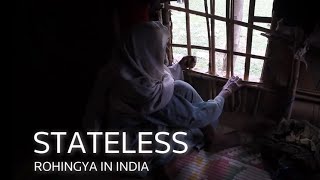
Tens of thousands of Rohingya, a Muslim minority fleeing ethnic persecution in Myanmar, are adrift in boats in the Bay of Bengal, desperate to find shelter on land. Thailand and Malaysia have refused to let most of them ashore. The United Nations said last week the outflow would continue unless Myanmar ended discrimination. Displaced Rohingya can be found in many parts of Asia. Myanmar passed a law in 1982 which denied the Rohingya citizenship. They are stateless – not recognized as nationals of any country. This video, first published in September 2014, describes how Kohinoor – a Muslim Rohingya - fled her home in Myanmar two and a half years ago after a wave of ethnic violence. She hoped for a chance to rebuild her life in a new country. But in India she has found destitution and discrimination. Kohinoor now lives with a small Rohingya community on a patch of wasteland in Delhi. In this film she talks about their daily struggle to survive and their dream for a permanent place to call home. There are an estimated 10 million stateless people worldwide. ________________________________________________________________________________________________________________________ (c) 2017 Thomson Reuters Foundation
- UN Special Adviser Condemns Human Rights Violations Against Rohingya Population by State Security Fo
On 6 February, the United Nations Special Adviser on the Prevention of Genocide, Adama Dieng, issued a statement condemning the alarming human rights violations committed against the Muslim Rohingya population in northern Rakhine State by Burmese security forces. The statement follows the recent release of the United Nations Office of the High Commissioner for Human Rights’ (OHCHR) latest report on the situation, which documents the testimonies of over 220 Rohingya refugees, interviewed between 12 and 21 January in Bangladesh. On Thursday, two senior United Nations officials also stated that more than 1,000 Rohingya civilians were killed during the army crackdown, of which the humanitarian consequences have been greatly underestimated by the country’s presidential spokesman, Zaw Htay. The latest OHCHR report includes testimonies of grave human rights violations, including mass gang-rape, killings of babies, and forced disappearances, while the UN Special Adviser called on the government to fulfill its responsibility to protect the population against these “atrocious and punishable acts”. Mr. Dieng also expressed his disappointment about the recent investigation conducted by the Government Commission over these crimes, which stated to have found nothing to substantiate the claims. Defining the Commission as a non-credible option to further undertake new investigations, the Special Adviser also called for a “totally independent and impartial body” staffed with international observers, to be allowed access to report on and document the whole range of “long-standing discriminatory practices and policies against the Rohingya Muslims,” in order to put in place conditions that would “support peaceful coexistence among different communities in Rakhine State.” On 8 February, Pope Francis also spoke in defense of the right of Burma’s Rohingya Muslims to “live their faith” and condemned the country’s government for its campaign of persecution, which is forcing them to flee. Charu Lata Hogg, an associate fellow with the Asia Programme at Chatham House, has said that “Pope Francis’ comments should serve as a wakeup call to the international community.” ______________________________________________________________________________________________________________________________________________(c) 2017 RtoP Weekly
- When (In)Action Speaks Louder Than Words: Confronting the Collapse of Humanitarian Values in Foreign
“Why do good people and their governments repeatedly turn away from intervention that could halt genocides and other mass abuses of human beings?” “What devaluation of human lives could possibly allow this?” I began to examine such questions when I became aware of the indifference toward the vast scale of atrocities being perpetrated in Darfur, Sudan. I saw a connection between earlier research I had published with David Fetherstonhaugh and colleagues in 19971 and subsequent research with Deborah Small and George Loewenstein.2 Specifically, this work documented the insensitivity to large numbers of lives at risk that we labeled psychophysical numbing, consistent with the general nonlinear model of valuation proposed by Daniel Kahneman and Amos Tversky (1979) in their landmark paper on prospect theory.3 Subsequent studies uncovered additional evidence of insensitivity described as compassion fade and, in some cases, compassion collapse, where valuation actually decreases and may even collapse to zero as the number of lives at stake increases.4 All of this helps explain why many who care greatly about individual lives lose their enthusiasm and compassion when the numbers get large. Slovic, Zionts, Woods, Goodman, and Jinks proposed some procedures that might infuse the dry statistics of atrocities with enough emotion to motivate people to care enough to act.5 But yet another problem beyond numbing, at the very foundation of valuation, decision-making, and action has become apparent. It is easy to view inaction on the part of powerful and well-intentioned governments as resulting primarily from a lack of direction or pressure from a numbed public that places little value on saving foreign lives. In her Pulitzer Prize winning book, Samantha Power concluded that: “[G]enocide in distant lands has not captivated senators, congressional caucuses . . . lobbyists . . . or individual citizens. . . . The battle to stop genocide has thus been repeatedly lost in the realm of domestic politics. . . . It takes political pressure to put genocide on the map in Washington.”6 True enough, and a testimony to the indifference on the part of a numbed citizenry that doesn’t feel an emotional connection to different suffering. But genocides and mass atrocities of recent years in places such as Rwanda, Darfur, and Syria have been thoroughly documented while they were taking place and that documentation has included emotionally jarring testimony and images. Something more than numbness must be impeding action. Is it a matter of values? It was easy to blame the Bush administration for being uncaring. Even when Colin Powell returned from Darfur in 2004 and used the “G word” to describe the atrocities there, no action was taken.7 Then the Obama administration came to power and hopes soared. Surely President Obama cared about humanitarian causes, and he was surrounded aides, including Samantha Power, who certainly placed high value on human lives. In fact, Ambassador Power has recalled that at her first meeting with the President he was greatly interested in her book and its documentation of repeated failures of the American government to live up to its ideals.8 Yet six years into an administration most likely to succeed in taking action to mitigate or halt mass atrocities, little seems to have changed—certainly not in Darfur. What’s going on? Perhaps psychology can again provide some explanation. Aided by valuable discussions with colleagues Robin Gregory, David Frank, and Daniel Västfjäll, I sought insight from data I began collecting in 1961. That research examined how people made decisions between two options that were equally valuable to them.9 Consider a gift package made up of two components—cash and a coupon worth $X, redeemable at a store you like. There are two such packages. Package A gives you more cash than Package B, but you are able to increase B’s advantage in the value of the coupon book by enough to make the two gifts equally attractive to you. But you have to choose. Which one would you take? Naïve theories would predict you will flip a coin, thus being equally likely to choose A or B. That didn’t happen. Eighty-eight percent of respondents, each of whom had individually adjusted the packages to make them equally attractive for them, made the choice in the same direction.10 What do you think they did? If you predicted that they chose the package with the greater amount of cash, you are correct.11 Similar results occurred with choices among nine other pairs of two-attribute “bundles,” such as baseball players (described by batting average and number of home-run hits), secretarial applicants (described by typing speed and typing accuracy), and so on.12 In every case, choices among individually equated pairs were highly predictable, with about eighty percent of respondents adhering to the following the rule: choose the option that is better on the attribute that is inherently more important (e.g., cash, or batting average, or typing accuracy).13 Not trusting the adjustment method used to equate the options in each pair, I finally found a way to overcome my methodological concerns and published these findings after more than a decade.14 Some thirteen years later, Amos Tversky and Shmuel Sattath incorporated this “more important dimension effect” into a new theory of choice.15 The core finding was named “the prominence effect.” 16 The essence of this effect is that, although we may have a qualitative sense of the importance of valued attributes, we may not have a sense of the appropriate quantitative tradeoffs when these attributes compete with one another.17 For example, we highly value both affordability and safety in a car, but how much more we should be willing to spend for a specific increment in safety is by no means obvious to us. We struggle with making tradeoffs and seek a simple, defensible way to choose among options whose attributes are important but conflicting. Here is where the prominence effect enters: don’t struggle to perform any quantitative calculations to weigh and compare valued objectives. Choose what is best according to the most prominent—that is the most defensible—attributes. You can’t go wrong. You can well defend your choice to yourself and others. Moreover, it likely “feels” right. So what does this have to do with valuing foreign lives and genocide? A lot. It is well recognized that decisions to save civilian lives by intervening in foreign countries’ domestic affairs are among the most difficult and controversial choices facing national decision makers. Although each situation is unique, such decisions typically involve tradeoffs that pit the value of human lives against other important objectives. And on rare occasions we do decide to intervene. In 2011, the United States supported military action to protect the lives of civilians living in Libya,18 and more recently the American military intervened aggressively to protect a threatened population of Yezidi people in Iraq.19 On the other hand, the United States has done little to intervene in the genocide in Darfur or to halt the barrel bombings and other government-led atrocities in Syria that have led to hundreds of thousands of deaths and millions of displaced people.20 The inconsistencies are striking. Why intervene in some situations and not in others that, by the numbers, seem far worse? And how do we reconcile the immense value our society places on an individual life with our failure to respond to the plight of millions? What are our true values when it comes to saving human lives? Should we accept these inconsistencies? Are we oblivious to them? Are other objectives really important enough to outweigh millions of lives? Why can’t sheer numbers, once great enough, tip the scales toward at least some forms of meaningful intervention if not outright troops on the ground? The lightbulb switched on in 2012 when I was at a conference in Jerusalem, listening to a presentation by social psychologist Nurit Schnabel, and her colleagues Ilanit SimanTov-Nachlieli and Arie Nadler.21 The title of their talk says it all: “Sensitivity to Moral Threats Increases When Safety Needs Are Satisfied: Evidence of Hierarchical Organization of Psychological Needs.”22 Their conclusion jumped out at me: consistent with Maslow’s hierarchy of needs, the basic need for security must be satisfied before people will respond to higher order needs.23 In other words, when security is tenuous moral action to help others is unlikely. Immediately I thought of the prominence effect, where determiners of choice are found to be hierarchical (we called it lexicographical), which means satisfying the most important attributes with little or no compensation allowed for lesser attributes. That is, prominent attributes trump less prominent factors. Prominence is driven by the need to justify and defend one’s decisions and actions in a way not called for when simply stating one’s values. And what is the most prominent set of values in today’s foreign policy world? National security interests! Could the unquestioned importance of national security explain, at least in part, the disconnect between the lofty expressed values of our government for protecting distant lives and the minimal valuation of those lives revealed by government inaction when millions are threatened? The rhetoric of the two most recent American presidents leaves no doubt that, in terms of expressed values, national security and humanitarian lifesaving are both vital objectives. Speaking on CNN in January of 2009, George W. Bush remarked: “The most important job I have had—and the most important job the next president is going to have—is to protect the American public from another [terrorist] attack.”24 Barack Obama echoed this sentiment, saying: “I have a solemn duty and responsibility to keep the American people safe. That’s my most important obligation as President and Commander-in-Chief.” 25 Yet both leaders expressed equally high valuation for life saving. Speaking at the Holocaust Museum in Washington, DC, President Obama stated that we need to do everything we can to prevent and end atrocities: “I made it clear that ‘preventing mass atrocities and genocide is a core national security interest and a core moral responsibility of the United States of America.’”26 I am drawn to the hypothesis that, because of the prominence effect, lofty humanitarian values are systematically devalued in the decision-making process. When intervention to protect thousands of nameless, faceless lives in a distant land is seen to increase risks to national security, security invariably wins. Decisions in support of security appear vastly more defensible than decisions to protect distant lives. In the few recent situations where the United States has intervened with the stated objective of saving lives, there were presumed security benefits as well, thus no conflict between objectives. We attacked Saddam Hussein, not because he was a mass murderer, but because we believed he possessed and might use weapons of mass destruction.27 When Libyan leader Muammar Gaddafi threatened to go door to door in Benghazi, killing anyone who opposed his regime, the United States joined a NATO coalition to topple him from power.28 But he, too, was considered a threat to security, long seen as a loose cannon addicted to violence at home and elsewhere. His menacing visage adorned the cover of Time magazine four times since 1986, when Ronald Reagan referred to him as “this mad dog of the Middle East.”29 When the United States recently decided to come to the rescue of thousands of Yazidis threatened by ISIS in Iraq, we were also protecting American military and diplomatic personnel stationed in nearby Erbil.30 Without that security objective, would we have aided the Yazidis? In contrast, humanitarian intervention in Darfur appears to have been blocked by security objectives in addition to the military and domestic political costs. We have long sought to obtain intelligence regarding terrorist operations from the Sudanese government.31 In addition, Sudanese President Omar al-Bashir, who takes a back seat to no one as a murderer, has been protected by the Chinese government, which for many years was the major buyer of Sudanese oil.32 An action against al-Bashir that strained relations with China would have jeopardized U.S. economic and military interests. One of the most stunning conclusions by Samantha Power in her book The Problem from Hell was that America’s repeated refusals to end genocide were not “accidental products of neglect” but rather “They were concrete choices made by the country’s most influential decisionmakers after unspoken and explicit weighing of costs and benefits.”33 But if the prominence effect is indeed infiltrating top-level policy decisions and causing decision makers to systematically devalue humanitarian actions, I doubt that the decision makers are consciously aware of this. The prominence mechanism driving the decision-making process is not consciously expressed devaluation of distant lives; this would be abhorrent to leaders who truly do value those lives. Rather, I believe that prominent objectives, in particular those offering enhanced security, draw attention away from less prominent goals. All eyes are on options that protect the homeland, and decision makers fixated on the security objectives likely fail to consider seriously the millions of people under siege and left to die. Compensatory weighing of costs and benefits associated with seeking security and saving distant lives is not really occurring. Thus meaningful action to prevent genocide and mass atrocities faces two psychological obstacles. The prominence effect leads to decisions that favor inaction, even when this contravenes deeply held values. And decision makers can get away with this because the public is psychologically numbed. As Samantha Power observed: “No U.S. president has ever made genocide prevention a priority, and no U.S. president has ever suffered politically for his indifference to its occurrence. It is thus no coincidence that genocide rages on.”34 My colleagues and I have been working to design laboratory experiments to test these speculations about the psychological prominence of security in values revealed through decisions. In a recent pilot study, we posed the humanitarian crisis in Syria (prior to the involvement of ISIS) to respondents instructed to play the role of the U.S. President. The objective of protecting 100,000 civilian lives by creating a “safe zone” was pitted against the decision to not intervene in order to minimize the political and military risks of intervention. We assumed the latter objectives would be prominent. Preliminary results support the hypothesis that an individual’s strongly expressed values for intervening to protect lives are often contravened by that same person’s decisions in favor of nonintervention for the sake of security. But amidst this sobering view contrasting our stated values and our revealed values, the pilot study did offer a ray of hope that needs to be pursued. We found a strong order effect in our data. One group of our respondents was first asked to think about their values for the competing objectives and to quantify them on a 0–100 rating scale of importance. One of the rated objectives was not intervening in order to protect national interests and national security. The objective of the alternative action, intervention, was characterized by three subgoals: (1) Create a no-fly zone to stop Syrian airplanes from attacking citizens; (2) Place U.S. troops on the border of the safe zone to protect it; (3) Have U.S. troops accompany ground shipments of food and medicine to ensure their delivery to the safe zone. Those who first decided whether to intervene or not made decisions that conflicted with their subsequent ratings of their goals on the 0–100 scale. As predicted by the prominence hypothesis, choices often favored nonintervention to a degree that was not consistent with respondents’ stated values, which tended to assign greater importance to objectives linked to intervention. However, those who first searched their souls and expressed their values quantitatively for the various objectives subsequently made choices that were highly consistent with their expressed values. This suggests that introduction of techniques known as decision analysis and value-focused thinking35 may help policy makers act in ways that don’t contradict their expressed values. Prominence appears likely to be aligned with immediate and certain benefits to individuals whom we care about. Without incorporating decision analysis and value-focused thinking, it will be difficult to defend actions that protect distant, anonymous masses from genocides and mass atrocities. Preferred Citation: Paul Slovic, When (In)Action Speaks Louder Than Words: Confronting the Collapse of Humanitarian Values in Foreign Policy Decisions, 2015 ----------------- U. Ill. L. Rev. Slip Opinions 24, http://www. illinoislawreview.org/wp-content/uploads/2015/04/Slovic.pdf. 1. See David Fetherstonhaugh, Paul Slovic, Stephen M. Johnson & James Freidrich, Insensitivity to the Value of Human Life: A Study of Psychophysical Numbing, 4 J. Risk & Uncertainty 283 (1997). 2. See Deborah A. Small, George Loewenstein & Paul Slovic, Sympathy and Callousness: The Impact of Deliberative Thought on Donations to Identifiable and Statistical Victims, 102 Organizational Behav. & Hum. Decision Processes 143 (2007). 3. See Daniel Kahneman & Amos Tversky, An Analysis of Decision Under Risk, 47 Econometrica 263 (1979). 4. See, e.g., Ezra M. Markowitz, Paul Slovic, Daniel Västfjäll & Sara D. Hodges, Compassion Fade and the Challenge of Environmental Conservation, 8 Judgment & Decision Making 397 (2013); Daniel Västfjäll, Paul Slovic, Marcus Mayorga & Ellen Peters, Compassion Fade: Affect and Charity Are Greatest for a Single Child in Need, 9 PLoS ONE 1 (2014). 5. Paul Slovic, David Zionts, Andrew K. Woods, Ryan Goodman & Derek Jinks, Psychic Numbing and Mass Atrocity, in The Behavioral Foundations of Public Policy 126 (Eldar Shafir ed., 2012). 6. Samantha Power, A Problem from Hell: America and the Age of Genocide 509 (2013). 7. David Hancock, Colin Powell and the G-Word, CBS (Sept. 9, 2004, 8:20 AM), http://www.cbsnews.com/news/colin-powell-and-the-g-word/. 8. Evan Osnos, In the Land of the Possible, New Yorker (Dec. 22, 2014), http://www.newyorker.com/magazine/2014/12/22/land-possible?currentPage=all. 9. Paul Slovic, Choice Between Equally Valued Alternatives, 1 J. Experimental Psychol.: Hum. Perception & Performance 280 (1975). 10. Id. at 284. 11. Id. at 283–84. 12. Id. at 283. 13. Id. at 284. 14. See id. at 280. 15. Amos Tversky, Shmuel Sattath & Paul Slovic, Contingent Weighting in Judgement and Choice, 95 Psycol. Rev. 371 (1988). 16. Id. at 375, 382–83. 17. Id. at 375–76. 18. See Jim Garamone, Obama Makes Case for U.S. Participation in Libya, U.S. Dept. of Def. (Mar. 28, 2011), http://www.defense.gov/news/newsarticle.aspx?id=63342; Genocide Prevention Initiative, Univ. of Or., http://blogs.uoregon.edu/prevent/about-2/ (last visited Mar. 3, 2015). 19. U.S Provides Aid to Yezidis, Strikes ISIL Mortar Position, U.S. Dept. of Def. (Aug. 13, 2014), http://www.defense.gov/news/newsarticle.aspx?id=122914. 20. See Fred Hiatt, Why Does the U.S. ‘Stand so Idly by’ on Syria?, Wash. Post, May 4, 2014, http://www.washingtonpost.com/opinions/fred-hiatt-why-does-the-us-stand-so-idly-by-on-syria/2014/05/04/88a9ca4a-d20b-11e3-937f-d3026234b51c_story.html; Eric Reeves, A Nightmare Impossible to “Slumber” Through, Sudan Trib. (Dec. 31, 2014), http://www.sudantribune.com/spip.php?article53500. 21. Nurit Shnabel, Ilanit Simantov-Nachlieli & Arie Nadler, Tel Aviv University, Sensitivity to Moral Threats Increases when Safety Needs are Satisfied: Evidence of Hierarchical Organization of Psychological Needs (June 6, 2012). 22. Id. 23. A. H. Maslow, A Theory of Human Motivation, 50 Psycol. Rev. 370, 376–380 (1943). 24. Bush: President’s Priority Is Preventing Attack, CNN (Jan. 14, 2009, 4:24 AM), http://www.cnn.com/2009/POLITICS/01/14/bush.lkl.interview/. 25. David Remnick, Going the Distance: On and Off the Road with Barack Obama, New Yorker, Jan. 27, 2014, http://www.newyorker.com/magazine/2014/01/27/going-the-distance-2. 26. President Barack Obama, Remarks at the United States Holocaust Memorial Museum (Apr. 23, 2012) (transcript available in the White House Office of the Press Secretary), available at http://www.whitehouse.gov/the-press-office/2012/04/23/remarks-president-united-states-holocaust-memorial-museum. 27. Bush, Blair: Time Running out for Saddam, CNN (Jan. 31, 2003, 11:37 PM), http://edition.cnn.com/2003/US/01/31/sprj.irq.bush.blair.topics/. 28. President Barack Obama, Address to the Nation on Libya (Mar. 83, 2011) (transcript available in the White House Office of the Press Secretary), available at http://www.whitehouse.gov/the-press-office/2011/03/28/remarks-president-address-nation-libya. 29. President Ronald Reagan, the Presidents News Conference (Apr. 9, 1986) available at http://www.presidency.ucsb.edu/ws/?pid=37105. See, e.g., The World After Gaddafi, Time, Sep. 5, 2011; What if He Doesn’t Go?: The War Against Gaddafi, Time, Apr. 4, 2011; Target Gaddafi, Time, Apr. 21, 1986. 30. Dana Ford & Josh Levs, ‘Heroic’ Mission Rescues Desperate Yazidis from ISIS, CNN (Aug. 16, 2014, 11:41 AM), http://www.cnn.com/2014/08/11/world/meast/iraq-rescue-mission/. 31. Madeleine K. Albright, Former Sec. of St., Statement to the National Commission on Terrorist Attacks upon the United States (Mar. 23, 2004). 32. See Christopher Alessi & Stephanie Hanson, Expanding China-Africa Oil Ties, Council on Foreign Rel. (Feb. 8, 2012), http://www.cfr.org/china/expanding-china-africa-oil-ties/p9557; Nat Hentoff. Al-Bashir’s Genocide Horrors Began and Continue in Darfur, Cato Inst. (Oct. 9, 2013), http://www.cato.org/publications/commentary/al-bashirs-genocide-horrors-began-continue-darfur. 33. Power, supra note 6, at 508. 34. Id. at XXI. 35. See Robin Gregory et al., Structured Decision Making: A Practical Guide to Environmental Management Choices (2012); Ralph L. Keeney, Value-Focused Thinking: A Path to Creative Decisionmaking (1996). ______________________________________________________________________________________________________________________________________________(c) 2015 U. Ill. L. Rev. Slip Opinions 24
- More than 1,000 Rohingya feared killed in Myanmar crackdown, say UN officials
A Myanmar policeman kicks a villager in Kotankauk during a clearance operation in November last year. Evidence of abuse against Rohingya Muslims by the army is growing. (Photograph: Zaw Myo Htike/AFP/Getty Images) More than 1,000 Rohingya Muslims might have been killed in a Myanmar army crackdown, according to two senior United Nations officials dealing with refugees fleeing the violence, suggesting the death toll is far greater than previously reported. The officials, from two separate UN agencies working in Bangladesh, where nearly 70,000 Rohingya have fled in recent months, said they were concerned the outside world had not fully grasped the severity of the crisis unfolding in Myanmar’s Rakhine state. “The talk until now has been of hundreds of deaths. This is probably an underestimation – we could be looking at thousands,” said one of the officials, speaking on condition of anonymity. Both officials, in separate interviews, cited the weight of testimony gathered by their agencies from refugees over the past four months in concluding the death toll was likely to have exceeded 1,000. Myanmar’s presidential spokesman, Zaw Htay, said the latest reports from military commanders were that fewer than 100 people had been killed in a counterinsurgency operation against Rohingya militants who attacked police border posts in October. Asked about the UN officials’ comments that the dead could number more than 1,000, he said: “Their number is much greater than our figure. We have to check on the ground.” About 1.1 million Rohingya Muslims live in apartheid-like conditions in north-western Myanmar, where they are denied citizenship. Many in Buddhist-majority Myanmar regard them as illegal immigrants from Bangladesh. In addition to the information the two UN officials gave Reuters, a report released by the UN Office of the High Commissioner for Human Rights (OHCHR) on Friday gave accounts of mass killings and gang rapes by troops in north-western Myanmar in recent months, which it said probably constituted crimes against humanity. The government led by Aung San Suu Kyi said last week it would investigate the allegations in the report. It has previously denied almost all accusations of killings, rapes and arson. But mounting evidence of atrocities by the army puts Suu Kyi, who has no control over the armed forces under a constitution written by the previous military government, in a difficult position, Myanmar-based diplomats say. The Nobel peace prize winner has been criticised in the west for her silence on the issue, undermining the goodwill she built up as a democracy champion under years of junta rule and threatening international support. Independent verification of what has been happening in Myanmar is extremely difficult because the military has cut off access to north-western Rakhine. The OHCHR report cited supporting evidence including bullet and knife wounds sustained by refugees and satellite imagery showing destruction of villages. A second senior UN official, from a different agency in Bangladesh, told Reuters the report described only “the tip of the iceberg”. The OHCHR report was based on interviews with 220 people, the majority of whom said they knew of people who had been killed or had disappeared. Reuters also has reviewed a separate, internal UN analysis using a much larger sample size. In this unpublished report, based on interviews with families comprising more than 1,750 refugees, there were 182 reports of killings of people in the interviewee’s home village alone, and 186 reports of people from their village disappearing, accounting for more than 10% in both cases. The document acknowledges the actual number in both categories was likely lower because interviewees from the same village might have separately described the same incidents. The UN says 69,000 people have crossed the border since October, so if the proportion reporting people killed or missing among all the refugees was consistent with those in the report the total number would run into the thousands. The army intensified its offensive in northern Rakhine in mid-November, unleashing what the OHCHR report described as a “calculated policy of terror” after an incident in which several hundred Rohingya attacked an outnumbered group of soldiers, killing an officer. (c) 2017 Reuters
- Fighting reaches 'worrying proportions' in South Sudan's north-east – UN mission
Over 9,000 displaced people seeking a safe place to stay have moved into the church compound in Wau, South Sudan. Photo: UNICEF/UN027524/Ohanesian 9 February 2017 – The United Nations Mission in South Sudan (UNMISS) today voiced concern about an escalation in the fighting between Government and opposition forces in the west bank of the River Nile in the African country's north. Fighting has reached what the head of UNMISS, David Shearer, described as “worrying proportions,” according to a statement issued by the Office of Spokesperson for the UN peacekeeping operation. “What began with an exchange of fire between SPLA [the Sudan People's Liberation Army] and Aguelek opposition forces, has expanded geographically,” the statement said, noting that military resupplies have since been observed arriving in the area. Military operations on the west bank of the Nile River are taking place in an area where people, predominantly from the Shilluk ethnic group live, forcing people out of their homes. The town of Wau Shilluk is now reported to be deserted. Humanitarian workers have been evacuated and aid is not being provided, the statement added. On Wednesday, UNMISS received reports of hostilities between the two sides in Owachi and Tonga, Panyinkang County. Meanwhile, Mr. Shearer today returned to the South Sudanese capital, Juba, from a two-day field visit to Bentiu and Leer, two towns which have been among the most affected by the country's conflict, according to a separate statement issued today by the spokesperson's office. In Bentiu, Mr. Shearer met state government officials, as well as internally displaced people who are living in the largest protection of civilians site in the country. In Leer, he visited the mission's temporary operating base to assess UNMISS' success in mounting robust patrols which push the mission's presence deep into the field. He held discussions with local officials and also took the opportunity to travel to an opposition-controlled area to meet with pro-Machar representatives so he could hear all shades of opinion on how to facilitate humanitarian assistance and advance the peace process, the statement said. The local opposition told Mr. Shearer that they support the current localized cessation of hostilities and remain in a defensive position which they hope will encourage the return of humanitarian agencies to Leer. Both the local authorities and the opposition praised the UN for its efforts to facilitate communications between them. Mr. Shearer heard that they both recognize that an inclusive national dialogue will assist the peace process, the statement added. South Sudan has faced ongoing challenges since a political face-off between President Salva Kiir and his then former Vice-President Riek Machar erupted into full blown conflict between forces loyal to each in December 2013. The crisis has produced one of the world's worst displacement situations with immense suffering for civilians. Despite the August 2015 peace agreement that formally ended the war, conflict and instability have also spread to previously unaffected areas. (c) 2017 United Nations
- Afghanistan: Attack on ICRC is a horrific crime
CRC / Norimasa Tochibayashi The killing of six employees of the International Committee of the Red Cross (ICRC) in northern Afghanistan is a horrific crime, Amnesty International said today. “By targeting the ICRC, who devote their lives to helping people in desperate need, the perpetrators have demonstrated a horrific contempt for human life,” said Biraj Patnaik, Amnesty International’s South Asia Director. The killings in the northern Jowzjan province come a day after a suicide bomber killed more than 20 people at the entrance of Afghanistan’s Supreme Court in Kabul. Afghanistan is currently reeling from a series of attacks on civilians, including the murder of four women in Herat and Badakhshan provinces over the past week. In Herat, the killers left behind a note saying, “This is the punishment for prostitutes.” No one has yet claimed responsibility for today’s attack, the bombing of the Supreme Court, or the killings of the ICRC staff. The deaths of the ICRC employees mark the latest in an escalating wave of violence. According to the UN Assistance Mission in Afghanistan, 3,498 people were killed and 7,920 people injured in 2016 – marking the highest number of civilian casualties since the UN began documenting statistics in Afghanistan. “We extend our deepest condolences to the families of the people killed in this and other attacks on civilians, as well as to our colleagues at the International Committee of the Red Cross on this incredibly sad day,” said Biraj Patnaik. “The Afghan authorities must immediately investigate these civilian deaths and bring the perpetrators to justice. They have a responsibility to deliver justice. The war in Afghanistan is not winding down, but tragically escalating with consequences for human rights that should alarm us all.” (c) 2017, Amnesty International
- Burundi: Measures being used to ‘criminalize’ work of human rights defenders, warn UN experts
Protestors raise their hands in front of police in the Musaga neighbourhood of Bujumbura, Burundi, on 4 May 2015. Photo: IRIN/Phil Moore (file) 6 February 2017 – Speaking out against a ban and provisional suspension of a number of civil society organizations in Burundi, United Nations rights experts warned today of growing repression of human rights defenders and groups amid the already difficult environment in which they. Also worrying, according to a news release issued by the Office of the UN High Commissioner for Human Rights (OHCHR) were two bills adopted by the National Assembly of Burundi last December that require local non-governmental organizations (NGOs) to obtain authorization from the Minister of the Interior for any activity and that the work of foreign NGOs must comply with priorities set by the Government. “These moves are just the latest in a series of attacks on the rights to freedom of expression and association in Burundi,” said the rights experts. “Disturbingly, these measures take particular aim at human rights defenders and independent civil society, and are being used to unduly obstruct and criminalize their work on broad and often fallacious grounds.” Authorities in Burundi banned five civil society organizations in October 2016. In December 2016, they also barred two other groups, one of which was working for good governance and the fight against corruption. Additionally, four other organizations have also been provisionally suspended. Also in the release, the experts reiterated the “unanimous” strong stance of various bodies, including the UN Human Rights Council – the inter-governmental body responsible for promoting and protecting human rights around the world – on allegations of serious human rights violations in Burundi, the experts called on the Governmental to “an end to the climate of impunity currently prevailing in the country” and to cooperate with the Commission of Inquiry on Burundi and with OHCHR in a positive and collaborative manner, as an essential step towards ending the major crisis facing the country. “It is crucial that the State promotes and protects the rights to freedom of expression and association enshrined in the International Covenant on Civil and Political Rights, to which Burundi is a State party,” they said. “All individuals, including human rights defenders, have the right to express themselves and associate freely, without fear of threats, intimidation, violence, arbitrary detention or enforced or disappearance,” the experts added. The human rights experts voicing their concern included: Maina Kiai, UN Special Rapporteur on freedom of peaceful assembly and of association Michel Forst, UN Special Rapporteur on the situation of human rights defenders David Kaye, UN Special Rapporteur on the right to freedom of opinion and expression Agnès Callamard, UN Special Rapporteur on extrajudicial, summary or arbitrary executions The UN Working Group on Enforced or Involuntary Disappearances Independent experts and Special Rapporteurs are appointed by the Geneva based Human Rights Council to examine and report back on a specific human rights theme or a country situation. The positions are honorary and the experts are not UN staff, nor are they paid for their work. (c) 2017, United Nations
- Dozens of Mass Graves Found
A total of 32 mass graves have so far been discovered after the liberation of Sinjar and other Kurdish areas in the Nineveh Plain from the Islamic State (IS), a Kurdish official revealed. “More than 1,200 complaints have been filed against the IS militants and the destruction of 28 religious sites were documented,” said Aiman Mustafa, head of Kurdistan Region’s Board for Genocide Documentation. He further explained to BasNews that the documents collected by his team can prove that the IS massacre of Kurdish Yezidis could mount to genocide. “The documentation process will not stop and legal procedures will be soon taken,” Mustafa added. The Kurdish official however stressed that the majority of collected documents are related to the genocide of Yezidis, but at least 20% of them show the jihadists’ campaign against other Kurdish religious minorities, including Christians, Shabaks and Kakayis. __________________________________________________________________________________________________________________________________________________________(c) 2017 Basnews
- Amnesty Report Accuses Syria of Executing Thousands Since War Began
President Bashar al-Assad of Syria in Damascus last month. He has denied accusations of abuses in Syrian prisons. CreditSyrian Arab News Agency, via Associated Press BEIRUT, Lebanon — The Syrian government has executed 5,000 to 13,000 people in mass hangings in just one of its many prisons since the start of the six-year-old uprising against President Bashar al-Assad, Amnesty International contends in a new report. The report on the Saydnaya military prison, which Amnesty said was based on interviews with former detainees there, prison employees, judges and others, accuses the Syrian government of systematically executing perceived opponents after sham trials that lasted just a few minutes. Inmates are kept under conditions so dismal — including regular, severe beatings and deprivation of food, water, medicine and basic sanitation — that they amount to deliberate extermination, defined under international law as a crime against humanity, the report said. While inhumane prison conditions in Syria have been known for decades, the Amnesty report laid out what it described as new details — not documented by any human rights monitoring group to date — about the scale of the killings and the state systems required to facilitate them, including approvals by high-ranking officials. “We now know where, when and how often these hangings are taking place, as well as which elements of the Syrian government have authorized them,” said Nicolette Waldman, an Amnesty researcher specializing in detention issues and one of the report’s authors. Mr. Assad, in an interview with The New York Times and other journalists last year, insisted that detainees were being treated according to Syrian law and that their families could locate them by appealing to the judicial system. But the report corroborates numerous accounts given to The Times by current and former detainees in several prisons across Syria, detailing regular torture and deprivation. It also echoes reports from families of detainees that the government has refused to provide even basic information such as where they are and whether they are alive. According to former officials cited in the report, detainees — most of them accused of nonviolent offenses, such as participating in demonstrations — are tortured into giving confessions, then taken to so-called military field courts, where they undergo trials lasting two to three minutes. At regular intervals, the Amnesty report said, they are gathered in the middle of the night from their cells and taken blindfolded to an execution room on the grounds of the prison near Damascus, where they are hanged. Some prisoners have managed to stand on toilets to look out windows and see bodies carted away, and the number of slippers left lying on the ground. “If there were 30 slippers, then we knew that 15 people had been executed,” Abu Osama, a former military officer detained in the prison, was quoted as saying. “There were usually between 30 and 80 slippers outside.” (c) 2017, The New York Times Company
- Canadian Military to Becomes First to Issue Guidelines on Child Soldiers
The Canadian military is poised to become the first in the world to issue guidelines for dealing with child soldiers, which could be put to the test immediately in Africa. The guidelines are intended to ensure Canadian troops are properly trained and emotionally prepared for situations involving child soldiers — including where they may have to shoot to kill. “If a child has a gun pointed at you and they have the intent, they have the capability, and they have the means by which to conduct harm on you or your partners, you have to use force as necessary to neutralize that,” said Cmdr. Rory McLay, who is overseeing development of the guidelines. “That is a tough reality, but we cannot afford to have our folks harmed because they hesitated.” The guidelines are also intended to make sure Canadian soldiers deal appropriately with a child soldier who isn’t a threat. “If you’re talking about detainees, for example, once it’s suspected or proven that the individual is a minor then they are immediately removed from the adult population,” said McLay. “The real push there is separation and rehabilitation. That’s what you want to do with child soldiers...to try to get these kids into a rehabilitated state and back to their families.” The guidelines were ordered by defence chief Gen. Jonathan Vance last March after a meeting with retired senator Romeo Dallaire, who has championed the fight against using children in conflict. While a variety of rules and policies on how to deal with child soldiers already exist, McLay said the new guidelines will be the first to gather everything into one place for Canadian military personnel. Vance is expected to sign off on them in the coming days, after which they will be distributed to commanders across the Canadian Armed Forces to be included in training and other mission preparation. “Training is one of the best ways to mentally prepare them to deal with the sights and sounds that they’re going to encounter,” McLay said. “So if you can specifically guide the training to deal with a specific issue, you are better preparing your team to react appropriately and to be able to deal with their own actions during and down the road.” Such direction is timely given the Liberal government is expected to greenlight the deployment of hundreds of Canadian soldiers to Mali in the coming weeks. The UN and human rights groups say armed groups in Mali have intentionally recruited and are using child soldiers in a number of capacities. The presence of child soldiers on the battlefield is a potential minefield for militaries like Canada, as the French learned the hard way last month when they came under fire for killing a 10-year-old boy. While the French military says the boy was acting as a lookout for one armed group suspected of planting improvised-explosive devices, the killing has marred its counter-terrorism mission in Mali. The Islamic State of Iraq and the Levant, which Canadian troops are fighting in Iraq, has also made extensive use of child soldiers. While the British are developing similar guidelines, Shelly Whitman, executive director of the Romeo Dallaire Child Soldiers Initiative, said they aren’t as far along as the Canadian military. Preparing Canadian soldiers for dealing with child soldiers in the field is critical for a number of reasons, Whitman said, which includes ensuring they are properly treated. But it is also important to consider the impact of child soldiers on the battlefield when planning missions from a legal perspective and in terms of making sure Canadian soldiers don’t hesitate when threatened. “A lot of soldiers would tell you they didn’t have any preparation for how to handle children in these contexts until they saw it in the battlefield,” she said. “And that’s where the emotional part of your brain kicks in instead of the cognitive part of your brain. Which means you’ll make decisions based on emotion and not on what’s the best professional decision on that matter.” __________________________________________________________________________________________________________________________________________________________(c) 2017 OTTAWA — The Canadian Press
- Pope Francis defends right of Burma’s Rohingya Muslims to ‘live their faith’
Francis issues stinging criticism of Burma government in unprepared section of weekly address Pope Francis has issued a strong defence of the right of Burma’s Rohingya Muslims to ‘live their faith’, and criticised the country’s government for an alleged campaign of persecution. In a stinging attack on the Burmese regime, the Pope said the Rohingyas have been tortured and killed “simply because they want to live their culture and their Muslim faith”. Burma denies carrying out atrocities against the Muslim minority, consisting of around 1.2 million people in the northern Rakhine state who have been refused citizenship of any country. Pope Francis made his comments during an unprepared section of his weekly address. He appeared to be referring to a UN rights office “flash report”, issued last week, detailing allegations of abuse, rape and murder of Rohingyas at the hands of the Burmese military. The Rohingyas were "good people", Pope Francis said. "They are not Christians, they are peaceful people, and they are our brothers and sisters." He then urged the 7,000 people present in the Vatican's Paul VI Hall to join him in prayer for all migrants who have been exploited and humiliated, and in particular for the Rohingyas who, he said, "are being chased from Myanmar and are fleeing from one place to another because no one wants them". The government in Burma is severely restricting access to the state where the persecution of Rohingyas is allegedly taking place, meaning it is difficult to verify any reports coming out of the region. But the UN has previously dubbed the Rohingyas, who are also denied access to university education and in 2013 were hit with a two-child policy, as “the most oppressed people on Earth”. "Pope Francis' comments should serve as a wake up call to the international community," Charu Lata Hogg, an associate fellow with the Asia Programme at Chatham House, told The Independent. "Despite the scathing UN report and the stream of NGO reporting on the plight of the Rohingyas, there doesn't seem to have been much international condemnation. "Strong political leverages need to be exercised to stop this egregious assault on a stateless people." The UN’s Office of the High Commissioner for Human Rights (OHCHR) had been documenting the allegations against the Burmese authorities by speaking to Rohingyas who have fled into neighbouring Bangladesh. And last week the OHCHR took the rare move of rushing out a report, before it had completed all its planned research, such was the scale and urgency of the crisis it perceived. Linnea Arvidsson, one of the four UN workers who interviewed Rohingya refugees in Bangladesh and drew up the report, told The Independent at the time that she had never before seen such a “shocking” situation. “I’ve never encountered a situation like this, where you do 204 interviews and every single person you speak with has a traumatic story, whether their house was burnt, they’ve been raped or a relative was killed or taken away,” said Ms Arvidsson. “In many cases we were the first people, other than their close family, who these people had spoken to. They would break down. Women and even grown men would be crying. “The women cried when they spoke of being raped, or seeing their children being killed. Men cried when they related how their houses had been burnt, and their concerns over how they would now be able to support their families. “It’s very rare for there to be such a high prevalence of violence. And when you think we spoke to just 204 people of a total of 88,000 who have fled the area, it’s really scary to think of the total numbers.” In his Wednesday address, Pope Francis also repeated his appeal for people to build bridges of understanding instead of walls. The comments are seen as being his first, albeit indirect, criticism since the Trump administration tried to impose a travel ban on people from seven Muslim-majority countries. The Pope dedicated his catechism lesson to the general Christian precepts of hope and forgiveness in forging peace. He said: “In the social and civil context as well, I appeal not to create walls but to build bridges. To not respond to evil with evil. To defeat evil with good, the offence with forgiveness. “A Christian would never say ‘you will pay for that’. Never. That is not a Christian gesture. An offence you overcome with forgiveness. To live in peace with everyone.” (C) 2017 Independent