

Dozens Killed in Pakistani Airstrike on Kabul

The attack hit a drug rehabilitation facility, and Afghanistan vowed to retaliate, risking an escalation of the conflict between the two countries.
By Safiullah Padshah and Elian Peltier

A Pakistani airstrike on a drug rehabilitation center killed dozens of people in Kabul, Afghanistan’s capital, on Monday night, in the deadliest single attack of an escalating conflict between the two neighbors.
There were at least 75 bodies in body bags or coffins in the backs of ambulances that shuttled back and forth throughout the night and on Tuesday morning. An initial assessment by a United Nations agency at the site said that the death toll could be much higher, noting that its observers found the “complete destruction” of one part of the facility, which housed about 180 adolescents, with “no survivors reported.”
Pakistan claimed responsibility for the strike, one of six that it carried out on Afghanistan on Monday, but, in a post on X, Pakistan’s information minister, Ataullah Tarar, said the target had been an ammunition depot. Monday’s strike was the third time Pakistan hit the Afghan capital in recent weeks.
A Taliban spokesman warned on Tuesday that Afghanistan would retaliate, a step that could lead to all-out war between two countries, whose populations share deep cultural bonds.
Pakistan, which once supported the Taliban, accuses Afghanistan’s Taliban government of harboring an Islamist terrorist group responsible for hundreds of attacks in Pakistan in recent years. Armed groups operate on both sides of their 1,640-mile border.
Officials from the two countries met regularly until last October, when the two militaries clashed along that border. In late February, Pakistan declared “open war” against the Taliban government in Afghanistan. Since then, Pakistan has launched dozens of airstrikes on Afghanistan’s two largest cities and in border areas.
Though Pakistan’s ultimate objective remains unclear, it has pummeled Afghan military infrastructure with strikes that have also hit or damaged civilian homes, refugee camps and health facilities, according to the United Nations.
The United States has said that Pakistan has a right to defend itself — a stance that Pakistani officials have said privately that they interpret as a green light to conduct their operations. Pakistan has ignored calls for dialogue from China, its primary partner, despite public mediation efforts over the past week.

“Both sides urgently need to step back and return to the negotiation table,” said Ibraheem Bahiss, a senior Afghanistan analyst at the International Crisis Group, based in Kabul. “Without a cease-fire, the situation risks escalating further, with civilians likely to bear the brunt.”
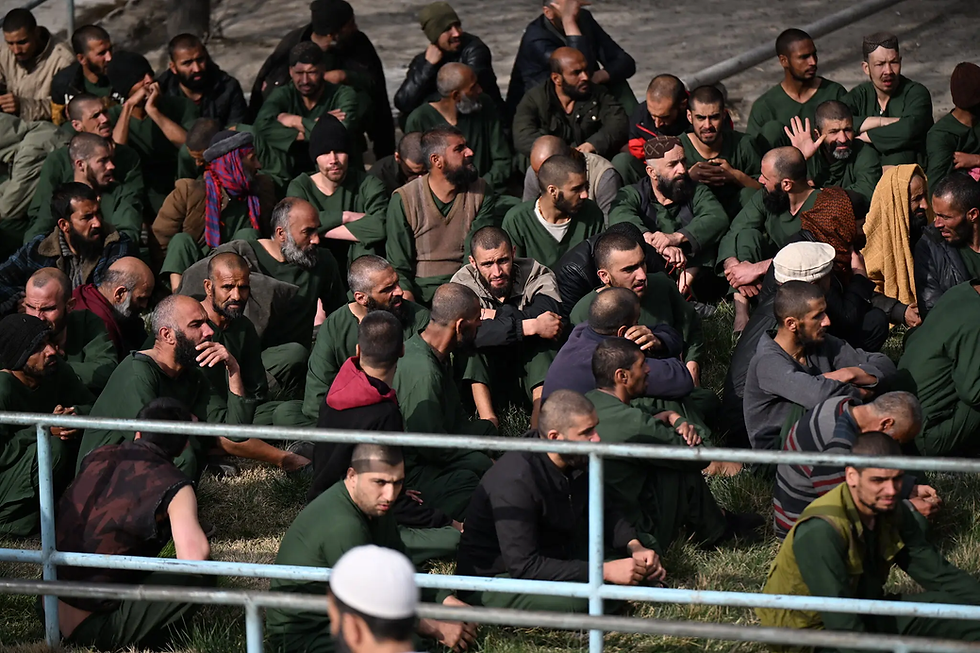
The compound hit by the Pakistani airstrike on Monday housed a drug rehabilitation facility run by the Taliban government. A spokesman for the Afghan Ministry of Health said 200 patients were staying in the building that had been struck.
A billboard atop an adjacent, charred building read “Support and Treatment Center, Omid” — or “hope” in the Dari dialect. On Tuesday, hundreds of people pressed against the compound’s entrance, many inquiring after relatives.
Basmina Khudadadi asked for news about her brother, who had been admitted about six weeks ago, she said. She had brought him fresh clothes last month, she said.
“We have not informed his wife yet,” Ms. Khudadadi said.

“The numbers are in the hundreds,” Jacopo Caridi, the head of the Afghanistan office for the Norwegian Refugee Council, said about casualties after visiting the site. He said he had seen no military facilities in the immediate area.
In a statement on Tuesday, Pakistan’s minister of information, Attaullah Tarar, said: “All targeting has been done with precision only at those infrastructures which are being used by Afghan Taliban regime.”

Monday’s death toll was the worst since late February, when Pakistan launched strikes on more than 20 locations, killing at least 274 people, according to the Pakistani military. Afghan troops attacked more than 50 Pakistani border positions during that fighting, and Afghanistan said it killed 55 Pakistani soldiers.
The U.N. mission in Afghanistan estimates that 115,000 people have been displaced there.

Some facilities built during the U.S. war in Afghanistan have been repurposed by the Taliban authorities, including former military bases now housing religious schools. The Omid drug rehabilitation center was set in a former U.S. base, not far from Kabul’s international airport.
By Tuesday, dozens of bloodstained mattresses lay scattered among the debris as firefighters and emergency teams carried bodies into ambulances, under the close watch of hundreds of armed personnel.
The destroyed building, Afghan officials said, was a 180-foot-long structure used for meals and prayer. In smaller adjacent buildings, the debris contained white and blue patient gowns, identical sandals and bottles of medicinal syrup.
Other buildings adjacent to the large structure, each containing 20 to 30 bunk beds, also caught fire.
Afghanistan has long been the world’s leading source of illegally produced opium, but a ban by the authorities led to a sharp decline in opium production in 2023. Still, the use of cannabis and synthetic drugs like methamphetamine remains a major public health concern.

As flames were still raging in the early hours of Tuesday, Muhammad Haidari, 23, stood dumbfounded. He said his two uncles had been admitted to the center in February.
“I don’t know if they are alive or dead,” Mr. Haidari said. “Each one has children and family waiting for them to return home.”


