The Challenge of Ethiopian Constitutionalism

By Dr. Gregory H. Stanton, Founding President, Genocide Watch, Chair, The Alliance Against Genocide
This speech was presented on May 15, 2026 by Dr. Gregory Stanton to a Conference on the Human Rights Crisis in Ethiopia in the Kennedy Conference Room, The Russell Office Building, US Senate, Washington, DC
The Challenge of Ethiopian Constitutionalism
Keynote Speech by Dr. Gregory H. Stanton
Conference on the Human Rights Crisis in Ethiopia
Kennedy Conference Room, US Senate, May 15, 2026
Dr. Stanton thanks Atticus Mawbe, LLB, London, England, for research and drafting of much of this speech.
Ethiopia's history
· Ethiopia is the birthplace of humanity.
· The oldest ancestor of homo sapiens, dating back 4.2 million years, was found in Ethiopia.
· From 100 AD, the Kingdom of Aksum established a unified civilization for 900 years.
· After Armenia (301 AD), Ethiopia is one of the world’s oldest Christian kingdoms (324 AD).
· Ethiopian Orthodox Christianity became the official state religion.
· Amharic became the official language of the Empire. Ethiopia developed its own alphabet.
· The Solomonic dynasty from which kings and emperors came was ruled by Amharas.
· The Aksum kingdom expanded Ethiopia’s territory until the kingdom collapsed in 960 AD.
· Islam came to northern Ethiopia from Arabia during the first Hijra in 615 AD.
· Islam became the dominant religion in the current Eritrea and Ethiopia’s current Somali Ogaden region.
· The Somali Muslim Sultanate of Adal ruled most of Ethiopia from 1533 to 1866.
· Menelik II reestablished the Ethiopian Empire and expanded its territory from 1866 to 1889.
· The Ethiopian Empire reabsorbed traditional territories of many non-Amharic groups.
· Expansion included ‘southern nationalities’ in Southwest and South Ethiopia provinces.
· Amhara governors ruled the territories of Oromo, Wolayta and groups in southern Ethiopia.
· Menelik II established fortified katama military settlements throughout the Empire.
· Neftenya Amharic warriors were granted feudal tenure over lands they conquered.
· Famines were common. The "Great Ethiopian Famine" of 1888-1892 killed a third of Ethiopia's population.
Ethiopia’s Ethnic divisions
· Ethiopia has been divided between over eighty ethnic groups for over 200 years.
· Oromos, Ogaden Somalis, Tigrayans, and other groups suffered from marginalization and dispossession.
· The Oromo remained independent until the 1890s, when they were colonized by Ethiopia.
· Menelik II’s Ethiopian wars cut the Oromo population from 10 million in 1870 to 5 million in 1900.
· The Oromo religion was banned, and Oromo institutions of self-governance were abolished.
· Oromo leaders were killed, Oromo land was confiscated, and Oromo cultural institutions were destroyed.
· Oromos were subjected to slavery by Amhara masters.
· Under Haile Selassie, the Oromo language was banned, and Oromo leaders were arrested and executed.
· Oromos, a group more numerous than Amharas, were excluded from political influence in Ethiopia.
· Amhara territorial expansion is the basis of today’s anti-Amhara sentiment among Oromos.
· Ethiopia’s history of ethnic conflict has prevented Ethiopia from having peace and security.
· Every Ethiopian ethnic group has suffered from discrimination, persecution, and genocide.
Italian colonialism worsened the divisions, especially between Eritrea and the rest of Ethiopia.
· Italy invaded Ethiopia in 1895 but was defeated at the Battle of Adwa on 1 March 1896.
· European powers recognized Ethiopia as a sovereign independent nation.
· Ethiopia lost its sovereignty in 1936, when Mussolini’s fascist Italy invaded Ethiopia and combined it with Italy’s colony of Eritrea and Somaliland, forming Italian East Africa.
· Ethiopia’s sovereignty was restored in 1944 after Italy was defeated in World War II.
· On 24 October 1945, Ethiopia became a founding member of the United Nations.
Haile Selassie became Ras (regent) in 1916, and Emperor in 1930.
· The Ethiopian Empire under Haile Selassie operated according to a strict ethnic hierarchy.
· Amharas ruled over Oromos, Tigrayans, Afars, Ogaden Somalis, and other groups.
· Emulating Japan, in 1931, Haile Salassie decreed Ethiopia’s first monarchist constitution.
· In 1955, the constitution was revised to make Ethiopia a constitutional monarchy.
· Although Haile Selassie made gestures toward a more inclusive Ethiopia, with roles for other ethnic groups, the reality was that Amharas were favored above all other ethnicities.
· Settlement of Amharas continued in areas that traditionally belonged to other ethnic groups.
· The neftenya system was a feudal structure that gave Amharas ownership of seized land.
· The system stripped traditional inhabitants of their homes and traditional farming territory.
· In 1963, the Ethiopian Imperial Army torched Somali villages and carried out mass killings of livestock.
· Watering holes were machine gunned to deny Somalis access to water. Thousands became refugees.
· In 1958, famine killed 100,000 Ethiopians. In 1966, famine killed 50,000. In the 1973 famine, up to 200,000 Ethiopians starved to death.
· Amhara youth in Addis Ababa protested Haile Salassie’s failure to address the 1973 famine.
Mengistu Haile Mariam’s Derg regime overthrew and murdered Haile Selassie in 1974.
· The Derg established Ethiopia as a Marxist-Leninist state supported by the Soviet Union.
· In 1976-78, over 100,000 Ethiopians were murdered in the Red Terror.
· The Derg imposed the 1987 Constitution, a version of the 1977 Soviet constitution.
· “Democratic centralism” concentrated dictatorial power in Mengistu and the Workers’ Party.
· Under the Derg, arbitrary arrests, torture, and extrajudicial executions were state policy.
· The Derg abolished all private land ownership, as the USSR did in the 1930s.
· Farmers were allocated 25-acre plots, too small to raise anything but subsistence crops.
· The Derg forced farmers to sell at below-market prices to feed cities. Food production plummeted.
· The Derg imposed travel restrictions to stop peasants from escaping their farms.
· Derg policies copied Soviet policies in Ukraine in 1932-33, the Holodomor genocide.
· The Derg used scorched earth tactics against the Oromo, burning villages and massacring thousands.
· Ethiopia was hit with severe drought from 1980 to 1984.
· The 1983–85 famine affected 8 million people.1.2 million Ethiopians died.
· The famine left 200,000 orphans, and 2.5 million people internally displaced.
· 400,000 refugees fled to other countries from Ethiopia.
· Oxfam and Human Rights Watch claim Mengistu’s counterinsurgency and land collectivization policies exacerbated food shortages and the famine.
· According to USAID, the hardest hit regions were Tigray, Wollo, and Eritrea.
· The Derg rejected food aid to those regions because of the Derg’s counter-insurgency campaigns.
Tigray People's Liberation Front (TPLF) rule
· The TPLF formed the Ethiopian People's Revolutionary Democratic Front (EPRDF).
· The EPRDF overthrew the Derg communist regime in May 1991.
· Mengistu fled to Zimbabwe, where he lived the rest of his life in luxury.
· Mengistu was tried for genocide in absentia, and in December 2006, was sentenced to death.
· The Soviet Union fell in 1989-1991 and stopped its aid to Ethiopia in 1990.
· Tigrayans under Meles Zenawi took power and appointed Tigrayans to run the government.
· Eritrea was granted independence on May 24, 1993.
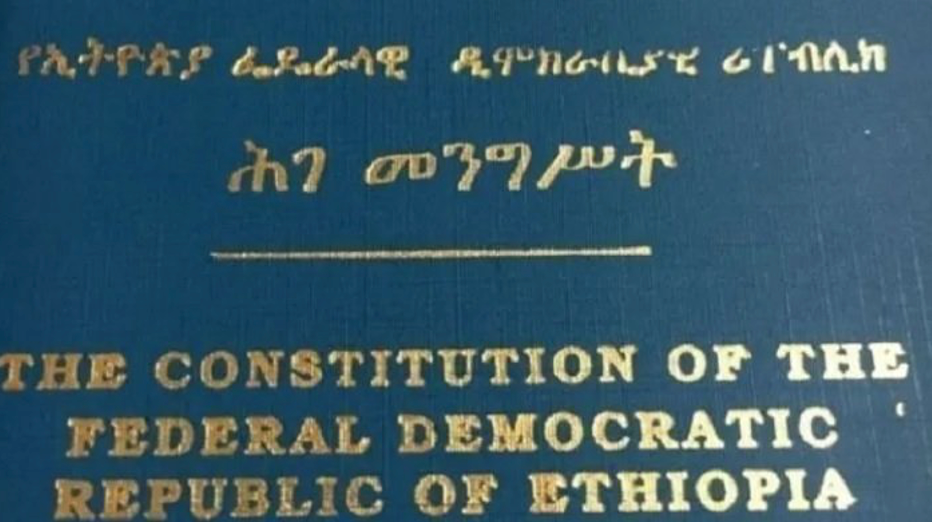
· The Meles government wrote the 1995 Constitution, based on ethnic states.
· Riots broke out over fraud in the 2005 election, won by the EPRDF.
Genocides under the Tigrayan TPLF regime
· The Tigrayan regime committed genocide against Anuaks, Oromos, Ogadenis, and Amharas.
· Ethiopian Defense Forces massacred hundreds of Oromo civilians at Oromo festivals in 2013 and 2016.
· Anuaks in Gambella province resisted transfer of their farmlands to Chinese companies.
· On December 3, 2003, EPRDF and Highlanders massacred over 416 Anuaks in Gambella city.
· Mr. Obang Metho called Dr. Gregory Stanton, President of Genocide Watch who called Michael C. Gonzales, Ethiopia desk officer in the US State Department and informed him of the Gambella massacres.
· Gonzales called US Ambassador to Ethiopia Aurelia E. Brazeal, who verified the massacres.
· Ambassador Brazeal demanded that Prime Minister Meles stop the genocide. Meles withdrew the EPRDF.
· The EPRDF later invaded Sudan to force Anuaks in the Pochalla Refugee Camp to return to Ethiopia.
· Dr. Stanton again contacted Michael Gonzales. Gonzales again informed US Ambassador Brazeal.
· Ambassador Brazeal demanded that Meles withdraw the EPRDF from Sudan. The EPRDF withdrew.
· The EPRDF also committed genocide against Ogadeni Somalis, the Beja, and other groups.
· In May 1998 a border dispute ignited the Eritrean-Ethiopian war, which cost 100,000 lives.
· After an Ethiopian activist shouted “murderer” at Meles at an event in Washington, DC, Meles collapsed with a heart attack. He died in a Belgian hospital in 2012.
The current Abiy Ahmed government came to power in April 2018.
· Prime Minister Abiy Ahmed is ethnically Oromo.
· He has a Christian mother and Muslim father.
· Like his mother, he is a Pentecostal Christian.
· Abiy Ahmed Abiy released thousands of political prisoners and unbanned opposition parties.
· He appointed a gender-balanced cabinet.
· He signed peace agreements with Ogadeni Somalis and with Eritrea.
· He was awarded the 2019 Nobel Peace Prize "for his efforts to achieve peace and international cooperation, and in particular for his decisive initiative to resolve the border conflict with neighboring Eritrea".
· He privatized many state-owned enterprises, including Ethiopian Airlines.
· Land in the north is owned by ethnic groups, not individuals, under rist communal ownership.
· In the south, most land is farmed by tenant farmers on gult land granted by the Emperor or the state.
· In 2019, Abiy Ahmed disbanded the EPRDF and formed his own party, the Prosperity Party, which included three of the four ethnic parties in the EPRDF, but not the Tigrayan TPLF.
Genocides under the Abiy Ahmed government
· The Abiy government has committed genocides against Tigrayans, Amharas, and Guji.
· When Tigrayan leaders sought autonomy in 2020, Abiy sent federal forces into Tigray.
· Allied with Amhara Fano and Eritrean armed forces, federal forces bombed civilian population centres, killed unarmed Tigrayan civilians, and committed widespread rapes.
· By the war’s conclusion in 2020, up to 600,000 Tigrayans were dead.
· Nearly three million Tigrayans were internally displaced. Thousands fled to Sudan.
· In 2023, Abiy sent troops to the Amhara Region to dissolve Amhara Fano armed forces.
· From 2019 to 2022, a war between Ethiopian federal forces and the Benishangul-Gomuz regional militia killed hundreds of civilians and displaced thousands.
· War between the Oromo Liberation Army and federal troops has killed over 5,000 people.
· These wars between regional and federal forces show no sign of stopping.
Structural flaws in the 1995 Ethiopian Constitution
The Tigrayan imposed constitution of 1995 has divided Ethiopia.
· The 1995 Constitution is rooted in Marxist “democratic centralist” theory.
· Ethnic “self-determination” gives states the rights to secession and to have state militias.
· The 1995 constitution is not framed as ruling over all Ethiopians.
· It is confederal, rather than federal, allowing ethnic militias and state secession.
· Regional governments are given the same overlapping powers as the federal government.
· [N]ationalist Ethiopians, … mainly Amhara elites who lost power to Tigrayan and Oromo elites, consider the current government contrary to an Ethiopian national identity.
· The 1995 constitution was written by the Tigrayan TPLF.
· The Transitional Government was led by TPLF commander Meles Zenawi and his allies.
· Although there were a few Amharas in the EPRDF coalition, Tigrayans under Meles dominated it.
· Ogadeni Somalis and ethnic groups from south and west Ethiopia were excluded from the drafting process.
· The 1995 Constitution was not produced by all Ethiopian ethnicities on an equal footing.
Land tenure is still held by the federal and ethnic states.
· The 1995 constitution continues to vest land ownership exclusively “in the State and in the peoples of Ethiopia.”
· Article 40 states: "Land is a common property of the Nations, Nationalities and Peoples of Ethiopia and shall not be subject to sale or to other means of exchange.”
· “Nations,” “Nationalities” and “Peoples” are the Ethiopian terms for ethnic groups and ethnic states.
· This communist form of property ownership keeps control in the hands of elites in the central government and the ethnic states.
· It does not protect private property rights from State expropriation without compensation.
· It does not provide the legal guarantees necessary for private capital investment and production.
The 1995 constitution isn't really federal.
· Legal rights of ethnic groups, especially in Article 39, formalize ethnic interests.
· In contrast to the limited federal powers set forth in the 1995 constitution, Meles’s Transitional Government was authoritarian, undemocratic, and highly centralized.
· Under Meles, the TPLF continued to exert total control over the ruling coalition.
· When opposition parties made gains in the 2005 elections, the government cracked down on them and won almost all parliamentary seats in the 2010 election.
· When ethnic militias began insurgencies, the Abiy government responded with systematic brutality.
· Federal forces have used scorched earth tactics in Tigray, Ogaden, and Amhara regions.
The 1995 constitution allows ethnic states to have their own militias.
· The 1995 Constitution is framed not as a social contract with the population, but with the ethnic groups that make up that population. Fasil Nahum summarises: “The preamble of the Constitution does not open with the familiar “We the People …”. Instead, it says, “We, the Nations, Nationalities and Peoples of Ethiopia”.
· National sovereignty in international law normally reserves military functions exclusively to nation states. A national government’s monopoly over military forces is a key trait separating sovereign states from constituent members of a single federal state.
· Within the European Union, each member state has its own armed forces.
· Subordinate states within federal nations do not have their own armies.
· In United Kingdom the separate countries (England, Scotland, Wales, Northern Ireland) are non-sovereign, and thus the only armed forces are those of the central United Kingdom.
· Constitutions that permit constituent states to maintain their own armed forces are confederations of independent states rather than parts of a single sovereign nation.
· America’s Articles of Confederation permitted each state to have its own armed forces and gave each state the right to regulate commerce, trade, and tariffs.
· America’s founding fathers realized that America needed a new constitution with a powerful federal government to unite the nation and have authority over the states.
· In 1787, they wrote a new constitution, in 1788 ratified it, and replaced the Articles of Confederation.
· The US Constitution grants the federal government the exclusive rights to regulate interstate commerce, levy tariffs and federal taxes, raise armed forces, conduct foreign affairs, make treaties, appoint ambassadors and federal judges, create federal courts, pass and enforce federal laws, and declare and wage war.
· The Supremacy Clause of the U.S. Constitution states: “This Constitution, and the Laws of the United States which shall be made in pursuance thereof; and all treaties made, or which shall be made, under the authority of the United States, shall be the supreme law of the land; and the judges in every state shall be bound thereby, anything in the constitution or laws of any state to the contrary notwithstanding.
· James Madison, principal author of the US Constitution, said that by ratifying the Constitution states had transferred their sovereignty to the federal government.
· Article 10 of the US Constitution reserves non-enumerated powers of the US federal government to the states. But the Supremacy Clause means that when federal law conflicts with state law, federal law prevails.
The 1995 Ethiopian constitution grants ethnic states the right to secede from Ethiopia.
· Article 39(1): grants the “unconditional right to self-determination, including the right to secession”.
· This is a feature practically never seen in national constitutions.
· It is unlike the constitutions of true federal nation states such as the United States, Canada, India, or Germany, where ultimate legal sovereignty rests with the sovereign nation state.
· The danger of state secession is best illustrated by the American Civil War.
· Southern slave-states asserted their right to secede from the Union, a power not granted to states by the US Constitution.
· The US federal government mustered a huge army to preserve the Union.
· The American Civil War was the result.
· The American Civil War cost 600,000 lives.
· The regional hatreds the Civil War aroused still divide America today.
· If the Southern Confederate States of America had won the Civil War, slavery would not have been abolished until the 1890s and there would be two nations in America.
· It took a hundred years after the Civil War to finally give African Americans the right to vote and to prohibit discrimination based on race.
· But the Union won the Civil War.
· America is much more powerful today because of that Union victory.
Apparently the Tigrayan government that wrote the 1995 Constitution hadn't read Madison's Federalist Paper Number 10, which warned about the danger of factions controlling states and why the federal government needed the power to overcome factions.
· In Federalist Paper No. 10, James Madison warned of the danger of domination of states by narrow factions. He said factions were a possible source of conflict in the USA.
· Madison recognized that local politics have the most important influence on the practical protection of the rights of minorities. If factions can use local governments to advance their own ends, minority rights could be denied, and the unity of the nation would be threatened.
· A strong federal government is necessary to outweigh the influence of factions in states.
· This lesson is especially relevant in a multi-ethnic nation like Ethiopia.
· The lesson is clear: if Ethiopia is to exist as a single nation, the federal government needs to protect minority rights against the factional interests of majority ethnic groups in its states.
· The core functions of a nation need to be substantially reserved to the federal government.
· In 1861, ignoring Madison’s warnings, southern States seceded, resulting in the American Civil War.
Can Ethiopia function as a true federation?
· In Ethiopia, the tragedies of ethnic division and wars of secession continue to this day.
· Are the cultural differences between ethnic groups too great in Ethiopia, in terms of ethnic identity, political expectations, practical experience, and national allegiance, for unity?
· Should Ethiopia be a confederation like the European Union? The degree of cultural, linguistic and religious variation amongst the ethnicities and regions of Ethiopia is as great as the differences between the many nations that comprise the European Union.
· Can the model of the US constitution be an example of federation for Ethiopia?
· As Ehrlich notes, “successful federations such as the United States and Canada did not form based on ethnicity. Therefore, states that have natural ethnic divisions cannot expect to adopt North American federalism wholesale”.
Why Ethiopia needs a new Constitution
· Under the 1995 Constitution, Ethiopia has been plagued by wars and genocides.
· After Prime Minister Abiy came to power in 2018, there was a period of comparative inter-ethnic peace.
· Ethnic violence has again reared its ugly head, particularly against Tigrayans and Amharas.
· A new constitution must create legal structures with the power to prevent civil war and genocide.
The Ethiopian government has appointed a commission to write a new constitution.
· The current Ethiopian government under Prime Minister Abiy recognises some of the problems with the 1995 Constitution, and it has created a Dialogue Commission to write a new constitution.
· To date, little discussion has recognized the urgency of a new Ethiopian constitution.
· Public consultations have included almost no Tigrayan or Somali participants.
· The progress of the Dialogue on a new Ethiopian constitution has been very slow.
What is required for a new Ethiopian constitution?
First, it must not be adopted by a government that is mistrusted by any major ethnic groups.
· It must not be drafted nor be seen to be advantageous for any single ethnic group.
· If a constitution is adopted by a government perceived as partial to one ethnic group at the expense of others, the resulting constitution will have no legitimacy with other groups.
·
Second, the new constitution must not take Ethiopian unity for granted.
· It must not create pathways for separatism or ethnic militias.
· It must create a federal government that is strong enough to overcome the centrifugal forces created by ethnic factions in states.
· Madison knew that for the United States, where a history of regional and racial disunity was strong, a unified federal government was necessary.
· Ethiopia has even more ethnic and racial disunity than America had in 1789.
· The secession of Eritrea and the threatened secession of Tigray provide warnings of the danger to national unity of ethnically based states with the right of secession.
·
Third, the new constitution must clearly define the powers of the federal government and the residual powers of state governments.
· It must distinguish between citizenship in the Ethiopian nation and Ethiopia’s states.
· Deciding the distribution of powers will be difficult, but if Ethiopia is to avoid civil wars, Ethiopians must agree on the respective roles of the federal and state governments, then write them into the new constitution and strictly abide by them.
What recommendations does Genocide Watch have for a new Ethiopian constitution?
· Legitimate authority of governments flows up from the people, not down from kings.
· Ethno-federalism is not federal at all.
· Federal authority from the political center must be supreme over political parties, ethnic groups, regions, and states.
· Even in theory, the concept of ethno-federalism as set out in the 1995 Ethiopian Constitution, especially in Art. 39, is a recipe for conflict and war.
· The greatest failure of the 1995 Constitution is not the legal-political structure it creates, nor any rights or powers that it reserves to the ethnic states.
· Rather, the greatest failure of the 1995 Constitution is the perception that it was written by Tigrayans only for the benefit of the Tigrayan people and region.
· The perception that the Constitution was crafted by Tigrayans for their own purposes means many Amharas and Oromos do not trust it.
· This distrust means that the 1995 Constitution can never serve as the basis of an Ethiopia-wide constitutional system that most Ethiopians will believe in.
· Many Ethiopians do not believe that Ethiopia has a political system they can trust.
· Trust is the fundamental foundation for the consent of the governed.
· Mistrust of the federal government in Ethiopia has caused both instability and tragedy.
· Instability because many Ethiopians believe a Tigrayan-authored constitution was not designed to meet the needs of other ethnic groups.
· Tragedy because this mistrust has been a justification for acts of genocide against Tigrayans, culminating in the genocide in Tigray that took as many as 400,000 lives.
· A constitution must be seen to represent all the ethnic groups that have woven the rich, many colored cultural tapestry of Ethiopia.
· It is not enough that these ethnic groups are consulted. It must be seen and widely accepted that they have all had their say. Only this will produce an Ethiopia in which no ethnic group considers that the nation’s political structure is designed to benefit one group over others.
· The constitution must be trusted by Amharas, Tigrayans, Oromos and Somalis, and all the other 80+ ethnic groups of Ethiopia.
Conclusion
· The constitution of 1995 will continue to produce civil wars and ethnic genocides.
· The 1995 constitution sets out sweeping rights for ethnic states while providing no clear division of powers between the federal and state governments.
· It can only lead to more power struggles like those we have seen since 1995.
· If one ethnic group imposes its interests on the country, the next constitution will fail, just as the 1995 Constitution has.
· In a few decades, Ethiopians will find themselves back where they are today, asking what went wrong.
· Ethiopia must decide whether it will be a nation with a central autocracy or a true federation.
· Those who want a strong Ethiopian federal nation in which Ethiopians are citizens of Ethiopia first and members of their ethnic group second must revise the 1995 constitution.
In the words of the great Ethiopian philosopher Walda Heywat: “Do not believe the doctrine of fools who say that our ‘fellow man’ means only our relatives or our friends. Do not say what they do, for all men are our fellow men, whether Christian, Muslim, Jewish or pagan. All are equal to us and our brothers, because we are all the sons of one father and the creatures of one creator.”