Search Results
Search this site
6561 results found with an empty search
- USCIRF Warns that Forced Sterilization of Uyghur Muslims is Evidence of Genocide
Washington, DC – The United States Commission on International Religious Freedom (USCIRF) warned that the Chinese government’s repressive population control measures against Uyghur and other Muslims—including forced sterilization—might meet the legal criteria for genocide under international law. “It’s evident from the Chinese government’s own data that the Communist Party’s policies are clearly designed to prevent population growth for the Uyghur, Kazakh, and other Turkic Muslim peoples,” said USCIRF Commissioner Nury Turkel. “We urge the State Department to investigate whether the Chinese authorities’ deliberate and systematic attempt to genetically reducing the Turkic Muslim population in Xinjiang meets the legal definition for genocide as contemplated in the Genocide Convention. We also call on the U.S. government to introduce a resolution at the U.N. on these crimes that the Chinese Communist Party has committed against the Uyghurs and other Muslims in China.” Under Article II(d) of the Convention on the Prevention and Punishment of the Crime of Genocide, “imposing measures intended to prevent births within the group” is considered evidence of genocide. Since 2017, the Chinese government under President Xi Jinping has detained more than a million Uyghur, Kazakh, and other Muslims, often targeting individuals engaged in religious practices, such as growing beards or wearing veils. According to leaked government documents, many individuals were detained because they had too many children. As stated by newly published research, the Chinese government’s sterilization policies have led birth rates in Xinjiang to plummet 24 percent last year. In addition, nearly half a million Muslim children have been separated from their families and placed in boarding schools, where they have been forced to denounce Islam and speak Mandarin. “It is absolutely horrifying that the Communist Chinese government is targeting a religious community for forced sterilization in the 21st century,” noted USCIRF Commissioner Gary Bauer. “We urge President Trump and the U.S. government to swiftly impose targeted sanctions under the Uyghur Human Rights Policy Act against the officials responsible for this heinous policy.” In its 2020 Annual Report, USCIRF called upon the administration to use its authority under the Global Magnitsky Human Rights Accountability Act and the International Religious Freedom Act to impose targeted sanctions on Chinese officials responsible for severe religious freedom violations, especially Chen Quanguo, the current Communist Party Secretary of Xinjiang. In February 2020, USCIRF released a factsheet explaining how the Chinese government’s new Administrative Measures for Religious Groups could further restrict religious freedom. --- The U.S. Commission on International Religious Freedom (USCIRF) is an independent, bipartisan federal government entity established by the U.S. Congress to monitor, analyze, and report on threats to religious freedom abroad. USCIRF makes foreign policy recommendations to the President, the Secretary of State, and Congress intended to deter religious persecution and promote freedom of religion and belief. To interview a Commissioner, please contact USCIRF at media@uscirf.gov or Danielle Ashbahian at dashbahian@uscirf.gov.
- Sahel summit agrees need to intensify campaign against jihadists
International and regional powers agreed at talks on Tuesday to intensify a military campaign against Islamist militants in the West African Sahel region, with French President Emmanuel Macron saying victory over the jihadists was within grasp. Militant attacks in the Sahel have increased over the last two years, especially in the tri-border region of Niger, Burkina Faso and Mali known as Liptako-Gourma, where local authorities have been overrun. Mauritania hosted a meeting of the leaders of five Sahel nations plus France and Spain to plot future strategy in the scrubland south of the Sahara where since 2013 thousands of French troops have been helping countries counter insurgencies. “The heads of state stressed the need to intensify the fight on all fronts by national and international forces against terrorist groups,” the final communique said. The so-called G-5 Sahel nations comprise Burkina Faso, Mali, Mauritania, Niger and Chad - all former French colonies. Spanish Prime Minister Pedro Sanchez also attended the summit, while other EU leaders joined by video. “We are all convinced that victory is possible in the Sahel. We are finding our way there thanks to the efforts that have been made over the past six months,” Macron said after the summit. Ahead of the summit, a joint statement by the United Nations and a group of aid organisations painted a dark picture of the situation on the ground. “The security situation in the Sahel countries has deteriorated considerably in recent months. Conflicts prevailing in the region are having unprecedented humanitarian consequences,” it said. The joint forces, led by France’s 5,100 troops, have so far targeted the regional affiliate of Islamic State, concentrating military efforts on Liptako-Gourma. French forces said this month that they had killed al Qaeda’s North Africa commander Abdelmalek Droukdel. But the G-5 force has been hampered by a lack of funding, equipment and coordination. France has long called for more help from its European allies for the mission, which it sees as essential to protecting the security of Europe’s southern flank. © Reuters 2020, Reporting by Kissimou Diagana in Nouakchott, Thiam Ndiaga in Ouagadougou and John Irish in Paris; Writing by Bate Felix, Edward McAllister and Alessandra Prentice; Editing by Mark Heinrich
- Press Briefing on Christian Genocide in Nigeria
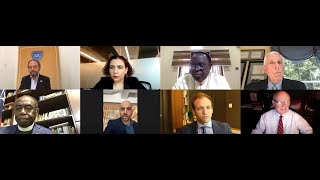
Click here to watch the full event discussion. A meeting hosted by In Defense of Christians (IDC) for reporters to learn more about Christian persecution and genocide in Nigeria. Archbishop Ben Kwashi, Bishop Matthew H. Kukah, Congressman Frank Wolf, Dr. Gregory Stanton, and Rev. Johnnie Moore provide introductory remarks about the situation in Nigeria and Steven Howard facilitates questions from members of the press to the panelists. The purpose of the meeting is to improve everyone’s understanding of an ongoing genocide that has not been widely covered in western media.
- Belarus: Full-scale attack on human rights ahead of presidential election
The Belarusian authorities must end their crackdown on political opposition, activists and critics, and fully respect, protect, promote and fulfil the human rights of everyone in the lead up to presidential election on 9 August, Amnesty International said today. In a statement Belarus: Growing Crackdown on Human Rights ahead of Presidential Election, the organization documented a wave of reprisals against political opponents, activists, critics and independent media. “There is no safe environment for political debate in Belarus, and there is a growing crackdown on human rights in the context of the forthcoming election. The wave of activism currently taking place in Belarus is unlike anything the authorities have faced for years, and they have responded by brutally crushing peaceful protests and dissent and punishing opposition leaders,” said Marie Struthers, Amnesty International’s Eastern Europe and Central Asia Director. “Opposition candidates along with their supporters are smeared, targeted and incarcerated under trumped-up charges, with women particularly targeted. One opposition activist was threatened with having her children taken into state custody; another was threatened with gang rape in a police station.” Two aspiring politicians, Syarhei Tsikhanouski and Viktar Babaryka, were thrown behind bars, alongside their associates, and face unfounded and politically motivated criminal proceedings. Hundreds of peaceful protesters, including their supporters, have been arbitrarily arrested and heavily fined or held in “administrative detention.” Amnesty International believes Syarhei Tsikhanouski, Viktar Babaryka, his son Eduard Babaryka arrested alongside with him, and dozens of peaceful protesters and activists detained at solidarity rallies are prisoners of conscience, prosecuted solely for the peaceful exercise of their human rights and expression of their political opinions. “In Belarus, opposition politicians and supporters are treated as criminals simply for exercising human rights and taking part in the political and elections processes,” said Marie Struthers. “These actions are a calculated move to harass and intimidate the opposition, activists and critics ahead of elections. The Belarusian authorities must stop their attacks, harassment and intimidation of all those named above, and ensure full respect for the human rights of everyone, including opposition leaders, before, during and after the elections.” All those detained under criminal or administrative proceedings solely for peacefully exercising their human rights must be immediately and unconditionally released. Background Syarhei Tsikhanouski, a well-known blogger and aspiring presidential candidate, was arrested on 29 May and charged with “organization and preparation for a grave breach of public order” (§1 Art. 342 of the Criminal Code of Belarus). He faces up to three years in prison if found guilty and has already been barred from running. Another presidential contender, Viktar Babaryka, a former banker, was arrested on 18 June, together with his son and campaign chief Eduard Babaryka. While Eduard Babaryka is facing charges of tax evasion (Art. 243 of the Criminal Code of Belarus), the nature of the charges against his father remain unknown. The investigating authorities have banned their lawyers from sharing any information about the case publicly. © Amnesty International 2020
- UN concerned as thousands flee Myanmar 'clearance operation'
The United Nations on Sunday said it was concerned by the humanitarian impact of fighting in western Myanmar's Rakhine and southern Chin states. The UN cited reports of increased fighting between Myanmar's armed forces, the Tatmadaw, and the Arakan Army, an insurgent group fighting for more autonomy for ethnic Rakhine Buddhists. Civil war Both factions have traded allegations of abuse. An increasingly bloody civil war between government troops and the rebels erupted in January last year, displacing some 150,000 people and forcing them to flee their homes while dozens have been killed and hundreds wounded. The UN urged both sides to "take urgent measures to spare civilians." It also called for them to respect international humanitarian law as well as reiterating the need for a ceasefire with the ongoing COVID-19 pandemic. 'Clearance operation' People were trapped by the fighting or lacking the means to move out of its way, the UN said in a statement. Houses and other civilian property were reportedly damaged or destroyed, it added. Others are believed to have fled after the military-controlled border affairs ministry issued an evacuation order warning of a "clearance operation" this week. The term is how the military described a 2017 campaign in Rakhine state in response to an attack by a Rohingya insurgent group. It led to accusations of genocide, amid reports that soldiers murdered and raped civilians en masse. The Myanmar government has repeatedly refused requests by the UN envoy to enter the country. Lee had previously accused the army of genocide and other war crimes against Rakhine's Rohingya Muslim minority in 2017, when some 700,000 escaped an army crackdown. Taiwan News © 2019 All Rights Reserved.
- China cuts Uighur births with IUDs, abortion, sterilization
The Chinese government is taking draconian measures to slash birth rates among Uighurs and other minorities as part of a sweeping campaign to curb its Muslim population, even as it encourages some of the country’s Han majority to have more children. While individual women have spoken out before about forced birth control, the practice is far more widespread and systematic than previously known, according to an AP investigation based on government statistics, state documents and interviews with 30 ex-detainees, family members and a former detention camp instructor. The campaign over the past four years in the far west region of Xinjiang is leading to what some experts are calling a form of “demographic genocide.” The state regularly subjects minority women to pregnancy checks, and forces intrauterine devices, sterilization and even abortion on hundreds of thousands, the interviews and data show. Even while the use of IUDs and sterilization has fallen nationwide, it is rising sharply in Xinjiang. The population control measures are backed by mass detention both as a threat and as a punishment for failure to comply. Having too many children is a major reason people are sent to detention camps, the AP found, with the parents of three or more ripped away from their families unless they can pay huge fines. Police raid homes, terrifying parents as they search for hidden children. After Gulnar Omirzakh, a Chinese-born Kazakh, had her third child, the government ordered her to get an IUD inserted. Two years later, in January 2018, four officials in military camouflage came knocking at her door anyway. They gave Omirzakh, the penniless wife of a detained vegetable trader, three days to pay a $2,685 fine for having more than two children. If she didn’t, they warned, she would join her husband and a million other ethnic minorities locked up in internment camps ¬— often for having too many children. “God bequeaths children on you. To prevent people from having children is wrong,” said Omirzakh, who tears up even now thinking back to that day. “They want to destroy us as a people.” The result of the birth control campaign is a climate of terror around having children, as seen in interview after interview. Birth rates in the mostly Uighur regions of Hotan and Kashgar plunged by more than 60% from 2015 to 2018, the latest year available in government statistics. Across the Xinjiang region, birth rates continue to plummet, falling nearly 24% last year alone — compared to just 4.2% nationwide, statistics show. The hundreds of millions of dollars the government pours into birth control has transformed Xinjiang from one of China’s fastest-growing regions to among its slowest in just a few years, according to new research obtained by The Associated Press in advance of publication by China scholar Adrian Zenz. “This kind of drop is unprecedented....there’s a ruthlessness to it,” said Zenz, a leading expert in the policing of China’s minority regions. “This is part of a wider control campaign to subjugate the Uighurs.” U.S. Secretary of State Michael Pompeo denounced the policies in a statement Monday. “We call on the Chinese Communist Party to immediately end these horrific practices,” he said. China’s foreign minister derided the story as “fabricated” and “fake news,” saying the government treats all ethnicities equally and protects the legal rights of minorities. “Everyone, regardless of whether they’re an ethnic minority or Han Chinese, must follow and act in accordance with the law,” ministry spokesman Zhao Lijian said Monday when asked about the AP story. Chinese officials have said in the past that the new measures are merely meant to be fair, allowing both Han Chinese and ethnic minorities the same number of children. For decades, China had one of the most extensive systems of minority entitlements in the world, with Uighurs and others getting more points on college entrance exams, hiring quotas for government posts and laxer birth control restrictions. Under China’s now-abandoned ‘one child’ policy, the authorities had long encouraged, often forced, contraceptives, sterilization and abortion on Han Chinese. But minorities were allowed two children — three if they came from the countryside. Under President Xi Jinping, China’s most authoritarian leader in decades, those benefits are now being rolled back. In 2014, soon after Xi visited Xinjiang, the region’s top official said it was time to implement “equal family planning policies” for all ethnicities and “reduce and stabilize birth rates.” In the following years, the government declared that instead of just one child, Han Chinese could now have two, and three in Xinjiang’s rural areas, just like minorities. But while equal on paper, in practice Han Chinese are largely spared the abortions, sterilizations, IUD insertions and detentions for having too many children that are forced on Xinjiang’s other ethnicities, interviews and data show. Some rural Muslims, like Omirzakh, are punished even for having the three children allowed by the law. State-backed scholars have warned for years that large rural religious families were at the root of bombings, knifings and other attacks the Xinjiang government blamed on Islamic terrorists. The growing Muslim population was a breeding ground for poverty and extremism which could “heighten political risk,” according to a 2017 paper by the head of the Institute of Sociology at the Xinjiang Academy of Social Sciences. Another cited as a key obstacle the religious belief that “the fetus is a gift from God.” Outside experts say the birth control campaign is part of a state-orchestrated assault on the Uighurs to purge them of their faith and identity and forcibly assimilate them. They’re subjected to political and religious re-education in camps and forced labor in factories, while their children are indoctrinated in orphanages. Uighurs, who are often but not always Muslim, are also tracked by a vast digital surveillance apparatus. “The intention may not be to fully eliminate the Uighur population, but it will sharply diminish their vitality,” said Darren Byler, an expert on Uighurs at the University of Colorado. “It will make them easier to assimilate into the mainstream Chinese population.” Some go a step further. “It’s genocide, full stop. It’s not immediate, shocking, mass-killing on the spot type genocide, but it’s slow, painful, creeping genocide,” said Joanne Smith Finley, who works at Newcastle University in the U.K. “These are direct means of genetically reducing the Uighur population.” For centuries, the majority was Muslim in the arid, landlocked region China now calls “Xinjiang” — meaning “New Frontier” in Mandarin. After the People’s Liberation Army swept through in 1949, China’s new Communist rulers ordered thousands of soldiers to settle in Xinjiang, pushing the Han population from 6.7% that year to more than 40% by 1980. The move sowed anxiety about Chinese migration that persists to this day. Drastic efforts to restrict birth rates in the 1990s were relaxed after major pushback, with many parents paying bribes or registering children as the offspring of friends or other family members. That all changed with an unprecedented crackdown starting in 2017, throwing hundreds of thousands of people into prisons and camps for alleged “signs of religious extremism” such as traveling abroad, praying or using foreign social media. Authorities launched what several notices called “dragnet-style” investigations to root out parents with too many children, even those who gave birth decades ago. “Leave no blind spots,” said two county and township directives in 2018 and 2019 uncovered by Zenz, who is also an independent contractor with the Victims of Communism Memorial Foundation, a bipartisan nonprofit based in Washington, D.C. “Contain illegal births and lower fertility levels,” said a third. Officials and armed police began pounding on doors, looking for kids and pregnant women. Minority residents were ordered to attend weekly flag-raising ceremonies, where officials threatened detention if they didn’t register all their children, according to interviews backed by attendance slips and booklets. Notices found by the AP show that local governments set up or expanded systems to reward those who report illegal births. In some areas, women were ordered to take gynecology exams after the ceremonies, they said. In others, officials outfitted special rooms with ultrasound scanners for pregnancy tests. “Test all who need to be tested,” ordered a township directive from 2018. “Detect and deal with those who violate policies early.” Abdushukur Umar was among the first to fall victim to the crackdown on children. A jovial Uighur tractor driver-turned-fruit merchant, the proud father considered his seven children a blessing from God. But authorities began pursuing him in 2016. The following year, he was thrown into a camp and later sentenced to seven years in prison — one for each child, authorities told relatives. “My cousin spent all his time taking care of his family, he never took part in any political movements,” Zuhra Sultan, Umar’s cousin, said from exile in Turkey. “How can you get seven years in prison for having too many children? We’re living in the 21st century — this is unimaginable.” Sixteen Uighurs and Kazakhs told the AP they knew people interned or jailed for having too many children. Many received years, even decades in prison. Leaked data obtained and corroborated by the AP showed that of 484 camp detainees listed in Karakax county in Xinjiang, 149 were there for having too many children - the most common reason for holding them. Time in a camp — what the government calls “education and training” — for parents with too many children is written policy in at least three counties, notices found by Zenz confirmed. In 2017, the Xinjiang government also tripled the already hefty fines for violating family planning laws for even the poorest residents — to at least three times the annual disposable income of the county. While fines also apply to Han Chinese, only minorities are sent to the detention camps if they cannot pay, according to interviews and data. Government reports show the counties collect millions of dollars from the fines each year. In other efforts to change the population balance of Xinjiang, China is dangling land, jobs and economic subsidies to lure Han migrants there. It is also aggressively promoting intermarriage between Han Chinese and Uighurs, with one couple telling the AP they were given money for housing and amenities like a washing machine, refrigerator and TV. “It links back to China’s long history of dabbling in eugenics….you don’t want people who are poorly educated, marginal minorities breeding quickly,” said James Leibold, a specialist in Chinese ethnic policy at La Trobe in Melbourne. “What you want is your educated Han to increase their birth rate.” Sultan describes how the policy looks to Uighurs like her: “The Chinese government wants to control the Uighur population and make us fewer and fewer, until we disappear.” Once in the detention camps, women are subjected to forced IUDs and what appear to be pregnancy prevention shots, according to former detainees. They are also made to attend lectures on how many children they should have. Seven former detainees told the AP that they were force-fed birth control pills or injected with fluids, often with no explanation. Many felt dizzy, tired or ill, and women stopped getting their periods. After being released and leaving China, some went to get medical check-ups and found they were sterile. It’s unclear what former detainees were injected with, but Xinjiang hospital slides obtained by the AP show that pregnancy prevention injections, sometimes with the hormonal medication Depo-Provera, are a common family planning measure. Side effects can include headaches and dizziness. Dina Nurdybay, a Kazakh woman, was detained in a camp which separated married and unmarried women. The married women were given pregnancy tests, Nurdybay recalled, and forced to have IUDs installed if they had children. She was spared because she was unmarried and childless. One day in February 2018, one of her cellmates, a Uighur woman, had to give a speech confessing what guards called her “crimes.” When a visiting official peered through the iron bars of their cell, she recited her lines in halting Mandarin. “I gave birth to too many children,” she said. “It shows I’m uneducated and know little about the law.” “Do you think it’s fair that Han people are only allowed to have one child?” the official asked, according to Nurdybay. “You ethnic minorities are shameless, wild and uncivilized.” Nurdybay met at least two others in the camps whom she learned were locked up for having too many children. Later, she was transferred to another facility with an orphanage that housed hundreds of children, including those with parents detained for giving birth too many times. The children counted the days until they could see their parents on rare visits. “They told me they wanted to hug their parents, but they were not allowed,” she said. “They always looked very sad.” Another former detainee, Tursunay Ziyawudun, said she was injected until she stopped having her period, and kicked repeatedly in the lower stomach during interrogations. She now can’t have children and often doubles over in pain, bleeding from her womb, she said. Ziyawudun and the 40 other women in her “class” were forced to attend family planning lectures most Wednesdays, where films were screened about impoverished women struggling to feed many children. Married women were rewarded for good behavior with conjugal visits from their husbands, along with showers, towels, and two hours in a bedroom. But there was a catch – they had to take birth control pills beforehand. Some women have even reported forced abortions. Ziyawudun said a “teacher” at her camp told women they would face abortions if found pregnant during gynecology exams. A woman in another class turned out to be pregnant and disappeared from the camp, she said. She added that two of her cousins who were pregnant got rid of their children on their own because they were so afraid. Another woman, Gulbahar Jelilova, confirmed that detainees in her camp were forced to abort their children. She also saw a new mother, still leaking breast milk, who did not know what had happened to her infant. And she met doctors and medical students who were detained for helping Uighurs dodge the system and give birth at home. In December 2017, on a visit from Kazakhstan back to China, Gulzia Mogdin was taken to a hospital after police found WhatsApp on her phone. A urine sample revealed she was two months pregnant with her third child. Officials told Mogdin she needed to get an abortion and threatened to detain her brother if she didn’t. During the procedure, medics inserted an electric vacuum into her womb and sucked her fetus out of her body. She was taken home and told to rest, as they planned to take her to a camp. Months later, Mogdin made it back to Kazakhstan, where her husband lives. “That baby was going to be the only baby we had together,” said Mogdin, who had recently remarried. “I cannot sleep. It’s terribly unfair.” The success of China’s push to control births among Muslim minorities shows up in the numbers for IUDs and sterilization. In 2014, just over 200,000 IUDs were inserted in Xinjiang. By 2018, that jumped more than 60 percent to nearly 330,000 IUDs. At the same time, IUD use tumbled elsewhere in China, as many women began getting the devices removed. A former teacher drafted to work as an instructor at a detention camp described her experience with IUDs to the AP. She said it started with flag-raising assemblies at her compound in the beginning of 2017, where officials made Uighur residents recite “anti-terror” lessons. They chanted, “If we have too many children, we’re religious extremists....That means we have to go to the training centers.” Police rounded up over 180 parents with too many children until “not a single one was left,” she said. At night, she said, she lay in bed, stiff with terror, as officers with guns and tasers hauled her neighbors away. From time to time police pounded on her door and searched her apartment for Qurans, knives, prayer mats and of course children, she said. “Your heart would leap out of your chest,” she said. Then, that August, officials in the teacher’s compound were told to install IUDs on all women of childbearing age. She protested, saying she was nearly 50 with just one child and no plans to have more. Officials threatened to drag her to a police station and strap her to an iron chair for interrogation. She was forced into a bus with four armed officers and taken to a hospital where hundreds of Uighur women lined up in silence, waiting for IUDs to be inserted. Some wept quietly, but nobody dared say a word because of the surveillance cameras hanging overhead. Her IUD was designed to be irremovable without special instruments. The first 15 days, she got headaches and nonstop menstrual bleeding. “I couldn’t eat properly, I couldn’t sleep properly. It gave me huge psychological pressure,” she said. “Only Uighurs had to wear it.” Chinese health statistics also show a sterilization boom in Xinjiang. Budget documents obtained by Zenz show that starting in 2016, the Xinjiang government began pumping tens of millions of dollars into a birth control surgery program and cash incentives for women to get sterilized. While sterilization rates plunged in the rest of the country, they surged seven-fold in Xinjiang from 2016 to 2018, to more than 60,000 procedures. The Uighur-majority city of Hotan budgeted for 14,872 sterilizations in 2019 — over 34% of all married women of childbearing age, Zenz found. Even within Xinjiang, policies vary widely, being harsher in the heavily Uighur south than the Han-majority north. In Shihezi, a Han-dominated city where Uighurs make up less than 2% of the population, the government subsidizes baby formula and hospital birth services to encourage more children, state media reported. Zumret Dawut got no such benefits. In 2018, the mother of three was locked in a camp for two months for having an American visa. When she returned home under house arrest, officials forced her to get gynecology exams every month, along with all other Uighur women in her compound. Han women were exempted. They warned that if she didn’t take what they called “free examinations”, she could end up back in the camp. One day, they turned up with a list of at least 200 Uighur women in her compound with more than two children who had to get sterilized, Dawut recalled. “My Han Chinese neighbors, they sympathized with us Uighurs,” Dawut said. “They told me, ‘oh, you’re suffering terribly, the government is going way too far!’” Dawut protested, but police again threatened to send her back to the camp. During the sterilization procedure, Han Chinese doctors injected her with anesthesia and tied her fallopian tubes — a permanent operation. When Dawut came to, she felt her womb ache. “I was so angry,” she said. “I wanted another son.” Looking back, Omirzakh considers herself lucky. After that frigid day when officials threatened to lock her up, Omirzakh called relatives around the clock. Hours before the deadline, she scraped together enough money to pay the fine from the sale of her sister’s cow and high-interest loans, leaving her deep in debt. For the next year, Omirzakh attended classes with the wives of others detained for having too many children. She and her children lived with two local party officials sent specially to spy on them. When her husband was finally released, they fled for Kazakhstan with just a few bundles of blankets and clothes. The IUD still in Omirzakh’s womb has now sunk into her flesh, causing inflammation and piercing back pain, “like being stabbed with a knife.” For Omirzakh, it’s a bitter reminder of everything she’s lost — and the plight of those she left behind. “People there are now terrified of giving birth,” she said. “When I think of the word ‘Xinjiang,’ I can still feel that fear.” Article II of 1948 Genocide Convention In the present Convention, genocide means any of the following acts committed with intent to destroy, in whole or in part, a national, ethnical, racial or religious group, as such: (d) Imposing measures intended to prevent births within the group © Copyright 2020 The Associated Press.
- African Migrants Scapegoated for Coronavirus Outbreak
Migrants say Houthi Militias that control northern Yemen are brutally forcing them out of their territory and into dangerous situations. Ethiopian migrants in the Yemeni capital, Sana, being forced to quarantine by security forces in April, over fears that they could spread the coronavirus. (Mohammed Hamoud/Getty Images) BEIRUT, Lebanon — The Yemeni militiamen rumbled up to the settlement of Al Ghar in the morning, firing their machine guns at the Ethiopian migrants caught in the middle of somebody else’s war. They shouted at the migrants: Take your coronavirus and leave the country, or face death. Fatima Mohammed’s baby, Naa’if, was screaming. She grabbed him and ran behind her husband as bullets streaked overhead. “The sound of the bullets was like thunder that wouldn’t stop,” said Kedir Jenni, 30, an Ethiopian waiter who also fled Al Ghar, near the Saudi border in northern Yemen, on that morning in early April. “Men and women get shot next to you, you see them die and move on.” This scene and others were recounted in phone interviews with a half-dozen migrants now in Saudi prisons. Their accounts could not be independently verified, but human rights groups have corroborated similar episodes. The Houthis, the Iran-backed militia that controls most of northern Yemen, have driven thousands of migrants out of their territory at gunpoint over the past three months, blaming them for spreading the coronavirus, and dumped them in the desert without food or water. Others were forced to the border with Saudi Arabia, the Houthis’ primary foe, only to be shot at by Saudi border guards and detained in prisons where they were beaten, given little food and forced to sleep on the same floor that they use as a toilet, migrants said in interviews from prison. Some have returned to abusive smugglers, determined to cross the border to find jobs in oil-rich Saudi Arabia. Houthi-allied Yemenis guarding a checkpoint during a pandemic-related curfew in Sana in May. (Yahya/EPA, via Shutterstock) A Houthi spokesman would not immediately comment on the allegations. Five years of war between the Houthis and the Saudi-led coalition propping up Yemen’s government have ransacked the country, the poorest in the Middle East, starving and killing its people and smashing the door open to a mounting coronavirus outbreak. Not only Yemeni civilians are caught in the crossfire. Humanitarian officials and researchers say the African migrant workers who traverse Yemen every year endure torture, rape, extortion, bombs and bullets in their desperation to get to Saudi Arabia. This spring, when the pandemic made them convenient scapegoats for Yemen’s troubles, they lost even that slender hope. “Covid is just one tragedy inside so many other tragedies that these migrants are facing,” said Afrah Nasser, a Yemen researcher at Human Rights Watch. More than 100,000 Ethiopians, Somalis and other East Africans board overstuff smugglers’ boats across the Red Sea or the Gulf of Aden to Yemen every year, according to the United Nations, hoping to make their way north to support their families with jobs as domestic servants, animal herders or laborers in the wealthy gulf countries whose economies depend on migrants. By The New York Times The journey is murderous at every stage. At sea, smugglers withhold water and food and throw uncooperative passengers overboard; in Yemen, the migrants are at the mercy of traffickers who torture and sexually abuse them, demanding huge sums of money from their impoverished families to buy their freedom, according to the United Nations, Human Rights Watch and other groups, as well as interviews with migrants. United Nations surveys show that most migrants do not know about the fighting in Yemen before they arrive, but crossfire and coalition airstrikes find them anyway. At border crossings, Saudi guards shoot and kill them, littering what the migrants call “slaughter valleys” with bodies, migrants and humanitarian officials say. Those who survive are often detained by the Saudi authorities and deported. A Saudi official, who asked not to be named, said allegations of mistreatment of migrants who cross the border illegally are not true and would be an affront to Saudi values. Ethiopian migrants in a Yemei detention site pending repatriation to their home country in 2019. (Fawaz Salman/Reuters) Since borders clamped shut during the pandemic, the flow of migrants to Yemen has nearly evaporated, plummeting from 18,904 in May 2019 to 1,195 this May, according to the United Nations. But at least 14,500 remain in the country. Many arrived in years past and stayed to scrape together a living or save up before trying to go on to Saudi Arabia. Ms. Mohammed, 23, said she left Kemise, Ethiopia, after a divorce two years ago, hoping to earn enough as a maid in Saudi Arabia to support her widowed mother and two children back home. The smuggler who brought her to Yemen beat her repeatedly, threatening to kill her unless her family sent money. When she could not pay, Ms. Mohammed said, she was sold to another smuggler who put her to work at a shisha house in Al Ghar, where the owner forced her to have sex with her customers. Al Ghar was where she met her current husband. They made a living selling food to other migrants from under a plastic tent. She was making breakfast there when the Houthis arrived. Mr. Jenni, who was working at a hotel in Al Ghar, was the only one of a group of friends from his Ethiopian hometown, Harage, to have made it that far. He and about 270 others had crammed into a small boat from the Somali coast, forbidden to move, eat or drink for the two-day journey to Yemen. When two friends asked for water, he said, smugglers stabbed them and threw them overboard. As he watched them drown, Mr. Jenni said, “I cried silently, because I knew my fate would be the same if they heard me.” Migrants from Ethiopia disembarking from a boat onto the shores of Ras al-Ara, Yemen, last year. (Nariman El-Mofty/Associated Press) When the Houthis stormed into town in April, Mr. Jenni said he fled in his flip-flops, shoving $1,300 — all his savings — into his underwear. Some of the migrants who ran from Al Ghar toward Saudi Arabia on April 8 estimated that the Houthis shot and killed at least 250 migrants that day. Another migrant, Ali Mohammed, 28, who recounted being chased off a farm in nearby Al Haydan, said only 57 of the 200 Ethiopians with him survived. Authorities on both sides of the war have long found it easy to stigmatize African migrants as carriers of disease — first cholera, now coronavirus, which is consuming what remains of Yemen’s health care system. Though rumors of sick residents had been circulating for some time, the first person the Houthis confirmed had died from coronavirus in Yemen, in early May, was a Somali man. "This kind of stigmatization on migrants is life-threatening,” said Mohammed Abdiker, the East and Horn of Africa director for the International Organization for Migration. Some migrants had been harassed for trying to get water or food, he added, and others blocked from getting medical care. All spring, the Houthis have done little to curb the coronavirus, denying reports of mass deaths in their territory. Instead, humanitarian officials, local security officials and residents say, the Houthis have used it as an excuse to expel unwanted migrants, mostly Ethiopians, driving them toward the Saudi border or rounding up truckloads of people to dump outside Houthi land. The I.O.M. estimates the northern authorities have arrested and relocated 1,500 migrants to southern Yemen over the past two months. Thousands are marooned in the southern port city of Aden, where, according to the organization, about 4,000 are living on the street, struggling to get food or water. In April, according to local officials in Houthi territory, at least 390 were deported to Al Jawf, a governorate on the war’s front lines; from mid-April to mid-May, at least 486 were expelled south to the city of Taiz, where Houthi land meets that of Yemen’s Saudi-backed government. Left to fend for themselves, some migrants go hungry in the open, unable to count on help from Yemenis, who now avoid Africans for fear of catching coronavirus. Ethiopian migrants resting in a building under construction in Aden, Yemen, this month. (Reuters) They meet just as harsh a fate at the Saudi border. At one point in April, humanitarian officials estimate, the Houthis left more than 20,000 migrants — mostly Ethiopians, many of them women — stranded in the “slaughter valleys” along the border. About 7,000 are believed to be there now. There is little food, water or aid. The number of dead is unknown. Ms. Mohammed, Mr. Jenni and the other Ethiopians reached the Saudi border after three hours’ running, only to be shot at by Saudi guards, they said. Ms. Mohammed took cover under a large rock until the Houthis retreated the next morning, while Mr. Jenni hid in a wooded area. Arriving at the border from Al Haydan, Mr. Mohammed and six others managed to escape the bullets by hiding under a rock, but the remaining 50 in their group were killed. A half-dozen migrants interviewed by phone from prisons in Saudi Arabia said the Saudi police stripped the men to their underwear and took the women’s bags. They hit Mr. Jenni in the chest with the butt of a gun and forced him to hand over his money, he said: Four years of savings, gone. Then they were driven to Saudi prisons, husbands separated from wives and children. In phone interviews from prison this month, Ethiopians said they received nothing to eat but a few biscuits or a piece of bread and a small portion of rice each day. The bare concrete floor was both toilet and bed. They said they cleaned it as best they could before sleeping. Imprisoned in the Saudi city of Jeddah, Ms. Mohammed could only watch her baby shrivel. “I’m worried he’ll die in my hands one day,” she said. “We are human but poor. I want to go home and die on my soil.” She will probably get her wish. Saudi Arabia has deported about 300,000 Ethiopians in the last two years for being in the kingdom illegally, according to humanitarian officials. The deportations have continued during the pandemic, though the Ethiopian government has pushed back, protesting that it cannot handle thousands of returnees. (The Saudi government, grappling with a large outbreak of its own, is screening deportees for symptoms and will treat those who have the virus for free instead of deporting them, a Saudi official said.) But for the migrants, going home means giving up. “I promised my six younger brothers and sisters I would go to Saudi Arabia to find a job and send them to school,” said Mr. Jenni. “But it only turned out to be a wild dream.” © 2020 The New York Times Company
- China forcing birth control on Uighurs to suppress population, report says
China is forcing women to be sterilised or fitted with contraceptive devices in Xinjiang in an apparent attempt to limit the population of Muslim Uighurs, according to new research. The report, by China scholar Adrian Zenz, has prompted international calls for the United Nations to investigate. China denies the allegations in the report, calling them "baseless". The state is already facing widespread criticism for holding Uighurs in detention camps It is believed there are about one million Uighur people and other mostly-Muslim minorities detained in China, in what the state defines as "re-education" camps. China previously denied the existence of the camps, before defending them as a necessary measure against terrorism, following separatist violence in the Xinjiang region. US Secretary of State Mike Pompeo called on China to "immediately end these horrific practices". In a statement, he urged "all nations to join the United States in demanding an end to these dehumanizing abuses". China has faced mounting global scrutiny over its treatment of Uighurs in recent years. An investigation by the BBC in 2019 suggested that children in Xinjiang were being systematically separated from their families in an effort to isolate them from their Muslim communities. What's in the report? Mr Zenz's report was based on a combination of official regional data, policy documents and interviews with ethnic minority women in Xinjiang. It alleges that Uighur women and other ethnic minorities are being threatened with internment in the camps for refusing to abort pregnancies that exceed birth quotas. It also says women who had fewer than the two children legally permitted were involuntarily fitted with intra-uterine devices (IUDs), while others were coerced into receiving sterilisation surgeries. "Since a sweeping crackdown starting in late 2016 transformed Xinjiang into a draconian police state, witness accounts of intrusive state interference into reproductive autonomy have become ubiquitous," the report says. According to Mr Zenz's analysis of the data, natural population growth in Xinjiang has declined dramatically in recent years, with growth rates falling by 84% in the two largest Uighur prefectures between 2015 and 2018 and declining further in 2019. "This kind of drop is unprecedented, there's a ruthlessness to it," Mr Zenz told the Associated Press. "This is part of a wider control campaign to subjugate the Uighurs." Former detainees in internment camps in Xinjiang said they were given injections that stopped their periods, or caused unusual bleeding consistent with the effects of birth control drugs. "Overall, it is likely that Xinjiang authorities are engaging in the mass sterilization of women with three or more children," the report said. Politicians call for UN investigation In a statement on Monday, the Interparliamentary Alliance on China (IPAC), an international cross-party group of politicians including Conservative MP Iain Duncan Smith, Baroness Helena Kennedy QC, and US senator Marco Rubio, called on the UN to "establish an international, impartial, independent investigation into the situation in the Xinjiang region". "A body of mounting evidence now exists, alleging mass incarceration, indoctrination, extrajudicial detention, invasive surveillance, forced labor, and the destruction of Uyghur cultural sites, including cemeteries, together with other forms of abuse," the statement said. "The world cannot remain silent in the face of unfolding atrocities. Our countries are bound by solemn obligations to prevent and punish any effort to destroy a national, ethnic, racial or religious group 'in whole or in part'." Coverage of China's hidden camps According to a report by the Associated Press published on Monday, women in Xinjiang have faced exorbitant fines and threats of internment for breaching childbearing limits. Gulnar Omirzakh, a Chinese-born Kazakh, was ordered to get an IUD inserted after having her third child, the AP reported. Two years later, in January 2018, four officials in military camouflage knocked at her door anyway and handed Omirzakh, the penniless wife of a detained vegetable trader, three days to pay a 17,5000 RMB (£2,000) fine for having more than two children. She was reportedly warned that she would join her husband in an internment camp if she refused to pay. "God bequeaths children on you. To prevent people from having children is wrong," Omirzakh told the AP. "They want to destroy us as a people." Responding to the report on Monday, China's foreign ministry said the allegations were "baseless" and showed "ulterior motives". Foreign ministry spokesman Zhao Lijian accused media outlets of "cooking up false information on Xinjiang-related issues". For decades, under China's one-child policy, urban minorities were instead allowed two children, or three for rural families. A 2017 policy change, under President Xi Jinping, removed the ethnic distinction, permitting Han Chinese to have the same number of children as minorities, while preserving the urban-rural distinction. But according to the AP, Han Chinese have been largely spared the abortions, sterilisations, IUD insertions and detentions implemented against minority populations, including the Uighurs. Mr Zenz's report characterises the alleged campaign of coercive birth control in Xinjiang as part of a "demographic campaign of genocide" against the Uighurs. "These findings provide the strongest evidence yet that Beijing's policies in Xinjiang meet one of the genocide criteria cited in the UN Convention on the Prevention and Punishment of the Crime of Genocide," he writes. © BBC News 2020
- The Situation in Nigeria is Critical; We Need to Send a Special Envoy Now
Experts have said that the violence in Nigeria is escalating and the government is failing to stop the violence. Nigeria is nearing a tipping point. In a column for the Christian Post, Stephen Enada said, “Nigeria has been sitting on this powder keg for a while now, with civil unrest building. Western nations have a vested interest in making sure that things get better from here.” We cannot let violence continue in Nigeria. Every single crime committed creates a devastating ripple effect that impacts more things, events, and people far and wide more than we will ever truly know – and sadly, the insurgent groups are relentless. We need to send a Special Envoy as soon as possible - before more innocent lives are lost. Invitation: Discover from the ICON founders on what we do and how you can get involved Topic: Informational Meeting Time: Jul 2, 2020 at 1:00 PM ET (US) / 12PM CT Join Zoom Meeting by copy/pasting the following link into your browser: https://systemdirect.zoom.us/j/94929951208?pwd=enZuWTN2MFBHeGs0TzhQNlBhNFVEZz09 Meeting ID: 949 2995 1208 Password: @ICONinfo1 Also, check out how you can stay informed. Visit ICONhelp.org for the latest info.
- 580 killed in central Mali so far in 2020 as security worsens - Bachelet
580 civilians have been killed so far this year in central Mali, as a deteriorating security situation and widespread impunity undermine efforts to protect civilians, UN High Commissioner for Human Rights Michelle Bachelet said on Friday. Violent disputes between the Peulh and Dogon communities, have increased in recent months, with community-based militias, initially formed to defend communities becoming increasingly violent and involved in attacks against other communities. From 1 January to 21 June 2020, the Human Rights and Protection Division of the Multidimensional Integrated Stabilization Mission in Mali (MINUSMA) documented 83 incidents of violence across communal lines in Mopti region (central Mali). Community-based militias from the Peulh community, who are primarily herders, were responsible for at least 71 of these violent incidents, leading to the deaths of 210 people, while those from the Dogon community, who are mainly farmers and hunters, carried out 12 attacks, leaving at least 82 people dead. Individuals were also abducted, forced to join community-based militias or displaced, with the attackers clearly aiming to inflict major and lasting damage on the communities, burning houses, looting properties and granaries, and killing or stealing cattle. These attacks across community lines have also been fuelled and instrumentalized by Al Qaeda in the Islamic Maghreb, the Islamic State in the Greater Sahara, the Group to Support Islam and Muslims and other similar or affiliated armed groups, which have used the intercommunal violence to recruit members into their ranks. These armed groups have increased their presence in the central regions as they continue to be challenged in the north of Mali by national and international armed forces. According to information documented by the Human Rights and Protection Division, since the start of the year, these armed groups have been responsible for 105 human rights abuses in the Mopti region, including 67 killings. Members of the Malian Defence and Security Forces sent to the area to counter community-based violence and armed groups have themselves been involved in human rights violations, mostly targeting members of the Peulh community. So far this year, the Human Rights and Protection Division has documented 230 extrajudicial, summary or arbitrary executions attributed to members of the Malian Defence and Security Forces (MDSF) in the central regions of Mopti and Ségou. Forty-seven of these killings, which occurred in five incidents in March 2020, are attributed to Malian Defence and Security Forces presumably acting under the command of the Joint Force of the Group of Five for the Sahel (G5 Sahel). Instances of enforced disappearances, torture and other cruel, inhuman or degrading treatment, arbitrary arrest, and the destruction of several properties have also been documented. All these violations and abuses have been perpetrated in a context of overwhelming impunity. The lack of accountability continues to erode the population’s confidence in State institutions, with people relying on militias and armed groups to provide security. “The vicious cycle of retaliatory attacks between Dogon and Peulh militias, coupled with the violations and abuses committed by Malian Defence and Security Forces and armed groups, has created a situation of chronic insecurity for the civilian population, who are not able to count on the protection of the Malian forces. This needs to stop,” said Bachelet. “The Government and national forces should restore State authority across the country, and deliver peace, security and protection for the people. This protective environment can only be possible if impunity ends and all perpetrators, including some members of the defence and security forces, are held accountable for their actions. People need justice, redress and reparations,” she said. “I call on the Malian authorities to establish prompt, thorough, impartial and independent investigations into all alleged human rights violations and abuses and to ensure proper accountability processes are established. This is the only way to reverse this trend of continuing violence,” Bachelet added. © OHCHR, United Nations Human Rights Office of the High Commissioner
- Rohingya say dozens perished in months-long voyage to Malaysia
Survivors from boat crammed with 300 refugees say bodies were thrown in the sea during the tortuous four-month voyage. Survivors from a boat crammed with more than 300 Rohingya refugees have recounted to Malaysian authorities how dozens had perished during a tortuous four-month voyage and their bodies thrown in the sea. The head of the Malaysian Maritime Enforcement Agency (MMEA) described the ordeal suffered by Rohingya whose damaged boat had made land on the Malaysian island of Langkawi on June 8, with 269 people on board. He also recounted how the Rohingya had been transferred from a larger "motherboat" to a smaller vessel half-way through a voyage that began close to the Myanmar-Bangladesh border back in February. "I was told that around 300-plus were transferred" to the boat that reached Malaysia, MMEA Director-General Mohd Zubil Bin Mat Som told a news conference on Wednesday. "But some died at sea. They were thrown overboard," he said, later telling Reuters that those that perished had fallen sick, without elaborating further. The Rohingya had risked the perilous sea journey south across the Bay of Bengal and the Andaman Sea, having lost hope of making a better life in the refugee camps in Bangladesh, where many of them had found sanctuary after fleeing their homes in Myanmar following a military crackdown in August 2017. The United Nations has said the military crackdown was carried out with "genocidal intent", but Myanmar denies it, saying it was responding to attacks on security posts by Rohingya fighters. Mainly Muslim Malaysia is home to the second-largest number of Rohingya refugees after Bangladesh, though there is growing opposition to them settling there as an ailing economy and the coronavirus scare have made people less tolerant of the newcomers. The survivors of the boat that came ashore in Langkawi have been detained, and their future remains unclear. Mohd Zubil declined to comment on whether a decision had been made to push the detainees back out to sea once their boat is repaired, a reported proposal that has been criticised by human rights groups. He said the fate of close to 500 Rohingya who had remained on "Motherboat 1" after the transfer at sea was unknown. "We cannot locate Motherboat 1... We've been trying for two weeks, but we can't locate it." © 2020 Al Jazeera Media Network
- More than 30,000 refugees flee violence in northwestern Nigeria in last two months alone
More than 30,000 Nigerian refugees have arrived in Niger’s Maradi region during the past two months alone, tripling the number who have fled there since last year. They are fleeing growing insecurity and atrocities across north-western Nigeria, most of it at the hands of armed gangs that rob, loot, rape and kill. The latest population movement was triggered by an extremely violent attack on the village of Gangara. As soon as they heard the first gunshots, Habsou and her younger sister Mariama* grabbed their children and ran for their lives. Mariama was heavily pregnant. Childbirth was triggered by running away, stress and fear. She died but her child initially survived. Habsou managed to carry the newborn baby all the way to Niger. But he too died a few days later. Nigerian “bandits” also regularly enter Niger to steal cattle. They don’t hesitate to kill when they think it is necessary. Despite the presence of the army, the border area is not safe. UNHCR is currently organizing the relocation of some of the refugees to “villages of opportunity”, more than 20 kilometres away from the border. An estimated 30,000 refugees have fled extreme violence in northwestern Nigeria since April, according to the UN. As a result, the number of refugees fleeing to Niger has nearly tripled from last year and we are still only halfway through 2020. Most of the people fleeing are women and children. UNHCR is extremely concerned about the deteriorating situation. Those fleeing speak of extreme violence unleashed against civilians. The refugees from Nigeria were allowed to seek protection in Niger despite border closures due to COVID-19. Now, UNHCR is working closely with authorities in Niger to relocate at least 11,000 refugees to safety and provide water, food, shelter, access to health and other essential support. *Names changed for protection reasons © UNHCR, the UN Refugee Agency 2020