Denial in India: The Tenth Stage of Genocide

In this final part of our Ten Stages of Genocide in India Series, we explain how Denial enables and continues
genocidal processes in India.

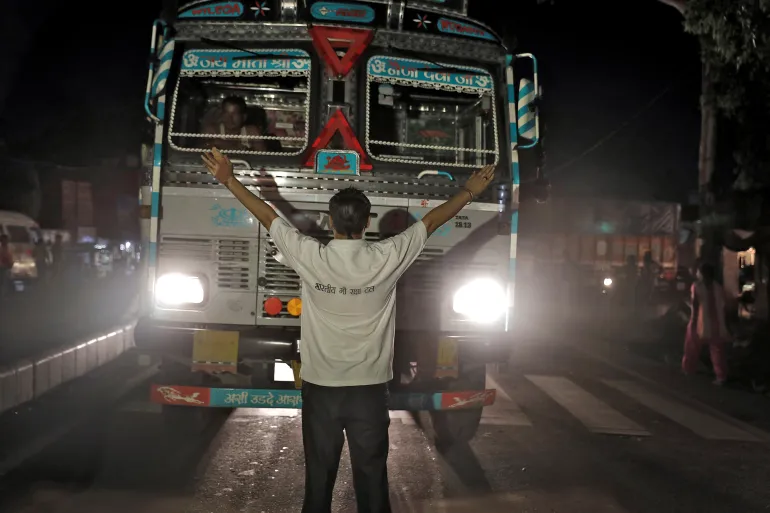
Ahmadabad, India, on February 28, 2002. (Manish Swarup/AP)
Denial is a continuation of genocide because it continues the erasure of a group’s culture and denies survivors accountability, mourning, and closure for murders of their relatives. It continues the intentional destruction of a group.
Denial is the stage that starts from the beginning and lasts throughout the genocidal process. Denial always
accompanies and follows every genocide. Perpetrators deny the existence of discriminatory laws, targeted attacks, hate crimes, and genocidal massacres. They conceal evidence, intimidate witnesses, and publicly deny that any crimes were committed. They blame victim groups for the persecution and murders of their members.
Genocide is justified as counterinsurgency or anti-terrorism. It is portrayed as necessary to protect the country's national security. In India, judicial manifestations of denial include refusal to prosecute murders of Muslims and acquittals of Hindus who lynch Muslims. The rhetoric of denialism is used by BJP-led state governments to frame exclusionary discrimination and persecution of Muslims. Genocidal attacks are justified as self-defense by Hindus.
The 2013 Muzaffarnagar “communal riots” killed 52 people, mostly Muslims, and forcibly displaced over 50,000 people. Uttar Pradesh’s BJP Chief Minister, Yogi Adityanath, a virulent Hindutva nationalist, withdrew prosecutions of more than 100 criminal cases against Hindu perpetrators of the riots. In 2023, 69 Hindus were acquitted of the murder of 11 Muslims during the 2002 Gujarat riots in which over two thousand Muslims were murdered. These non-prosecutions and acquittals reflect official denial and create an expectation of impunity for murders of Muslims.
BJP state governments portray their Muslim citizens as criminals to justify violence against them. A 2026 report by three independent human rights experts, published by the Transnational Legal Clinic at King’s College London, highlights how evictions in BJP-ruled Assam have exclusively targeted Muslim communities. Muslims are labelled as “illegal encroachers” even though many Muslims in Assam are Indian citizens born and raised in Assam.
By portraying Muslims as criminals (a tactic of Stage 4, Dehumanization) the BJP justifies violence against Muslims as necessary to protect the state from "infiltrators" and “terrorists.”
In August 2023, communal riots in Haryana's Nuh district killed six people. Following the clashes, the state
government demolished 1200 Muslim homes and businesses. The BJP governments of Punjab and Haryana claimed the demolitions were justified because of “illegal encroachments on government land.” State officials denied any form of discriminatory and genocidal intent.

A woman walks amid the remains of her son's demolished shop in Nuh, Haryana [File: Md Meharban/Al Jazeera]
The Punjab and Haryana High Court rejected these denials. It said the demolitions may be characterized as “ethnic cleansing”. Muslim houses and businesses were selectively targeted, and no prior notice was given to the owners of demolished structures. The Punjab and Haryana High Court ruled that the demolitions were carried out “without following the procedure established by law.”
Despite the striking presence of early warning signs of every stage in the genocidal process in India, as illustrated in this series, the Modi government has denied any attacks against Indian Muslims. In June 2023, during Modi's visit to the U.S., he held a news conference with U.S. President Joe Biden. [It should be noted that in his entire time in office, Modi has not held an open press conference in India.]
In the U.S. press conference, Modi was asked, “What would you do to improve the rights of Muslims in India?”.
Modi, responded, “When I say deliver, regardless of caste, creed, religion, gender – there is absolutely no space for any discrimination [in my government],” suggesting that Muslims in the country do not face discrimination.In the months leading up to Modi's visit to the U.S., there were numerous cases of mob lynching, cow vigilantism, and attacks based on the anti-Muslim conspiracy theory and hate speech of “Love Jihad.”
The process of Denial in India is also manifest as “triumphalism,” actual celebration of acts of genocide. On 22nd January 2024, a temple for the Hindu deity Lord Ram was consecrated on the site where the Babri Masjid mosque was demolished by Hindu mobs in 1992. The religious ceremony was presided over by PM Narendra Modi. He claimed that the event was “not just a date on the calendar” but “the dawn of a new era”.
The demolition of the Babri Mosque in 1992 was followed by nationwide riots that resulted in the death of more
than 2000 people, mostly Muslims. The Ram temple’s extravagant celebrations show how the deaths of thousands of Muslim citizens are not just overlooked but instead are celebrated as a victory for Hindus.
Genocide Watch recognizes these events and the justifications for them as signs of the genocidal process of Denial.
Genocide Watch recommends:
A fact-finding commission should be appointed by an independent organization such as the International
Commission of Jurists or the Permanent Peoples' Tribunal to review the facts about the 2002 Gujarat
massacres and subsequent attacks on Muslims to determine whether then Gujarat Chief Minister Narendra
Modi was complicit in perpetration of the Gujarat massacres and Hindutva policies since then.
The Delhi government, the North East Delhi Riots Claims Commission (NEDRCC), and Sub-Divisional
Magistrates (SDMs) must compensate all survivors of the 2020 Delhi pogrom for property loss, medical
costs, and livelihood destruction.
The Indian government must immediately halt eviction and deportation drives that target Muslim
communities in BJP-ruled states such as Assam.
Political leaders who disseminate hate speech and incite violence against Muslims should be arrested and prosecuted.
Political leaders who planned and carried out demolition drives against Muslims in Nuh and elsewhere must be prosecuted and held criminally liable to the people whose homes and businesses they destroyed.
The U.S and EU must hold the Indian government accountable for its attacks on Muslims. They should
raise India’s deteriorating human rights record during Prime Minister Modi’s foreign visits, and in diplomatic discussions such as the EU-India Human Rights Dialogue.
Genocide is not a sudden event. It is a process. Through this series, we have illustrated how the Ten Stages of Genocide are unfolding in India. However, genocide is not inevitable in India. Indian citizens must take electoral and legal action to stop the genocidal process in India. If the Modi government and Hindutva movement are not stopped, India will plunge from its status as the world’s largest democracy into the abyss of religious bigotry and political autocracy.
Read Part One of the series here : The Ten Stages of Genocide in India - Classification
Read Part Two of the series here : The Ten Stages of Genocide in India - Symbolization
Read Part Three of the series here : The Ten Stages of Genocide in India - Discrimination
Read Part Four of the series here : The Ten Stages of Genocide in India - Dehumanization
Read Part Five of the series here: The Ten Stages of Genocide in India - Organization
Read Part Six of the series here: The Ten Stages of Genocide in India - Polarization
Read Part Seven of the series here: The Ten Stages of Genocide in India - Preparation
Read Part Eight of the series here: The Ten Stages of Genocide in India - Persecution
Read Part Nine of the series here: The Ten Stages of Genocide in India - Extermination